
Find The Cheapest Ferries
If you're moving to France or Spain, planning a booze cruise, taking a sports team or band abroad, or even heading over to the Isle of Wight, you will need to book your hire van on a ferry.
The cheapest and most popular ferry route is from Dover to Calais, but if you're heading to somewhere in Europe such as the south of France or Spain then longer ferry crossings are worth considering to cut down on driving time.
Use our ferry booking service to compare ferry prices and book your van onto almost every ferry route to mainland Europe and Ireland.
Book A Ferry:
Here's our step-by-step guide of what you need to do when taking a hire van to Europe:
- Arrange permission for overseas use with your van hire company
- Find out the shipping dimensions for your hire van
- Choose which ferry crossing you will book
- UK-Spain Ferry Example - Why Longer Can Be Better
Arrange overseas use with your van hire company
In most cases you need to specifically arrange to take you hire van to Europe or Ireland. Not all rental companies allow this, so check that you will be allowed before you book your van on a ferry.
An additional payment for European insurance and breakdown cover is normally required.
See our list of UK European van hire companies that allow you to travel into Europe with a hire van.
Find out the shipping dimensions of your hire van
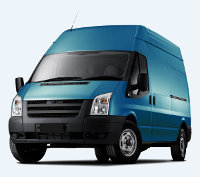
Ask your hire company for the shipping dimensions of the vehicle you will be taking. These are its height, length and width, including any roof racks, bike racks, etc. but excluding mirrors.
To book a ferry, you will always need to know the height and length of your van, and sometimes width.
Make sure you get these shipping dimensions in metres, as this is how ferry companies measure them.
Choose which ferry crossing route you will book
The best choice of ferry crossing isn't always the cheapest or shortest - you need to consider the total cost of the journey and the total time taken to reach your destination.
If you can't decide between a longer crossing with less driving and a shorter crossing with more driving, work out the total cost of each option. Here are the factors you need to consider:
- Motorway toll costs for each route. Most European motorways are tolled in some way - travelling on motorways in France especially is quite expensive.
- Fuel costs for each route. See our van sizes page for typical fuel consumption information.
- How many days it will take? If you aren't used to driving long distances in Europe, be realistic. Calculate the cost of overnight accommodation for you and any passengers. As a rule, don't plan more than 400-500 miles in a day unless you are sure you can do it. ViaMichelin have an excellent European route planner that will do most of this work for you - click here.
- Don't forget any mileage surcharges your hire company might apply, although most don't.
- Get quotes for each of the possible ferry crossings.
Once you have all of the data you need, compare the total costs, time taken and stress levels.
UK-Spain ferry - Why longer can be better
Most people find that a longer ferry crossing with less driving is much less hassle and often cheaper. Probably the best example of this is if you are travelling or moving to Spain.
By taking one of the Brittany Ferries services from the UK to Spain, you arrive in Spain refreshed after a good night's rest. Brittany Ferries now offers three routes from the UK to Spain:
- Portsmouth, UK to Santander, Spain
- Plymouth, UK to Santander, Spain
- Portsmouth, UK to Bilbao, Spain
Bilbao and Santander are both located centrally on the north coast of Spain, which allows you to reach most Spanish destinations within a day's driving - saving 1-2 days' driving, fuel costs and tolls in France.