Renault Trafic Review – Van Reviews

Renault Trafic

Renault Trafic

Disclosure: The van driven was a hire van from a well-known rental company which I paid for myself as I needed it to help a relative move house. No freebies were involved.

I recently spent a day driving a 2007 Renault Trafic, so thought this would be a perfect opportunity to write a review on this popular rental van. It also provided me with a good chance to compare it to the (slightly older) Ford Transit that I normally drive.

My route for the day took in a return trip totalling 500 miles and including city roads, motorways and long stretches of rural A and B roads (in Wales). I also experienced torrential downpours and drove part of the journey in the dark, so became very familiar with the wiper and light controls, which were both perfectly adequate (as were the lights and wipers themselves).

First Impressions

If you like swooping curves and bug-eyed headlights, then you will like the Trafic’s looks. For something that needs to be as square as possible, it manages to look quite curvaceous and stylish without sacrificing those essential van like qualities – load space and practicality.

It’s a noticeable contrast to a Transit, which is all straight lines and angles – somehow this makes it look more workman-like than the Trafic.

In terms of size, the SWB Trafic is pretty much identical to a SWB Transit – length, width and height all appeared to be the same, and loadspace dimensions were pretty close, too.

Comfort & Cab Layout
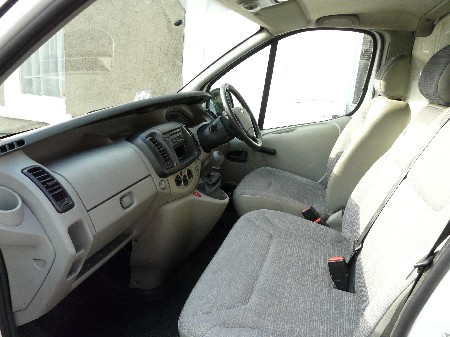
Renault Trafic cab

Renault Trafic cab

Vehicle comfort seems to mean different things in different countries. My experience of French cars and vans, and Renaults in particular, is that the seats are rather soft but nonetheless very comfortable. German vans have firm – but still very comfortable – seats, while Ford cars and vans have carefully middling seats (at least, all of mine have done).

The Renault Trafic stayed true to this pattern – the driver’s seat was quite soft but had adequate adjustment and remained comfortable for the whole of the day I spent in it – at the end of the day, I did not have any aches or pains. It was, possibly, a little bit more comfortable than the driver’s seat in my Transit – although that might be down to my Transit being older and higher mileage – the seat has seen some use.

The rest of the interior was pleasant and usable but unremarkable and a bit plasticy. The dashboard-mounted gearstick comes easily to hand but doesn’t really seem to offer any benefits over its floor-mounted equivalent, other than a slightly shorter throw and more familiarity for car drivers.

Driving & Performance

The Trafic is certainly quite car-like to drive – no doubt one of the contributing factors to its success. The engine pulled well and was reasonably refined and the 6-speed gearbox makes motorway cruising a bit more relaxed and fuel efficient – although 6th gear is only really usable at speeds of over 60mph, which means constant changing down to 5th on a busy motorway. Other than that, performance was very similar to my (5 speed) Transit.

Handling was fine – when empty it was almost like a car and when heavily loaded it remained well balanced and easy to drive. The Trafic’s brakes were decent, although the pedal needed to travel quite a long way down before the brakes really bit.

Load compartment
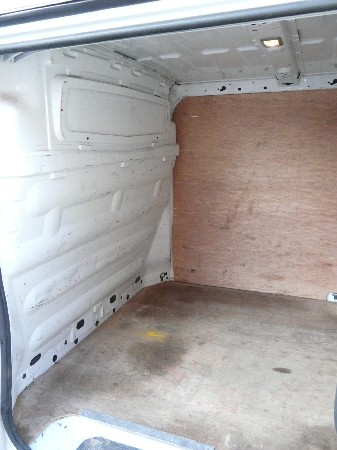
Renault Trafic factory bulkhead - note the curve

Renault Trafic factory bulkhead – note the curve & the step

The Trafic I drove had a full, factory bulkhead – meaning that it curved outwards as it rose to the roof, to fit around the backs of the front seats. This meant that stacking boxes against the bulkhead was awkward – I had to fill out the space at the base until it was level with the top of the bulkhead, then start stacking up to the roof.

Still, this is a worthwhile compromise in a short wheelbase van as it provides extra load length (at floor level) whilst providing the safety and security of a full, fixed bulkhead.

Other than that comment, the load space was exactly what you’d expect and appeared to be virtually identical to that in my Transit, except the Trafic had a shallow step by the side loading door, whereas my equivalent front-wheel drive Transit has a completely flat loadspace floor. This is unlikely to make any practical difference to most people, unless a completely flat floor is essential to you.

Quality & Efficiency

My Trafic was a rental van with 45,000 miles on the clock. It had obviously had a great many drivers and was a bit tatty, but everything still worked and there were no rattles or loose bits of trim. This would suggest that the interior build quality, at least, is fairly good.

Similarly, the van still felt decent to drive. Fuel efficiency was around 35mpg for the day – I didn’t calculate it exactly but it was on a par with my Transit, which religiously returns 35mpg, whatever I do.

Final Thoughts

If I was given a Trafic as a daily drive, I’d be perfectly happy. If I was spending my own money, I’d probably by another Transit – if nothing else, I prefer the interior. However, the differences are small and they are both excellent small panel vans to drive and use.

Manchester Van & Minibus Hire from Spinning Wheels Vehicle Rental

spinning-wheels-car-van-rental-logoI’m very happy to welcome Spinning Wheels Vehicle Rental of Manchester to the vanrental.co.uk directory.
Spinning Wheels offers van, minibus and car hire and even has a number of refrigerated vans on its fleet – making it a true one-stop shop for light vehicle hire in the Manchester area. The Spinning Wheels fleet includes:

  • Medium panel vans (e.g. Ford Transit/LDV Maxus)
  • Large panel vans (e.g. Ford Transit LWB/LDV Maxus LWB)
  • Luton vans
  • Luton vans with tail lifts
  • 3.5t refrigerated vans (e.g. Ford Transit or LDV Maxus)
  • 12 or 15-seat minibuses

All of this family-run firm’s vehicles are nearly new and covered by 24-hour breakdown cover. Minimum age for rental customers is just 23 and Spinning Wheels is open 6 days a week at its New Smithfield Market location, just of the A635 Ashton Old Road.

Spinning Wheels also offers a meet and greet service from Manchester International Airport, Manchester Piccadilly Railway Station and Chorlton Street Bus Station – highlighting its commitment to providing a comprehensive, first-class service.

If you’d like to see your van hire company listed on vanrental.co.uk, click here for details of our advertising options.

Do You Need Glasses To Drive?

I’ve always needed glasses to drive and usually keep them in my van – but it’s easy to forget to take them with you when you are driving a hire van.

If you do need glasses to drive, it is important never to drive without them – doing so is an offence.

If you haven’t used glasses but suspect you might need them, take a look at the driving test eyesight  requirements (basically, read a licence plate from 20m away) or take yourself along to your nearest optician for a test. It doesn’t take long.

If you do a lot of driving, then I would wholeheartedly recommend prescription sunglasses. I recently bought a pair for the first time and they are fantastic. I chose a light-grey tint and it is perfect – all the glare is gone, but colours remain natural and I can still see clearly when the sun goes in.

Clean Up Before You Hand Your Van Back

There are two types of dirt on rental vans – good dirt and bad dirt.

Good dirt is normal road dirt plus a little dust inside.

Bad dirt is excessive mud (inside or out) and food, drink, oil or other mess inside.

The reason for this is that while hire vans do get dirty in use, you don’t expect them to be like that when you pick them up from the hire company. That means someone has to clean them between rentals.

Van hire companies always do a quick wash down between hires – but if they have to do much more than that, they may decide to charge a cleaning fee to the person who created all the dirt! Your job is to make sure that doesn’t happen to you.

Fortunately, it is surprisingly easy.

Spilled coffee on the dashboard? Kitchen roll or baby wipes should take care of it (moisten the kitchen roll if the drink has dried on).

Excessive mud on the floor? A quick sweep or vacuum should get rid of it (easier if it is dry).

Oil? It should come off most plastics OK, but you may be in trouble if it is on the upholstery. Consider using disposable seat covers (or putting an old blanket on the seats) if you will be doing dirty work with your hire van.

Rubbish and litter? Do I really need to explain what to do with this?

I’m no cleaning expert and this is not meant to be a cleaning guide – just a gentle warning to try and return hire vans in the same state you found them – especially on the inside. Naturally, vans get more wear and tear than cars and some of the ones I have hired have been pretty shabby – so don’t get too paranoid about it.

Save Money With Mid-Week Van Hire

It’s often tempting to plan house moves and other activities requiring a hire van for the weekends. However, if saving money is a priority, it may pay to plan these for mid-week, instead, as rates can be cheaper and you may be able to reduce your hire period.

For example, Europcar currently has an offer on mid-week van hire, with rates starting from just £22.50 per day at selected hire locations.

Hiring mid-week might also enable you to manage with one day’s hire, instead of two. Most van hire branches are closed on Sunday’s and many shut at lunchtime on Saturday – meaning that if you hire on Friday, you are probably going to have to keep the van for the whole weekend. Hire mid-week, for example, and you can get a full 24-hour period without having to keep the van for a second day.

It’s just a thought…

To find van hire locations in your area, click here for our van hire search facility

Hired Vans – Remember You Are Responsible

One of the attractions of a hired vehicle is that if it goes wrong, it isn’t your problem. That’s true with regard to genuine, unforeseeable breakdowns – but you are still responsible for looking after the vehicle while it is in your care.

The main areas that you are expected to check are oil, water and tyres. When you pick up a rental van, these should all have been checked – but in my experience they may not have been.

Of the last three cars and vans I hired, one was fine, one had low water and one had a nearly flat tyre that would probably have punctured if I had driven it any distance while fully loaded.

If the van you have hired suffers damage as a result of you failing to check the oil, water and tyres, then you may be held liable for the consequences of that damage – which can be considerable. Motoring expert Honest John, writing in the Daily Telegraph, confirms this in response to a reader’s letter (scroll down to the “Start Wreck” heading).

Most rental companies’ terms and conditions also imply this, with words to the effect that the renter is responsible for returning the rental vehicle in the same condition as it was rented, excluding normal wear and tear.

Van Checks

Fortunately, checking the oil, water, tyre pressures and (for convenience and safety) the windscreen wash is quite easy. The SimpleMotoring.co.uk website has a handy illustrated guide to doing all of these tasks, if you are not familiar with them:

Simple Car Care Guide

Van Tyre Pressures

You probably won’t be familiar with the correct tyre pressures for vans – if this is a problem, I would suggest two possible solutions:

  • Ring up the van hire company and ask them
  • If the tyre on the other side of the van seems fine, check what pressure that is at and pump up the flat tyre to the same pressure (remember that front and rear tyre pressures will be different)

Finally…

Don’t get paranoid or scared about all of this – the vast majority of rentals are completely trouble free. It just pays to be aware of the potential problems and protect yourself from them.

DIY House Move With A Renault Trafic – I Did It!

Our DIY Removals Guide is one of the most popular pages on the site – it’s based on my own experience of moving house for myself. However, it has been a few years since I last moved, so I thought it was time to refresh my experience and put my money where my mouth is.

Luckily enough, my sister was due to move recently, so I offered my help in the form of a hired van and my labour for the day. As she was living in a furnished, rented house, she did not have a lot of furniture or appliances – so I opted for a medium van from my local rental company. The van in question turned out to be a Renault Trafic – a hugely popular model that is also sold as the Vauxhall Vivaro and Nissan Primastar.

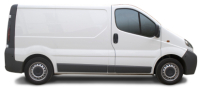
Renault Trafic

Renault Trafic

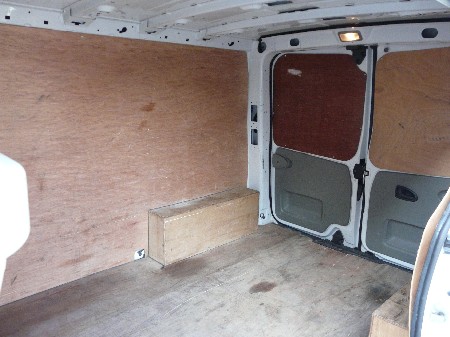
Here’s a snapshot of the inside, empty:

Inside an empty Renault Trafic

Inside an empty Renault Trafic

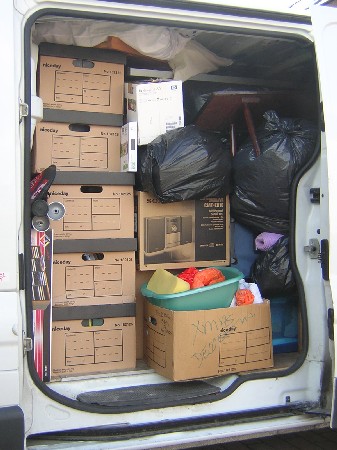
Here’s what it looked like when we had finished loading:

Renault Trafic loaded up and ready to go

Renault Trafic loaded up and ready to go

The lesson here is that, correctly packed, you can get a surprising amount in a van of this size. I could have booked the next size up, but I would then have had a lot more space than I needed and would have had to restrain the load to stop it all moving about while I was driving.

There are a few additional tips I would like to share:

  • A lot of the stuff was packed in identical boxes. I could stack these against the bulkhead neatly and efficiently – if the boxes had all been different sizes, this would have been less convenient and stable.
  • Start at the front, with the heavy, stackable stuff. Stack hard against the bulkhead and work your way back.
  • Anything like flatpack furniture or table tops can be stacked against a side wall and then boxed in so it can’t move – use an old blanket or sheet to protect any unboxed furniture from being scratched.
  • Drive carefully – with the van this full, I did feel the extra weight
  • Make sure your tyres are inflated correctly – mine all looked okay before I loaded the van, but one was badly underinflated and after the van was loaded it was visibly flat. I pumped it up at the first garage I came to.

I’m pleased to report that nothing moved and nothing was damaged during the move – which was over a distance of about 190 miles, many of which were on winding, country roads. Of course, I did take care and took the corners slower than I would have in an empty van (or car).

Nottingham Van Rental from Bridges Van Hire

It’s a pleasure to welcome our newest advertiser, Bridges Van Hire of Awsworth, Nottingham, to the vanrental.co.uk directory.

Bridges Van Hire is a family-run business that was established in 1971 and is still going strong today. Bridges offers competitive daily hire rates on a wide range of vans and allows customers to choose whether to provide their own insurance or use Bridges – ideal for business renters.

Vans available to rent include:

  • Small vans – e.g. Peugeot Partner
  • Short wheelbase Ford Transit panel vans
  • Long wheelbase Ford Transit panel vans with high roof
  • Ford Transit luton vans with tail lift
  • Ford Transit dropsides

Bridges Van Hire also offers a range of trailers for hire, including plant and car transporter trailers.

The company is based in Awsworth, near Kimberley (close to Ikea) and covers the whole of the surrounding area, including Heanor, Beeston and Nottingham. For more information or to arrange a hire, visit www.bridgesvanhire.co.uk or call 01559 32 32 32.

Van Hire Rates To Rise?

Car and van hire rates could rise by as much as 15%, according to Sixt. Sixt’s Managing Director, Ian Lawrence, told Fleet News that:

Even with the most recent increases, rates are still nowhere near where we need them to be … They are still 10 to 15% below where they should be.”

It’s not just Sixt, either. An Avis spokesman confirmed that they too were seeking to “continue to take opportunities to maximise price increases where appropriate”.

Rental rates have risen by about 8% in recent months. These rises can mostly be explained by two factors:

  • Rising vehicle acquisition costs being passed on to rental customers
  • Reduction in fleet sizes in order to lower debt requirements and increase fleet utilisation (and hence profitability)

Both Avis and Sixt have managed to improve their financial results this year – in Avis’ case by reducing debt by 14% and in Sixt’s case by improving revenue (although profit stayed unchanged in the UK).

Driving an Electric Van – It Ain’t No Milk Float

If you grew up in the UK, your oldest memory of electric vehicles is likely to be milk floats – those slow, crude, whining vehicles that trundled around residential streets in the early hours of the morning.

Many of those milk floats were built by Smith Electric Vehicles – the same company that has now gone into partnership with Ford to produce all-electric versions of the Transit Connect van. The company name may be the same – but the vehicles are a million miles apart, as this first drive report from the Re*Move blog shows.

The Re*Move team got to drive the first production electric Transit Connect that came off the Smith Electric Vehicles production line – you can read much more about their first impressions here. They have also written a general guide on driving electric vehicles, which is interesting reading.

Both articles are well worth a read and illustrate just how much potential there is for using electric vans on low mileage work – in towns and on set routes. So-called range anxiety is irrelevant in these circumstances, which may well give electric vans a head start over electric cars – hybrids will probably be a more popular option in the car market for the near future.