
Author Archives: Van Rental

Hybrid’s – Do They Make Financial Sense?

The environmental benefits of hybrids may be widely accepted – lower emissions – but for commercial operators to adopt them, the operating costs will also have to be competitive.

Are they?

Hybrid vans and trucks are too thin on the ground for there to be any meaningful data about comparitive operating costs, but hybrid cars – particularly in the US – have been around for a while now.

In a recent article, CNN Money calculated the payback time for some popular hybrids – how long before the extra cost of the hybrid pays for itself in fuel savings?

The results made interesting reading. Based on driving 15,000 mile a year – much less than most commercial operators – the Toyota Prius should put you into profit after 4.2 years – not unreasonable. The worst result came from the Lexus LS600h – it would take a full 3,771 years before you actually moved into profit when compared to the regular LS460 model. But let’s be honest – anyone who buys a car with a 5 litre engine clearly isn’t an environmental fanatic (or poor…).

These figures are based on US fuel prices, however.

For UK drivers, these savings should be much more impressive – given that our fuel costs are about 2.5 times those of US drivers. Assuming we pay roughly the same prices for our hybrid vehicles as US residents, UK hybrid operators should be able to save a lot more money on fuel bills than their American counterparts.

In the real world, we probably pay a little more for our vehicles, but the savings should be significant all the same, don’t you think?

A Van Load of Awards for the Usual Suspects

ACFO Fleet Awards

Despite the competitiveness of the van industry, some names always seem to come out on top. Take Ford’s Transit, for example – top-selling used van, popular new buy and now winner of the prestigious ACFO fleet operators “Fleet Panel Van of the Year” award.

The Ford Transit Connect scooped the ACFO “Fleet Light Van of the Year” award, making it a well-deserved double haul for Ford.

What Van? Awards

At the recent What Van? awards, the several class-leading vans received their just desserts, too.

The all-new Citroen Dispatch won the What Van? “Small Panel Van of the Year” award and Citroen also bagged a second award for their Ready to Run range.

The Ready to Run range allows van operators to purchase converted and special-purpose vans directly from Citroen – and includes popular choices such as 3.5t tippers, dropsides, car transporters and Lutons.

Other winners included Vauxhall’s new Corsa Van – the What Van? “Small Van of the Year” and Iveco’s Daily, with “Van of the Year”, for the second time in the last three years.

Electric Vans Hit The Roads In Our Cities

Recent months have seen a number of UK companies putting all-electric vans and 7.5t trucks into operation on urban duties.Ford Transit SWB Van

The most popular choice at present seems to be the Smith Electric Vehicles Edison – a Ford Transit converted to all-electric operation. The Edison provides an impressive 150 miles range and maintains a 1,500kg payload with a gross vehicle weight of under 3.5t – making it exempt from the London Congestion Charge.

The Edison has a restricted top speed of 50mph – presumably to avoid the batteries being drained too quickly by excessive speed – which should be more than adequate for any urban deliveries.

Customers so far include A Plant – a London-based plant hire firm, as well as household names like Sainsbury Online, TNT Express and Scottish & Southern Energy, who is adding the Edison to its 6,000 strong commercial vehicle fleet.

An alternative electric-powered option has also been produced by UK company Modec, who have developed an all-new electric van design providing a payload of up to 2,000kg. The Modec van has already been adopted by equipment hire firm Speedy Hire for London use – and it seems certain that other companies with intensive urban operations will follow suit.

I can’t see many of these all-electric vans making their way into rental fleets; their limited range and speed mean that they are only really suitable for dedicated urban use at present. However, the rapidly-growing popularity of electric power just goes to support the case for hybrid power – surely the best of both worlds?

Best Value Used Van Buys Revealed

When it comes to used vans, there’s probably no one that knows the market better than British Car Auctions (BCA). BCA auctions thousands of used vans every year – meaning that it has a very good idea of the level of demand for each type of van.Ford Transit Connect SWB

According to a recent Transport News article, Ford Transits are still one of the very biggest sellers in the used marketplace. Available in a vast array of sizes, shapes and payloads, the Transit offers a truly flexible van platform, combined with the reliability and value traditionally associated with the Ford marque.

Other popular choices in the van sector include Mercedes Sprinters and Vitos – favoured by Mercedes Sprinter XLWBcouriers for their reliability and by all buyers for their quality and “rock solid residuals”.

At the small end of the market, I’ve written before about the outstanding success of the Peugeot Partner/Citroen Berlingo and good examples of these continue to sell well.

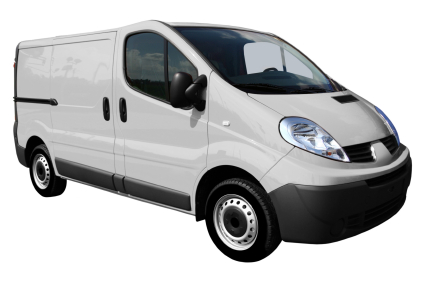
Other strong contenders are the Renault Trafic/Vauxhall Vivaro and Fiat Scudo, Peugeot Expert or Citroen Dispatch – all of which share useful load capacity with refined, car-like driving qualities. This combination has made them very popular with self-employed van operators who may also use their vans for private use.

The good news is that the van hire companies know all this too – and you will find that the vast majority of hire vans fall into BCA’s best-selling list.

10 Million Volkswagen Transporters – One Legend

Vans don’t come up much cooler than the VW Transporter. For almost 60 years, VWVolkswagen Transporter Campervan Transporters have been rolling out of Volkswagen plants in Europe and South America – 10 million of them, to be exact.
That’s right – Volkswagen’s 10,000,000th Transporter van rolled off the production lines earlier this year.

To mark the occasion, Volkswagen Commercial Vehicles has launched a special advertising campaign featuring the headline “10 Million Transporter Drivers Can’t Be Wrong”.

Earlier this year, the 60th anniversary of the creation of the Transporter model was celebrated at a festival-style gathering in Hanover, Germany. More than 71,000 visitors and 5,000 Transporter vans gathered to celebrate this anniversary and watch The Who play live.

Most Van Drivers Speeding Without Realising It

It’s always been possible to drive vans under 3.5t on a standard car license – and consequently many van drivers assume that the same rules and speed limits apply to them as when they are driving a car.

Unfortunately, that’s not true.

Car speed limits only apply to vans of under 2 tonnes maximum laden weight – meaning that any Transit-sized van is excluded.

Instead, a seperate set of speed limits apply; for vehicles with a maximum laden weight between 2 tonnes and 7.5 tonnes (all Transits, Sprinters, etc.).

Here are the speed limits that apply to Transits and similar vans:

Single Carriageways: 50mph

Dual Carriageways: 60mph

Motorways: 70mph

The fact that a great many van drivers either ignore or don’t know about these limits doesn’t count for anything, unfortunately. Here’s what Sergeant Spence of North Yorkshire police had to say about van speed limits in a recent interview with the Bradford Telegraph & Argus:

“However, we have found that a great many van drivers wrongly presume the speed limits for a van are the same as for a car.

“This simply is not a plausible excuse.”

In other words, ignorance is no excuse and they will ticket you anyway…

Don’t say I didn’t warn you. (See the Highway Code for more details)

easyVan Increases Luton Van Availability

In response to customer demand, van hire company easyVan are to increase the availability of Luton box vans with tail lifts at four of their branch locations.

Previously, customers have only been able to request a Luton van for later confirmation when booking on the easyVan website – the changes will mean that customers can now book and confirm a Luton van immediately online for collection from the Huddersfield, Milton Keynes, Peterborough and Huntingdon branches.

The only restrictions are that Lutons must be booked 5 days in advance with a minimum 2-day rental period.

Smaller vans such as the Ford Transit SWB and Vauxhall Combos can already be booked for next-day hire at all locations. However, Luton vans, with their huge load compartments and tail lift facility have always been popular for small removals and larger DIY jobs – making them a popular choice with renters in the UK.

Check out easyVan’s website to learn more and book a van, or take a look at our ‘Van Hire Quote‘ page to see a list of van hire locations in your area.

Sixt Launches Fire-Breathing VW Vans!

If you decide to hire a large panel van from Sixt in the next few months, you could be in for an eye-catching surprise.

In an effort to raise the profile of their van rental business, Sixt have introduced a range of specially liveried VW Crafters. These popular large vans are based on the Mercedes Sprinter and offer the same class-leading performance and quality – and form part of Sixt’s VW-dominated rental van fleet.

You can see a picture of one of these fire-breathing VWs here on the aptly-named Big Lorry Blog.

Europcar Introduces Handy Location Finder

Most rental websites (except this one!) require you to choose your dates, vehicle type and location at the beginning of the booking process – without allowing you to see the location’s exact address.

This can be a bit of a headache in larger towns and cities, as you can end up having to trek some distance across town to pick up your vehicle.

To help address this problem, we allow people to choose a location first and then see a list of van hire branches and their addresses before proceeding any further. We also provide popup maps for every hire branch in our database – so you can see exactly where it is.

Europcar has now also introduced a similar feature to their website – the location finder.

Simply choose a town name from the drop down list (rather like this site). You can then see full address details for the branch at that location and a map of its exact position (of course, with our system, you gain access to all this information for four rental companies – not just one!).

Take a look at the UK version of Europcar’s van rental location finder here.

Hybrid Power Predictions (& Why Biofuels Can’t Be The Answer)

Update: Hot on the heels of this post comes a report from the OECD, no less, entitled “Biofuels: Could the Cure Be Worse Than the Disease?”

I hate to say I told you so… (Full details here)

It’s time for another prediction about the future of light commercial vehicles (vans to you and me):

Hybrids will be big for the next 10-20 years – and they deserve to be much bigger than biofuels.

Hybrid-powered vehicles, in case you haven’t come across them yet, utilise both a diesel or petrol engine and an electric motor.

At low speeds, the electric motor is driven by some beefy batteries and the main engine is off – meaning zero emissions and zero fuel consumption.

Once speeds rise, the diesel or petrol engine automatically kicks in and starts providing extra power – for out-of-town driving speeds. The batteries for the electric motor also get charged by the main engine while it’s running.

So that’s hybrids – back to my predictions…

Hybrid setups provide two massive advantages:

  • A considerable reduction in urban emissions – where the electric setup is most at home
  • A considerable improvement in fuel consumption – urban and stop/start driving (think motorway queues) gives very poor fuel consumption

Hybrid drivetrains are really starting to take off commercially now – both in the USA and in Europe. They are politically acceptable, increasingly technologically practical and seem to scale quite well, too.

Hybrids have always been more expensive than non-hybrid setups, but that cost differential is gradually being eroded, too.

So what’s this got to do with commercial vehicles?

As well as well-known hybrid cars like the Toyota Prius, which are already in commercial production, commercial vehicle manufacturers are increasingly experimenting with and trialling hybrid drivetrains for their larger, more fuel-hungry vehicles.

I firmly believe that in the short-medium term, hybrids will triumph over most of the alternative fuels that are currently being hyped up – especially biofuels.

Biofuels – (e.g. biodiesel) seem to me to be a poor compromise. They seem to cause as many problems as they might solve.

They drive farmers to start farming for fuel production instead of food (driving food prices up). They will also inevitably cause less-developed countries to sacrifice even larger swathes of jungle and much-needed fertile farming land to start producing cheap oil for fuel use*.

Simple economics make these consequences inevitable.

On top of that, biofuels don’t address the consumption issue – a diesel vehicle’s fuel consumption doesn’t change just because it’s using biodiesel.

To me, one of our targets should be to do more with less.

Hybrid’s have the advantage of enabling us to do exactly that – and of making the most of existing technology, fuel supply chains and infrastructures. I’m convinced that hybrids will be one of the main bridging technologies that sees us through until the next revolution occurs – be it fuel cells or something else.

What do you think?

(*For example, see “The western appetite for biofuels is causing starvation in the poor world”– The Guardian, 6th November 2007.)