Category Archives: Motoring News

Save Money At Halfords – Limited Time Discount Code

It seems that Halfords is currently running a 5% discount code for online purchases.

The code is AFF5APR and it is valid until 16th June 2009.

THIS CODE HAS EXPIRED

The discount offer applies to almost all products, except the usual suspects – sat nav, alloys, mp3/iPod and gift vouchers.

Remember, it’s only valid on online purchases made before 16/06/2009 – so if you are planning a purchase, check out Halfords’ prices now to see if you can save money.

Snow Driving – Essential Tips

Driving in the snow is not something that most of us have much experience at.

Here are a few tips for anyone renting a van in the next few days who may need to drive in the snow:

  • Take it easy – steer, accelerate and brake much more gently and slowly than usual
  • You may need up to 10 times your normal braking distance to come to a safe halt
  • Drive in the lowest gear possible – if you set off in 1st gear, shift up to 2nd as soon as you are moving
  • If you start to skid, take your foot off the brake/accelerator and steer gently into the skid – don’t brake or accelerate hard to try and drive out of it
  • Make sure you have plenty of fuel, warm clothes and perhaps a drink and sugary snack with you. You may get stuck, break down or have to take a long diversion and the cold is your enemy in these cases.
  • Remember that if you break down you should get out of your vehicle to wait for assistance – you will need a warm coat.
  • Make sure all of your windows are cleared of condensation, ice and snow before you set off. Allow plenty of time so you won’t feel tempted to try and rush.
  • Make sure your windscreen washer bottle if full and has plenty of anti-freeze in it
  • The compacted snow in other vehicle’s tyre tracks is more likely to be icy – fresh snow often gives better grip
  • Put a shovel in your van if you have one – it will enable you to clear the snow from around your wheels if you get stuck.

Take care out there – most collisions are preventable and are the result of driving errors, even in this bad weather.

For the latest traffic information, visit the Highways Agency Traffic Information website.

Photocard Driving Licenses – They Expire Sooner Than You Think…

When the current two-part photocard driving licenses were introduced in 1998, one of the little-publicised changes was that the photocard itself expires after 10 years.

Your driving license remains valid until you are 70 – as before – but the photocard itself needs renewing. Presumably this is so that the photograph keeps pace with changes to your appearance over the years!

I have to admit that I only realised this myself recently and wasn’t sure whether I would get a reminder from the DVLA nearer the time.

Thanks to this excellent post on the Avis blog, I now know the answer – reminders are being sent out.

Apparently, the DVLA have been sending out reminders since May 2008 – but although you are legally required to renew your license, there is a £17.50 fee to do so with a potential £1,000 fine for non-compliance.

Interestingly, Avis say that they will still hire to you if your photocard has expired but your license is still valid – but I am not sure whether that would be the case with all hire companies, so it is probably as well to ensure that your photocard is renewed on time.

Cop Cars Halted By Misfuelling

It seems that Essex police isn’t the only police force wrestling with costly misfuelling problems – breakdowns caused by drivers filling up vehicles with the wrong type of fuel.

Avon & Somerset Police has had to fork out nearly £24,000 over the last three years as a result of drivers filling up diesels vehicles with petrol and vice versa.

The bad news is that the problem is inevitable – with drivers often switching vehicles. The good news is that major manufacturers such as Ford are starting to factory-fit misfuelling prevention devices to prevent diesels being filled with petrol.

Putting petrol into diesel vehicles is the most common type of misfuel due to petrol nozzles being slightly smaller than diesel nozzles. Filling a petrol vehicle with diesel is harder as the nozzle will not fit into the filler neck as easily as normal. This alerts most drivers to their mistake before they start fuelling.

Just in case you aren’t familiar with the problem, misfuelling a diesel vehicle with petrol can cause costly damage to the engine if the vehicle is started. At the very least, the vehicle will have to have its fuel system drained – a time-consuming and hence costly procedure.

Click here for more information on misfuelling.

Gear-Changing Advice – Coming soon to a Ford near you

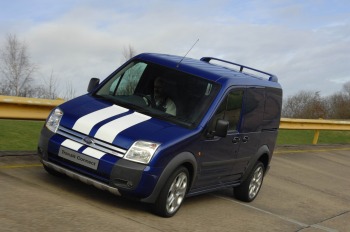
Ford Transit Connect SportVanOne of the easiest ways to improve fuel consumption and reduce wear and tear on your vehicle’s drivetrain is by timing gear changes correctly.

Ford are obviously aware of this and are now taking active steps to help drivers change gear better.

From 2009, all Ford Econetic model cars (Fiesta, Focus and Mondeo) will have a gear change indicator on their instrument consoles. The same indicator will also be fitted to Transit and Transit Connect vans.

The indicator consists of a light that illuminates when it’s time to change up to the next gear. The idea is that many drivers over-rev needlessly and without realising it, causing wear and wasting lots of fuel.

By timing up-changes correctly, significant cost savings can be achieved.

According to Ford, the system “continuously monitors data from the vehicle including engine speed, road speed, gear selected and throttle position to calculate optimum gear changes.”

In other words, it’s not just some dumb light that flashes automatically when engine revs reach a certain level. Sounds good to me – I will certainly look forward to trying one in practice and seeing how well it works.

RAC Reveals Strangest Breakdown Calls

It’s Christmas – it must be time for some slightly less serious press releases.

This contribution from the RAC reveals its all-time strangest call outs – including steamy windows (apparently 31% of patrols have arrived at a breakdown to find an ‘amorous couple’ in the car), rats in the dashboard and hungry alligators…

RAC Top Ten most unusual call-outs

1. A patrol called out to a car that wouldn’t start discovered the culprits; a family of rats living in the fuse box, who had chewed through all the wires.

2. One RAC member was mystified as to why they couldn’t unlock their car. On arrival, the patrol had to break it gently that they had the wrong car!

3. One member was trying to protect rather more than his car – he had broken down at the side of the road with over £80,000 in cash in his boot!

4. A patrol had to make it snappy when a van taking an alligator to a zoo broke down. Another speedy patrol helped restart a transporter taking a cheetah to a zoo before it was dinner time!

5. A hapless groom nearly didn’t marry his bride when he locked the wedding rings in his car – thankfully the RAC patrol saved the day just moments before the ceremony.

6. A £30,000 violin had to be rescued by a RAC patrol from a jammed seatbelt so that it’s musical maestro owner could get to a concert in time.

7. A kitten being driven to his new home panicked on arrival and escaped into the dashboard of the vehicle. An RAC patrol undertook the rescue, dismantling the entire dashboard, and recovering the kitten safely. Similar callouts have involved snakes, mice and hamsters.

8. On opening the back of a broken down van, a patrol was startled by 17 pairs of eyes staring back at him belonging to a cast of falcons.

9. One RAC patrol rescued a referee on his way to a crucial league football match, just hours before the game was due to kick off.

10. An RAC patrol rescued a police car, stuck up to its windows in mud having chased a runaway criminal across a ploughed field.

Overall, almost four in ten (39%) patrols have helped a motorist get to a life-changing event such as a wedding on time and one even reported helping to deliver a baby.

RAC patrol of the year Iain Vale commented: “Our patrols respond to around 2.7 million roadside assistance call-outs every year and this survey reveals the extend of the very odd and unusual nature of what sometimes awaits us.

“Whether it’s meeting members who keep their dogs ashes in an urn in the car, calls asking whether they can extend breakdown cover to their electric wheelchairs or a new kitten that’s panicked and hidden in the dashboard, RAC patrols aren’t afraid to get their hands dirty and really can be relied on to come to the rescue of members.”

Stop Start Vehicle Review – Land Rover Freelander

I’ve written several times before about the new Mercedes Eco-Start system – formerly known as Stop Start.

This shuts down the vehicle’s engine after it has idled for a certain period and restarts it automatically (and near instantly) when the clutch is depressed. Similar systems are starting to appear on a variety of vehicles, including the latest Land Rover Freelander.

The Telegraph has now published a review of this vehicle with a detailed discussion of its Stop/Start system that I thought might be of interest to you – if so, click here for the full review.

The short version is that the system seems to work pretty well, although boy racers wanting to make fools of themselves tear away from traffic lights might be a little frustrated as they are forced to wait for a heartbeat while the engine fires up again.

Update: Here is a (very short) road test review of the Mercedes Sprinter ECO Start.

RAC Survey Confirms Cost Matters, Environment Doesn’t

A new survey by the RAC has confirmed what I have always believed – people will adjust their driving habits in response to increasing costs, but won’t make changes solely for environmental benefits.

The RAC surveyed the attitudes of 1,040 British motorists as part of its 2008 RAC Report on Motoring. It found that 77% of motorists have changed their driving habits in the last year due to the higher cost of fuel – but just 6% had changed driving habits out of concern for the environment.

The cost vs. environment theme continued, with 77% of drivers saying that they would buy a greener car – if the tax incentives were better. In other words, they would buy a greener car if it was cheaper than a more polluting vehicle!

At the risk of sounding cynical, this is exactly what I expected – and to be honest, exactly what I do. My concerns are firstly for the health of my vehicle, secondly for reducing fuel consumption and other costs and thirdly (if that) for the environment.

Given the cost of owning and running a vehicle, no other approach really makes sense to me.

What do you think?

If you’d like to learn how to save money, save fuel and save the environment, check out my better driving tips here and learn why raising road tax on polluting vehicles won’t necessarily lower emissions.

Diesel Losing Ground to Petrol – As Predicted

Back in July (when diesel prices were around 135p/litre), I suggested that petrol-engined cars might experience a resurgence in popularity against diesels, thanks to lower fuel costs and improved fuel economy.

Much of diesel’s recent popularity has been due to its superior fuel economy, but now that it is so much more expensive than petrol (14p/litre more at my local garage) the differences in fuel economy have become much less impressive.

For example:

Diesel car/van travels 40 miles at 40mpg: Fuel cost £4.75 (£1.079/litre)

Petrol car/van travels 40 miles at 30mpg: Fuel cost £5.50 (£0.939/litre)

Although the petrol vehicle still costs more to fuel, the difference is much smaller than it was – especially when you factor in the greater purchase and maintenance costs of diesels.

New figures from GE Capital Solutions’ Fleet Services division suggests that the swing back to petrol might already be underway in the fleet car market – albeit in its early stages.

10.7% of those surveyed reported that there had been an increase in the number of petrol-engined vehicles in their fleet over the last 12 months – against only 3% for diesel.

These figures aren’t yet backed up by new registration figures, which show that fleet registrations of diesel cars are up this year, from 486,000 in the first ten months of 2007 to 511,000 in the same period this year.

However, I do believe that the balance of fuel choice will tip back towards petrol a little over the next few years. Not entirely – modern diesels are very practical for high-mileage applications – but for lower mileage drivers at least.

Source: Fleet News