Category Archives: Van News

News and articles about UK vans – especially information relevant to the van hire market. Coverage of new van model launches from all the major manufacturers – Ford, Mercedes, Volkswagen, Peugeot, Fiat and Citroen.

Fiat Doblo Gets Unlimited Mileage Warranty Offer

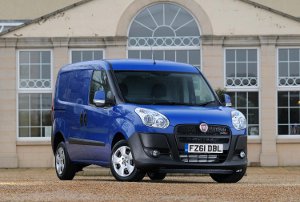
Fiat Doblo CargoFiat Professional (Fiat’s commercial vehicle division) has launched a special warranty offer on the Doblò Cargo and Doblò Combi vans. Business customers buying one of these models before 31st March 2012 will get a 3 year, unlimited mileage warranty – up from 120,000 miles.

The rest of the warranty remains unchanged and includes 3 years’ AA Assurance cover, which comprises Roadside Assistance, Home Start, Relay, Relay Plus & European cover.

Although not all business users will do the 40,000+ miles a year needed to benefit from this offer, it is an impressive statement of Fiat’s confidence in the Doblò, which is a popular model.

The Doblò has previously been chosen as International Van of the Year and Fleet Van of the Year, and is currently the What Van? Light Van of the Year for the second consecutive year. Available with a choice of five low emissions, Euro 4 and 5-specification engines, the new Doblò comes in eight different versions – Cargo, Cargo Maxi, Cargo SX, Cargo Maxi SX, Combi, Combi Maxi, Platform Cab and Work Up – offering something for a wide spectrum of van users.

The engine line-up comprises a 1.4-litre 16v 95bhp petrol unit and four MultiJet 16v diesels – 1.3 (90bhp), 1.6 (105bhp), 1.6 MTA (90bhp) and 2.0 (135bhp). A petrol engine choice is increasingly unusual on vans and provides a welcome DPF-free alternative for operators whose work will keep their vans on short urban routes. Prices start at £11,695 (basic price) for the Doblò Cargo 1.4 16v Petrol Euro 4, or £12,515 for the Euro 5 version.

Start&Stop – which stops the engine automatically whenever traffic conditions bring the van to a complete halt, and restarts it when the driver wants to move off again – is fitted on all Euro 5 versions to give up to 15 per cent fuel savings, and the vehicles offer a low CO2 figure from just 126g/km.

To find out more, visit www.fiatprofessional.co.uk.
Van Tyre News: Avon, Yokohama & Continental

Tyre manufacturers Avon and Yokohama have both announced new additions to their ranges of van tyres.

Avon AV11: Designed for Hard Knocks

Van tyres often have a hard life – routinely being kerbed and heavily loaded over high mileages. Avon’s new AV11 tyre appears to be a beefed-up alternative to its AV9 van tyre that has been specially designed for heavy use. It has reinforced sidewalls and a stronger carcass to reduce the chance of accidental damage.

According to Nigel Hampson, Sales Director of Cooper Tire Europe: “The AV11 will stand up to relatively harsh treatment”.

Although the AV11 is a summer tyre, it has been designed to provide good water dispersal and should work well in most conditions.

Yokohama: 3 Tyres For Any Conditions

Yokohama now offers four tyres for vans and other light commercial vehicles. Between them, they cover virtually all weather conditions and usage scenarios.

  • RY818: This is a summer tyre designed with urban delivery work in mind. It is designed to endure regular kerb abuse and to provide a stable platform with good water dispersal characteristics.
  • Y354: This is an all-season tyre: these are not popular or widely available in the UK, but I am a big fan and believe they are very suitable for most UK conditions – far more so than a winter/summer tyre combo for most drivers. In this case, Yokohama has designed them with distance work in mind. These tyres should work well in all weather conditions and should mean that driver can cope with moderate snow and ice without needing to think about winter tyres. They have snowflake and M+S markings.
  • WY01: The WY01 is a winter tyre and will provide optimum performance in all conditions when the temperature is below 7°C. I think a full winter tyre is overkill in most parts of the UK, but operators in Scotland or rural areas of the Midlands and Northern England might well benefit from the superior grip of a full winter tyre.
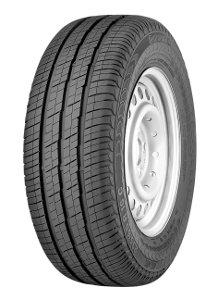
Continental Vanco 2 van tyre

Continental Vanco 2 tyre

Continental Tyres OE Fitment on 1/3 European Vans

Continental tyres are an original equipment fitment on one third of European-manufactured vans. The Continental range includes the following tyres:

  • VanEco – designed with low rolling resistance in mind for improved fuel efficiency
  • Vanco 2 – designed to provide a durable tyre for heavier vans
  • VancoContact 2 – a van tyre for small and car-derived vans
  • VancoWinter 2 – A winter tyre for vans
  • VancoWinterContact – a winter tyre for car-derived and small vans
Continental tyres are certainly amongst the best on the market in all categories and it’s no surprise so many European manufacturers choose them as OE fitment. I have Vancos on my van and they have lasted remarkably well – a little better than the other premium make which I have also used on the same van.

Volkswagen Transporter Is Used Van Of The Year 2011

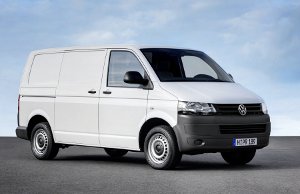
Volkswagen Transporter T5Volkswagen’s evergreen Transporter panel van has been chosen as Used Van of the Year 2011 by vehicle pricing specialists CAP.

The CAP awards looked at a three year old, 60,000 mile model of all current vans and chose a winner in each category of van before going on to choose an overall winner – the VW Transporter. The judging criteria were:

  • Value retained vs. cost new compared with peer group
  • Model range coverage
  • Options availability
  • Perceived reliability/cost of ownership
  • Image & brand perception
  • Dealer network professionalism and support

The winners in each category included some of my firm favourites – not least the Ford Transit, which has now been setting the standard for medium and large vans for more than 40 years.

Here are the category winners and the judges’ comments about each model. It’s interesting to note that only two van manufacturers are represented, Ford and VW (excluding the pick-up, which isn’t a van):

  • Best hatchback van – Ford Fiesta: “In its 5th generation and still a class leader in all respects.”
  • Small van – Volkswagen Caddy C20: “Brought new levels of quality to its sector and depreciation is among the lowest.”
  • Medium van – Volkswagen Transporter T5: “Just ‘right’ in every way.”
  • Large van – Ford Transit 330-350: “Ubiquitous and drives improvement across the whole market by setting the standard for others to aim for.”
  • Lifestyle pick-up – Toyota HiLux: “Great image and reputation for durability.”
  • Minibus – Ford Transit: “Enviable heritage and trust – the name says it all.”

Hopefully the Fiesta van will be with us for a few more years – as I reported recently, car-derived vans are a dying breed.

What’s your first choice for a used van? Does the premium style, finish and perceived quality of the Transporter float your boat, or do you prefer the straightforward practicality and greater flexibility of the Ford Transit? Leave a comment and let me know.

Euro 5 Diesel Particulate Filters Pose Risk For Van Owners

If you are a self-employed tradesman, own a used van and only travel a few urban miles to work each day, then your van could be heading for an expensive problem – if it’s a Euro 5 model.

There are not many Euro 5 vans on the secondhand market yet, so this will be more of a problem in the next 2-4 years than it is at present.

Let me explain: To achieve Euro 5 emissions standards with diesel engines, van (and car) manufacturers use something called a Diesel Particulate Filter (DPF). Without getting into too much detail, these clog up if they are only used for short, low-speed journeys.

They need to be ‘regenerated’ from time to time, and this can only happen through sustained, high speed driving, when the DPF gets hot enough to work properly. In large conurbations like London, this can be awkward to do.

The problem, as many car owners have already discovered, is that if you only use your DPF-fitted diesel vehicle in town, it will never regenerate. If you ignore the warning light on the dashboard and keep on using it, the filter will eventually clog beyond all help and you will need an expensive replacement filter.

The solution for car owners is to buy a petrol-engined car, if your usage is primarily short, low-speed journeys. Petrols warm up faster anyway and are a more suitable choice for this type of usage.

However, van buyers don’t currently have this choice – apart from a few small models, it is diesel or nothing. This means that anyone buying a used, Euro 5 van should consider how it has been used, look for a good service history and remember that they themselves will need to give it a good run out of town occasionally to keep the DPF in good order.

Although the problem could affect the new owners of the van, it is more likely to affect second or third owners, as John Watts of CAP explains:

“This problem will mostly emerge in low speed, short distance operating cycles, typically undertaken in large conurbations. This type of operating environment could become even more of a problem for future owners since operational radius tends to reduce in the secondary market.

“A typical example could be a city-based self-employed used van owner who travels less than ten miles to site from home and stays all day. A continuous operation of this nature could result in a blocked filter and a potential replacement cost.”

Most manufacturers do provide guidelines indicating how the van should be used periodically to prevent the filter blocking, but such manuals are often missing from older secondary market vans.

CAP believes that widespread DPF blockage problems could affect used van prices but that dealers are already aware of the risks. CAP’s Watts said:

“If problems occur, how many will take their vehicles back to the supplier, expecting them to carry out repairs under warranty? Following on from that, how will the trade view vehicle values in the light of potential problems of this nature?

“CAP’s view is that the used vehicle trade need to be aware of the potential problem and ensure that vehicle documentation is complete, especially where a filter has already been replaced. Used van buyers in turn must be aware of the need for a functioning particulate filter for Euro 5 compliance and that problems may not be routinely covered under warranty.”

DPF blockage problems have already become commonplace with cars – many new van users use their vans enough to avoid this issue but it seems certain to rear its head eventually, especially in large cities.

Toyota Abandoning UK LCV Market?

Toyota Hiace

Toyota Hiace panel van - discontinued in the UK from 2012

As I reported in September, Toyota dropped the Hiace panel van from its range at the end of 2011.

The decision was due to a lack of Euro 5 engines, but given that Toyota has plenty of Euro 5 diesels in other vehicles, this decision makes you wonder if the real reason was its failure to compete with vans like the VW Transporter.

Although the Hiace benefits from Toyota’s usual excellent engineering and build quality, the cab lacks the car-like sophistication of the Transporter and even the latest Transit, and it has never been a big seller in the UK market.

Toyota has also announced that it is reducing the range of Dyna models available in the UK in 2012.

Toyota Dyna with factory tipper body

Toyota Dyna - this factory fit tipper body will not longer be available in the UK in 2012

The Dyna is a chassis cab based light truck: although its only available with gross weights from 3.0t – 3.5t, it is built like a small lorry, rather than a large van. This makes is rugged and ideal for demanding applications, such as waste collection and construction use.

Toyota is dropping the short wheelbase variant of the Dyna from its UK model range – only medium and long wheelbase models will be available and only one ready-bodied conversion will be offered; a long wheelbase dropside.

Toyota’s primary focus seems to be its popular Hilux 4×4 pick-up. The company has launched an updated model for 2012; an all-new model is expected in 2013/4.

Vauxhall Tops UK Van Production League

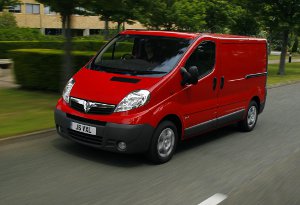
Vauxhall Vivaro at Vauxhall's Luton factoryVauxhall produces more vans in the UK than any other manufacturer, making 60% of the commercial vehicles which are built in the UK.
The vast majority of these (57%) are Vauxhall Vivaro vans, which are built at the company’s Luton plant. The remainder of Vauxhall’s UK van production takes place at its Ellesmere Port plant (near Liverpool), where Astravans are built on the Astra production line.

In 2011, 64% of UK-built Vivaros were exported to Europe, highlighting the fact that despite public perception, Britain has a thriving motor industry that exports a substantial number of vehicles every year.

Ford is probably the next largest producer of light commercial vehicles in the UK, with many Transit models continuing to be made at its Southampton plant, despite the fact that some Transit models are now made in Turkey. Both Transit and Vivaro have always been popular choices with van hire companies and this trend looks set to continue, with the latest Transit update receiving excellent reviews and a new model Vivaro due to go into production in less than two years.

Is This The End Of Car-Derived Vans?

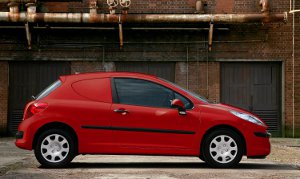
Peugeot 207 Van

The Peugeot 207 Van is soon to be discontinued

Car-derived vans such as the Vauxhall Corsavan and Ford Fiesta Van have been around for years. They have never been big sellers but have maintained a niche presence servicing the needs of people who really do need a very small van.

One other regular in the very small van parc has been Peugeot, with its 206 and 207 Van models. The 207 car is shortly due to be replaced by the 208 and the French company has announced that it will not produce a van version of the 208.

Peugeot told What Van? that UK sales of the 207 Van, which have never been high, have fallen from a peak of 970 units in 2008 to about 250 in 2011. In addition, the 207 Van competes with Peugeot’s own Bipper van, a highly successful, modern compact van model which sold 5,000 units in the UK in 2011 and which is far more versatile than the 207 Van, without having significantly higher running costs.

According to What Van?, Peugeot’s spokesman also indicated that a 208 Van model might not be compatible with Peugeot’s aim to take their cars upmarket.

Although both Ford and Vauxhall continue to produce car-derived small vans, neither of these manufacturers have a compact van in their ranges equivalent to the Peugeot Bipper. One wonders whether they will persist with the car-derived van format or whether they will introduce new compact van models to replace their car-derived models – which have limited appeal due to their very small loadspaces.

Iveco Announces DriveAway Ready-Built Conversions

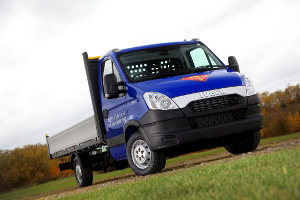
Iveco Daily dropside or tipper conversionIveco has announced that it will launch a range of conversion options for new Daily chassis cab and chassis crew cab models in the first quarter of 2012.
The options will be available through the DriveAway scheme and will mean that customers needing body conversions will be able to order specify these bodies when they order their vehicles, rather than having to source them from third-party body builders. Luton, dropside and tipper bodies will be available under the DriveAway scheme in both single cab and crew cab variants.

Most other light commercial vehicle manufacturers already operate such schemes and Iveco’s move is in response both to customer demand and to the impending European Whole Vehicle Type Approval legislation, which applies to all new vehicle types registered from October 2011 and to all existing vehicle types from April 2013.

Since the launch of the new Daily in September 2011, Iveco has received orders for 11,000 vehicles, including a significant number of chassis cab units, highlighting demand for ready-built conversions.

Use Van Hire To Save On Record Diesel Prices

Diesel prices are set to reach record levels in January, with fuel retailers already reeling from a 4.5p per litre rise in the cost they pay per litre over the Christmas period.

Further rises are likely before the end of January and the petrol division of the Retail Motor Industry (RMI Petrol) believes that the average forecourt price for a litre of diesel will soon top its all-time record of 143p. Industry experts are pinning the blame on Iran’s threat to hold a demonstration in the Strait of Hormuz and tightening capacity as cash-strapped refineries shut down.

For van operators, it is a good time to tighten up on heavy-footed drivers and ensure that multiple journeys are consolidated into one wherever possible. It may also be a good time to consider disposing of older vans, especially if their fuel consumption is poor when compared to new models.

Van hire can provide the ideal solution in this scenario: using a hire van to replace an older van for a week or two will provide a good insight into the difference in fuel consumption between the two models, although drivers need to play ball and concentrate on optimising fuel consumption, rather than revelling in the improved performance offered by the latest van models…

To provide an example of how van fuel consumption has improved over the last 10 years, here are fuel consumption figures for Mk5, Mk6 and the latest Mk7 Ford Transits:

  • I owned a  Mk5 (1999) Ford Transit – average consumption 30mpg
  • I replaced it with a Mk6 (2001) Ford Transit 100T280 – average consumption 36mpg
  • The current (2012) Mk7 Ford Transit Econetic (same body/power as my Mk6) has an official combined fuel consumption figure of 43.5mpg if fitted with the optional 62mph speed limiter

The savings could really add up for anyone doing more than nominal mileage – why not hire a van for a week and find out how your business would benefit?

To compare van hire prices from major UK van rental companies, click here.

Van Sales Up In 2011 As Vauxhall Becomes Small Business Favourite

Van sales rose by 16.7% in 2011, with sales up 2.8% in December alone, according to the year-end figures from the Society of Motor Manufacturers and Traders (SMMT).

A total of 260,153 vans (commercial vehicles under 3.5t, including pickups and some 4x4s) were registered last year. The SMMT figures also highlight the popularity of the 2.5t-3.5t van sector – 57.8% of vans sold in 2011 were 2.5t-3.5t models, such as the Volkswagen Transporter, Vauxhall Vivaro, Ford Transit and Mercedes Sprinter.

Vauxhall Vans Are Small Business Favourites

Vauxhall Vivaro

Vauxhall Vivaro

Vauxhall sold more vans at retail than any other van manufacturer in the UK in 2011. Selling at retail normally means selling to small businesses, who buy their vans from dealers, rather than as fleet purchases.

Despite the increasing age of the Vauxhall Vivaro, it remains good to drive, stylish and a firm favourite with small business owners, topping the retail medium van segment in 2011 with sales up 58%.

Vauxhall’s very attractive offer of  four years’ zero per cent APR finance, four years’ free servicing, a four year warranty and four years’ AA cover no doubt helped seal a few of these deals.

The current Vivaro (also badged as Renault Trafic and Nissan Primastar) is built at Vauxhall’s Luton plant and Vauxhall fans will be pleased to know that the next generation Vivaro will also be built in Luton, continuing a decade-long tradition.