Category Archives: Van News

News and articles about UK vans – especially information relevant to the van hire market. Coverage of new van model launches from all the major manufacturers – Ford, Mercedes, Volkswagen, Peugeot, Fiat and Citroen.

London Low Emission Zone – Mayor Scraps Van Plans

It looks like drivers of vans with a maximum weight of under 3.5 tonnes may escape the London Low Emission Zone, at least for the foreseeable future. Restrictions that would effectively ban vans that weren’t Euro III compliant from entering the zone were due to be introduced in October 2010 – but London Mayor Boris Johnson has announced his intention to suspend the introduction of these rules.

LEZ – What’s That?

Anyone who regularly drives in the Greater London area will probably have come across the Low Emission Zone, or LEZ. Most of the space within the M25 falls into the LEZ (click here for a map of the zone), including the M4 Heathrow Spur, the M4 east of Junction 3 and the M1 south of London Gateway Services.

The goal of the LEZ is to reduce the use of older, more polluting large vehicles (vans, buses, lorries and coaches) in the Greater London area. Restrictions put in place in July 2008 mean that lorries, buses and coaches that do not meet the Euro III emissions standard have to pay a daily charge of £200 to enter the zone.

From October 2010, a similar restriction was to be placed on vans weighing up to 3.5 tonnes – a £100 daily charge for vans failing to meet the Euro III emissions standard. (Cars, motorcycles and vans with an unladen weight of under 1.205 tonnes are exempt from the LEZ.)

What Does This Mean For Me?

Most vans made since 2002 do comply with the Euro III standard – and more recent vans meet the later Euro IV or even Euro V standards. For these vehicles, the LEZ has no effect. No registration or permit is required – just ignore it.

Most London van hire companies operate vans under 5 years old, so they will all meet the Euro III standard anyway.

If the proposed suspension of the new rules goes ahead, then it won’t matter what you are driving. However, if it doesn’t, there are likely to be some seriously inconvenienced people. Tradesmen and small businesses operating older vans – perhaps because they do very limited mileage – will have to choose between buying a newer vehicle and paying £100 a day to go about their business. Similarly, any van hire companies operating within the LEZ will have no choice but to replace any non-Euro III vans with newer vehicles.

If you want to check whether a van you drive is compliant with the proposed October 2010 rules, then Transport for London provides an online compliance checker – click here.
Van Review: Fiat Fiorino 2009

The Fiat Fiorino was one of a brace of new small vans that appeared last year. Also new – and based on the same platform – were the Citroen Nemo and Peugeot Bipper.

Despite their unlikely names, these vans are ideally suited for city use and offer a surprisingly capacious loadspace, with a payload of around 600kg and a volume of 2.5 cubic metres. The Fiat Fiorino was voted International Van of the Year at the Hanover commercial vehicle show and based on this review, it’s easy to see why.

Here’s RoadTransport.com’s Julian Milne putting the Fiat Fiorino through its paces:

Renault Trafic Voted Most Secure Van

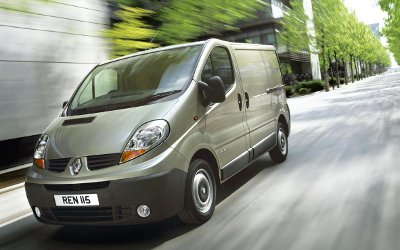
Renault Trafic - Britain's Most Secure Van?

Renault Trafic - Britain's Most Secure Van?

The Renault Trafic has added another award to its impressive collection – the British Insurance Vehicle Security Award in the Heavy Van category.

It’s the first time that vans have been eligible for the awards, which are based on the industry-standard New Vehicle Security Ratings. The Trafic comes out top thanks to its remarkable level of factory-fit security – which certainly puts my 2001 Transit to shame.

According to Renault, the Trafic comes with security features including anti-drill door locks and barrels, Thatcham category 1 alarm and immobiliser system, remote central locking with deadlocking, full steel bulkheads and R.A.I.D. (Renault Anti Intruder Device), which automatically locks all the vehicles doors once travelling above 5 mph. A three-button key with selective door opening is also available as an option, to combat opportunistic thieves while the vehicle is being unloaded.

LDV – Bust, But Not Forgotten By Buyers

LDV duly went into administration recently – following the withdrawal of Malaysian suitors Weststar from a proposed rescue deal.

However, that isn’t likely to be the end of the story. No one wants to pay more than they have to when buying a company and by waiting until LDV went into administration, potential buyers such as Weststar stand to get a much better deal than they would have done previously.

The risk in holding out for the best possible deal, however, is that someone else might beat you to it. In Weststar’s case, the other possible party is Connaught – a company that produces a pioneering aftermarket hybrid conversion kit for vans. The system has been tested by the RAC and is said to produce fuel savings of around 20%.

Connaught’s interest in LDV seems bold but the synergies are obvious – it could sell factory-converted hybrid vans at virtually no cost over the standard vehicle. This would be a unique offering in the mainstream van market at present.

In addition, LDV had reportedly already developed an electric version of the Maxus, providing Connaught with a good basis for developing an all-electric van to compete with existing offerings from the likes of Modec and Smith Electric Vehicles.

Van Fuel Consumption & CO2 Database Goes Live

Fuel costs and CO2 emissions are increasingly important to van operators, as business conditions remain tough and regulation relating to emissions gets tighter.

Until last year, van manufacturers were extremely reluctant to publish fuel consumption and CO2 emissions data for their vehicles, claiming (with some truth) that they varied too widely depending on usage and loading.

The government, however, was having none of that and insisted that this information be made public. The result can be seen here, on the VCA’s (Vehicle Certification Agency) website. – a free, easy to use and comprehensive database of new van emissions and official fuel consumption figures.

(There was an similar database published by the BVLRA in December 2008, but it seems to have disappeared from their website)

Although these are only official figures, measured under test conditions, at least they are calculated in the same way for each van, so should provide some kind of meaningful comparison.

To access the new VCA Van Data Tool, click here.

Another Classic TV Ad from Renault…

Remember Papa & Nicole – the series of television adverts that helped make the Renault Clio sexy?

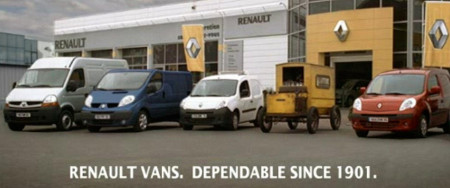
Meet The Laitier (the milkman). Driving a 1901 Renault van, he looks set to do for Renault vans what that loved-up couple did for the Clio.

It’s all part of Renault’s first van television advertising campaign.

Renault The Laitier television ad

The advert is going to be shown on national television later this year – as part of the build up to the launch of the new Renault Master (the current model is visible on the left of the photo).

At present, it’s only viewable online – but I would highly recommend taking yourself to Renault’s van site to have a look. It will be a minute well spent!

Electric Charging for London, Hybrid Trials & More

Fiat van becomes car

Fiat appears to have turned its Fiorino van (aka Citren Nemo, Peugeot Bipper) into a car.

The Fiat Qubo was thoroughly slated by Jeremy Clarkson in The Times last weekend, if you fancy a laugh.

Electric Charging Stations for London?

Also in The Times, news comes of a company that’s planning to setup a network of electric vehicle charging stations across London. Evoasis hopes to have six charging stations setup by the end of next year.

The stations will charge at 440V rather than the domestic norm of 240V, resulting in much faster charging than usual – Evoasis claims that charging could be completed in 20 minutes for suitably adpated vehicles.

Still seems a bit slow compared to filling up with petrol…

Finally, FedEx Hybrid Van Trial Saves 26.5% On Fuel

A six-month trial of 10 diesel-electric hybrid Iveco Daily vans by FedEx has resulted in fuel savings of 26.5% and a reduction in CO2 emissions of 7.5 tonnes when compared to conventional, diesel-only vans.

The vans participating in the trial apparently only did 4,900 miles in six months, so I would hazard a guess that they were being used on urban delivery routes, but the results are impressive nonetheless.

The only thing they don’t tell us is which solution would have cost more (assuming the hybrids were purhcased at market prices).

Today’s Van News In Short

Here’s a selection of interesting links covering UK van industry developments and the future of electric vehicles:

LDV – Should It Be Saved?


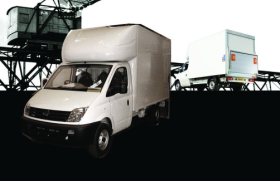
LDV Maxus Luton Van

Although I am sympathetic to the plight of LDV’s 900+ workers and would not wish to see another UK manufacturing business* close, I’m not sure whether LDV really deserves to survive.

The problem is that while LDV has sold quite a few of its Maxus vans, it hasn’t made any money – in fact it has lost money for the last four years.

On top of that, LDV has gone bust numerous times before – hardly an inspiring vote of confidence in its management, engineering ability or product design and marketing.

Finally, from a driver’s point of view, I haven’t heard anything good about the LDV Maxus. Certainly, it is a functional van and can be used to do a job – but by all accounts its durability and general quality is poorer than its main competitors, some of which are also built in the UK (think Ford Transit in Southampton and Vauxhall Vivaro in Luton).

Given all of this, it’s not surprising that LDV’s management is planning to change the business’s direction to focus on the production of a green, electric van. The only problem with this is that as with all other areas of van production, Ford’s Transit is there ahead of them.

All-electric Transit and Transit Connect vans are already available from Smith Electric Vehicles – a British-owned and genuinely profitable company that’s been around for years. From next year, Ford will be selling electric Transit Connect’s under the Ford badge, too, in partnership with SEV.

As if that wasn’t enough competition, Renault is also working hard on electric vehicles through its partnership with Nissan, who in turn have a partnership with NEC, one of the world’s leading battery producers.

Does LDV have any of these advantages? No. Does it have a war chest of money to invest in developing this technology? No. It wants to borrow it from us, the taxpayers. Having failed to make a profit with a simple, conventional vehicle in a time of easy credit, it thinks it can make a profit with a difficult, unconventional vehicle that depends on new, sometimes unproven technology.

I’d rather not subsidise that, thanks.

Note: In an almost tragically pathetic gesture, a demonstration was arranged this week at LDV’s Washwood Heath, Birmingham site to protest at the lack of government support for the company. Just eight people turned up, as reported by the BBC.

*Pedant’s note: LDV’s factory is located in the UK even if it’s owned by the Russian GAZ Group.

LDV In Trouble As Vauxhall Launches Van Cashback Deal

LDV Needs £25m Government Loan To Survive

Today brings news that the mystery automotive factory threatened with closure is in fact the Russian-backed tentative success story that is LDV.

Although its Maxus van appears to have been a success (indeed, LDV has just won an £11m contract to supply Maxus-based vehicles to the Jewson and Graham chains of builders merchants), LDV is in trouble and in need of government support.

According to today’s Guardian, LDV is in need of a £25m loan from the government if it is to survive. Apparently, LDV’s Russian owner, Oleg Deripaska, has been hit hard by the credit crunch and cannot finance the van maker. The short-term, emergency loan is needed to fund a management buy-out of the company, aimed at turning it into Europe’s first green van firm. Not sure what that means.

Update 1830 23/02/09: The government has ruled out a taxpayer-funded rescue for LDV, leaving its future somewhat uncertain and up to 6,000 jobs at risk. The Times has the latest update.

Vauxhall Offers 5% Cashback to New Van Customers

As LDV hits the buffers, Vauxhall has come up with a rather novel way to encourage people to start buying new vans.

The company is offering van buyers who put down a 20% deposit on new vans a cheque back for 5% of the total amount financed (i.e. a maximum of 4% of the purchase price). Although cashback deals aren’t new in the automotive world, the scale of this offer is larger than usual and reflects Vauxhall’s desperate need to start shifting new vans – even if they don’t make much money on them.

In this, however, they are no different to most car manufacturers – who collectively have around 500,000 unsold new vehicles sitting around in Europe at present. At least Vauxhall are trying to do something about it – although I suspect that used vehicles will continue to be more attractive to many buyers, as the UK’s vehicle auctioneers are finding.