Category Archives: Van News

News and articles about UK vans – especially information relevant to the van hire market. Coverage of new van model launches from all the major manufacturers – Ford, Mercedes, Volkswagen, Peugeot, Fiat and Citroen.

New Berlingo / Partner Van On Sale This Year

One of the biggest successes in the light commercial market in recent years has undoubtedly been the Peugeot Partner / Citroen Berlingo.

With combined sales of over 3 million units its compact yet capacious design has had a strong influence on the small van market. PSA Group, manufacturers of Peugeot and Citroen vans (the same vehicles, badged differently) will no doubt be hoping to repeat this success with this year’s launch of the new Berlingo/Partner van.

Slightly larger (when aren’t new models?), the new Berlingo/Partner benefits from a 25kg increase in payload – from its original 600kg – 800kg up to 625kg – 825kg. There are also new safety features and the option of a new fleet management system to allow vehicles’ serviceability and mileage to be remotely monitored.

A right-hand drive version will be available from the summer – expect to see plenty around in company and rental fleets.

Van Emissions Data To Be Made Available

Over the last few years, car users have become used to paying variable rates of road tax and company car tax based on the CO2 (Carbon Dioxide) emissions of their vehicles. Similarly, HGV operators have also become increasingly motivated to buy lower-emission Euro 4 and Euro 5 trucks thanks to tax incentives and other impending legislation.

Vans, on the other hand, have been rather left out of all of this. Emissions data is not yet publicly available for most vans – leaving van operators unable to include environmental considerations in their purchasing choices. This is a growing issue for large fleet operators and it looks like industry pressure may be about to force van manufacturers to cough up the necessary information.

This article on RoadTransport.com discusses the BVRLA’s (British Vehicle Rental & Leasing Association) plans to create and make public a database of van CO2 emissions – the kind of thing that already exists for passenger cars.

From 1st January this year, new vans must have a CO2 rating – but the manufacturers aren’t yet obliged to disclose this. The BVRLA is working hard to overcome the manufacturers’ understandable shyness (would you want to be the first to reveal your figures…) and expects to be able to make a comprehensive van emissions database available on its website later this year.

Watch this space!

Vauxhall Vans Increase Market Share with UK-Built Vans

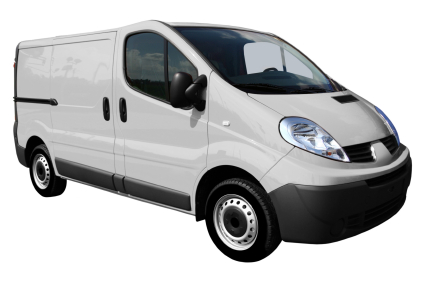
Vauxhall Vivaro, Renault Trafic or Nissan Primastar white panel vanWhile Vauxhall and parent company GM have always had a strong presence in the fleet market – their retail success has been slightly less consistent, at least in the van market.

It seems that the market-leading Vauxhall Vivaro (also Renault Trafic and Nissan Primastar) have put paid to that weakness, however. 2007 saw Vauxhall sell more than 30,000 UK-built vans to British buyers – of which more than 18,000 were Luton-made Vivaros.

Vauxhall’s overall share of the van market was up 1.1% to 15.7%, with its share of the retail market reached 12.2% – translating to an impressive 13,323 vans sold to non-fleet buyers – typically small businesses and tradesmen.

2007 saw Vauxhall’s 500,000th Vivaro roll off their Luton production line and the company remains the UK’s largest producer of commercial vehicles, producing more than 100,000 light commerical vehicles in the UK every year.

A Van Load of Awards for the Usual Suspects

ACFO Fleet Awards

Despite the competitiveness of the van industry, some names always seem to come out on top. Take Ford’s Transit, for example – top-selling used van, popular new buy and now winner of the prestigious ACFO fleet operators “Fleet Panel Van of the Year” award.

The Ford Transit Connect scooped the ACFO “Fleet Light Van of the Year” award, making it a well-deserved double haul for Ford.

What Van? Awards

At the recent What Van? awards, the several class-leading vans received their just desserts, too.

The all-new Citroen Dispatch won the What Van? “Small Panel Van of the Year” award and Citroen also bagged a second award for their Ready to Run range.

The Ready to Run range allows van operators to purchase converted and special-purpose vans directly from Citroen – and includes popular choices such as 3.5t tippers, dropsides, car transporters and Lutons.

Other winners included Vauxhall’s new Corsa Van – the What Van? “Small Van of the Year” and Iveco’s Daily, with “Van of the Year”, for the second time in the last three years.

Electric Vans Hit The Roads In Our Cities

Recent months have seen a number of UK companies putting all-electric vans and 7.5t trucks into operation on urban duties.Ford Transit SWB Van

The most popular choice at present seems to be the Smith Electric Vehicles Edison – a Ford Transit converted to all-electric operation. The Edison provides an impressive 150 miles range and maintains a 1,500kg payload with a gross vehicle weight of under 3.5t – making it exempt from the London Congestion Charge.

The Edison has a restricted top speed of 50mph – presumably to avoid the batteries being drained too quickly by excessive speed – which should be more than adequate for any urban deliveries.

Customers so far include A Plant – a London-based plant hire firm, as well as household names like Sainsbury Online, TNT Express and Scottish & Southern Energy, who is adding the Edison to its 6,000 strong commercial vehicle fleet.

An alternative electric-powered option has also been produced by UK company Modec, who have developed an all-new electric van design providing a payload of up to 2,000kg. The Modec van has already been adopted by equipment hire firm Speedy Hire for London use – and it seems certain that other companies with intensive urban operations will follow suit.

I can’t see many of these all-electric vans making their way into rental fleets; their limited range and speed mean that they are only really suitable for dedicated urban use at present. However, the rapidly-growing popularity of electric power just goes to support the case for hybrid power – surely the best of both worlds?

10 Million Volkswagen Transporters – One Legend

Vans don’t come up much cooler than the VW Transporter. For almost 60 years, VWVolkswagen Transporter Campervan Transporters have been rolling out of Volkswagen plants in Europe and South America – 10 million of them, to be exact.

That’s right – Volkswagen’s 10,000,000th Transporter van rolled off the production lines earlier this year.

To mark the occasion, Volkswagen Commercial Vehicles has launched a special advertising campaign featuring the headline “10 Million Transporter Drivers Can’t Be Wrong”.

Earlier this year, the 60th anniversary of the creation of the Transporter model was celebrated at a festival-style gathering in Hanover, Germany. More than 71,000 visitors and 5,000 Transporter vans gathered to celebrate this anniversary and watch The Who play live.

Most Van Drivers Speeding Without Realising It

It’s always been possible to drive vans under 3.5t on a standard car license – and consequently many van drivers assume that the same rules and speed limits apply to them as when they are driving a car.

Unfortunately, that’s not true.

Car speed limits only apply to vans of under 2 tonnes maximum laden weight – meaning that any Transit-sized van is excluded.

Instead, a seperate set of speed limits apply; for vehicles with a maximum laden weight between 2 tonnes and 7.5 tonnes (all Transits, Sprinters, etc.).

Here are the speed limits that apply to Transits and similar vans:

Single Carriageways: 50mph

Dual Carriageways: 60mph

Motorways: 70mph

The fact that a great many van drivers either ignore or don’t know about these limits doesn’t count for anything, unfortunately. Here’s what Sergeant Spence of North Yorkshire police had to say about van speed limits in a recent interview with the Bradford Telegraph & Argus:

“However, we have found that a great many van drivers wrongly presume the speed limits for a van are the same as for a car.

“This simply is not a plausible excuse.”

In other words, ignorance is no excuse and they will ticket you anyway…

Don’t say I didn’t warn you. (See the Highway Code for more details)

More Automatic Gearboxes for Vans

Update: Just to prove that I’m not making up stories about the growing popularity of automated manual transmission, here’s a link to a recent article from the RoadTransport.com website.

Iveco are reporting steady growth in sales of ‘two-pedal’ vans – those with automatic transmission. I must confess to feeling especially smug that Iveco’s UK marketing director Andrea Bucci shares my expectation that automatic gearboxes will become the norm in 10 years.

I recently mentioned that the new Citroen Nemo / Peugeot Bipper van will come with the option of automated manual transmission (AMT). This is basically a manual gearbox that operates automatically – just stick it in drive and go.

AMT is fast becoming the standard choice in larger commercial vehicles and combines most of the benefits of manual and traditional automatic gearboxes without really having any of their weaknesses.

Such is its rapid growth in popularity that eager not to be left behind, Vauxhall have now announced that they are making an AMT gearbox available on the Vauxhall Combo and Vauxhall Vivaro vans – two of their biggest sellers.

You can see more details here, but I have little doubt that this will become the standard technology in pretty much all vehicles over the next 5-10 years (including cars)

He’s Not Heavy, He’s My Brother – A Guide to Overloading

Recent changes in the legislation governing the use and speed restrictions of 7.5t lorries have meant that many operators are downsizing to 3.5t vans – still blessedly tacho and speed limiter free.

This is especially true of companies whose workers simply use the vehicles to transport their own equipment, not for commercial transport.

The problem is that a growing number of 3.5 tonne vans are being overloaded by their drivers and operators – whether knowingly or unknowingly. 55% of vans stopped by VOSA in 2006/7 were overloaded (obviously a skewed statistic because some would have been chosen to be stopped because they looked overloaded). All the same, that figure is up from only 38.7% in 2005/6 and 30% the year before.

Overloading carries a fine of up to £5,000 – ouch – so what do you need to know to avoid it?

Why’s It Happening?

It’s easy to see how this can happen – vans used as mobile workshops, sheds and storage facilities gradually get heavier – and then you have to add perhaps 200kg for 2/3 people and their ‘stuff’, as well. Unfamiliar loads can be heavier than they look, and so it goes…

3.5t vans keep on getting bigger, too. Transit Jumbos and XLWB Sprinters are positively cavernous inside – and try telling the boss you can only use half that space because his stuff all weighs too much.

Our ‘What Size Van‘ page includes typical approximate payloads for all the most common types of vans, but what else do you need to know?

How Do I Know the Maximum Load Weight I Can Carry?

All goods vehicles should have a ‘plating certificate’ issued by the manufacturer on vans and the Department for Transport on heavier vehicles. It’s a metal plate fastened in the cab somewhere, often around the door wells – in my Transit, it’s on the passenger side below the seat.

This states the legal ‘Maximum Authorised Mass’ for the vehicle – also known as the maximum gross weight or something similar. Problem is, it won’t tell you the unladen weight – so how does it help?

If you think there’s a risk that you may be overloaded, the thing to do is to find out the ‘Tare’ – or empty – weight of your van.

If You Carry Different or Unpredictable Loads

If you carry varying loads, that means taking it to a weighbridge and having it weighed with you, a full tank of fuel and your standard (always with you) tools or equipment but with no load.

Take the weighbridge weight and subtract it from the MAM (maximum authorised mass) for the vehicle. That will give you the maximum load weight you can legally carry.

Now you just need to find a way of knowing how much all the stuff you need to carry actually weighs – easier said than done, sometimes.

If You Always Carry the Same Load

If you always have the same set of equipment/load in your van, take it to a weighbridge fully-loaded (including people and packed lunches) and see what it weighs. If it’s more than your maximum plated weight (MAM) – you need to shed a few pounds, somehow, before VOSA do it for you.

See here and here for two useful guides on commercial vehicle weights (although they are biased a bit towards lorries). If in doubt, check your information with VOSA or on the government’s Transport Office website.

New Van Double Act From Peugeot-Citroen

Peugeot and Citroen are both part of the PSA automotive group – hence why almost all of their vans are produced in two versions, one featuring the Peugeot badge and one the Citroen.

Regardless of this, the company has produced some great vans in recent years – most notably the three-million selling Berlingo / Partner small panel van.

Now there is a new kid on the block – the Peugeot Bipper and Citroen Nemo.

Aimed firmly at the European small van market, the Bipper and Nemo offer great economy – with a choice of 1.4L petrol or 1.4L HDi diesel engines – and a convenient 600kg payload. The van has an impressive 18,000 mile service interval – meaning most rental companies will never have to service them!

The load area is a generous (for the van’s size) 1.5m long, 1.18m high and 1.05m wide between the wheel arches, and the front passenger seat can be folded into the floor to increase the load length to almost 2.5m.

On the outside, the van is usefully small – at just 3.75m long and 1.68m wide, it’s ideal for town work. High barriers won’t be a problem, either – even with the roof rails fitted, the Bipper / Nemo is still only 1.78m high.

The van features an optional automated manual gearbox – a fitting fast becoming standard on larger commercial vehicles and one which makes the driver’s life much easier, especially around town. Get ready to see a lot more of these over the next few years – the advantages of full manual gearboxes are rapidly disappearing!

The Bipper / Nemo looks like it should be a suitable addition to the hire fleets of most van hire companies – although small, it’s ideal for urban work and should be economical and straightforward to operate. I also expect it to be very popular – perhaps replacing the extremely small Corsa-sized vans for some operators.

P.S. I should of course have mentioned that most PSA vans are also produced badged as Fiats. That’s certainly true with the Bipper/Nemo – Fiat will be resurrecting the Fiorino name with its own version of this new van.