Van Sales Down 16.4% in January 2012

Van sales in January 2012 were 16.4% lower than in January 2011.

The year has got off to a fairly limp start for van manufacturers, according to the Society of Motor Manufacturers and Traders (SMMT), with new van registrations in January totalling just 14,338 – down 16.5% on January 2011 and substantially below the SMMT forecast of 17,000.
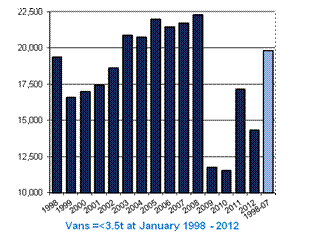
SMMT Jan 2012 Van new registration figures (courtesy of SMMT)

New van registration figures Jan 2012 (courtesy of SMMT)

Despite this poor start, Paul Everitt, SMMT Chief Executive, expects things to improve, saying today:

“Over the course of 2012 SMMT expects the CV market to be steady, ending the year marginally up on 2011.”

Van sales are still up by 12.6% on a rolling year basis, with last year’s strong sales more than compensating for January’s disappointing results.

The graph to the right illustrates the changing levels of new van registrations since the late 1990s. Last year’s levels were a substantial improvement on 2010 but were still much lower than the levels seen in 2008, before the recession bit.

Although this might seem obvious, it is a marked contrast to levels of new truck registrations, which have recovered much more strongly.

Truckin’ Demand Is High

January’s fall in new van registrations was not reflected in new registrations for goods vehicles over 3.5t. In this sector, sales continued the trend seen in the final quarter of 2011 and rose strongly, rising 45.4% on January 2011.

While 3-axle artic registrations were up by 15.2%, the biggest gains were in the 6t+ rigid sector. Registrations of 6t-16t rigids were up 110% on January 2011 and 16t+ rigids were up 108%.

Rigids in the 3.5t-6t category only showed an increase of 19% – unsurprising, as operators of this class of vehicle are increasingly moving to larger trucks or large vans instead, depending on their requirements.

These trends are reflected in the rolling year registration figures, too. New registrations of <6t rigids have fallen by 18.3% over the last year, while registrations of larger rigids (>6t) and large vans (<3.5t) have risen by between 12% and 32%.
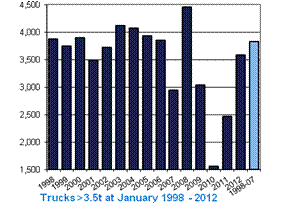
Jan 2012 truck registration figures (courtesy of SMMT)

Jan 2012 truck registration figures (courtesy of SMMT)

This problem is that small rigids (<6t) are no longer as attractive as they used to be. The combination of speed limiters, tachograph restrictions, higher purchase and running costs and relatively low payload means that a modern 3.5t box van can often be a more suitable alternative for light work, while a >6t rigid with a substantial payload makes more sense for heavier work.

However, to my mind, the most interesting thing about the truck sector is that registration levels have recovered much more strongly than van registrations (see graph).

The only conclusion I can draw from this is that the UK’s haulage requirements are fundamentally linked to the basic needs of businesses and individuals – and that these recover quickly after a recession.

Conversely, van demand is linked much more closely to discretionary expenditure; an area that is still suffering badly as unemployment rises and average incomes fall in real terms. Even the new London LEZ rules have not caused the expected surge in new registrations.

What do you think? Does your business operate vans? Is it extending replacement intervals or even choosing to rent vans instead in order to meet unstable demand?


Mercedes To Enter Small Van Market With Citan

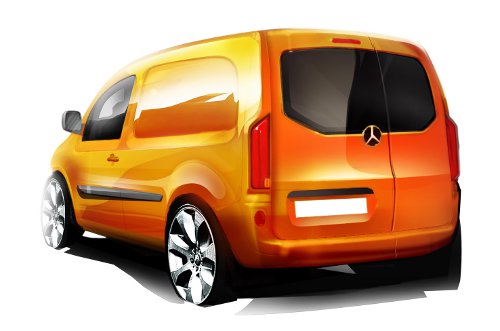
Mercedes Citan small van - artist's impression

Update 08/02/2012: A teaser video of the Citan has been published by VansA2Z – scroll to the bottom to see this. It seems that the Citan will be a rebadged Fiat Doblo/Vauxhall Combo, but with extensive modifications and Merc quality control.

The small van market is an important and lucrative one for van manufacturers – Peugeot, Citroen, Fiat, Ford, Volkswagen and Vauxhall all fight hard for their share.

They will have to fight a bit harder from this autumn, as Mercedes-Benz has announced that it will be joining the fray with its first ever small van, the Citan – a slightly odd combination of the words ‘city’ and ‘titan’.

Still, if the Vito and Sprinter are anything to go by, the Citan will be very good and very desirable, from a driver’s point of view. Firmly aimed at the urban delivery market, it will offer a range of petrol and diesel engines, including the option of Mercedes’ Blue Efficiency low emission package. An all-electric version is also in the pipeline.

Mercedes’ larger commercial vehicles have enviable safety credentials and the Citan should be no different, with ESP standard on all models. The Citan will be available in multiple lengths and weights, and panel van, crewbus and Mixto (crew cab?) variants will be on offer. It should be an interesting addition to a competitive sector.

The Citan will first be shown to the general public in September 2012, at the IAA Commercial Vehicles Show in Hannover and will be launched sometime in the autumn of 2012. 

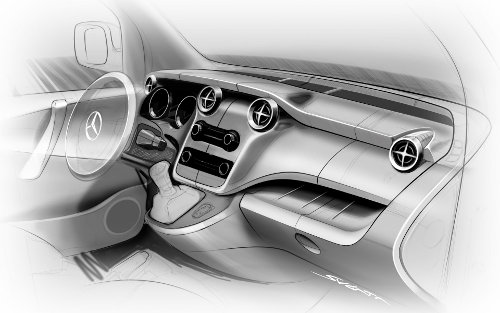
Here are some pictures of what the van will look like:

Mercedes Citan small van - artist's impressionMercedes Citan - rearMercedes Citan - Interior

Peugeot & Citroen Update Van Ranges for 2012

Peugeot and Citroëns’ core van ranges are the same, with each model rebadged and sometimes given a different engine. This is perfectly logical – both Peugeot and Citroën are part of PSA, Europe’s second-largest vehicle maker (after VAG – Volkswagen Audi Group). Peugeot also offers the car-derived 207 van, but this is being discontinued shortly.

Given this closeness, it is no surprise that both manufacturers have announced 2012 updates to some of their van models on the same day.

Peugeot: Updates Partner and Expert Vans for 2012

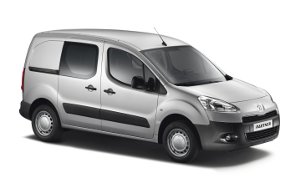
Peugeot Partner van 2012 model update

The Partner is also available in a crew cab model, with a second row of seats

The Peugeot Partner and Expert are both popular models with small businesses and tradesmen, offering useful capacity combined with compact dimensions and car-like driveability.

Both models are being updated for 2012 with a subtle front-end facelift, but the most significant changes are under the bonnet. The Partner now gets Euro 5 engines and e-HDi, Peugeot’s Stop & Start system.

The lowest emission Partner model now has CO2 emissions of just 123g/km, which Peugeot claims is the best in its class.

The larger Peugeot Expert is also getting an updated Euro 5 engine range with CO2 emissions for van models now starting at 168g/km and the range-topping 165bhp 2.0HDi engine now offering buyers the chance to specify Peugeot’s six speed automatic gearbox.

Citroën: 2012 Updates to Berlingo and Dispatch Models

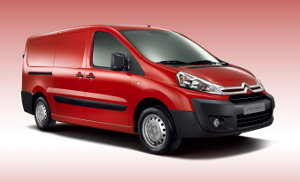
Citroen Dispatch 2012 model update

Citroen Dispatch

Citroën has confirmed that its venerable but much-loved Berlingo First van (based on the first generation Berlingo) has now been withdrawn from the UK market.

The original Berlingo went on sale in 1996 and has sold 140,000 units in the UK alone. Its combination of compact practicality and reliability has won it a lot of fans over the years, but I suspect it diverts sales from Citroën’s current Nemo and Berlingo models – and its Euro 4 engines have had their day.

The current Berlingo launched in 2008 and has received a package of updates for 2012. Like its sibling the Peugeot Partner, it has an updated front end with lights, grill and bumper all getting freshened up.

Inside, the upholstery has been replaced with Citroën’s new ‘Gazyban’ (grey) trim. The Extenso, folding 2-person passenger seat remains standard fitment on LX and Enterprise models – this does give the vehicle useful flexibility, even if you would not want to travel too far with two passengers.

Under the bonnet, the changes are as you would expect. Euro 5 engines with reduced CO2 emissions and the option of Citroën’s Airdream regenerative stop-start system, which I mentioned recently. CO2 emissions now start from 123g/km for the range-topping HDi 90 Airdream model with optional automated six-speed gearbox. Operators choosing the basic HDi 75 model will have to be content with a manual gearbox and slightly higher CO2 emissions of 133g/km.

A petrol model continues to be available; in this case the VTi 95, which comes with a manual gearbox and 164g/km of CO2 emissions. I am a big fan of maintaining the option of petrol engines in small vans, but it does seem to be a dying trend.

The larger Citroën Dispatch is the sibling to the Peugeot Expert and offers a driving position and level of comfort that is not far off that of a large people carrier, combined with a choice of two load lengths and two roof heights, that provide up to 7m³ of loadspace.

For 2012, the Dispatch gets updated front lights, bumper and grill and additional aerodynamic panels under the body, which are aimed at reducing CO2 emissions. These are down from 182g/km  to 177g/km for the HDi 90 and from 179g/km to 168g/km for the HDi 125 with six-speed manual gearbox. Citroën’s Grip Control traction control system is available for the first time on a van, as well as the option of hill-start assist and a speed limiter.

When Are They All On Sale?

All of the models mentioned in this article are due to go on sale from the beginning of April 2012 – further specification details and pricing will be confirmed by Peugeot and Citroën nearer the time.

Fiat Doblo Gets Unlimited Mileage Warranty Offer

Fiat Doblo CargoFiat Professional (Fiat’s commercial vehicle division) has launched a special warranty offer on the Doblò Cargo and Doblò Combi vans. Business customers buying one of these models before 31st March 2012 will get a 3 year, unlimited mileage warranty – up from 120,000 miles.
The rest of the warranty remains unchanged and includes 3 years’ AA Assurance cover, which comprises Roadside Assistance, Home Start, Relay, Relay Plus & European cover.

Although not all business users will do the 40,000+ miles a year needed to benefit from this offer, it is an impressive statement of Fiat’s confidence in the Doblò, which is a popular model.

The Doblò has previously been chosen as International Van of the Year and Fleet Van of the Year, and is currently the What Van? Light Van of the Year for the second consecutive year. Available with a choice of five low emissions, Euro 4 and 5-specification engines, the new Doblò comes in eight different versions – Cargo, Cargo Maxi, Cargo SX, Cargo Maxi SX, Combi, Combi Maxi, Platform Cab and Work Up – offering something for a wide spectrum of van users.

The engine line-up comprises a 1.4-litre 16v 95bhp petrol unit and four MultiJet 16v diesels – 1.3 (90bhp), 1.6 (105bhp), 1.6 MTA (90bhp) and 2.0 (135bhp). A petrol engine choice is increasingly unusual on vans and provides a welcome DPF-free alternative for operators whose work will keep their vans on short urban routes. Prices start at £11,695 (basic price) for the Doblò Cargo 1.4 16v Petrol Euro 4, or £12,515 for the Euro 5 version.

Start&Stop – which stops the engine automatically whenever traffic conditions bring the van to a complete halt, and restarts it when the driver wants to move off again – is fitted on all Euro 5 versions to give up to 15 per cent fuel savings, and the vehicles offer a low CO2 figure from just 126g/km.

To find out more, visit www.fiatprofessional.co.uk.

Van Tyre News: Avon, Yokohama & Continental

Tyre manufacturers Avon and Yokohama have both announced new additions to their ranges of van tyres.

Avon AV11: Designed for Hard Knocks

Van tyres often have a hard life – routinely being kerbed and heavily loaded over high mileages. Avon’s new AV11 tyre appears to be a beefed-up alternative to its AV9 van tyre that has been specially designed for heavy use. It has reinforced sidewalls and a stronger carcass to reduce the chance of accidental damage.

According to Nigel Hampson, Sales Director of Cooper Tire Europe: “The AV11 will stand up to relatively harsh treatment”.

Although the AV11 is a summer tyre, it has been designed to provide good water dispersal and should work well in most conditions.

Yokohama: 3 Tyres For Any Conditions

Yokohama now offers four tyres for vans and other light commercial vehicles. Between them, they cover virtually all weather conditions and usage scenarios.

  • RY818: This is a summer tyre designed with urban delivery work in mind. It is designed to endure regular kerb abuse and to provide a stable platform with good water dispersal characteristics.
  • Y354: This is an all-season tyre: these are not popular or widely available in the UK, but I am a big fan and believe they are very suitable for most UK conditions – far more so than a winter/summer tyre combo for most drivers. In this case, Yokohama has designed them with distance work in mind. These tyres should work well in all weather conditions and should mean that driver can cope with moderate snow and ice without needing to think about winter tyres. They have snowflake and M+S markings.
  • WY01: The WY01 is a winter tyre and will provide optimum performance in all conditions when the temperature is below 7°C. I think a full winter tyre is overkill in most parts of the UK, but operators in Scotland or rural areas of the Midlands and Northern England might well benefit from the superior grip of a full winter tyre.
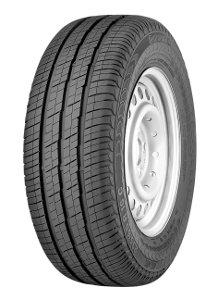
Continental Vanco 2 van tyre

Continental Vanco 2 tyre

Continental Tyres OE Fitment on 1/3 European Vans

Continental tyres are an original equipment fitment on one third of European-manufactured vans. The Continental range includes the following tyres:

  • VanEco – designed with low rolling resistance in mind for improved fuel efficiency
  • Vanco 2 – designed to provide a durable tyre for heavier vans
  • VancoContact 2 – a van tyre for small and car-derived vans
  • VancoWinter 2 – A winter tyre for vans
  • VancoWinterContact – a winter tyre for car-derived and small vans
Continental tyres are certainly amongst the best on the market in all categories and it’s no surprise so many European manufacturers choose them as OE fitment. I have Vancos on my van and they have lasted remarkably well – a little better than the other premium make which I have also used on the same van.

Volkswagen Transporter Is Used Van Of The Year 2011

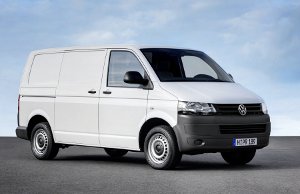
Volkswagen Transporter T5Volkswagen’s evergreen Transporter panel van has been chosen as Used Van of the Year 2011 by vehicle pricing specialists CAP.
The CAP awards looked at a three year old, 60,000 mile model of all current vans and chose a winner in each category of van before going on to choose an overall winner – the VW Transporter. The judging criteria were:

  • Value retained vs. cost new compared with peer group
  • Model range coverage
  • Options availability
  • Perceived reliability/cost of ownership
  • Image & brand perception
  • Dealer network professionalism and support

The winners in each category included some of my firm favourites – not least the Ford Transit, which has now been setting the standard for medium and large vans for more than 40 years.

Here are the category winners and the judges’ comments about each model. It’s interesting to note that only two van manufacturers are represented, Ford and VW (excluding the pick-up, which isn’t a van):

  • Best hatchback van – Ford Fiesta: “In its 5th generation and still a class leader in all respects.”
  • Small van – Volkswagen Caddy C20: “Brought new levels of quality to its sector and depreciation is among the lowest.”
  • Medium van – Volkswagen Transporter T5: “Just ‘right’ in every way.”
  • Large van – Ford Transit 330-350: “Ubiquitous and drives improvement across the whole market by setting the standard for others to aim for.”
  • Lifestyle pick-up – Toyota HiLux: “Great image and reputation for durability.”
  • Minibus – Ford Transit: “Enviable heritage and trust – the name says it all.”

Hopefully the Fiesta van will be with us for a few more years – as I reported recently, car-derived vans are a dying breed.

What’s your first choice for a used van? Does the premium style, finish and perceived quality of the Transporter float your boat, or do you prefer the straightforward practicality and greater flexibility of the Ford Transit? Leave a comment and let me know.

New P&O Dover-Calais Ferry Arrives In Dover

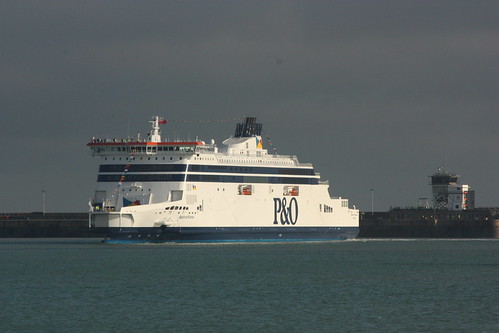
P&O’s second new ferry for the Dover-Calais route, the Spirit of France, has arrived in Dover. The Spirit of France is an identical sister ship to the Sprirt of Britain, which entered service in January 2011.

Spirit of France first arrival at Dover

Picture courtesy of Canterbury Chris / Flickr

The two new ferries, which cost €180m each, are the largest ever built for operation in the Dover Straits and provide nearly double the capacity of the ships they replace, the Pride of Dover and the Pride of Calais.

The Spirit of France can carry up to 180 lorries and 195 cars, plus 1,750 passengers. It has a whopping 3,746m of vehicle lanes – if loaded only with cars, it could carry more than 1,000, as opposed to 650 on the current ferries. P&O plans to keep the two new ferries in service on this route for the next 25 years, mirroring the successful careers of the two Pride ships.

The Spirit of France is expected to enter service in mid-February – apparently, the first available booking date is currently on the 1520 sailing on 9th February 2012.

Euro 5 Diesel Particulate Filters Pose Risk For Van Owners

If you are a self-employed tradesman, own a used van and only travel a few urban miles to work each day, then your van could be heading for an expensive problem – if it’s a Euro 5 model.

There are not many Euro 5 vans on the secondhand market yet, so this will be more of a problem in the next 2-4 years than it is at present.

Let me explain: To achieve Euro 5 emissions standards with diesel engines, van (and car) manufacturers use something called a Diesel Particulate Filter (DPF). Without getting into too much detail, these clog up if they are only used for short, low-speed journeys.

They need to be ‘regenerated’ from time to time, and this can only happen through sustained, high speed driving, when the DPF gets hot enough to work properly. In large conurbations like London, this can be awkward to do.

The problem, as many car owners have already discovered, is that if you only use your DPF-fitted diesel vehicle in town, it will never regenerate. If you ignore the warning light on the dashboard and keep on using it, the filter will eventually clog beyond all help and you will need an expensive replacement filter.

The solution for car owners is to buy a petrol-engined car, if your usage is primarily short, low-speed journeys. Petrols warm up faster anyway and are a more suitable choice for this type of usage.

However, van buyers don’t currently have this choice – apart from a few small models, it is diesel or nothing. This means that anyone buying a used, Euro 5 van should consider how it has been used, look for a good service history and remember that they themselves will need to give it a good run out of town occasionally to keep the DPF in good order.

Although the problem could affect the new owners of the van, it is more likely to affect second or third owners, as John Watts of CAP explains:

“This problem will mostly emerge in low speed, short distance operating cycles, typically undertaken in large conurbations. This type of operating environment could become even more of a problem for future owners since operational radius tends to reduce in the secondary market.

“A typical example could be a city-based self-employed used van owner who travels less than ten miles to site from home and stays all day. A continuous operation of this nature could result in a blocked filter and a potential replacement cost.”

Most manufacturers do provide guidelines indicating how the van should be used periodically to prevent the filter blocking, but such manuals are often missing from older secondary market vans.

CAP believes that widespread DPF blockage problems could affect used van prices but that dealers are already aware of the risks. CAP’s Watts said:

“If problems occur, how many will take their vehicles back to the supplier, expecting them to carry out repairs under warranty? Following on from that, how will the trade view vehicle values in the light of potential problems of this nature?

“CAP’s view is that the used vehicle trade need to be aware of the potential problem and ensure that vehicle documentation is complete, especially where a filter has already been replaced. Used van buyers in turn must be aware of the need for a functioning particulate filter for Euro 5 compliance and that problems may not be routinely covered under warranty.”

DPF blockage problems have already become commonplace with cars – many new van users use their vans enough to avoid this issue but it seems certain to rear its head eventually, especially in large cities.

Toyota Abandoning UK LCV Market?

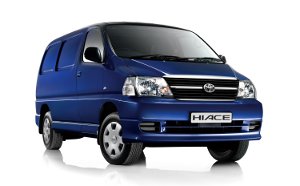
Toyota Hiace

Toyota Hiace panel van - discontinued in the UK from 2012

As I reported in September, Toyota dropped the Hiace panel van from its range at the end of 2011.

The decision was due to a lack of Euro 5 engines, but given that Toyota has plenty of Euro 5 diesels in other vehicles, this decision makes you wonder if the real reason was its failure to compete with vans like the VW Transporter.

Although the Hiace benefits from Toyota’s usual excellent engineering and build quality, the cab lacks the car-like sophistication of the Transporter and even the latest Transit, and it has never been a big seller in the UK market.

Toyota has also announced that it is reducing the range of Dyna models available in the UK in 2012.

Toyota Dyna with factory tipper body

Toyota Dyna - this factory fit tipper body will not longer be available in the UK in 2012

The Dyna is a chassis cab based light truck: although its only available with gross weights from 3.0t – 3.5t, it is built like a small lorry, rather than a large van. This makes is rugged and ideal for demanding applications, such as waste collection and construction use.

Toyota is dropping the short wheelbase variant of the Dyna from its UK model range – only medium and long wheelbase models will be available and only one ready-bodied conversion will be offered; a long wheelbase dropside.

Toyota’s primary focus seems to be its popular Hilux 4×4 pick-up. The company has launched an updated model for 2012; an all-new model is expected in 2013/4.

Vauxhall Tops UK Van Production League

Vauxhall Vivaro at Vauxhall's Luton factoryVauxhall produces more vans in the UK than any other manufacturer, making 60% of the commercial vehicles which are built in the UK.

The vast majority of these (57%) are Vauxhall Vivaro vans, which are built at the company’s Luton plant. The remainder of Vauxhall’s UK van production takes place at its Ellesmere Port plant (near Liverpool), where Astravans are built on the Astra production line.

In 2011, 64% of UK-built Vivaros were exported to Europe, highlighting the fact that despite public perception, Britain has a thriving motor industry that exports a substantial number of vehicles every year.

Ford is probably the next largest producer of light commercial vehicles in the UK, with many Transit models continuing to be made at its Southampton plant, despite the fact that some Transit models are now made in Turkey. Both Transit and Vivaro have always been popular choices with van hire companies and this trend looks set to continue, with the latest Transit update receiving excellent reviews and a new model Vivaro due to go into production in less than two years.