
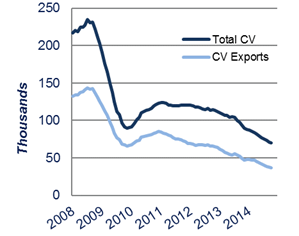
That lost production ain’t never coming back: UK commercial vehicle manufacturing, rolling year total 2008 – 2014 (courtesy of SMMT)
UK commercial vehicle production fell by 31% in September, and by 23% during the first six months of 2014.In that context, October’s 8.9% decline looks pretty encouraging — especially as it masks a 14.6% increase in production for the UK market, compared to the same period last year.
The reason total production declined is that export demand, primarily to the EU, remains weak, and fell by 30.6% last month, taking the year-to-date decline in export production to 27.9%.
The enfeebled state of the eurozone economy is no surprise: it is reassuring, however, to see that UK demand for home-produced vehicles may be picking up. The SMMT figures don’t provide a breakdown, but I’m fairly sure that a significant part of last months’ climb — if not all of it — was due to the introduction of the new Vauxhall Vivaro, which is built at GM’s Luton plant.
This would also explain why the increase wasn’t mirrored in export figures: the Renault Trafic, for example (the same vehicle, badge engineered) is built in one of Renault’s plants in France, and will be the default choice for many French and Iberian buyers.
Here’s how last months’ figures look:
| CV manufacturing | Oct-13 | Oct-14 | % Change | YTD-13 | YTD-14 | % Change |
| Total | 7,939 | 7,235 | -8.9% | 75,826 | 57,981 | -23.5% |
| Home | 3,816 | 4,372 | 14.6% | 35,416 | 28,846 | -18.6% |
| Export | 4,123 | 2,863 | -30.6% | 40,410 | 29,135 | -27.9% |
| % export | 51.9% | 39.6% | 53.3% | 50.2% |
Data courtesy of SMMT (www.smmt.co.uk)
Commenting on the figures, Mike Hawes, SMMT chief executive, said that EU demand remained uncertain, but that UK demand was now expected to stabilise:
“The heavy fall seen in UK commercial vehicle manufacturing over the past year is now levelling off as the effects of last year’s restructuring only apply to year-to-date figures. With new models now being produced in UK plants, production for the home market grew for the first time since June 2013. It remains to be seen if the recent growth in EU demand will continue, but the indications are of greater stability in the months to come.”
There’s a lot of media focus on how UK car production has risen to record levels in recent years, and that’s certainly good news. However, what seems to be less well understood is the catastrophic decline in UK CV production since 2008. Output has fallen from a peak of about 230,000 per year to around 75,000 per year — a 67% decline! In fact, SMMT has stopped including rolling 12-month figures in its monthly updates (e.g. the table above), presumably because they are so depressing.
If you don’t believe me, just take a look at the graph at the top of this article.

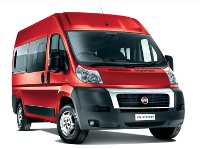 Of course, an 8-seater is a relatively small minibus, as a minibus is defined as a vehicle with between 8 and 16 passenger seats. At the larger end of the scale, 12, 15 and 17-seater minibuses (including the driver in this seat count) are definitely more van-like, but are still far easier to drive than many hire customers expect.
 Citroën has announced that subtle modifications to the Berlingo will increase the popular small van’s fuel efficiency, with the changes taking place from November production onwards.
 Used van buyers just can’t get enough decent quality vans to meet demand — that’s the conclusion of Manheim’s head of LCV, Matthew Davock, who says:
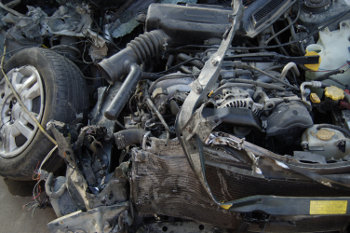 Fifty years ago, the government launched the UK’s first ever anti-drink drive campaign.
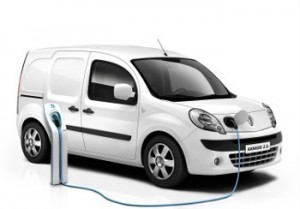 Renault has been one of the most enthusiastic advocates of electric power in the European car and van market, and as you’d expect, the organs of French government have backed this — in this case through France’s state-owned postal service, La Poste, which operates nearly 25,000 means of electric transport out of a total fleet of 69,000 vehicles.