
Author Archives: Van Rental

All-new Vauxhall Vivaro — first interior pictures

Vauxhall has released more pictures of its all-new Vivaro model, which will be launched in the UK later this year. The van’s lines are very similar to the old model, but with an updated front end that brings the same style seen on the Insignia car to the Vivaro, plus an updated and equally car-like interior.

You can see the previous pictures I published by clicking here, but here are a few more detailed images that have been released by Vauxhall today:

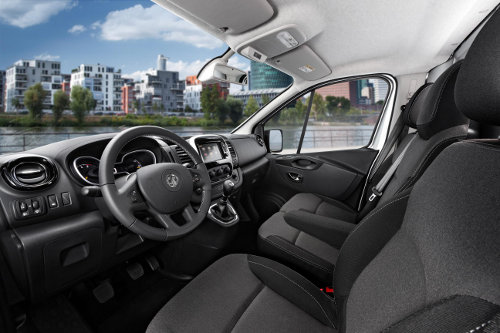
New Vauxhall Vivaro interior

The interior of the new Vauxhall Vivaro is a more car-like and sophisticated evolution of the current model’s interior.

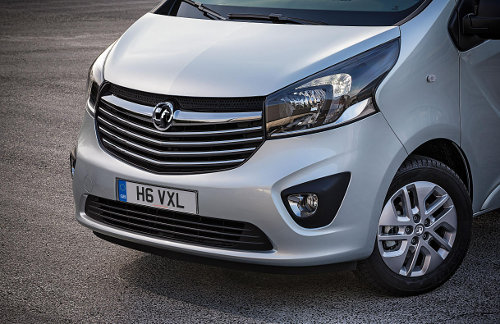
Front end of new Vauxhall Vivaro

The front end of the new Vauxhall Vivaro appears to be derived from the front end of the Insignia car, and suggest that Vauxhall is echoing Ford’s approach in creating a front-end style that’s consistent and recognisable across all of its vehicles.


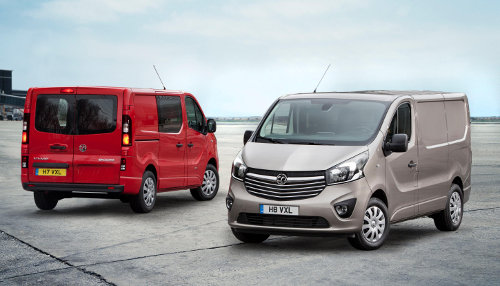
New Vauxhall Vivaro front and rear views

Front and rear views of the new Vivaro.

Peterborough van hire: Rent Direct

Rent Direct logoI’m very pleased to welcome our newest advertiser, Rent Direct, to vanrental.co.uk.

Rent Direct is an independent local car and van hire company with branches in Peterborough and Cambridge. Established for more than 10 years, the firm has a strong local customer base and prides itself on providing excellent customer service and competitive prices.

The firm’s rental rates are published clearly on their website and discounted rates are available for hire periods of 3 days or more, and for customers who choose to pay at the time of booking, rather than on collection.

Rent Direct’s experienced staff are always happy to help you choose the right-sized van for your requirements, and the firm also published an online guide to van sizes and payloads for visitors to its website. The company’s van rental fleet includes the following types of van:

  • Small van (e.g. Volkswagen Caddy)
  • Short wheelbase panel van (e.g. Ford Transit SWB)
  • Long wheelbase panel van (e.g. Ford Transit LWB)
  • Extra-long wheelbase panel van (e.g. Mercedes-Benz Sprinter XLWB)
  • Luton box van with tail lift (ideal for removals)

For more details or to make a booking or get a quotation, contact Rent Direct:

Practical Car & Van Rental adds telematics to hire fleet

In-Car Cleverness logoPractical Car & Van Rental has partnered with vehicle-to-business technology provider, In-Car Cleverness (ICC) to make ICC’s advanced, feature-rich product available to Practical’s 130 franchisees, who collectively operate around 7,000 cars and vans in the UK.

Developed over 250 million miles of real-world testing and designed to be offered as an entirely scalable telematics solution, the In-Car Cleverness platform allows users to personalise the easy-to-use dashboard interface, tailor the data interrogated and define how it is analysed.

As well as analysing driver behaviour during rentals, customers will benefit from asset protection in terms of tracing fleet vehicles, advanced remote vehicle fault alerts, totally accurate mileage recording and a cutting-edge incident reconstruction system.

Practical Managing Director, Graham Lond, said:

“We feel the adoption of this solution by the network can only add value to our business model, will undoubtedly result in cost savings due to better vehicle management and protection and will give us more ammunition to keep insurance costs at a low level.”

Although this system will partly be used for asset management purposes, it’s interesting to see that Practical also appears to be planning to use the system to monitor drivers’ behaviour. As far as I know, using telematics is unusual in rental cars and vans, as the drivers are usually employed by someone else and are not directly accountable — or managed — by the rental firm.

Tim Eaves, ICC Commercial Director, believes this is a positive for rental firms:

“Whereas fleet operators know their drivers and can offer training and advice if the behaviour of individuals behind the wheel is costing them money, rental companies typically know nothing about the people driving their vehicles.

“That’s where the asset protection benefits of ICC come into their own – being able to see where their vehicles are, how they are being driven and exactly who is liable after an accident will save Practical money in insurance costs alone.”

Although most corporate rental customers will probably welcome this development, I wonder whether it migith be a culture shock for some drivers, who will be accustomed to a certain sense of anonymity and lack of direct responsibility when driving rental vehicles.

Although take-up will be optional, Practical expects the majority of its network to take up the ICC proposition, as it will complement Practical’s fleet insurance option, which is used by 95% of franchisees. Using both services is expected to help cut insurance costs for franchisees.

Has the used van market reached a turning point?

Manheim logoThe last three years have seen the average age of used vans at auction rise steadily, as fleet operators extended their replacement cycles in an effort to defer capital expenditure and new debt commitments.

I’ve commented many times on the ever-rising prices seen at BCA LCV auctions — most recently yesterday — but today, some figures from Manheim, another auctioneer (or ‘remarketing specialist’), have dropped into my inbox, shedding some additional light on the rising age profile of vans at auction.

At Manheim’s March auctions, 48% of large panel vans sold (> 3.0t) were more than five years old, a proportion that increased to 53% for panel vans under 3.0t, and 64% of small vans. James Davis, Manheim’s head of commercial vehicles, believes that the extended replacement cycles seen over the last couple of years could become the new norm, as they don’t seem to have caused any problems for operators:

I believe it will be two to three years before the pre-recessionary age profile potentially returns to the wholesale market. The big question is: have first life operators, as a consequence of extending replacement cycles, enjoyed the reliability of modern day vans and decided to run their newly acquired vans longer?

If the average age at which fleet vans are injected into the used market does remain above historic averages, then logically this should trigger falls in used values, especially as new sales rise. Matthew Davock, head of LCVs at Manheim, tentatively suggests that we might have reached a turning point:

We believe this likely represents an important watershed moment in the wholesale market, signalling what might be the final major tranche of older, extended vans entering the used marketplace. Looking ahead, we predict we will see similar age and mileage profiles, albeit in lower volumes. These older lower mileage vans are good news as they are an attractive price point”

Although it’s always difficult to call the top or bottom of a market, it’s worth remembering that change usually catches most people by surprise. Therefore the fact that the market has now become used to paying more for older vehicles, and expects this situation to continue, could be a sign that things are about to start changing.

Watch this space.

New Iveco Daily to launch June 2014

New Iveco Daily will launch June 2014

The new Iveco Daily will be launched to the press in June 2014

Just three short years ago, Iveco launched the current version of its Daily large van. That’s about to be consigned to van history, as the company prepares the third-generation Daily for its press launch in June this year.

Iveco says that the latest Daily is ‘entirely new’, but will retain the existing van’s classic ladder frame chassis structure, which has always helped to make it one of the most robust, flexible and truck-like vans in its class.

The new model will be made in both panel van and chassis cab formats, and Iveco says that the van model has benefited from improved use of space that has optimised load volumes and improved the accessibility of the cargo bed, by lowering the load deck by 55mm for single-wheel models.

The van’s capacity has been improved through the reassessment of the relationship between wheelbase, overall length, and the length of the cargo bed. This gives way to the | (best in class for volume) and the 11 m3 model (best in class for cargo efficiency – an index that measures the relationship between the length of the loading compartment with the total length of the vehicle).

One distinctive characteristic of the rear-wheel drive Daily has always been its extended rear overhang, but this looks likely to have been moderated, as Iveco says the new models have longer wheelbases and a shorter rear overhang, to improve the compromise between driveability and manoeuvrability.

Fuel consumption has also been a target, and the new model is said to deliver a 5% saving compared to previous models, combined with an improvement in the total cost of ownership (TCO). Inside, driver comfort has been addressed with improved soundproofing, better air conditioning and a more car-like driving position and feel.

The new Daily will go up against Ford’s all-new two-tonne Transit, which promises to be formidable competition for both the Daily and the Sprinter. It will be interesting to see if either Transit or Daily can dent the dominance of the Sprinter in the heavy-duty large van market.

The van’s capacity has been improved through the reassessment of the relationship between wheelbase, overall length, and the length of the cargo bed. This gives way to the new 18 and 20 m3 models (best in class for volume) and the 11 m3 model (best in class for cargo efficiency – an index that measures the relationship between the length of the loading compartment with the total length of the vehicle).

Highways Agency unveils A14 development proposal

The Highways Agency has published details of its proposed improvement scheme for the Huntingdon – Cambridge stretch of the A14, a topic I first looked at here and then here (when the idea of tolls was scrapped).

The new plans are will now form the basis of a public consultation that’s expected to last until 15 June 2014, after which the Highways Agency hopes to begin the Development Consent Order application process, with a view to starting work in late 2016.

What’s being proposed?

You can find full details and maps of the proposed scheme on the GOV.UK website here, but here’s a summary of the changes being proposed:

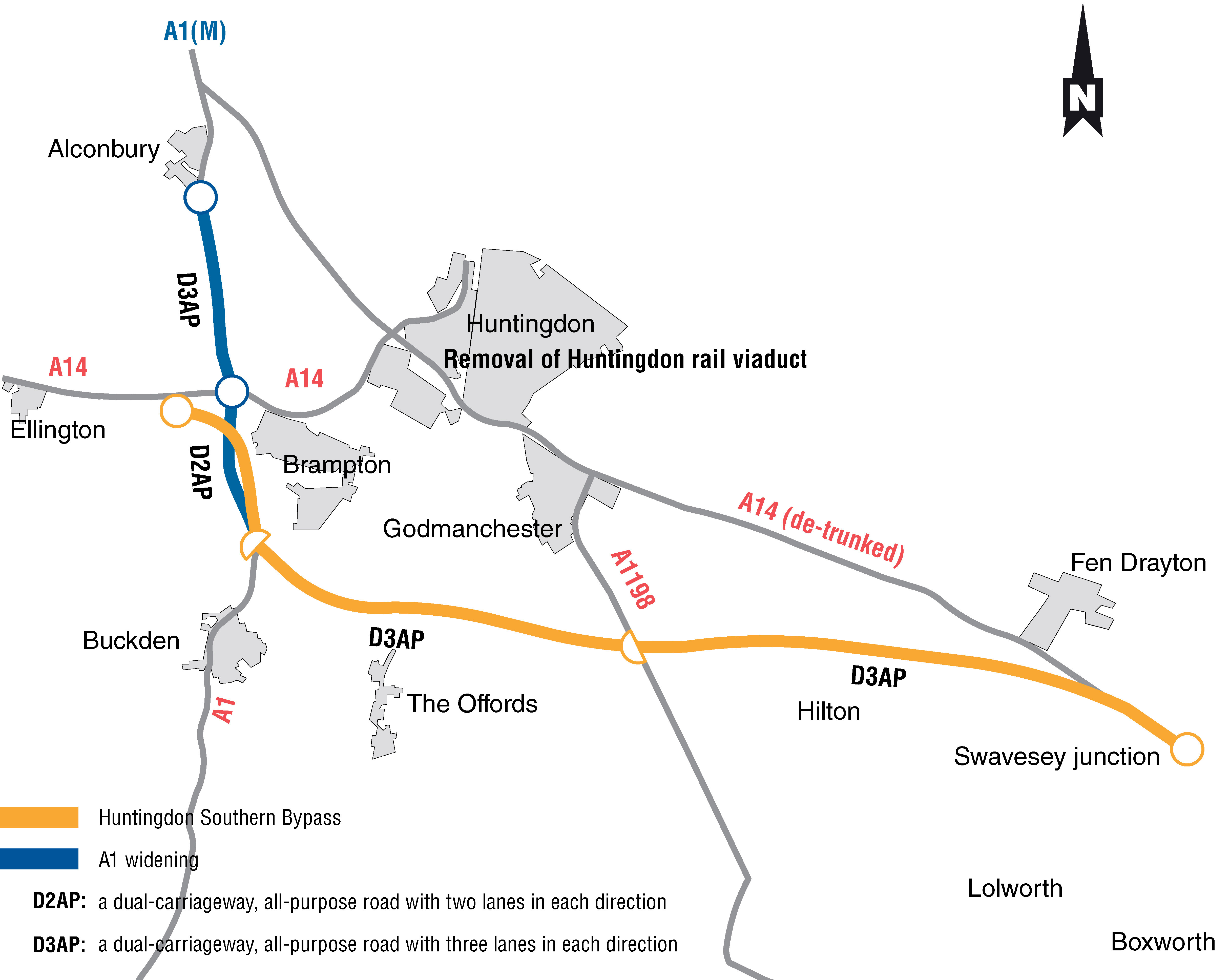
A14 Huntingdon - Cambridge proposed route

The Highways Agency’s proposed route for the A14 improvement scheme between Huntingdon and Cambridge (click map to expand)

  • Widening the A1 between Brampton and Alconbury over a length of approximately 3½ miles, from the existing two lane dual carriageway to a three lane dual carriageway. This would be achieved between Brampton and Brampton Hut by constructing a new road to the west of the existing A1, with the existing A1 road becoming part of the new A14 Huntingdon Southern Bypass
  • A new Huntingdon Southern Bypass of approximately 12½ miles in length, which would provide a two lane dual carriageway between Ellington and the A1 at Brampton and a three lane dual carriageway between Brampton and Swavesey; this would remove a large proportion of traffic from the section of the existing A14 between Huntingdon and Swavesey as well as Brampton Hut and Spittals interchange. The new bypass would include a raised viaduct section of road running across the river Great Ouse and a bridge over the East Coast Mainline railway. it would include junctions with the A1 at Brampton and with the A1198 at Godmanchester
  • Downgrading the existing A14 trunk road (de-trunking to county road status) over approximately 12 miles between Ellington and Swavesey, as well as between Alconbury and Spittals interchange
  • Huntingdon Town Centre improvements; to include the demolition of the A14 rail viaduct over the East Coast Mainline railway and Brampton Road in Huntingdon. A through route would be maintained broadly along the line of the existing A14 through Huntingdon, making use of the Brampton Road bridge to cross the railway line and by constructing a new link road from Brampton Road to connect with the A14 to the west
  • Widening of the existing A14 over approximately 5½ miles to provide three lanes in each direction between Swavesey and Bar Hill and to four lanes in each direction between Bar Hill and Girton
  • Widening of a 1½ mile section of the Cambridge Northern Bypass between Histon and Milton
  • Improvement of existing A14 junctions at Swavesey, Bar Hill and Girton; to improve the capacity of the road, ensures compatibility with adjacent proposed developments such as Northstowe, and connections for non-motorised users
  • A new local access road, approximately five miles in length, to be constructed as a dual carriageway between Fen Drayton and Swavesey and as a single carriageway between Swavesey and Girton. The road would provide a route for local traffic between Cambridge and Huntingdon as well as providing access to properties and businesses along the corridor.

Full details on the GOV.UK website — and anyone wishing to submit comments online can do so here.

Used van values hit new record as prices rise 14% in twelve months

Surging demand for new vans hasn’t put a dampener on the record prices being achieved in the used van market, according to the latest figures from auctioneers BCA , which showed that average used van prices at auction hit a new record of £5,557 in March — a rise of 3.9% since February.

I suppose we should be grateful that inflation in the wider economy isn’t running at this rate, but I’m glad I’ve not been in the market for a used van over the last year or so, during which average prices have risen by 14%:

BCA LCV values March 2014

Used LCV values Feb 2012 – March 2014 (courtesy of BCA)

Year-on-year values remain well ahead, up by £697 (14.3%) over the twelve month period.  Compared to a year ago, age has risen by nearly two months to over 60 months, while mileage has decreased by around 3,000 miles on average over the same period.  Average CAP performance improved by half a point compared to March 2013.

All vans Avg Age (mnths) Avg Mileage Avg Value Sale vs CAP
Mar 2013 58.88 80,853 £4,860 103.32%
Mar 2014 60.41 77,816 £5,557 104.03%

(Data courtesy of BCA)

The figures suggest that the UK economy is recovering, but Duncan Ward, BCA’s General Manager – Commercial Vehicles, sounded a note of caution, despite recent strong demand:

“There can be little doubt that the improving economic background is giving a boost to the used LCV market, particularly as demand increases from the building and construction industries.  Small and medium-sized enterprises (SMEs) remain positive about prospects this year, but cashflow is a problem for some and that may impact any decision on replacing their workhorse vans.”

“We expect demand to remain strong in April, but post-Easter, we know from experience that values typically soften over the late spring and early summer months.”

Business is clearly very good for BCA, but perhaps some used buyers are holding back in the hope that used values will soften before they are forced to buy?

Van demand steps up 14.6% in March on 14-plate change

The March and September registration plate changes typically account for a surprising third of the annual van market, and van registrations rose by 14.6% in March to 50,064.

The increase takes the total increase in new van registrations so far this year to 16%, compared to the same period last year, according to the latest figures from the Society for Motor Manufacturers and Traders (SMMT).

UK van and truck registrations: 2014 and % change on 2013

March % change Year-to-date % change Rolling year % change
Vans 50,064 14.6% 79,917 16.0% 282,108 14.3%
Trucks 4,168 -16.5% 7,574 -24.7% 53,732 23.0%
Total 54,232 11.4% 87,491 10.8% 335,840 15.6%

Data courtesy of SMMT (www.smmt.co.uk)

Mike Hawes, the SMMT Chief Executive, says March’s van market outperformance was expected and even the stagnant, post Euro 6 truck market saw some benefit from the plate change:

“The new 14-plate drove van numbers up, pushing the overall commercial vehicle market 11.4% ahead of 2013 to more than 54,000 units. Registration plate changes always prove popular with van buyers, so March and September numbers are typically more than double the average month, a trend continued this March as volumes rose 14.6% to above 50,000 units.

Truck demand remained subdued as the influence of Euro-6 legislation continues to be felt across the sector, but the level of impact has lessened steadily since January and should be minimal by mid-year.”

As the graph below shows, van demand has really started to lift off over the last six months, suggesting that the UK recovery may be the genuine item:

SMMT van and truck registrations March 14

Truck registrations have stalled following a spurt of sales ahead of the introduction of Euro 6 emissions rules, but demand for new vans has been rising steadily since October, suggesting the market may be returning to health (graph courtesy of SMMT)

The rise in van registations is being led by larger models, too — while registrations of smaller, sub-2.0t vans fell by 18.5% in March, compared to the same period in 2013, demand for models between 2.0t and 2.5t rose by 55%, while registrations of vans between 2.5t and 3.5t rose by 16.9%, to 27,460 — more than half of all vans registered in March.

Earn TRIPLE Nectar points on Hertz Van Rental in April [expired]

Hertz logoFrom 7th – 30th April, 2014, Hertz is offering TRIPLE Nectar points on van hire

If you need to hire a van in the next two weeks and are a Nectar card holder, then it might be worth getting a quote from Hertz, as Nectar points are redeemable at Sainsbury’s, Homebase and other popular locations.

Offer details:

THIS OFFER HAS NOW EXPIRED

Triple Nectar points with Hertz Van Rental in April

>>Use PC number 197540 at time of booking.<<

Valid from: 7th April 2014
Book by: 30th April 2014

Valid for bookings until 31 July 2014

Click here to visit the Hertz website


Terms and conditions apply, see Hertz website for details.

Manheim predicts sparky future for electric vans

Nissan e-NV200 British Gas trial van

Manheim’s head of commercial vehicles believes that the June 2014 launch of the Nissan e-NV200 electric van, see here on extended trial with British Gas, could be a tipping point for electric vans.

With impeccable timing, given the smog blanketing much of the UK, vehicle auctioneers Manheim have declared that 2014 could be the tipping point for electric van adoption.

James Davis, head of commercial vehicles at Manheim, says that technical and economical hurdles remain for electric vans in the used market:

These vans were expensive to buy new and were often funded from major PLC marketing budgets to satisfy their ‘green’ agendas.

In the used market, a buyer has to justify their price premium versus tried, tested and trusted heavy oil technology; without the budget or turnover of the original PLC owner. Diesel will win the day for a long time yet, until LCV running costs and taxes are more closely linked to emissions.

Nervousness over longevity and battery lease agreements are also deterring buyers, says Davis, although occasional hybrid models have seen strong demand at auction; Davis cites two AshWoods Transit hybrid conversions, which sold for between 125% and 131% of their CAP book prices at a sale in late 2013.

However, Davis suggests that that tipping point could come this year:

“Looking ahead, the official launch of Nissan’s e-NV200 in June 2014 will be a major landmark in the eVan market. A volume fleet order, most likely from one of the PLC fleets currently on trial, will surely launch used electric OEM vans as a real alternative to fossil fuels, with a viable dealer and charging network to follow.”

Strangely enough, Davis’ views about the Nissan e-NV200 echo my own exactly — as I explained in a post on this site at the start of March.

I strongly believe that the van market is currently the most realistic target for volume sales of electric vehicles. Time will tell if I’m right, but frankly, the competition from other alternative fuels is pretty thin. Hydrogen and fuel cells are still too experimental and complex, while looking back, LPG might have been a good idea, but the economic advantages were only ever based on fuel duty rates, not underlying fuel costs, and as Manheim’s James Davis explains, the game is now nearly over:

“In our view, LPG is all but extinct among mainstream fleets. Operation, tank size and its position in the payload area, coupled with a fragmented refuelling network infrastructure, conspire against the technology.”

I’m bullish on electricity and believe that when combined with range-extender and hybrid technology, it’s a logical and complementary way for internal combustion engined vehicles to evolve, while retaining the practicality we all value so highly.

Indeed, I’ll go further and say that in a few short years, hybrid technology will become a standard feature on many new models — to the point that it isn’t even badged anymore. After all, I remember a time, not so long ago, when vehicle manufacturers badged their vehicles to advertise the presence fuel injection, catalytic converters and turbos (on diesel engines).

Today, any new car or van without these features wouldn’t be fit for purpose, and I’m pretty sure the same thing will happen with hybrid technologies.