Category Archives: Motoring News

Exhaust & Catalytic Converter Theft – What Next?

I was surprised recently to come across this story in the Scarborough Evening News (of all places!)

Apparently an unsuspecting Ford Transit owner came back to his parked van and found that the exhaust system and catalytic converter had been removed and stolen.

I suspect that these will now be sold for spares – or even scrap metal, but I suppose there is a chance that the thieves needed an identical system for their own van. Whatever the case, it’s a bit of a worry to think that you can’t even rely on your exhaust system still being there when you come back to your parked car or van.

It’s no laughing matter, either – a new exhaust plus catalytic converter is likely to cost the best part of £400, or even more for some models. I feel for the van owner – I don’t think it’s very likely he will get his property back, even if the thieves are caught.

Increased Congestion Hitting UK Business

Increased congestion is hitting the effectiveness of British businesses, according to a new survey by car and van rental giant Europcar.

70% of the 300 businesses surveyed said that congestion was impacting the efficiency of their staff when travelling for work, with 42% of those who responded saying that up to 20% of business travel time was spent in congested traffic.

80% of those surveyed felt that traffic congestion is getting worse in the UK – no arguments there. David McNeill, Corporate Sales Director at Europcar feels that it’s time for all road users to take responsibility for minimising their contribution to congestion:

“…what this survey has clearly shown is that we must all take responsibility to identify the ways in which we can reduce congestion on our over-stressed road network.  Challenging times lie ahead and the survivors will be those that tighten their belts and explore all the options to work as efficiently as possible.”

Europcar are one of the world’s leading car and van hire companies and their combined UK fleet (which includes National Car & Van Rental) amounts to more than 60,000 cars and vans.

Record Rise For Diesel Prices – But What Next?

In my last article about fuel prices, I highlighted just how much of the pump price goes to the Treasury.

I’m afraid that this time the news is equally bad!

May has seen the highest rise in diesel prices ever recorded, according to the latest fuel price report from the AA.

Diesel rose by an average of 6.76p per litre from 117.41p to 124.17p between mid-April and mid-May. This means that the 68 litre fuel tank on my Transit now costs an extra £4.60 to fill up. For vehicles with a smaller 50 litre tank, the cost of a tank full of diesel is up by £3.38.

Most of this increase has taken place in the first half of May, but it is interesting to see how the price differences between supermarket garages and non-supermarket garages have grown. Supermarket garages are now an average of 2.5 pence per litre cheaper for petrol and a surprising 4p per litre for diesel.

Surprising to me, anyway! The pump prices at my local Sainsbury and Morrisons are pretty much the same price as the Shell garage I usually use, although some other local forecourts are more expensive than the supermarkets.

Unsurprisingly, London is still the most expensive place to buy fuel and Yorkshire & Humberside the cheapest.

As the AA comments, the most worrying aspect of this is that the rise in oil prices appears to be primarily the result of speculative investors putting money into oil in an attempt to make a quick buck from the rising prices.

The old ‘rising demand, limited supply’ argument is being trotted out by those with vested interests, but the facts appear to suggest that increased demand for oil is not the real culprit (remember when people were saying that house prices had to rise because there weren’t enough houses?).

I’m going to stick my neck out and predict that oil prices will start to fall in the next six months – but I will also predict that petrol and diesel prices won’t fall as far…

Anyone care to disagree?

UK Drivers Would Welcome Stop-Start Systems

A survey of UK drivers by car supermarket Motorpoint has found that 3 out of 4 would buy a vehicle with a stop-start system – a system that automatically stops the engine when the vehicle is idling and starts it again as soon as the clutch is depressed.

For vehicles undertaking extensive urban driving, stop-start systems have been shown to provide fuel savings of 5% – 10%; a very significant benefit, especially for commercial operators.

Although frequent stop-start activity normally increases wear and tear to a vehicle’s starting system and engine, stop-start equipped vehicles are engineered to prevent this problem. A typical stop-start specification includes an uprated alternator and starter battery and built-in safeguards to prevent repeated cold starts or engine overheating.

Currently, Citroen, BMW and MINI offer such a system in their cars and Mercedes-Benz have recently introduced their Eco-Start system on the Sprinter van and Atego lorry. More manufacturers are likely to follow suit – particularly if customer demand continues to grow.

UK Petrol & Diesel Now Comes With 2.5% Biodiesel

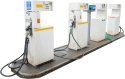
From yesterday, 15th April, all petrol and diesel sold in the UK must include 2.5% biodiesel, according to new legislation introduced in this year’s Budget. Diesel and petrol pumps

The requirement is part of the Renewable Transport Fuels Obligation and will increase to 5% in 2010, despite growing concerns about the environmental cost of producing biofuels – especially in countries were deforestation is taking place to plant biofuel crops such as palm trees.

Any fuel suppliers who cannot demonstrate that their fuels include the required 2.5% of biofuels will have to pay a fee to the Treasury. Although this measure was designed to protect fuel suppliers from sudden fluctuations in the price of biofuel, it also serves as an buy-out clause – fuel companies need not bother with biofuels if they are happy to pay the buy-out price.

According to press reports, the Department for Transport was unable to confirm whether any fuel suppliers had chosen this route or not.

You can learn more about this issue here and here.

Portsmouth Introduces 20mph Limit In Residential Areas

When I first saw this story about Portsmouth City Council introducing a 20mph speed limit to most residential streets, I have to confess that my immediate reaction was that it was a bit silly and would just result in increased CO2 emissions – 20mph isn’t a very fuel-efficient speed for modern vehicles.

However, I soon changed my hastily formed judgement – because having read through Portsmouth Council’s press release, I think it seems quite a good, carefully-planned idea.

Here’s why. I live in an old town too – and on my street and most of the ones around it, anything greater than 20mph is definitely unnecessary and usually unsafe. Portsmouth City Council hasn’t reduced the limits on any of the more major roads – so once you’re out of your street you can progress through the city at the usual 30/40mph limit.

The other reason it seems sensible is that none of the 1,200 streets affected had an average speed above 24mph anyway – so it’s not much of a loss.

If you live in Portsmouth (or anywhere else with 20mph limits), how have you found them? Have they been applied inappropriately and without consultation, or have the local council been intelligent and thoughtful about it? Leave a comment below with your thoughts and experiences.

20mph speed limits are clearly here to stay in the UK, and are getting more popular by the day. Let’s just hope that councils don’t succumb to the temptation to use them in combination with speed cameras to raise tax revenue…

A Solution To Misfuelling Problems?

Hot on the heels of my recent post on the number of drivers who fill up diesel vehicles with petrol each year and have to be rescued by the RAC, the good people at DDN Ltd have got in touch to let me know that they have come up with a solution to this problem.

The problem, you’ll remember, comes about because the filler neck of diesel vehicles is larger than that of petrol vehicles – meaning that a petrol nozzle will slip in just as easily as a diesel nozzle.

It’s a problem that seems to be growing, too – in 2007 50,000 RAC members and 20,000 Green Flag members alone managed to fill up with the wrong fuel. Leaving safety and environmental issues from the disposal of the fuel aside, misfuelling has a huge financial impact. Just ask anyone who has had to have their diesel vehicle repaired after running it on petrol…DDN’s Misfuelling Prevention Device
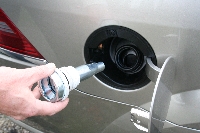
DDN’s solution seems simple. Named the Misfuelling Prevention Device, it’s essentially a cleverly-designed sleeve that fits inside your existing filler neck. Once in place, any attempt to insert a petrol nozzle will be blocked – only diesel nozzles will fit in.

Fitting seems extremely simple and once in place, no further maintenance or adjustment is required. DDN say that it should last the lifetime of the vehicle. DDN MPD fitting part 2
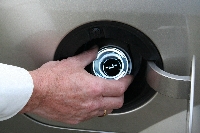
The MPD costs around £50+VAT for fleets and most popular makes and models are or will be supported. The device has been successfully trialled with a variety of fleet operators – including one police force. For more news, see DDN’s website. I’m not sure that it’s available for retail customers yet.

I would imagine that van hire companies could become enthusiastic customers for such a product – anyone driving a rental van who usually drives a petrol car must be a prime candidate for misfuelling. Still, it’s a problem that can affect anyone – as this RAC employee found out! (Although in fairness it is a windscreen fitter’s van, not a breakdown van.)

(All pictures courtesy of DDN Limited.)

How To Drive Green & Save Money

‘Getting the best out of your vehicle’ is something that means different things to different people – but according to new research by the RAC, what it doesn’t usually mean is saving fuel.

Amazingly – given that we have some of the highest petrol and diesel prices in Europe – large numbers of UK drivers don’t seem to know or care how to get the best fuel economy from their vehicles.

According to the RAC, £2.2bn worth of fuel is wasted every year by drivers who ignore basic green driving techniques. That’s 267 Olympic-sized swimming pools full of fuel…

Contrary to popular belief, eco-friendly driving doesn’t mean dawdling along at 50mph on motorways and never accelerating hard. Instead, it’s simply a question of understanding your vehicles a little better and applying some common sense.

Here’s a selection of the RAC’s tips for green driving – tailored to the needs of hire van drivers:

  1. Don’t bother ‘warming up’ the engine before you set off. Modern engines don’t need to be warmed up – infact, they warm up better if you ease off slowly as soon as you’ve started up.
  2. Switch off instead of idling. If you’re going to be stationary for more than a few minutes, idling just burns fuel pointlessly. Switch off and startup again when you’re ready to move.
  3. Don’t thrash it! Modern turbo-diesels of the kind found in vans pull very well from relatively low revs. Make good use of this and keep the revs well below the red band, changing evenly through the gears.
  4. Look further ahead – breaking and accelerating unnecessarily wastes a lot of fuel. Your goal should be a steady, consistent speed. If you can ease off the accelerator slightly well in advance of an obstacle, you’ll use much less fuel than if you brake hard at the last minute and then have to change through the gears again.
  5. Don’t lug around anything you don’t need – extra weight equals increased fuel consumption. It’s all to easy to keep everything plus the kitchen sink in a van – don’t if you don’t need to.
  6. Tyre pressures. Even if you’ve only hiring a van for a few days, keep an eye on them. Low tyre pressures mean higher fuel consumption and an increased likelihood of punctures.

Following this advice ain’t difficult – it’s mostly just good, safe driving. But it’s amazing how many van drivers don’t do it. Are you one of them?

Five Good Reasons Most Drivers Don’t Care About Emissions

Let’s be honest with ourselves. Most of us don’t really care about the CO2 emissions of our cars. There are simply far too many other things that are more important if you’re buying a used car.

Sure, lots of drivers like to talk the eco-friendly talk – but when it comes to parting with their cash, they don’t point their wallets at that low emission 1 litre Wippo Thingamibob. And with good reason.

In fact, with at least five good reasons. Here are drivers’ top priorities when buying a used car, according to a new survey* of UK drivers:Ferrari

  1. Reliability – 77%: The only surprise here is that it isn’t higher. Are there that many people who like fixing their own cars?
  2. Safety – 54%: I suspect this mostly represents buyers with families (and it’s also a popular justification for buying a 4×4!)
  3. Performance – 48%: When you’re paying all that money, you want to enjoy using it – don’t you?
  4. Styling – 33%: It’s all about image and lifestyle for some people.
  5. Space – 32%: In the end, a car is useless if it won’t hold everything you need to carry – although it’s quite interesting that styling comes just above space…

*Source

So do any used car buyers care about emissions at all? The good news is that 26% of used car buyers rate Car exhaust tailpipe emissions emissions as important when choosing a vehicle.

The bad news is that this figure has fallen since 2006 – when 29% of people rated emissions as important!

Of course, this is only in the UK. To get some balance, let’s look at things in the USA.

Here, the latest J.D. Power study has found that only 11% of new car buyers – i.e. the ones with more money – are ‘very willing’ to pay more for an environmentally-friendly vehicle. Oh dear.

Despite people’s general concerns about greenhouse gases, it looks like helping the environment is going to have to wait until car makers can sell green cars and vans at the same prices as dirty ones, doesn’t it?

Do You Realise How Much Fuel Duty You Are Paying?

We all know that a huge proportion of our petrol and diesel costs are taken up by tax, but how many of you know exactly how much is tax?Van Fuel dial - empty tank

I certainly don’t – that’s why I wholeheartedly agree with the suggestion by the FTA (Freight Transport Asssociation) that filling station operators should amend their receipts so that the cost of fuel is broken down into fuel cost, fuel duty and VAT.

This is already common practice with VAT – so why not fuel duty?

Fuel duty is currently a staggering 50.35p per litre – probably more than most people realise. I have to admit I thought it was “about 40p” – as did most other people I asked.

The FTA’s Director of External Affairs, Geoff Dossetter, provided a simple example to show just how this duty adds up:

“With fuel duty at 50.35p per litre and VAT at 17.5 per cent then the cost of a typical fill of 50 litres of fuel at £1.05 per litre works out at £52.50. This consists of £19.51 for the fuel, £25.17 for the fuel duty and £7.82 for the VAT.”

“So, for 50 litres at the pump, we are paying £19.51 for the fuel plus an eye-watering £32.99 in taxation. And now the Chancellor is looking for a further 2p per litre in April!”

The FTA believe that oil companies and filling station operators should make sure that the public understand just how much duty and tax they pay on fuel – especially as the government are planning a further 2p per litre rise in fuel duty in April, pushing fuel prices ever higher.