Is urban “killer diesel pollution” really that bad?

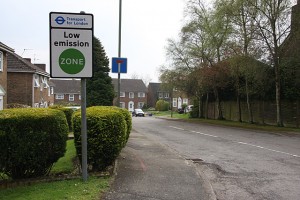
London Low Emission Zone sign

I’ve been a bit hard on diesel in recent months. Headlines such as Government must act to combat killer diesel pollution in cities” may have given the impression that emissions from diesel vehicles are on a par with untreated nuclear waste.

They’re not of course, although I suspect that diesel particulates probably do cause more health problems than nuclear power stations.

The main targets of my criticism were the EU and Euro 5.

The EU because it has chosen to focus myopically on reducing CO2 emissions while ignoring equally dangerous NO2 (nitrogen dioxide) emissions.

Euro 5 because it doesn’t work properly. The latest-but-one emissions standard turns out to have been a spectacular failure at reducing harmful emissions in our towns and cities. That’s because the pollution control technology used to meet the Euro 5 standard doesn’t actually work in stop-start, low-speed conditions.

However, things are improving with Euro 6. In the interests of balance I thought I should highlight some recent commentary from used vehicle price bible, Glass’s.

Glass’s view appears to be that imposing new restrictions on diesel vehicles in urban areas would be like shutting the stable door after the horse has bolted.

Rupert Pontin, Glass’s head of valuations, points that while some older diesel vehicles undoubtedly pump out too much nitrogen oxide and other potentially harmful substances, those that meet the latest emissions standards are virtually as clean as petrol. He said:

“We have no argument against the findings of the various reports on air quality that are pointing the finger at diesel. The science appears to be very robust. However, they are reporting an historic picture. The latest diesel emissions standards are very stringent and newer vehicles are unlikely to have the same kind of impact on the air that we breathe.

Mr Pontin is probably right. Euro 6 is a big step forwards, in that it should actually deliver the benefits we were promised for Euro 5.

However, I’m not sure Glass’s motives are as pure as they would have you believe. Remember that this is a company funded by people who sell cars for a living. Mr Pontin clearly understands what his customers need:

“There is a general assumption that, for example, a hybrid is always cleaner than a diesel but the picture is not always that straightforward and we are potentially engineering a move away from diesel without looking at all of the facts.

“Of course, there will also be an impact on car and commercial vehicle values if there is general governmental move against diesel. Current and predicated residual values will undoubtedly fall thanks to higher running costs.”

The problem is that the last thing Mr Pontin’s customers (car dealers) need is any weakness in demand for nearly-new and used diesels, of which there is a vast supply.

There is already evidence that car drivers who don’t do high mileages are switching back to petrol, in order to avoid the higher purchase prices and costly mid-life repair bills which increasingly characterise modern, low-emission diesels. Some friends of mine did exactly that recently.

For the van market of course, petrol isn’t a serious contender. Anyone covering any distance will continue to use diesels. However, concerns over the harmful effect of diesel emissions remains.

Electric vans are now proven to be a viable solution in urban environments and operations where their daily mileage is predictable and includes one or more returns to base. Vans should also be able to play a role in reducing urban pollution and the resultant health problems.

Are London parking wardens getting 72% of van and truck tickets wrong?

MoneyFigures released by the Freight Transport Association show that 72% of parking ticket appeals in London are successful. In other words, 72% of tickets issued to FTA members are issued incorrectly.

The FTA provides a PCN (Penalty Charge Notice) Administration Service, which helps FTA members (including many van operators) to administrate and if necessary appeal their PCNs.

According to the FCA, the most common reason for a PCN is ‘stopping where prohibited’. This typically means stopping on a red route or on single or double yellow lines to deliver to a high street business. Almost 36% of tickets included in the survey were issued for this reason, which a further 33% handed out for parking or loading where restrictions are in force.

However, Natalie Chapman, FTA’s Head of Policy for London, says that many of these tickets are issued incorrectly:

“Loading and unloading is an exemption to restricted street regulations – it’s allowed on single or double yellow lines for a maximum of 40 minutes. Often PCNs are issued incorrectly because the enforcement officer needs more training and doesn’t realise what’s permitted.

“Our PCN Administration Service can advise members when tickets have been issued incorrectly and should be challenged.”

The survey was based on data provided by fifteen companies covering about 32,633 parking fines they had received over a 12-month period.

PCN’s are a daily occurence for many companies delivering into London and other cities. However, drivers of hired vans delivering on business in the capital should take note — the hire company will forward the penalty notice on to the company or individual who hired the van, but it could be worth taking a closer look at the circumstances of the parking ticket to check that it is valid.

FTA members can of course use the association’s PCN Administration Service.

EXCLUSIVE: SAVE 10% on Hertz Van Rental with our discount code [EXPIRED]

Hertz Van RentalDo you need to hire a van this week?
Here at vanrental.co.uk we have an exclusive 10% discount code for Hertz Van Rental.

You won’t find this discount anywhere else this week — plus it’s valid for hire periods up until 19 July 2015.

*** THIS OFFER HAS NOW EXPIRED ***

Here are the details:

  • EXCLUSIVE: 10% Off Hertz Van Rental and collect Nectar points…
  • Valid from: 22nd June 2015
  • Expires: 28th June 2015
  • DISCOUNT CODE: 778650
  • Terms and conditions: Pick up Period 22nd June to 19th July 2015


Terms and conditions may apply — see Hertz website for details.

Could your vans land you in prison?

VOSA van enforcement checkpoint

A van being inspected at a VOSA/Police enforcement checkpoint.

More than 80% of van operators running individual van or small fleets are unaware that the UK’s corporate manslaughter laws could land them in jail if one of their vans was involved in was involved in a serious collision resulting in a death or serious injury.

This surprising statistic was the outcome of research by leading van news website VansA2Z.com at the 2015 CV Show in April.

The risk of employers being prosecuted under corporate manslaughter legislation is particularly high if the van they are responsible for is found to be defective.

Unfortunately, the chances of that happening appear to be quite high in the UK.

Government data, supplied by the Vehicle and Operator Standards Agency (VOSA), shows that at least 50 per cent of vans fail their first MoT roadworthiness test, with many older vans often exhibiting even more serious faults, such as structural corrosion. The vast majority of MoT failures relate to vehicle lighting, brakes and steering components, all of which could contribute to a major road traffic accident.

VansA2Z.com Managing Director, Kevin Gregory, said:

“Illegal, badly maintained vans are a peril to other road users, and many owners are not only unaware of the faults on some of their fleet vehicles, but also of their personal liability if something does go horribly wrong.”

Statistically, around 300,000 vans a year are sold in the UK, with the number rising to 320,000 in 2014 and projected to be even more in 2015.

That means, on average, at least 150,000 vans a year fail their first MoT, some with potentially deadly faults that could put drivers and road users at risk of injury, and their owners at risk of a jail sentence.”

That’s a depressing statistic, which suggests to me that a sizeable proportion of van operators and drivers do not carry out even the most basic checks — such as lights and tyres — on their vehicles. It also suggests many operators skimp on regular servicing and maintenance.

Europcar targets corporate market with fleet van rental centres

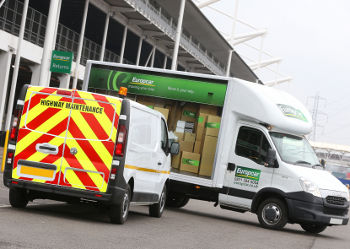
Europcar Chapter 8 van

A Europcar hire van with Chapter 8 markings at one of the firm’s new UK Van Supersites.

Corporate hire plays a big role in the van rental business, as you’d expect.

Many companies now run part-rental or even 100% rental fleets, enabling them to add or subtract vans to meet demand, without committing to finance or long-term leases.

Europcar has now joined Hertz in opening a number of corporate rental van supersites around the UK.

Located in Newcastle, Leeds, Birmingham, London and Bristol, Europcar’s Van Supersites create a network running down the spine of the UK.

Each supersite offers a range of vehicles targeting the fleet market, including crew cab vans, 4×4 pick-ups and a comprehensive range of Chapter 8 vehicles (vans with reflective markings required is the vehicle will stop on a main road for work purpose, such as road works — see picture for an example).

Europcar’s Ken McCall says that the firm’s goal is to playing its role in the UK’s economic recovery:

“The launch of Europcar’s Van Supersites is part of our commitment to helping UK businesses that are making the most of an increasingly positive economy.”

“By having a dedicated focus on a range of commercial vehicles – combined with specialist account management – these Supersites mean we can deliver both efficiency and cost savings to the businesses that need the confidence of supply for their own continuity”

Europcar’s network of Van Supersites will run alongside the firm’s existing 170-strong branch network, which serves the needs of retail and corporate customers.

New Volkswagen Caddy price list details

Volkswagen Caddy Maxi

The new Volkswagen Caddy Maxi goes on sale later in June in the UK.

Volkswagen has announced pricing for the latest version of the firm’s Caddy panel van range, which goes on sale in the UK later in June (first deliveries expected in September).

The new range has three trim levels, Startline, Trendline and Highline, with short or Maxi (long) wheelbases. The Maxi version adds 469mm to the short wheelbase and has a load capacity of 4.2 cubic metres, versus 3.2 cubic metres for SWB.

Here’s an overview of the price and specification for each trim level.

Startline

Prices for the range start at £13,500 +VAT for the base C20 Startline short wheelbase model with 2.0-litre TDI diesel engine.

Standard equipment on Startline includes electric windows and heated and electrically adjustable wing mirrors, a five-inch touchscreen Composition Colour radio system with DAB+ and Bluetooth capability, a lockable glovebox, plus safety features such as driver and front passenger front, side and curtain airbags, a new post-collision braking system and a seatbelt reminder.

Trendline

Trendline prices start from £15,670 +VAT.

In addition to the Startline spec, standard equipment for Trendline models includes full wheel covers, body coloured bumpers, handles and wing mirrors, rear parking sensors, cruise control, multi-function display, driver’s lumbar support, under-seat storage and sun visors with vanity mirrors.

Highline

The range-topping Highline model starts from £16,650.

Additional standard equipment includes  alloy wheels, front fog lights and daytime running lights, Climatic air conditioning, heated front windscreen, automatic dimming rear-view mirror, Thatcham category 1 alarm and windscreen wipers with intermittent control and rain sensor. A seriously well-specified van, in other words.

Engines

As I’ve written before, the new Caddy will initially be offered with two engine ranges, Euro 5 and Euro 6.

The Euro 5 engine range is built aounrd a 2.0-litre diesel with a choice of three power outputs, 75PS, 105PS and 150PS.

The Euro 6 engine range will be limited to a 102PS 2.0-litre diesel at launch. Clearly VW does not expect anyone to buy a Euro 6 Caddy until the law forces them to.

All models can be specified with a five or six-speed manual gearbox, while some higher-powered versions are available with VW’s DSG automated gearbox.

All Caddy models can be specified as ‘BMT’, meaning BlueMotion Technology modifications (start/stop system and battery regeneration) are fitted to reduce fuel consumption and CO2 emissions.  A standalone BlueMotion variant also joins the range: with a 2.0-litre EU6 102 PS engine and five-speed manual gearbox it can return 65.7 mpg and CO2 emissions of 114 g/km.

Customers will also be able to specify Adaptive Cruise Control with Front Assist and City Emergency Braking.  This system monitors the space to the vehicle ahead and maintains a specified speed and distance to ensure safe stopping.  This technology has been used in Volkswagen Passenger Cars and is proven to reduce third party injury claims by 45 per cent.

Updated Peugeot Partner Puts Fuel Saving First

The 2015 Peugeot Partner

The 2015 Peugeot Partner comes with a new range of Euro 6 engines — on sale in June

We’re seeing a raft of updated van models hit the market at the moment, as manufacturers switch over their ranges to use Euro 6 diesel engines ahead of their mandatory introduction for light commercials.

This time it’s the turn of Peugeot, which has just started selling an updated version of its Partner small van.

The new van has an updated front end, but the big change is under the bonnet, where a new range of engines are is in place:

  • 1.6-litre VTi 98 Petrol 5-speed manual Euro 6
  • 1.6-litre HDi 75 5-speed manual
  • 1.6-litre HDi 92 5-speed manual
  • 1.6-litre HDi 92 ATV with Grip Control 5-speed manual
  • 1.6-litre BlueHDi 100 S&S 5-speed manual Euro 6
  • 1.6-litre BlueHDi 100 S&S 6-speed ETG Euro 6

According to Peugeot, the new engine range provides an average 15% reduction in fuel consumption and CO2 emissions. The most eco-friendly engine looks to be the 1.6-litre BlueHDi 100 Stop&Start model, which has CO2 emissions from just 108g/km and is available with a manual and automated gearboxes.

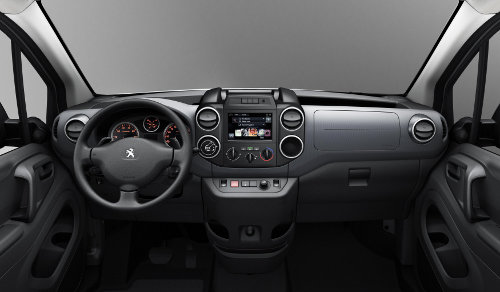
Inside the 2015 Peugeot Partner

Inside the 2015 Peugeot Partner

Other changes include the availability of Active City Brake, which is a collission avoidance system designed to slam on the brakes if you look likely to have a low speed rear-end collision. Peugeot say the effect of this system should help to reduce insurance costs, lowering the total cost of ownership (TCO) for business users.

The Partner Electric has been available for some time, and has been updated for this relaunch. The Partner Panel Van EV has a range of up to 106 miles and comes with an eight-year/60,000 mile battery warranty.

Prices start from £21,300 +VAT for the electric model, and at £13,215 +VAT for the regular panel van, which is also available in a crew cab format for around £2k more.

Used van prices flat in May but demand “steady” — BCA

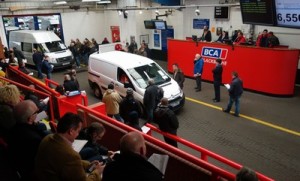
BCA van auctionUsed van prices at auction were largely unchanged in May, according to the latest figures from British Car Auctions (BCA).
All vans

Avg Age (mnths)

Avg Mileage

Avg Value

Sale vs CAP

May 2014

57.83

77,673

£5,587

99.79%

May 2015

58.07

78,012

£5,558

101.94%

Source: BCA (www.british-car-auctions.co.uk)

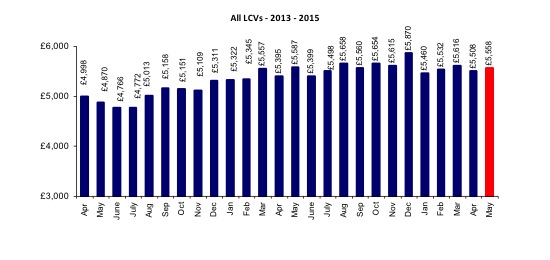
Average age, mileage and price were all nearly identical to May last year, although sale price as a percentage of CAP (book) price rose slightly, suggesting to me that BCA had a good mix of desirable stock through its halls last month.

Common, strangely painted or poor condition models remain hard to shift, as Duncan Ward, BCA’s Head of Commercial Vehicles, explains:

“While average values have stopped their meteoric year-on-year climb as volume has returned to the marketplace, demand has remained steady.  Buyers compete strongly for good condition, later plate vehicles, and any unusual or scarce derivatives will find a ready audience.  Condition is key to success, however, and buyers expect to see a full service history.”

“Poor condition stock, or readily available models in corporate colours need to be sensibly valued to sell first time as the competition is fierce for the buyer’s wallet.”

The changes seen in the used van market can be seen on this graph, which shows clearly that prices peaked in December last year — manic demand for courier vans ahead of Christmas — and have remained fairly flat after January’s fall:

BCA used van prices May 2015

Courtesy of BCA


One interesting quirk of last month’s figures was that part-exchange prices rose sharply. Part-ex vans are the oldest and cheapest vans that go through the auction halls. On average, they’re about 7 years old and have close on 100,000 miles.

The average price for a part-ex van rose by 6.7% to £3,773 in May, up from £3,533 in April, according to BCA. No idea why.


Updated Ford Transit Connect will cut fuel bills

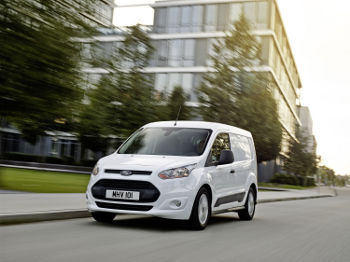
Ford Transit Connect

The Ford Transit Connect will be available with a new Euro VI 1.5-litre diesel engine this summer.

Ford has released details of the latest updates to its Transit Connect small van model, which will go on sale this summer.

The changes revolve around making the van Euro VI compliant and to this end, Transit Connects will get a new 1.5-litre TDCi diesel engine to replace the outgoing 1.6l model.

Ford promises a 6% reduction in fuel consumption with an official fuel consumption figure of 74.3mpg for the eco-friendly ECOnetic model.

The Transit Connect will also gain some new gadgets, including Traffic Sign Recognition and Lane Keeping Aid, while Ford’s SYNC2 smartphone integration technology will make its debut in the European van market.

The Transit Connect is available in van and crew cab bodystyles with L1 and L2 (short and long wheelbase) variants. Payloads of up to 1,000kg are available. Ford says that so far this year, sales are up by 93% compared with the same period last year.

The updated Transit Connect will go on sale this summer. There’ll also be an updated version of the smaller Transit Courier. Good news here — Ford has seen sense and will now offer this compact van with its fantastic 1.0-litre EcoBoost petrol engine. Fuel consumption of up to 55mpg should be possible, according to the firm.

In such a small van, especially in urban use, petrol makes far more sense than diesel, but few manufacturers seem willing to embrace this logic and sell it to their customers.

4×4 Sprinters maintain wind power for Siemens

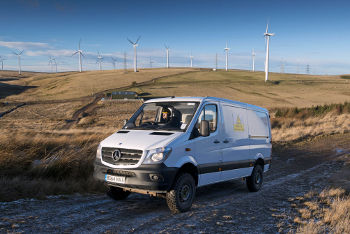
Siemens MB Sprinter 4x4 vanFew planning decisions attract more controversary than a new onshore wind farm. Personally, I don’t mind them.

Whatever your view, however, it’s clear that once installed, these massive, whirling constructions need to be well maintained. A load-carrying vehicle with genuine off-road ability is essential.

Enter the Mercedes-Benz Sprinter 4×4. Siemens, which operates around 50% of the UK’s total wind power capacity, has ordered a fleet of 50 Sprinter 4x4s from Merc dealer Midlands Truck & Van. The new vans both replace older vehicles and extend the German manufacturer’s current fleet.

The new vans are being fitted with racking and an electrical inverter system to provide power for electric tools when onsite and even include a section for cloths drying.

The Sprinter 4×4 is a geniune factory 4×4, not an aftermarket conversion, and includes raised suspension and an advanced all-wheel drive system that uses Mercedes’ electronic traction system (ETS) to replace mechanical differential locks. Essentially, this is an extension of the traction control system fitted to most new cars, albeit more sophisticated.

On road, the Sprinter 4×4 is rear-wheel drive, saving fuel and tyre wear. All-wheel drive can be selected when required, such as when venturing off road or driving in difficult winter conditions.