Category Archives: Van News

News and articles about UK vans – especially information relevant to the van hire market. Coverage of new van model launches from all the major manufacturers – Ford, Mercedes, Volkswagen, Peugeot, Fiat and Citroen.

Used van market is flush with supply, prices weakening

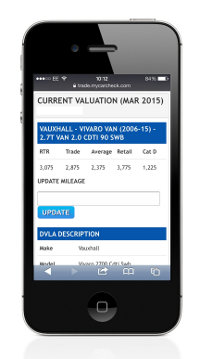
My Car Check Trade app screenshotHeading into the summer, a seasonal slowdown is likely in the used van retail market. As a result, dealers are in no rush to top up with stock except to replace sold vehicles or to grab more unusual models.

That’s the view of David Hill, LCV expert at My Car Check’s new Trade service, which provides used van valuations for trade buyers.

Mr Hill says that while supply to the market is currently ample, it’s very repetitive. Certain models are available in volume, but there’s little choice in other areas. Here’s a run-down of his view of current conditions in the used van market.

Small vans

As reported previously, the Ford Fiesta Van and Vauxhall Corsavan are the pick of the field. However, ample supply means that only tidy examples will fetch strong prices. Prices rapidly drop off for more average examples.

One step up in size, the Peugeot Partner, Citroën Berlingo and Volkswagen Caddy are all around “in volume” according to Mr Hill. As always, this means that only retail-ready vans will fetch top prices. Apparently there’s a particular glut of “blue 69PS” VW Caddies. These are presumably ex-British Gas. A decent spec means that prices are holding firm at the moment, says Mr Hill, but values are likely to weaken as the influx continues.

Medium vans

Stepping up to the Volkswagen Transport/Ford Transit sector, it’s a similar story. While demand for Transporters remains strong, prices are slipping for poorly-specified 84 and 102PS models. Used buyers want 140PS Highline or similar models if possible.

Similarly, old-style Ford Transits and newer Transit Customs sell best in Trend and Limited specification, for which trade buyers will travel.

Large vans

Supply of large panel vans remains tight. As a result, they tend to sell quickly, although prices still come under pressure for vans “that require body work or mechanical attention”. If the price is too high, trade buyers will still walk away, says Mr Hill.

With chassis cab models, badge is much less important than condition:

Tippers have to be clean with no tarmac or concrete in the rear. Double cabs have to have the rear seats. Drop sides are not even mileage sensitive as long as they are tidy, and it is the same for Luton variants. This is all because demand outstrips supply.

I’ve been watching used van prices at auction weaken for some months, as buyers have become more discerning. This provides further evidence from the next level up the chain that the market is softening slightly as supply shortages start to be eroded by strong new registrations.

45% of drivers knowingly overload vans, says Volkswagen

Volkswagen overloading infographic

Volkswagen has produced a graphical guide to help drivers avoid overloading issues (click to enlarge)

A new survey by Volkswagen Commercial Vehicles has found that 45% of drivers knowingly overload their vans and that 53% of drivers don’t even know their vans load-carrying capacity.

As a result, VW estimates that nearly 50%, or 1.2m, of the vans on British roads are overloaded.

According to the survey, nearly half of UK businesses don’t monitor the weights of their company vehicles. When driving a hire van the difficulties can be greater.

Even similar models can have signficantly different weight ratings, depending on how they’ve been specified by the hire company. Payloads for a Volkswagen Transporter, for example, can range from 682kg to 1,340kg, according to the firm!

Knowing how much your load weights isn’t always easy, either. While standardised items such as bags of cement are labelled with their weight, the contents of your home aren’t. If you’re moving house with a hired van, it’s potentially quite easy to overload the van, especially if you have lots of heavier items, such as boxes of books.

The Driver and Vehicle Standards Agency (DVSA) are quite good a spotting overloaded vans, too. The DVSA stopped over 10,800 vans last year, of which 89% were overloaded. If you get caught, you could face points on your licence, a fine or even a court summons, depending on how overloaded your van is.

What’s more, if you are involved in a collision when your van is overloaded, your insurance will be invalidated. Driving when overloaded increases braking distances and can unbalance the handling of your van, making it more likely to roll over and harder to steer.

How to avoid overloading

Before you hire a van, I’d suggest a look at the vanrental.co.uk van weight jargon buster.

Once you’ve punched through the confusing jargon relating to this subject, then a bit of common sense is required. Assuming you are not able to know the weight of everything in your van, here are some tips:

  • The simplest way to avoid overloading is to make sure the van you are hiring is plenty big enough. Loading from floor to ceiling and nose to tail increases the likelihood you will be overweight.
  • If your hire van is sagging down at the back, it’s probably overloaded.
  • If you know you are carrying something that’s especially heavy, such as a large machine, then hire a van with this in mind and don’t try to fill the remaining space in the van with other goods. A van can be fully loaded without being full.
  • Remember that for most loads, the correct way to load is to start at the bulkhead at the front of the load compartment and work backwards. Always put the heaviest items at the bottom and secure anything that’s able to move. Our guide to loading a van may help.

Finally, remember that many council recycling facilities also have weighbridges. To find your nearest public weighbridge, try ringing your local council.

Volkswagen confirms pricing for new Transporter

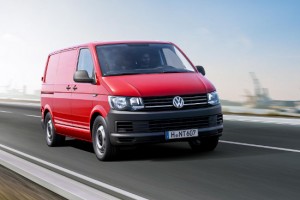
Volkswagen Transporter T6

The new Volkswagen Transporter T6

Volkswagen has announced pricing for the latest version of its most popular van, the Transporter T6.

List prices for the sixth-generation van will start from £17,745 +VAT, with Kombi models priced from £19,840 +VAT.

Order books open on 6 July, with the first UK deliveries expected in September.

More choices than ever

VW says that the new Transporter range will contain the broadest range of engines, trims and transmissions ever offered. This includes a choice of Euro 5 and Euro 6 engines, while buyers of 140PS and 180PS models can also choose between a six-speed manual transmission and VW’s seven-speed DSG automatic gearbox.

As I expected, BlueMotion fuel-saving technology, which was previously an option, is now standard across the range. This includes low rolling resistance tyres, regenerative braking and Start/Stop systems.

As with the new Caddy, the Transporter T6 will be available in three trim levels, Startline, Trendline and Highline. Here’s what you’ll get and what it will cost.

Startline

The entry-level Startline range is priced from £17,745 +VAT. The standard specification includes BlueMotion Technology, DAB+ digital radio, 5-inch touchscreen, Bluetooth phone connectivity and USB connection.

Trendline

Next up is Trendline, which starts from £19,755 +VAT and adds new wheel trims, a full-height steel bulkhead (panel van), body-coloured bumpers and rear parking sensors to the Startline’s standard spec. Other standard features include a multi-function display and a new cloth upholstery design.

A Comfort pack consisting of foldable grab handles on A-pillars, additional storage compartments, dimmable cabin lights and additional noise suppression is also fitted as standard.

Highline

Moving on up, the Highline range starts from £21,315. This is aimed at owner-drivers and perhaps the campervan market, and the standard spec includes feel-good features such as a new leather multifunction steering wheel, heated windscreen, automatic driving light control, daytime running lights and 16-inch Clayton alloy wheels (17” Richmond alloys on T32 and/or 180PS engine).

Highline models also come with front fog lights with cornering function and a Thatcham Category 1-approved alarm as standard.

Lengths, heights and weights

As with previous models, the new Transporter will be available in a range of sizes. Three roof height options, four gross vehicle weights (2,600kg – 3,200kg) and short and long wheelbase versions will be available.

UK CV exports surge higher in May but home demand slows

UK commercial vehicle production rose by 32.8% to 6,808 units in May, according to the latest figures from the Society of Motor Manufacturers and Traders (SMMT).

The figures represent a big step up from last May’s production of 5,127 units vehicles, but the overall rate of growth was lower in May than in April, when UK CV production rose by 36.8%. There was no mistaking the cause of this reduction, either — the rate of demand growth from domestic buyers fell from 21.5% in April to just 5% in May.

It’s worth keeping this in perspective, though. So far this year, UK CV production is almost 25% higher than it was during the first five months of last year. That’s not bad news, especially as export demand is surging higher and rose by a whopping 69.4% last month, which is good news for the UK economy:

CV manufacturing May-14 May-15 % Change YTD-14 YTD-15 % Change
Total 5,127 6,808 32.8% 31,112 38,872 24.9%
Home 2,937 3,098 5.5% 15,544 19,702 26.7%
Export 2,190 3,710 69.4% 15,568 19,170 23.1%
% export 42.7% 54.5% 51.2% 49.3%

Data courtesy of SMMT (www.smmt.co.uk)

Commenting on the figures, Mike Hawes, SMMT chief executive, said:

“May’s strong figures consolidate the UK commercial vehicle manufacturing sector’s return to form, following a more subdued period over the past couple of years when changes to type approval legislation disrupted fleet renewal patterns. Continued demand for high quality British engineering, growing business confidence and regulatory stability have helped to fuel steady growth for both the domestic and export markets.”

We’ll have to wait a few more months to see whether this months slowdown in growth is simply a glitch or the start of a new trend. Logically, the rate of growth might well be slowing down — trees don’t grow to the sky, after all.

New Volkswagen Caddy price list details

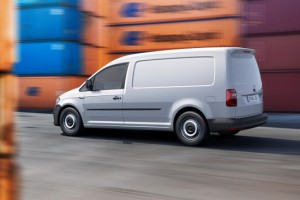
Volkswagen Caddy Maxi

The new Volkswagen Caddy Maxi goes on sale later in June in the UK.

Volkswagen has announced pricing for the latest version of the firm’s Caddy panel van range, which goes on sale in the UK later in June (first deliveries expected in September).

The new range has three trim levels, Startline, Trendline and Highline, with short or Maxi (long) wheelbases. The Maxi version adds 469mm to the short wheelbase and has a load capacity of 4.2 cubic metres, versus 3.2 cubic metres for SWB.

Here’s an overview of the price and specification for each trim level.

Startline

Prices for the range start at £13,500 +VAT for the base C20 Startline short wheelbase model with 2.0-litre TDI diesel engine.

Standard equipment on Startline includes electric windows and heated and electrically adjustable wing mirrors, a five-inch touchscreen Composition Colour radio system with DAB+ and Bluetooth capability, a lockable glovebox, plus safety features such as driver and front passenger front, side and curtain airbags, a new post-collision braking system and a seatbelt reminder.

Trendline

Trendline prices start from £15,670 +VAT.

In addition to the Startline spec, standard equipment for Trendline models includes full wheel covers, body coloured bumpers, handles and wing mirrors, rear parking sensors, cruise control, multi-function display, driver’s lumbar support, under-seat storage and sun visors with vanity mirrors.

Highline

The range-topping Highline model starts from £16,650.

Additional standard equipment includes  alloy wheels, front fog lights and daytime running lights, Climatic air conditioning, heated front windscreen, automatic dimming rear-view mirror, Thatcham category 1 alarm and windscreen wipers with intermittent control and rain sensor. A seriously well-specified van, in other words.

Engines

As I’ve written before, the new Caddy will initially be offered with two engine ranges, Euro 5 and Euro 6.

The Euro 5 engine range is built aounrd a 2.0-litre diesel with a choice of three power outputs, 75PS, 105PS and 150PS.

The Euro 6 engine range will be limited to a 102PS 2.0-litre diesel at launch. Clearly VW does not expect anyone to buy a Euro 6 Caddy until the law forces them to.

All models can be specified with a five or six-speed manual gearbox, while some higher-powered versions are available with VW’s DSG automated gearbox.

All Caddy models can be specified as ‘BMT’, meaning BlueMotion Technology modifications (start/stop system and battery regeneration) are fitted to reduce fuel consumption and CO2 emissions.  A standalone BlueMotion variant also joins the range: with a 2.0-litre EU6 102 PS engine and five-speed manual gearbox it can return 65.7 mpg and CO2 emissions of 114 g/km.

Customers will also be able to specify Adaptive Cruise Control with Front Assist and City Emergency Braking.  This system monitors the space to the vehicle ahead and maintains a specified speed and distance to ensure safe stopping.  This technology has been used in Volkswagen Passenger Cars and is proven to reduce third party injury claims by 45 per cent.

Updated Peugeot Partner Puts Fuel Saving First

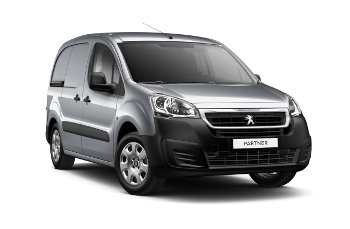
The 2015 Peugeot Partner

The 2015 Peugeot Partner comes with a new range of Euro 6 engines — on sale in June

We’re seeing a raft of updated van models hit the market at the moment, as manufacturers switch over their ranges to use Euro 6 diesel engines ahead of their mandatory introduction for light commercials.

This time it’s the turn of Peugeot, which has just started selling an updated version of its Partner small van.

The new van has an updated front end, but the big change is under the bonnet, where a new range of engines are is in place:

  • 1.6-litre VTi 98 Petrol 5-speed manual Euro 6
  • 1.6-litre HDi 75 5-speed manual
  • 1.6-litre HDi 92 5-speed manual
  • 1.6-litre HDi 92 ATV with Grip Control 5-speed manual
  • 1.6-litre BlueHDi 100 S&S 5-speed manual Euro 6
  • 1.6-litre BlueHDi 100 S&S 6-speed ETG Euro 6

According to Peugeot, the new engine range provides an average 15% reduction in fuel consumption and CO2 emissions. The most eco-friendly engine looks to be the 1.6-litre BlueHDi 100 Stop&Start model, which has CO2 emissions from just 108g/km and is available with a manual and automated gearboxes.

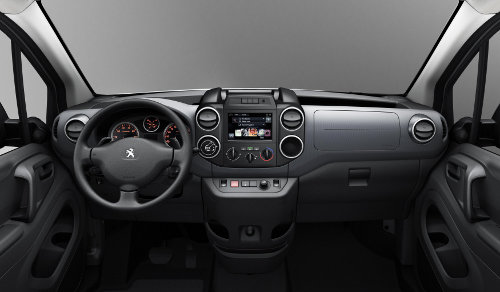
Inside the 2015 Peugeot Partner

Inside the 2015 Peugeot Partner

Other changes include the availability of Active City Brake, which is a collission avoidance system designed to slam on the brakes if you look likely to have a low speed rear-end collision. Peugeot say the effect of this system should help to reduce insurance costs, lowering the total cost of ownership (TCO) for business users.

The Partner Electric has been available for some time, and has been updated for this relaunch. The Partner Panel Van EV has a range of up to 106 miles and comes with an eight-year/60,000 mile battery warranty.

Prices start from £21,300 +VAT for the electric model, and at £13,215 +VAT for the regular panel van, which is also available in a crew cab format for around £2k more.

Used van prices flat in May but demand “steady” — BCA

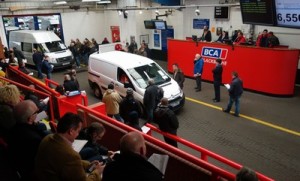
BCA van auctionUsed van prices at auction were largely unchanged in May, according to the latest figures from British Car Auctions (BCA).
All vans

Avg Age (mnths)

Avg Mileage

Avg Value

Sale vs CAP

May 2014

57.83

77,673

£5,587

99.79%

May 2015

58.07

78,012

£5,558

101.94%

Source: BCA (www.british-car-auctions.co.uk)

Average age, mileage and price were all nearly identical to May last year, although sale price as a percentage of CAP (book) price rose slightly, suggesting to me that BCA had a good mix of desirable stock through its halls last month.

Common, strangely painted or poor condition models remain hard to shift, as Duncan Ward, BCA’s Head of Commercial Vehicles, explains:

“While average values have stopped their meteoric year-on-year climb as volume has returned to the marketplace, demand has remained steady.  Buyers compete strongly for good condition, later plate vehicles, and any unusual or scarce derivatives will find a ready audience.  Condition is key to success, however, and buyers expect to see a full service history.”

“Poor condition stock, or readily available models in corporate colours need to be sensibly valued to sell first time as the competition is fierce for the buyer’s wallet.”

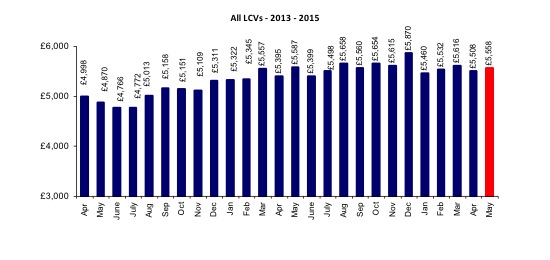
The changes seen in the used van market can be seen on this graph, which shows clearly that prices peaked in December last year — manic demand for courier vans ahead of Christmas — and have remained fairly flat after January’s fall:

BCA used van prices May 2015

Courtesy of BCA


One interesting quirk of last month’s figures was that part-exchange prices rose sharply. Part-ex vans are the oldest and cheapest vans that go through the auction halls. On average, they’re about 7 years old and have close on 100,000 miles.

The average price for a part-ex van rose by 6.7% to £3,773 in May, up from £3,533 in April, according to BCA. No idea why.


Updated Ford Transit Connect will cut fuel bills

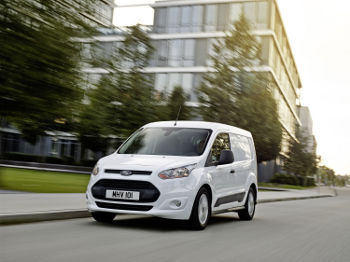
Ford Transit Connect

The Ford Transit Connect will be available with a new Euro VI 1.5-litre diesel engine this summer.

Ford has released details of the latest updates to its Transit Connect small van model, which will go on sale this summer.

The changes revolve around making the van Euro VI compliant and to this end, Transit Connects will get a new 1.5-litre TDCi diesel engine to replace the outgoing 1.6l model.

Ford promises a 6% reduction in fuel consumption with an official fuel consumption figure of 74.3mpg for the eco-friendly ECOnetic model.

The Transit Connect will also gain some new gadgets, including Traffic Sign Recognition and Lane Keeping Aid, while Ford’s SYNC2 smartphone integration technology will make its debut in the European van market.

The Transit Connect is available in van and crew cab bodystyles with L1 and L2 (short and long wheelbase) variants. Payloads of up to 1,000kg are available. Ford says that so far this year, sales are up by 93% compared with the same period last year.

The updated Transit Connect will go on sale this summer. There’ll also be an updated version of the smaller Transit Courier. Good news here — Ford has seen sense and will now offer this compact van with its fantastic 1.0-litre EcoBoost petrol engine. Fuel consumption of up to 55mpg should be possible, according to the firm.

In such a small van, especially in urban use, petrol makes far more sense than diesel, but few manufacturers seem willing to embrace this logic and sell it to their customers.

Missing MOT could cost £400 as used van market stumbles

James Davis, Manheim

James Davis, head of commercial vehicles at Manheim

When we are faced with an abundant choice of similar options, we tend to become choosy, dismissing good examples in favour of perfection.

So it is in the used van market, where auctioneers Manheim report that used vans with little or no MOT can fetch as much as £400 less than their freshly-tested counterparts.

Of course, there’s another reason for this too.

The lack of a fresh MOT on a used vehicle is sometimes a classic warning that there’s something wrong with it. Perhaps an MOT won’t be possible without major expenditure. Or perhaps the previous owner has a lazy and inadequate approach to maintenance.

You don’t know — but if you’ve got any sense, you buy another used vehicle, which does have a new MOT.

Commenting on this issue, James Davis, Manheim Director of Commercial Vehicles, said:

In recent years, our buyers have increasingly scrutinised van provenance, including detail of service history and number of spare keys. Now, length of MOT can be added to that list.

Mr Davis also confirmed my belief in the importance of a fresh MOT when buying used, observing that some vendors may have an ulterior motive for omitting to test newly de-fleeted vehicles:

I would add a further note of caution. Vendors who de-fleet based on an uneconomical mechanical repair or a pre-MOT test failure must pass this detailed knowledge onto their remarketing provider so it can be declared transparently at the time of sale.

Price action?

Manheim’s latest market analysis says that average used van sale prices rose by £19 to £4,109 in May. But this is a statistical smokescreen.

Average mileage fell by 2,670 miles, while average age fell a whopping seven months to 66 months. In other words, the average price, adjusted for age and mileage, fell in May. Possibly significantly.

If you’re wondering, Manheim says that the big fall in average mileage was due to lots of ex-fleet utility and distribution vans falling out of the numbers. Utilities, in particular, tend to keep their vans for longer than some users. Mileage is often modest and the vans are usually heavily-kitted out in the back, so longer ownership makes more financial sense.

Although Manheim is reporting that demand for used vans remains healthy, prices are clearly under sustained pressure. It will be interesting to see how the market copes over the summer season.


Nissan adds 7-seat e-NV200 model to electric range

Nissan e-NV200 7-seater

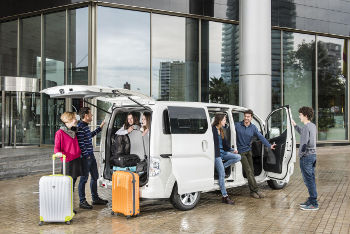
The Nissan e-NV200 7-seater still leaves ample luggage room behind the third row of seats. Both rows can be folded out of the way.

I’ve written about the popular and successful Nissan e-NV200 electric van quite a bit on this website.

Nissan has now announced that this model will also be available in 7-seat people carrier/minibus format from this summer.

It’s already available as a 5-seater Combi, but the new model – the world’s first pure electric seven seater – is being introduced in response to huge interest from fleet operators and larger families. They’re keen to capitalise on the market-leading e-NV200’s low running and maintenance costs and zero emissions performance.

Private hire companies and shuttle services in particular have been keen to see its introduction since the e-NV200 was launched last year. This isn’t a surprise when you consider that the e-NV200 has a range of 106 miles and fuel costs from just 2p per mile, according to the manufacturer’s figures.

Nissan estimates that the total cost of ownership of an e-NV200 could be £2,500 lower than an equivalent diesel model over three years, based on a driving cycle of 20,000 miles per year — or 79 miles per day. Urban taxi, anyone?

Prices start at £19,895 (incorporating the Government Plug-In Car Grant) for those choosing the convenience of the Nissan Flex battery leasing option and from £23,400 (inc PiCG) for those purchasing outright.

At the same time, the e-NV200 line-up will be further strengthened with the addition of a new ‘Evalia’ version available in five and seven-seat form – offering a ‘full trim’ option for the ultimate combination of technology, style, sophistication and comfort.

The developments mean the e-NV200 will be available as a panel van, five or seven-seat Combi, or five or seven-seat Evalia – giving customers the freedom to specify a vehicle that best suits their lifestyle or business requirements.