Category Archives: Van News

News and articles about UK vans – especially information relevant to the van hire market. Coverage of new van model launches from all the major manufacturers – Ford, Mercedes, Volkswagen, Peugeot, Fiat and Citroen.

Vauxhall updates van service offering with 90% UK coverage

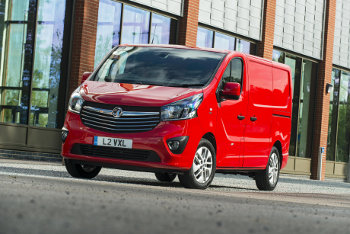
Vauxhall Vivaro

The new Vauxhall Vivaro

Vauxhall’s refreshed Premier Van Centre is set to shake-up the fleet aftersales sector with over 90 per cent of all UK businesses covered within a 30-minute drive time of one of the company’s 100 Premier sites.

Vauxhall van fleet customers can expect diagnostics without appointment, lead times no longer than three days and a dedicated Premier Van Helpline.

Vauxhall will also collect and deliver vehicles within a ten-mile radius (five miles within the M25) and offer a courtesy vehicle free of charge.

All Premier Van Centre sites will carry out Class 7 MOTs and have a 5-tonne lift on-site.

Vauxhall’s Premier Service Centres have to meet a strict selection criteria. Only sites that can provide sales and service support and meet strict service level requirements can qualify for Premier Van Centre status. Premier Van Centres are also listed on Epyx 1link for ease of identification and online service booking requests.

Repairs are carried out at fixed labour rates with job sheets completed on the day the work is completed and invoiced within five working days, so no hidden or unexpected surprises. Customers can also take advantage of a while-you-wait option when a repair is expected to be completed on the same day.

Once work is complete a 25-point safety check is carried out including all safety enhancements and software updates. Vauxhall even throws in a wash and vac with every annual service and free fitting of wiper blades.

Motorbodies Luton was the first Vauxhall retailer to be granted Premier Van Centre status.

“This is a fantastic opportunity to demonstrate our commitment to looking after the needs of van customers,” said Rachel Parker, Operations Director.

“We always strive to deliver the very best in customer service and aftersales support.”

The announcement of Premier Van Centres follows the launch of the all-new British-built Vivaro, which further enhances Vauxhall’s award-winning van range.

“We are delighted to announce full details of our refreshed Premier Van Centres,” said Richard Collier, Vauxhall’s National Commercial Vehicle and B2B Sales Manager.

“The enhanced programme brings industry-leading customer experience to Vauxhall Commercial Vehicle fleet customers with over 90 per cent UK coverage. Our nationwide network of van experts will deliver the highest standards of skills and expertise whilst also helping fleets save time and money.”

Vauxhall isn’t the only company attempting to up its game in the van fleet service sector — Ford launched Transit24, a similar service, shortly after the launch of its Vivaro-sized Transit Custom van, last year.
New van registrations up 34.5% in July

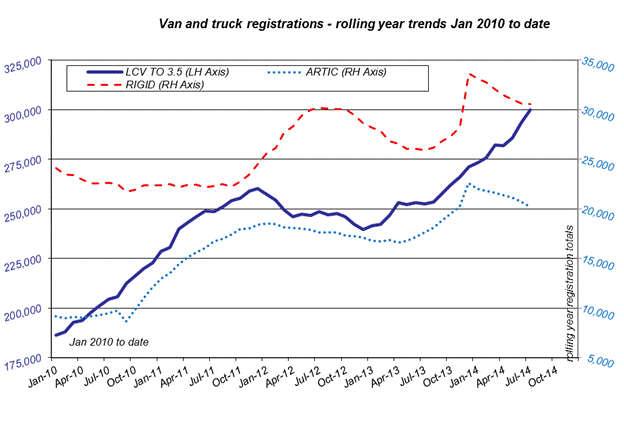
Van registrations rose by 34.5% in July, compared to the same period last year, according to the latest figures from the SMMT.

July’s strong performance leaves new van registrations up by 18.9% so far this year, compared to the first eight months of 2013, although it’s worth noting that July’s total of 24,764 new registrations was considerably lower than the 30,712 logged in June.

Despite this, year-to-date sales are now broadly in-line with 2008  levels, possibly marking the end of the long-running depressed market for new vans.

Second-half sales may be helped by a raft of new van models arriving on the market this summer, including the new big Transit, new Vauxhall Vivaro and Renault Trafic, updated Renault Master and new Ford Transits Connect and Courier, as well as the ongoing strong performance from the Ford Transit Custom, which was the UK’s best-selling commercial vehicle in July.

Commenting on the figures, SMMT chief executive Mike Hawes said:

“The commercial vehicle market has delivered another strong month overall, driven by an impressive number of van registrations. This reflects growing business confidence in the economy and the variety of highly capable and efficient vans on the market.”

The graph below shows how van registrations have recovered (the dark blue line) over the last year:

SMMT van registrations July 2014

Van registrations Jan 2010 – July 2014 (courtesy of SMMT)

Bigger is better

Although new registrations rose in all sectors of the van market in July, the biggest increases were at the top end of the weight range.

Sales of vans from 2.0t – 2.5t rose by a massive 78% to 5,365 units, compared to July 2013, while sales of 2.5t – 3.5t rose by 32.7% to 13,428 — these heavier vans drive the highest volumes in the van sector.

In contrast, sales of vans under 2.0t — a disappearing breed — rose by just 4.8% to 3,005, and are actually down by 6.6% on a year-to-date basis.

Last old-school Vauxhall Vivaro rolls off production line

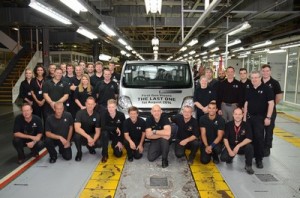
Vauxhall Vivaro last oneVauxhall reached an important milestone on Friday as the last current generation Vivaro rolled off the production line at its Luton plant.

Jubilant workers cheered off the Vivaro van, the 957,107th built there, before they start building the all-new model later this month.  This milestone vehicle will take pride of place at Vauxhall’s Heritage Centre at its Griffin House headquarters in Luton.

The all-new Vivaro secures 1,200 jobs, a 10-year contract and a £185 million investment at the Luton facility. Vauxhall announced last month that it will add a second shift at its Luton plant in January 2015, creating around 250 new jobs.

Rival Ford shut its Transit factory in Southampton last year making Vauxhall’s Luton facility the sole flag bearer for UK van manufacturing – on a site where over eight million vehicles have been built since 1905.

The plant is a significant contributor to the local and national economies building nearly a million Vivaro vans since 2001, including 44,000 vans built in 2013 — a full half of the UK’s commercial vehicle production last year.

Vauxhall also remains a major exporter with 52 per cent of production destined for European markets.

 “The current Vivaro has been a huge success and our workforce at Luton is very much looking forward to building the all-new model,” said Tim Tozer, Vauxhall’s Chairman and Managing Director.

“The Vivaro van is of critical importance to Vauxhall and its manufacturing facility in Luton. I’m very proud of the men and women who build this vehicle to world class levels of quality and productivity.”

Used LCV prices hit new record in Q2

BCA van auctionUsed commercial vehicle prices set new records during the second quarter of 2014, according to remarketing specialists BCA.
The firm said that average prices for LCVs rose to £5,460 during the second quarter, 11.9% (£583) higher than the same period last year.

Average age and mileage were broadly in-line with last year’s figures, at 58 months and 79,140 miles respectively, with sales prices continuing to average 100% of CAP book price.

Longer term value growth in the used LCV sector can be seen when comparing 2014 to 2012.  Average values have risen by £1,181 (27.5%) over the 24 month period as the shortage of good quality stock continues and demand increases as economic conditions improve.

All vans

Avg Age (mnths)

Avg Mileage

Avg Value

Sale vs CAP

Q2 2012

57.41

77,275

£4,279

98.32%

Q2 2013

58.18

78,687

£4,877

100.55%

Q2 2014

58.04

79,140

£5,460

100.23%

Source: BCA

BCA LCV prices 2012-2014

Source: BCA Pulse

Commenting on the figures,

BCA’s General Manager – Commercial Vehicles, Duncan Ward, said:

“There can be little doubt that the improving economic background is giving a boost to the used LCV market, and small and medium-sized enterprises (SMEs) remain positive about future prospects.

News of massive infrastructure projects such as HS2 which will generate thousands of construction jobs, as well as numerous A-road improvement schemes and house building projects will do much to improve confidence in small businesses serving the civil engineering and construction industries.  The building and associated trades are some the biggest buyers of used LCVs, so we should expect demand to remain relatively strong in the months ahead.”

“Additionally, the continued growth in online shopping and home delivery services has created another layer of demand for used panel vans, which is keeping values firm.”

Mr Ward emphasised that quality and specification are key, noting that:

“Competition remains very strong for retail quality used stock, and values for these best quality vans remain exceptionally strong, typically outperforming guide expectations by some considerable margin.

Buyers particularly like any vehicle with a good useable specification or specialist equipment and there is always demand for Lutons, dropsides and tippers.”

Vanrental.co.uk says:

It’s said that a classic symptom of a stock market bull run that is approaching its peak is when taxi drivers, neighbours and work colleagues start discussing stock tips.

In much the same way, the never-ending rise of used van prices seems to have become a universal topic of conversation within the industry — which makes me think that this trend may be nearing its peak, as I’ve said previously.

Although timing the top is nigh-on impossible, I’m standing by my judgement for now, as I still believe that changing demand dynamics — as new van registrations rise to pre-recession levels — could be the first trigger for changes to the supply-demand balance in the used marketplace.

Slippery new Mercedes-Benz Vito promises 49.6mpg

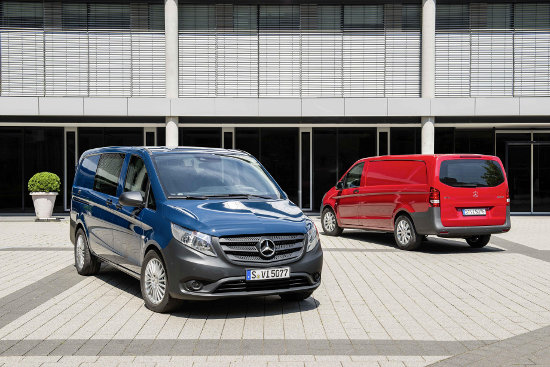
Mercedes-Benz has unveiled details of the latest version of its popular Vito medium van.

The new model will come in two wheelbases, three lengths and three weight variants. Unusually for this class of vehicle, it will also come in a choice of front- or rear-wheel models, enabling buyers to tailor the van to their requirements and gain optimimum fuel efficiency and driving performance.

The new Mercedes-Benz Vito

The new Mercedes-Benz Vito

The tailored theme continues with Vito panel, Crew and Tourer models, with the Tourer (minibus/people carrier) featuring modified suspension to provide a smoother ride, along with the most comprehensive selection of air bags yet seen in a commercially-derived vehicle.

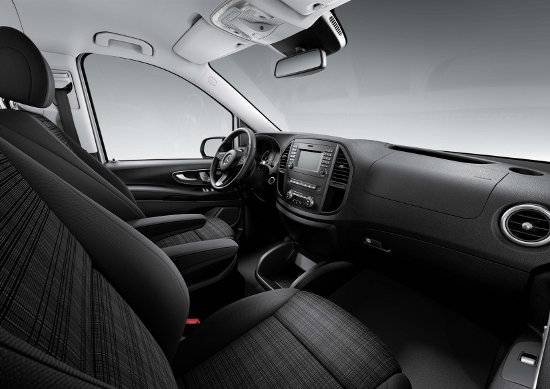
Internally, the Vito has also been upgraded, and is following the current trend of offering car-like levels of comfort, finish and specification. Indeed, judging from this photo, the new Vito’s cab will put many mass-market cars to shame:

New Mercedes-Benz Vito interior

Inside the new Vito — there’s no mistaking the fact that this is a Merc

Engines

Panel and Crew van models of the new Vito will come with one of two engines: front-wheel drive models will benefit from a lightweight and compact 1.6-litre engine, with a choice of 88hp and 114hp power outputs.

Rear-wheel drive variants, which are designed for heavier loads and towing, will use a 2.15-litre diesel with a choice of three power outputs, 136hp, 163hp and 190hp. Additionally, the Vito 119 BluTEC will be the first Euro 6 model in its class.

Six-speed manual transmissions handle power transmission as standard. The 7G-TRONIC PLUS automatic transmission with torque converter is optional for the Vito 114 CDI and Vito 116 CDI and standard equipment on the Vito 119 BlueTEC. For vans it is the world’s only automatic transmission with torque converter and seven gears.

The new Vito has a slipper 0.32 drag coefficient and the firm says that when combined with the 116 CDI BlueEfficiency variant, this will provide combined cycle fuel efficiency of up to an impressive 49.6mpg (I bet they were disappointed they couldn’t get it up to 50mpg!).

Weights and lengths

The new Vito is designed to offer competitive payloads across the range. The two core models are 2.8t and 3.05t gross vehicle weight models, while a heavy duty 3.2t model is also available in rear-wheel drive guise.

In front-wheel drive, medium-wheel base spec, Mercedes says that the Vito will have an unladen kerb weight of 1,761kg, giving a payload of 1,289kg for the 3.05t model. Payload rises to 1,369kg for the heaviest model, the 3.2t rear-wheel drive Vito.

All three lengths are 140 millimetres longer than the preceding Vito, thanks to an improved pedestrian safety design.The resulting vehicle lengths are 4,895 mm, 5,140 mm and 5,370 mm. The maximum vehicle height is 1,910 mm depending on the model. Consequently all variants are significantly below the important two-metre mark and should therefore fit standard multi-storey/underground car parks and automatic car washes.

UK prices

Mercedes says that UK pricing and specification details have not yet been confirmed, so we’ll have to wait a little long to see how it compares to key competitors the Ford Transit Custom and Volkswagen Transporter.

However, I expect that even if it costs a little more upfront, in the Merc tradition, used values will be very strong, making the total cost of ownership competitive.

Update: The new Vito should be coming to the UK in 2015, according to Merc’s parent company, Daimler:

Vans get vanity, says CAP — will second-hand prices blush?

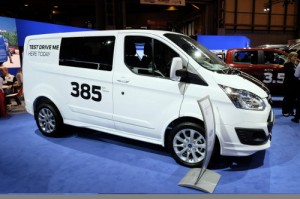
Ford Transit Custom at CV Show

Ford has marketd the new Transit Custom heavily to owner-drivers such as tradesmen, who value its car-like qualities and style.

Automotive data specialist CAP says that the van market has become more sensitive to aesthetics and model freshness than ever before.

The firm says that until now, the van world has generally been considered immune from the pace of change that sees car designs changing more often today than ever before.

For example, last year, CAP reported that the shelf life of some car models has halved since the 1970s, as manufacturers compete to keep their products as fresh and interesting as possible.

Van model cycles have always been longer, as operators have preferred to focus on proven reliability, cost of ownership and other such practicalities. However, the growing importance of aesthetic appeal in the van market has been identified by CAP’s van price forecasting expert, Tim Cattlin, who says the days of vans being seen purely as a work tool are over:

“… the days of the van being seen as purely a tool to get a job done are clearly ending and the signs are strongest in the one tonne panel van market.

For example, Ford has spent the first 18 months of the life of the Transit Custom successfully cultivating the ‘artisan’ retail smaller business sector.  Looking at registration statistics there has been a high proportion of ‘Trend’ and ‘Limited’ models, with relatively high specification, sold.”

However, Tim Cattlin highlights the risk that with vans being looked at in terms of fashion, as well as utility, second-hand values could become more volatile:

“Looking again at the 4×4 lifestyle vehicle, key players in that sector such as Mitsubishi, Nissan, Toyota and Ford are fully aware of how their current offering can fall out of fashion quickly. When that happens and a model starts to fall behind its peers in terms of image, then demand drops off in the used market sufficiently to cause more rapidly falling values.

“In our own forecasting of future light commercial vehicle values we are now extending this lifecycle effect to other areas of the LCV market because we believe it will have an increasingly significant bearing on the value realised at disposal time.”

Although the near-iconic status of the Volkswagen Transporter — a van that always has strong residuals is not news — the idea that this situation could spread more widely through the used van market is interesting, and could have unexpected consequences, as Mr Cattlin explains:

“In the end, the creep of vanity into the van market is a mixed blessing. It ensures a more dynamic marketplace, with exciting and fresh offerings appearing with increasing regularity.  But it also threatens faster depreciation as model ‘shelf life’ begins to shorten and end users are constantly drawn to the newest vehicle on offer.”

For van rental companies, which tend to change their vehicles regularly, I’d hope that this wouldn’t have much effect on resale values — and indeed, the best way to be driving the latest van at all times is to take advantage of long-term rental agreements, rather than buying.

On the other hand, van buyers looking at older vans may have to face a dilemma that has been present in the car world for a long time: you can buy good quality, but unfashionable, used models for very attractive prices, but when the time comes to sell them, they are worth virtually nothing — in other words, the total cost of ownership isn’t necessarily lower, but the initial outlay might be.

Citroën makes electronic stability control standard on new vans

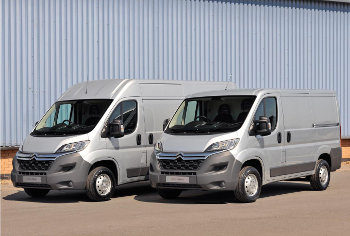
Citroën Relay 35 L3H2 (l) and L1H1 (r)

This year’s new Citroën Relay already came with ESC as standard — now all other Citroën vans will do, too.

Electronic Stability Control (ESC) is now standard specification on all Citroën Nemo, Berlingo and Dispatch LCVs produced from 1 July 2014.

With the recent launch of the New Relay, the entire Citroën LCV range now has ESC as standard. In addition to fitting ESC, Nemo, Berlingo and Dispatch LCVs produced from1 July also benefit from further specification improvements.

ESC uses steering angle data and other information from the vehicle to detect if the vehicle is about to travel in a different direction to that indicated by the steering wheel position.

ESC then automatically reduces engine power and brakes the appropriate wheel to help the driver maintain control.

The firm has also announced a number of other minor specification and pricing changes, including:

  • Software improvements to its ETG automated gearbox to provide smoother start-ups and acceleration;
  • All Berlingo models will be fitted with Hill Start Assist as standard from 1 July;
  • Entry level Dispatch models will move from 15-inch rear wheels and drum brakes to 16-inch wheels with disc brakes

Commenting on the changes, Jeremy Smith, Citroën’s Head of Commercial Vehicles & Business Sector Operations, said:

“Citroën continues to improve the specification of its award-winning LCV range. These latest changes to the Nemo, Berlingo and Dispatch, together with the recently launched New Relay, will further enhance the competitive positioning of our LCV range and will significantly benefit fleet and business customers here in the UK.”

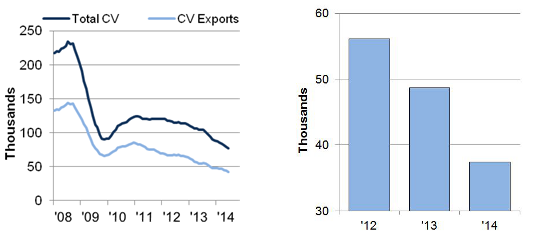
CV manufacturing falls 23% in first half of 2014

UK commercial vehicle manufacturing output fell by 23% during the first half of 2014, according to the latest figures from the Society of Motor Manufacturers and Traders (SMMT):

CV manufacturing Jun-13 Jun-14 % Change YTD-13 YTD-14 % Change
Total 8,507 6,348 -25.4% 48,664 37,460 -23.0%
Home 3,674 3,054 -16.9% 24,021 18,598 -22.6%
Export 4,833 3,294 -31.8% 24,643 18,862 -23.5%
% export 56.8% 51.9% 50.6% 50.4%

Source: SMMT

As the figures in the table show, the proportion of vehicles made for export has remained relatively constant compared to the first half of last year, at just over 50%, although June did see a small rise in export orders, compared to June 2013.

2013 was of course a year of considerable restructuring (capacity reduction and closures) in the UK CV manufacturing industry. That’s perhaps the main reason why there has been such a steep comparative decline — this year’s figures are likely to be the new normal…

SMMT CV manufacturing graphs June 2014

Source: SMMT

Commenting on the figures, Mike Hawes, SMMT chief executive, claims that despite the poor figures, there are signs of optimism:

“UK commercial vehicle manufacturing figures continue to be swayed by operational restructuring in 2013 and the pull-forward of demand in the heavy commercial sector. There are signs of optimism, however, with double-digit growth in European commercial vehicle registrations, and the emergence of new products and investments across the sector.”

Mr Hawes is right to point out that CV registrations have risen in the UK and Europe this year, thanks to rising demand for new vans, but I’m not sure how much effect this will have on the UK’s CV manufacturers, as there are now very few volume manufacturers, except — notably — Vauxhall, which continues to make the Vivaro van at its Luton plant.

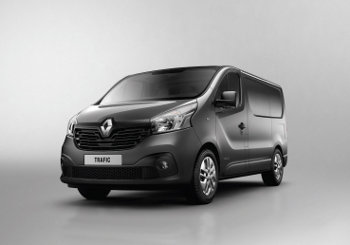
Is Fiat planning a new van based on the Renault Trafic?

New 2014 Renault Trafic

Signs suggest that Fiat is planning a new van model based on the Renault Trafic, to replace the outgoing Scudo model.

Renault issued a fabulously tight-lipped press release today, stating that:

Renault and Fiat have signed an agreement under which Renault will supply Fiat with a light commercial vehicle based on a Renault platform.

The styling of the Fiat vehicle will be developed by Fiat and will feature unique and distinctive elements on the model, branded Fiat Professional.

The vehicle will be manufactured by Renault in France starting from the second quarter of 2016.

So what can could Renault provide from its current range, that Fiat doesn’t already have?

All things considered, there’s only one possible candidate: the new Renault Trafic, which would make a perfect replacement for the current Fiat Scudo.

Choosing the Trafic as a base vehicle would provide Fiat with a popular medium van, that can compete directly with the Trafic, Ford Transit Custom, VW Transporter and Mercedes-Benz Vito, filling the gap between Fiat’s Ducato large van and the Doblò small van.

Vans A2Z highlights that the manufacturing agreement for the current Scudo ends in 2017, and suggests that ‘unique and distinctive elements’ of the new van may refer to its drivetrain — something that makes sense to me, too: Fiat tends to use its own engine and drivetrain components in joint venture vans, as in the current and previous model Ducato, as well as others.

The question now is whether PSA Peugeot Citroen will stick with the slightly smaller format of the Expert/Dispatch (currently also sold as Fiat Scudo and Toyota Proace), or whether when the model is next updated, PSA the model will be enlarged to fit the mould created by the Trafic, and its rapidly growing peer group.

Ford & Volkswagen win at Auto Express Awards

New Ford TransitFord has continued its run of award-winning form by picking up the Auto Express ‘Van of the Year’ award for its brand-new Transit, the first examples of which have gone on the road in the last few weeks.
It’s the second consecutive win in this prestigious category for Ford — last year, the firm’s Transit Custom model won, in its introductory year. Commenting on this year’s award, Steve Fowler, Auto Express editor-in-chief, said:

“Ford really has thrown absolutely everything at it and come up with one of the best vans we’ve ever seen. The numbers stack up so well for businesses, while it’s easier than ever to load and more enjoyable to drive.”

Ford’s Fiesta also picked up the ‘Best Supermini’ award, while the Ford Ranger managed a commendation in the pick-up class. However, the class winner in the pick-up class, which these days straddles the commercial vehicle and car markets, was the

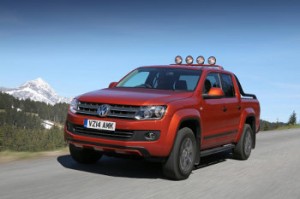
Volkswagen Amarok Canyon edition

The new Volkswagen Amarok Canyon limited edition

Volkswagen Amarok, which bagged the ‘Best Pick-Up’ award for the third consecutive year.

Commenting on the award, Steve Fowler said:

“The Amarok remains the best pick-up by some margin. Nothing comes close to its brilliant combination of carrying ability and car-like road manners, with the efficiency expected by demanding buyers. The fact it has the rugged looks required of a class-leading pick-up is the icing on the cake.”

As we’ve seen in the van sector, where engine sizes are coming down, pick-ups are also managing with smaller engines than in the past.

The Amarok uses a 2.0-litre diesel engine in all models, but the twin-turbo configuration means it still delivers a whopping 180PS of power and 400Nm of torque, giving it a healthy 3t towing capacty and 1.1t payload.