Category Archives: Van News

News and articles about UK vans – especially information relevant to the van hire market. Coverage of new van model launches from all the major manufacturers – Ford, Mercedes, Volkswagen, Peugeot, Fiat and Citroen.

UK van market gains 28% in February

Van registrations rose by 28.2% in February, compared to February 2013, according to the latest figures from the SMMT.

The gains in the light commercial vehicle sector build on January’s gains and mean that total commercial vehicle registrations rose by 17.5% last month, despite a 27.3% fall in truck registrations, as the heavy goods market continues to sag after last year’s pre-Euro VI sales boost.
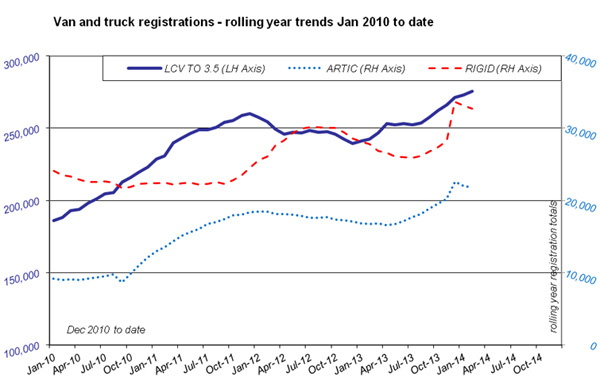
UK commercial vehicle registrations Jan 2010 - Feb 2014

UK commercial vehicle registrations Jan 2010 – Feb 2014 (courtesy of SMMT)

The growth in van registrations means that UK van sales have risen by 18.5% so far this year, compared to the same period in 2013.

UK van and truck registrations: 2014 and % change on 2013

February % change Year-to-date % change Rolling year % change
Vans 11,731 28.2% 29,853 18.5% 275,728 13.8%
Trucks 1,589 -27.3% 3,406 -32.8% 54,555 22.4%
Total 13,320 17.5% 33,259 9.9% 330,283 15.1%

Data courtesy of SMMT (www.smmt.co.uk)

Gains in the van market were concentrated in the 2.0t – 2.5t (up 111%) and 2.5t – 3.5t (up 23.8%) categories, as these figures show:

Month Feb-14 Feb-13 % change
Pickups 943 1,047 -9.9%
4x4s 170 131 29.8%
Vans <= 2.0t 1,499 1,494 0.3%
Vans > 2.0 – 2.5t 2,664 1,262 111.1%
Vans > 2.5 – 3.5t 6,455 5,215 23.8%
All vans to 3.5t 11,731 9,149 28.2%

Data courtesy of SMMT

 These gains are encouraging, as medium and large vans are the workhorses of the economy — businesses in all sectors will experience a rise in demand for such vehicles as the economy picks up. 

Mike Hawes, chief executive of the SMMT, says that he expects more of the same as the year continues:

“Growing van registrations supported the February vehicle market as middle and heavy-weight vans enjoyed healthy rises, reflecting improving economic activity,” said Mike Hawes SMMT Chief Executive. “Registrations of trucks over six tonnes continued to decline as the market adjusts to new Euro-6 legislation. We anticipate this rebalancing act to be a factor for some months yet, while van volumes should remain on an upward trend.”

 

Volkswagen Multivan Alltrack concept offers 4×4 luxury

Volkswagen Multivan Alltrack concept vehicle

Volkswagen Multivan Alltrack is still a concept vehicle at this stage.

The all-wheel drive option has always been a popular choice with Volkswagen commercial vehicle buyers, and the German firm says that 20% of the commercial vehicles it sells in Europe are ordered with all-wheel drive.

Obviously this slice of the market includes the Amarok pick-up, but the firm’s 4MOTION all-wheel drive system has always been a popular option on its vans and cars, and does add unique versatility to these models.

I’ve always been a fan of VW’s all-wheel drive van offerings, but the firm’s latest concept model, the Multivan Alltrack, takes the concept further than ever before, blurring the boundaries between SUV, van, people carrier and campervan in a direct nod to the popularity of vehicles such as the BMW X5, Volkswagen Touareg and Range Rover Sport.

Volkswagen says that the Multivan Alltrack ‘combines stylish nautical design with rugged off-road features’. I’m not sure which elements are nautical — other than the vehicle’s suitability for towing a boat, something VW is keen to emphasise — but the rugged off-road features are there for all to see in the form of 19-inch wheels, black plastic wheel arch extensions and rubbing strips, underbody protection and 4MOTION all-wheel drive system.

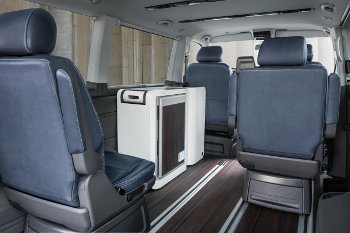
Interior of Volkswagen Multivan Alltrack

Inside the Multivan Alltrack are independently movable leather seats, along with a removable kitchen module that includes cooking facilities, a fridge and a water tank and tap.

Under the bonnet, the high-spec theme continues: the Multivan is powered by VW’s range-topping 2.0 TDI (132 kW/180 PS) engine, the power from which is transferred to a Haldex multi-plate coupling mounted to the rear axle. It has an approach angle of 21° and a departure angle of 15°.

Inside, it’s more of the same — Volkswagen’s floor track system allows the individual leather seats to be moved independently, while a removable kitchen module means that you won’t have any problem brewing up (or keeping the champagne cold).

I doubt the Multivan Alltrack will make it into production in its current format, but it showcases the potential of the Transporter/Caravelle model, at a time when competition from the new Ford Transit Custom and Vito in the mainstream van/minibus market is intensifying.


What Type Of Van Makes The Best Ambulance?

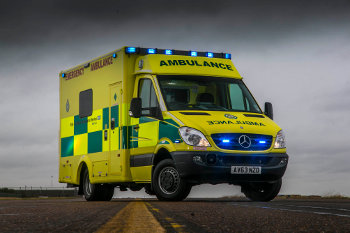
Mercedes-Benz Sprinter ambulanceIf you’ve ever wondered which vans make the best ambulances, then let me explain.
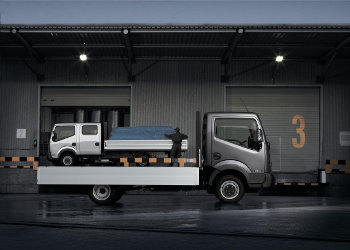

At the top of the pyramid, the kings of the emergency medical jungle are coachbuilt Mercedes Sprinter conversions.

Amongst the lower orders, you may occasionally see ambulances based on the Renault Master, Iveco Daily, Volkswagen Crafter, Fiat Ducato, Citroen Relay and even the humble Ford Transit, but there’s no doubt who’s boss.

An example of the Sprinter’s supremacy in action is the latest order from the East of England Ambulance Service NHS Trust, which has just started taking delivery of a 147-ambulance order worth some £15m. All the new ambulances are based on Mercedes-Benz Sprinter 519 CDI chassis, fitted with purpose-designed box bodies by German specialist WAS.

At the beginning of this year, the Trust’s fleet contained 283 ambulances, of which 45 were non-Mercedes models. However, these outsiders are being systematically replaced as the fleet is renewed, and by the end of this year, every one of the newly-expanded fleet’s 310 emergency ambulances will be a Mercedes-Benz.

The Trust’s Head of Fleet, John Hole, explains why:

“The 5.0-tonne Mercedes-Benz Sprinter is well proven in operation and offers the combination of performance, reliability, safety and carrying capacity that allows us to provide a high-quality service to patients.”

The Trust’s latest Sprinters are powered by smooth and fuel-efficient 190 hp V6 common rail turbodiesel engines and additionally equipped with Telma electro-magnetic engine retarders to reduce wear and tear and enhance braking performance. Key to the model’s appeal for ambulance services nationwide is the availability of a fully automatic gearbox.

“This makes life a lot easier for our drivers, particularly when they’re on a ‘blue light’ call, as it leaves them free to concentrate fully on the road,” says Mr Hole.

Other optional features specified to ensure the Sprinters are ‘fit for purpose’ include air conditioning, adjustable steering wheels, an outside temperature gauge, halogen fog lamps, Comfort seats for driver and front-seat passenger, and an airbag for the passenger (the driver’s bag is standard).

The Sprinter’s well-known performance, durability and sophistication mean that it continues to be the preferred choice of courier fleets and other demanding van users — and it’s no surprise that the heavyweight 5t version continues to be the base vehicle of choice for amublance fleets.

I suspect that Ford’s new two-tonne Transit may edge into the emergency service market when it appears later this year, but its short history and lack of proven conversion options may work against it for the first year or two.

New Nissan NT400 Cabstar Goes On Sale In UK

Nissan NT400 Cabstar

The new Nissan NT400 Cabstar is available in single and double cab models.

The new Nissan NT400 Cabstar has gone on sale across Europe. The updated range benefits from improved payload, a new high output engine option and longer service intervals, as well as improvements designed to make coachbuilt conversions easier to integrate with the base vehicle.

All engine options are fully compliant with Euro 5b+ emission regulations while the new 145hp (107kW) high output engine option is 45kg lighter than the unit it replaces, benefiting both economy and improving the vehicle payload.

The new Cabstar is available in single and double cab forms, in three different wheelbase lengths, five gross vehicle weights from 2.8t to 4.5t, and three power output options all from the same common rail 2.5-litre turbo diesel engine. The three power options are low (121hp/90kW, 250Nm), mid (136hp/100kw, 270Nm) and high (145hp/107kW, 350Nm).

The 145hp option replaces the previous 3.0-litre ZD30 unit and is new to the NT400 Cabstar. Although it is produced by a smaller engine, torque is identical and power is just 5hp less than from the old engine, and Nissan believes the benefits it provides in terms of fuel economy, emissions and operational efficiency are worth the slight cut in outright power.

To make the job of the specialist body builders as easy as possible, Nissan has equipped the NT400 Cabstar with a comprehensive array of connectors, electrical pre-equipment and warning lamps to enable a virtual ‘plug and go’ operation.

The cab has also been upgraded, with new USB/iPod compatible audio equipment and integrated Bluetooth connectivity for hands-free phone use. The dashboard instruments have also been tweeked, while a winter pack is now available, which provides a rear heater in the crew cab model, a heated driver’s seat and heated and electrically adjustable wing mirrors.

Volkswagen Crafter To Get Euro VI Engines

Volkswagen Crafter vanThe Volkswagen Crafter will soon be availabe with Euro VI engines, making them some of the cleanest in their class.
The Euro VI standard is the most stringent European standard for exhaust emissions and Volkswagen says that a combination of three systems — Selective Catalytic Reduction (SCR), Exhaust Gas Recirculation (EGR) systems, and a built-in Diesel Particulate Filter — will be used to stay within the limits imposed by Euro VI.

Volkswagen’s Euro VI range will be available on selected Crafter models with kerbweights between 2,355 kg and 2,815 kg in medium and long wheelbases.  The firm’s Euro VI engine is a 2.0-litre TDI engine with an output of either 163 PS or 114 PS, the latter of which is new to the Crafter range.  The 114 PS EURO VI engine can also be specified with Volkswagen’s BlueMotion Technology, which will provide fuel economy of up to 35.3 mpg (combined) and emissions of just 210 g/km — not bad for a large van.

Crafter Euro VI model prices will start from £28,935 ex. VAT.

Citroën To Unveil New Relay At April’s CV Show

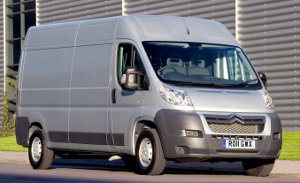
Citroen Relay

The new Relay is expected to be an updated version of the current model (shown above).

Citroën will unveil an updated version of its popular Relay large van at the Birmingham NEC CV Show this April. The new Relay, which is due to go on sale during the third quarter of this year, will go head to head against the all-new two tonne Ford Transit, which has had outstanding reviews from early press tests.

Full details of the New Relay will be released at the CV Show. However, the range is expected to include all the major model configurations found in the current Relay range.

As such there will be a wide choice of panel vans, chassis cabs, chassis crew cabs and back-to-back cabs. All will be offered in a variety of gross vehicle weights, with a range of low emission, fuel-efficient HDi diesels. In addition the New Relay range will include ready-bodied Specialist Models, such as dropside trucks, tippers and Luton vans – and a full range of Ready-to-Run conversions.

I’ll publish photos and more details when they become available following the launch, which will take place on April 29 2014 at the CV Show.

UK Commercial Vehicle Manufacturing Down 14.6% In January

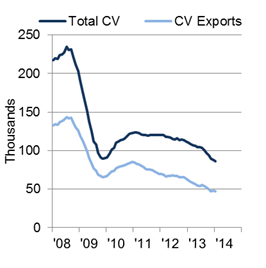
Commercial vehicle manufacturing output fell by 14.6% in January compared to January 2013, continuing a decline that has seen output drop by 32% since January 2012.

The decline shows no sign of slowing, and perhaps worryingly, demand fell faster at home (down 17.9%) than it did in our primarily European export markets (down 10.8%):

CV manufacturing Jan-13 Jan-14 % Change YTD-13 YTD-14 % Change
Total 7,822 6,681 -14.6% 7,822 6,681 -14.6%
Home 4,196 3,445 -17.9% 4,196 3,445 -17.9%
Export 3,626 3,236 -10.8% 3,626 3,236 -10.8%
% export 46.4% 48.4% 46.4% 48.4%

Data courtesy of SMMT (www.smmt.co.uk)

CV output rolling Jan 2008-2014

Graph courtesy of SMMT.

Mike Hawes, the SMMT’s chief executive, believes the change is due to various companies’ restructuring their manufacturing activities in 2013, and to the introduction of Euro 6 emissions legislation for lorries:

“New Euro-6 engine emission legislation came into effect from January this year, a change which invariably results in a lull in UK heavy commercial vehicle manufacturing and a contributor to January’s 14.6% fall in output,” said Mike Hawes, SMMT Chief Executive.

While van production was strong in the month, the 2014 market will, for some months, continue to be affected by the Europe-wide restructuring that occurred last year.”

It’s true that there was a dip in truck registrations in January, following the surge seen during the second half of last year, but it also seems clear to me that the UK’s CV manufacturing industry is now unlikely ever to recover the capacity lost by the closure of Ford’s Southampton plant and as a result of the other restructuring that took place in 2013.

Used Van Prices Hit New Record In January

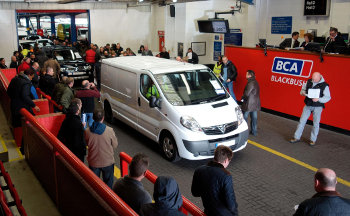
BCA van auction at Blackbushe

Used LCV values hit a new record in January 2014, but price growth appears to be slowing.

The relentless march upwards of used van values continued in January, as I predicted.

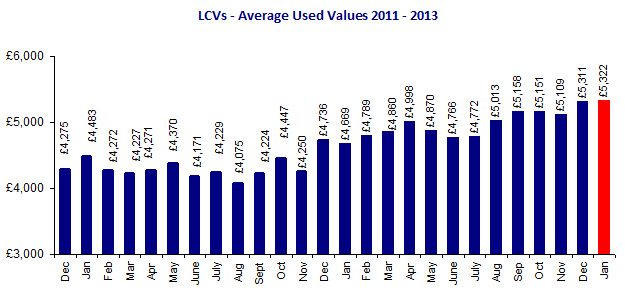
According to the latest figures from vehicle auctioneers BCA, average values for all light commercial vehicles increased marginally in January 2014 to £5,322 – a rise of £11 compared to December 2013.

January’s average value was the highest since BCA began reporting monthly sales in 2005, and was the sixth month in a row that average values across all light commercial vehicles exceeded £5,000.

On a year-on-year basis, January’s used LCV prices were 13.9% — or £653 — higher than in January 2013, despite the average age of vans being sold having risen by 1 month over the same period.

The average sale price relative to the CAP [book] price remained unchanged on one year ago, with vans selling for an average of 102% of their book price:

All vans Avg Age (mnths) Avg Mileage Avg Value Sale vs CAP
Jan 2013 56.64 80,736 £4,669 102.24%
Jan 2014 57.90 79,654 £5,322 102.24%

Data courtesyt of BCA (www.british-car-auctions.co.uk)

Duncan Ward, BCA’s General Manager – Commercial Vehicles, confirmed that January had delivered as expected:

“January essentially delivered more of what we saw throughout the previous 12 months – a shortage of stock allied to decent levels of demand that generated exceptionally strong prices in the used van market.”

“With stock remaining thin on the ground, buyer demand is focused on the best quality commercial vehicles and this is driving values up.  BCA saw lots of activity in the online arena with around a quarter of all vehicles being purchased by internet bidders and BCA’s Video Appraisals are helping to create additional confidence for remote buyers.”

Mr Ward also confirmed that used van prices were rising at the bottom end of the market, in a sign that the rising tide of demand is lifting all vans, regardless of quality or age:

“The rise in average prices at the ‘value-for-money’ end of the market also continues and dealer part-exchange values reached a new record level. In fact, demand has been right across the board, from older higher mileage vans through to younger ex-fleet and lease vehicles.”

Although average values fell in both the ex-fleet/lease and nearly-new categories, BCA says that this was largely due to changing model mix in the fleet market and the volatility created by very limited volumes in the nearly-new market. Overall, demand remains strong, although my interpretation of the graph below, showing all sales, is that the growth in demand may have reached a peak and be beginning to slow, as you’d expect in a market where new van registrations are rising strongly:

BCA LCV prices 2011-2013 (Jan 2014)

BCA LCV prices 2011-2013 (Jan 2014)

1-in-5 Vans Sold In UK Is A Ford

The new Ford Transit

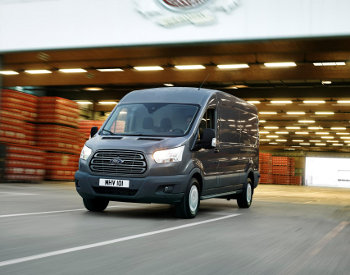
The new Ford Transit is now on sale, with first deliveries due later in the first half of this year.

The Ford Fiesta and Ford Focus are the UK’s two top-selling vehicles. The third, perhaps surprisingly, is a van, the Ford Transit.

The Transit has been the biggest selling commercial vehicle in the UK since its launch in 1965, and there are currently more than 700,000 Transit on the road in the UK, according to Ford — one in four of all the vans on the road.

The blue oval’s success doesn’t end there: in 2013, Ford sold 72,238 commercial vehicles in the UK, giving it a 20.9% market share.

Across Europe, patriotic preferences shape the market differently, but Ford’s share increased from 8.5% in 2012 to 9.2% last year, nevertheless, thanks in part to the success of its Ford Ranger, a model that only has one equal amongst European marques, the Volkswagen Amarok.

Ford’s big new van bet

Ford has taken the unusual and bold move of replacing its entire CV line-up in the space of 24 months. The process started last year, with the introduction of the the new Transit Custom and Fiesta Vans, while this year has already seen the launch of the new Transit Connect, which will shortly be followed by the full-size new Transit and a long-awaited replacement for a discontinued model, the Transit Courier.

The outgoing Transit was neither as big as the largest vans on the market, like the Sprinter and Ducato, nor quite as small as vans such as the Vito and VW Transporter. This unique size formula has worked well for many years, but Ford has decided to go mainstream with its revamped CV range, and the new Transit — referred to as the two-tonne model — will be a full-size large van, aimed squarely at the Sprinter, Ducato, Relay et al.

Filling the smaller space vacated by the outgoing Transit is the Transit Custom, which sold 41,500 units across Europe in its first year of production, and by all accounts is an extremely accomplished van.

Ford is taking a risk by changing a winning formula, but I suspect it will pay off, and if the new Transit is as good as early reviews suggest, it could increase the firm’s market share still further, as van operators for whom the old Transit wasn’t big enough will be able to meet their requirements with the new model, including van hire fleets, who may finally have a realistic alternative to the big Sprinter.

Van Registrations Rise 12.9% In January

The UK van market has made a strong start to 2014, with new registrations rising by 12.9% in January, compared the same period last year, according to the latest figures from the Society of Motor Manufacturers and Traders (SMMT):

UK van and truck registrations: 2014 and % change on 2013

January % change Year-to-date % change Rolling year % change
Vans 18,122 12.9% 18,122 12.9% 273,146 13.2%
Trucks 1,817 -37.0% 1,817 -37.0% 55,153 22.6%
Total 19,939 5.3% 19,939 5.3% 328,299 14.6%

Data courtesy of SMMT (www.smmt.co.uk)

Demand was particularly strong in the large van (2.5t – 3.5t) sector, where registrations rose by 27.1%, from 8,084 in January 2013 to 10,274 this year.

Commenting on the figures, Mike Hawes, SMMT chief executive, said that he was confident about the outlook for van demand in 2014:

“The overall commercial vehicle market grew 4.4% in January as more robust business confidence boosted van registrations. Looking ahead, SMMT is confident that van registrations will continue to grow at a sustainable rate, while truck demand should level out over the full year.”

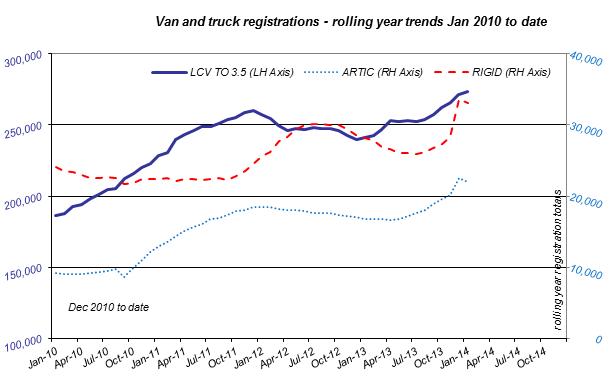
As the graph below shows, demand for all categories of commercial vehicle finally started to pick up towards the end of last year. The sudden surge in truck demand is linked to the introduction of Euro 6 in January — as hauliers rushed to buy Euro 5 vehicles while they were still available.

SMMT commercial vehicle registrations Jan 2014

SMMT commercial vehicle registrations Jan 2010 – 2014 (courtesy of SMMT).