Category Archives: Van News

News and articles about UK vans – especially information relevant to the van hire market. Coverage of new van model launches from all the major manufacturers – Ford, Mercedes, Volkswagen, Peugeot, Fiat and Citroen.

UK Commercial Vehicle Manufacturing Down 27.5% In September

CV output rolling year total

CV output has now fallen nearly as far as it did in the depths of the 2009/10 recession.

The headline says it all, really — the decline in UK commercial vehicle manufacturing (which includes vans) accelerated in September, with total output down by 27.5%, according to the latest figures from the Society of Motor Manufacturers and Traders (SMMT).

The decline breaks down into two main categories; a 16% drop in home market demand, and a 37.7% fall in export market demand, which basically means Europe.

Mike Hawes, who is the SMMT’s chief executive, says — somewhat unconvincingly — that there is some cause for hope:

“CV production remained subdued in September, with continuing uncertainty in the EU and restructuring of UK operations,” said Mike Hawes, SMMT Chief Executive. “While the overall market is striving against tough conditions, there remains cause for optimism in some areas, with the truck sector out-performing the market in September.”

Here’s a summary of the key figures:

CV manufacturing Sep-12 Sep-13 %
Change
YTD-12 YTD-13 %
Change
Total 9,607 6,963 -27.5% 82,315 67,609 -17.9%
Home 4,501 3,783 -16.0% 34,419 31,322 -9.0%
Export 5,106 3,180 -37.7% 47,896 36,287 -24.2%
% export 53.1% 45.7% 58.2% 53.7%  

Data courtesy of SMMT (www.smmt.co.uk)

Car & engine manufacturing powering ahead

Remarkably, the decline seen in the CV sector is not affecting the engine or car manufacturing sector at all. Car output rose by 9.9% in September, while engine manufacturing was up by 8.3%. The decline in the UK’s CV manufacturing industry, where output is down by around 23% since 2011, is a singular thing.

As I’ve mentioned before, part of the problem is the closure of Ford’s Southampton Transit factory, but there must be more to it than that. Sadly, the SMMT doesn’t publish a more detailed breakdown of its figure, so it isn’t easy to say where exactly the decline is coming from — and how much of it is due to weak export demand, rather than cuts to manufacturing capacity.

However, unless this trend reverses, it seems likely that there will be further structural reductions in Britain’s CV manufacturing capacity — because it can’t stay under-utlilised indefinitely.
Strike A Light! Real Life Matchbox Van Goes Under The Hammer

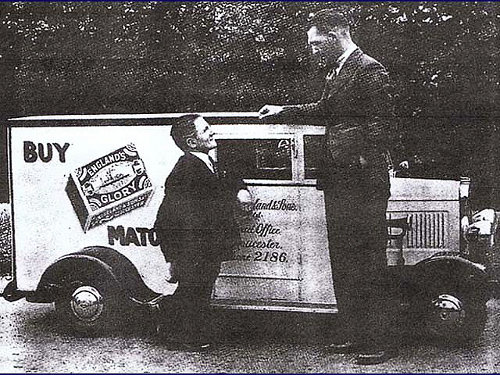
A ‘real life matchbox van, built in 1937 as an advertising vehicle for England’s Glory matches, will go under the hammer on October 29th at Barons’ sale next Sandown Park auction sale.

The van, was based on a 1932 Austin Seven and is a fully-functioning, road-legal vehicle, although as this gloriously non-politically correct picture shows, it is quite a small vehicle:

1937 Matchbox Van for sale

This 1937 promotional Matchbox van was based on an Austin Seven and will be sold on October 29th, 2013, at an auction at Sandown Park.

It was comprehensively restored in the 1970s/’80s, and is now due for a refresh, so is offered as a fascinating rolling restoration, with an estimated hammer price of £12,000-£15,000.

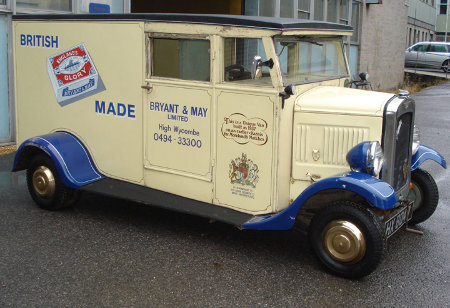
Update 4 November 2013: The Matchbox van sold at Sandown Park on October 29th for £10,700 to a UK-based collector. Here’s a more recent picture of the van in question:

Real-life Matchbox Van

The real-life Matchbox van sold for £10,700 at auction in October 2013.

Other vehicles that may be of interest include a Group N 1996 Escort Cosworth rally car in road legal trim (estimate £9,000 – £11,000) and a 2007 Jaguar Sovereign 4.2 that was formerly used by the Royal Household and has every option under the sun, including some aimed at chauffeur-driven occupants, such as rear televisions, fold-away business tables and heated rear seats. There’s also a bizarre extra that allows rear seat passengers to electrically adjust the front passenger seat — so if  your ‘man’ is using too much space in the front and you want to stretch our for a snooze in the back, you don’t have to condescend to speak to him — just hit the remote and slide his seat forward!

Finally, there’s also a personal favourite of mine — a 1972 Saab 99, which is thought to be one of just 18 still registered in the UK. The Saab 99 was the forerunner of the classic 900, a car I could once have owned and didn’t — a decision I’ve regretted ever since… This particular model has emerged from eight years in storage and is in excellent, unrestored, original condition. It offers a rare chance to obtain a superb, original collectors’ car, at an estimate of £3,500-£4,500.

For more details on all of the vehicles in the sale, visit www.barons-auctions.com.

Van MPG Marathon Proves Manufacturers’ Figures Can Be Beaten

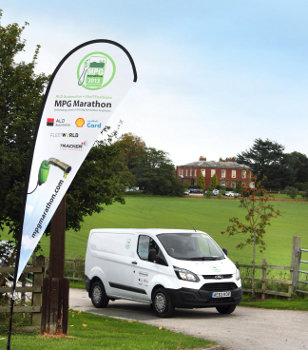
Ford Transit Custom at MPG Marathon

The Ford Transit Custom at this year’s ALD Automotive / Shell FuelSave MPG Marathon.

This year’s ALD Automotive / Shell FuelSave MPG Marathon was won by a couple of drivers who had never met each other before and had never taken part in an eco-driving event, either.

Leicestershire Council employees Nick Chapman and Rosemary Horner took the overall win by returning an impressive 88.69mpg in their Ford Fiesta ECOnetic 1.6 TDCi over the two-day, 339.3-mile event.

Interestingly, the car was the same model used by last year’s winners, so maybe it’s the car that’s the biggest star?

Whatever the case, the winning Fiesta car was comprehensively outperformed in terms of outright fuel consumption by its Fiesta Sport Van sibling, which returned 108.82mpg in the hands of BBC transport correspondent Paul Clifton and his son, beating the Fiesta Van’s official combined figure of 78.5mpg by 38.6%.

Elsewhere in the van categories, VAN Fleet World editor Dan Gilkes managed to coax 52.08mpg from a chunky Isuzu Eiger double-cab pick-up, proving that such vehicles don’t have to be gas guzzlers, while Status Heating employees Leigh Skillet and Richard Bone managed to deliver a 29.1% increase in the manufacturer’s combined consumption figure for their Citroen Berlingo.

Although critics will say that the driving conditions for the MPG Marathon are unrealistic, especially for vans, which might normally be fully-loaded and forced to make many stop-start journeys, the MPG Marathon is structured to be as realistic as possible and drivers have strict time limits to prevent them driving abnormally slowly and had to face headwinds and heavy traffic conditions at times.

Event organiser Ross Durkin commented:

“The MPG Marathon highlights the fuel – and hence emissions – savings that can be achieved by any driver in any vehicle. And as this year’s winners will testify, you don’t have to be a seasoned, hyper-miling pro to do it.

“The motor manufacturers and technology suppliers have done a tremendous job in improving the fuel efficiency of all news cars and vans, but motorists should see their published fuel consumption figures as a target to beat, not the maximum achievable.”

This year, the MPG Marathon took place on the 9th and 10th October, based at Tankersley Manor hotel, near Sheffield. Competitors pushed for the best economy over two days, choosing their own route between a series of fixed points. Each vehicle was fitted with a TRACKER satellite tracking device to measure the exact distance travelled. The competitors covered an average 360 miles of British countryside, including A and B roads and motorway driving. Day 1 took drivers east to Lincoln and York, while day 2 circumnavigated Stockport and Derby.

Vehicles were split into classes depending on CO2 emissions, with a maximum CO2 limit for passenger cars of 180g/km. Awards were given for the most economical drivers, as well as the most efficient cars and vans.

The winners will be awarded at a presentation held on the 16th October at the Royal Automobile Club in Pall Mall, London.

Van Registrations Up 10.3% In September – SMMT

After rising by 11.1% in August, new van registrations rose by 10.3% in September, compared to September 2012, according to the latest figures from the Society of Motor Manufacturers & Traders (SMMT). The increase means that van sales are up by 9.6% on the year-to-date.

Truck registrations haven’t fared so well this year, but did rise by 29.7% last month, making me wonder whether truck operators are more prone to plate-change vanity than I would expect! The gain leaves truck registrations down by just 0.1% so far this year, compared to the first nine months of last year.

UK van and truck registrations: 2013 and % change on 2012

September % change Year-to-date % change Rolling year % change
Vans 43,066 10.3% 205,004 9.6% 257,578 4.1%
Trucks 6,131 29.7% 34,352 -0.1% 45,683 -4.2%
Total 49,197 12.4% 239,356 8.1% 303,261 2.7%

Data courtesy of Society of Motor Manufacturers & Traders (www.smmt.co.uk)

Commenting on the figures, Mike Hawes, who is the SMMT’s chief executive, said that he believes that upcoming Euro 6 emissions legislation for trucks may have played a role in September’s surge in sales:

“Commercial vehicle registrations rose 12.4% in September, with greater confidence and impending Euro 6 legislation producing a strong recovery in truck volumes,” said Mike Hawes, SMMT Chief Executive.

“Encouragingly, van registration levels have stabilised, up around 10% in the month and year-to-date, after a variable year that reacted to model changes and changeable market conditions. Year-to-date truck demand is back to 2012 levels after a slow start to the year and we expect the last quarter to be very strong for the sector.”

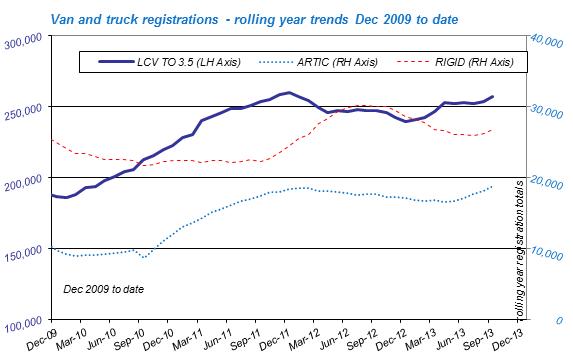
The graph below shows how sales have picked up over the summer:

SMMT van and truck registrations Dec 09 - Sept 13

Heavy demand

SMMT divides CV sales into three categories — vans under 3.5t, rigids, and artics. In each of these categories, registration growth was strongest in the heaviest weight category, in numerical terms.

That means that new registrations of vans between 2.5t and 3.5t, rigids over 16t, and 3-axle artics rose strongly last month, suggesting that those sectors of the economy that control the majority of usage of these vehicles (retail, construction and industry) have enough confidence to invest in fleet renewals.

Given that September’s plate change is often linked to a surge in sales, it will be interesting to see if the upwards momentum in registrations carries on through October.

Ford Transit Custom With High Roof Goes On Sale

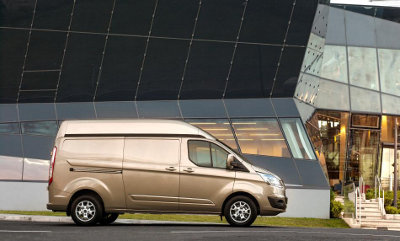
Ford Transit Custom High RoofThe new Ford Transit Custom is a fine van that’s only been missing one thing — the option of a high roof. That omission has now been addressed, and a high-roof Transit Custom model is now available for sale in the UK.
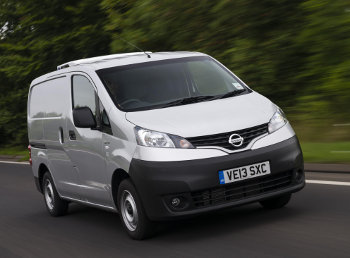

The new model retains the choice of short and long wheelbases and different engine power levels, and offers 20 per cent more space than the standard roof, taking the cubic capacity to 8.3 cubic metres.

Load height increases by 370mm to 1.78m, and the new high roof has an all-steel construction that allows for a 100kg roof rack load and costs just £500 extra, making it something of a no brainer.

Load space features that debuted in the standard roof model are all present and correct in the high roof van, including the load-through hatch in the bulkhead that allows loads of up to 3m in length to be carried, as well as side-mountede tie-down hooks, and LED loadspace lighting.

Ford says that it has sold more than 6,000 Transit Customs in the UK since the model’s launch in December, which suggests that the model is still getting a foothold in the market, but sales should rise as more variants become available. The high roof model should open up the Transit Custom to a range of new customers who would previously have purchased the standard Transit with a medium-height roof, which is a popular choice — although strangely, you see very few Transporter, Vivaro and Vito high roof models, even though these are available as factory options.

The Transit Custom remains the only van in its segment to have achieved a maximum five-star Euro NCAP safety rating and buyers of the high-roof model can also choose to include the advanced safety features that helped it earn this accolade, including SYNC with Emergency Assistance, Rear View Camera, Acceleration Control, Lane Keeping Alert and Driver Alert.

Nissan Launches Ready-To-Roll NV200 Fridge Van

Nissan NV200 Fridge

The cooling unit hardly protrudes above the roofline in the Nissan NV200 Fridge – the bulk of the unit is inside, as the picture below shows.

Nissan has launched a refrigerated conversion of its NV200 van that will be available directly from main dealers, with prices starting from £19,375.

The firm says that the decision to offer a fridge van conversion is the result of strong fleet and business demand and highlights that buyers of the new van will get Nissan’s standard three-year warranty, which will include the insulated cell and the cooling unit.

The conversion itself is carried out for Nissan by French converter Gruau, which will install a moulded polyester-polyurethane insulated cell with a cubic capacity of 2.2m³and a Carrier low-profile roof-mounted cooling unit, which will cool the van down to 0°C.

Unlike many aftermarket fridge conversions, where box-like cooling units are bolted on top of the front of the roof, this cooling unit barely protrudes above roof level and maintains the original look and aerodynamic qualities of the van — the majority of the cooling unit is inside the van, although not in such a way as to be likely to affect the usable loadspace.

Nissan NV200 Fridge van insulated cell

Inside the Nissan NV200 Fridge van.

Nissan says that the entire conversion adds just 215kg to the weight of the vehicle, leaving a useful 524kg of payload.

The NV200 Fridge Van also comes fitted with a mains connection, so that it can be plugged into a standard 13A socket overnight to maintain the temperature in the refrigerated compartment.

The van is powered by Nissan’s ever-present (and very good) 1.5 dCi diesel engine, which boasts an official fuel consumption figure of 57mpg, although I would imagine the fridge might reduce this a bit.

Barry Beeston, Nissan corporate sales director said:

“A lot of great work has gone into developing the NV200 Fridge as the ideal solution for any fresh food company’s transportation needs. With the conversion adding little weight to the vehicle, the driving quality and the nimble performance of the base NV200 is maintained. ”

The standard version of the NV200 Fridge includes rear doors only and starts from £19,375, but a model with an additional sliding side door is also available, from £19,675. The van is available to order now from Nissan dealers.

UK Van Manufacturing Slumps 51% In August

Commercial vehicle manufacturing output collapsed in August, falling by 51% as a combination of weak demand, the Ford Southampton closure and seasonal maintenance periods impacted production.

According to the Society of Motor Manufacturers and Traders (SMMT), just 3,694 commercial vehicles were built in the UK in August, down by 51% from August 2012, when 7,608 were built:

CV manufacturing Aug-12 Aug-13 % Change YTD-12 YTD-13 % Change
Total 7,608 3,694 -51.4% 72,708 60,646 -16.6%
Home 3,648 1,338 -63.3% 29,918 27,539 -8.0%
Export 3,960 2,356 -40.5% 42,790 33,107 -22.6%
% export 52.1% 63.8% 58.9% 54.6%

Data courtesy of SMMT (www.smmt.co.uk)

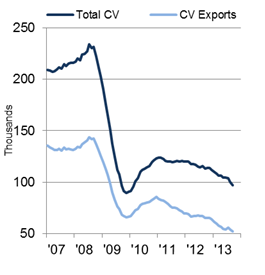
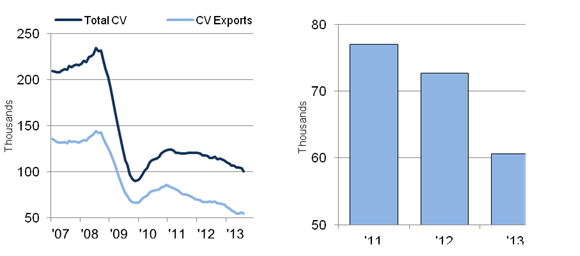
August is traditionally the weakest month of the year, but this year has been pretty disastrous, not least because of the closure of the Ford Transit factory in Southampton. These two graphs show the full horror of the situation — the UK’s CV manufacturing industry has simply collapsed since 2009, with no prospect of any improvement:

UK CV manufacturing August 2013

Total CV manufacturing is less than half its peak pre-recession level, while CV exports have shrunk to almost nothing. (Graphs courtesy of SMMT)

Mike Hawes, SMMT Chief Executive, says that he expects the rest of the year to be pretty bad, too:

“Focused almost entirely on the European market, UK commercial vehicle manufacturing has been impacted by ongoing uncertainly in Eurozone countries, model changes and restructuring of some domestic operations. We expect overall commercial vehicle output to remain negative through the rest of the year, but some sectors may fare better with recent increases in demand for UK-built trucks and buses.”

Given that total CV manufacturing output is down by 16.6% for the year to date, compared to the same period last year, any improvement would be worthwhile, but with unemployment still rife in Southern Europe, and French and German van operators traditionally loyal to home-market brands, it’s hard to see where the improvement is going to come from, unless the UK economy picks up unexpectedly quickly.

Thieves vs. TRACKER = No Contest As Stolen Van Recovered

Thief stealing a carWhen it comes to improving the chances of recovering a stolen vehicle, nothing beats a TRACKER.
Although many motorists will commonly associate this technology with high-end cars, the truth is that it is probably even more relevant for companies operating commercial vehicle fleets.

The loss of a van or truck, with thousands of pounds worth of goods or specialist equipment on board can cause damaging disruption to a business, even if it is all insured.

The story of a recent van theft illustrates just how powerful the TRACKER system is, both technologically, and as a deterrent.

A van belonging to Mark Keel, of KD Doors in Lanarkshire, was stolen while an engineer was out on a job. Mark is a TRACKER Fleet customer and also has TRACKER SVR (stolen vehicle recovery) units fitted to all his vehicles for added security; the power of both technologies found the van within less than an hour.

Mark Keel says:

“One of my engineers called me in the afternoon to let me know his van had just been stolen. I was obviously very concerned.  Not only was the van itself valuable, but the tools and equipment inside were equally valuable.  The loss of both would have been a major hit on our business.

“I called 999 and gave them details of the TRACKER SVR unit and 50 minutes later the vehicle was located and recovered. The thieves had apparently left it there to check if it had a tracking unit on it, and so the van was recovered with all my equipment inside. After the initial shock it was a real relief to know I had a TRACKER on my vehicle, ensuring that it could be located swiftly with everything safe inside.”

TRACKER’s range of SVR products work like electronic homing devices.  A covert transmitter is hidden in one of several dozen places around the vehicle. There is no visible aerial, so the thief won’t even know it’s there. Unlike other systems, TRACKER’s devices work no matter where the vehicle or equipment is hidden, even if taken abroad.

Van hire companies don’t always tend to fit TRACKERs (at least they don’t publicly admit to it, and given the short time vans can spend on fleet before being de-fleeted, it doesn’t seem likely), but the power of a TRACKER system is a useful lesson to anyone operating a van who can ill afford to lose a van and all the associated gear.

Of course, there are other tracking systems available that claim to offer similar benefits, but judging from this tale in The Times, they are not all as effective and securely fitted as a genuine TRACKER. In this case, thieves stole the car and removed the tracking device within 12 minutes — since when the car has not been seen.

New Ford Transit Connect Is ‘International Van Of The Year 2014’

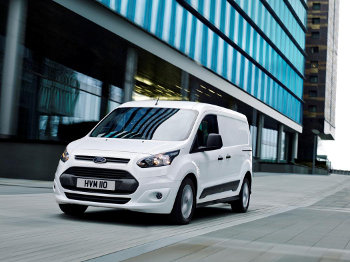
Ford Transit Connect

The new Ford Transit Connect is International Van of the Year 2014

Having bagged the International Van of the Year trophy in 2001 (Transit), 2003 (Transit Connect), 2007 (Transit) and 2013 (Transit Custom), Ford has made it five by winning the International Van of the Year 2014 award at the COMTRANS commercial vehicle exhibition in Moscow.

If the new Transit Connect is anything like as good as the Transit Custom — and we can safely assume it is — then the award isn’t really surprising.

Ford has consistently upped the ante with its small and medium vans over the last decade, and I have high expectations that next year’s full-size 2-tonne Transit model will take the fight to the Sprinter in the same way.

A few interesting statistics for van award followers; Ford is first single manufacturer to win the award for two years in a row, and its fifth award gives it the joint record for the most number of wins.

A jury of 24 journalists awards Transit Connect 130 points from a maximum possible 163, placing it ahead of the Mercedes-Benz Sprinter and Renault Kangoo. The judges singled out the Transit Connect’s fuel economy, design, driveability, load-carrying and safety for praise, and Pieter Wieman, chairman of the “International Van of the Year” jury, said:

“Ford has succeeded in building a light van with a strong accent on economics – the vehicle is a good answer to the needs of small operators as well as big fleets to reduce the cost of transport of goods. The loading space offers several innovative aspects, such as load-through hatch in the bulkhead, fold-up front passenger seat and a sliding side door in the long-wheelbase model which enables a Europallet to be loaded.

The new Transit Connect is also the first van in its class to offer features such as Active City Stop, which helps to prevent rear-end shunts in heavy traffic conditions — a common type of collision.

The all-new Transit Connect is now available to order for delivery in late 2013.

Used Van Values Hit New Record As Supply Crunch Bites

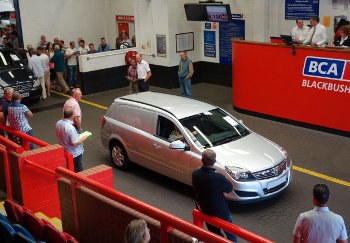
Vauxhal Astravan being sold at BCA LCV AuctionUsed van values fell in May and June and flatlined in July, but August saw a return to normal — values moved firmly higher to hit a new record of £5,013 despite an increase in average age and mileage.
According to auction specialists BCA, who supplied the figures, record values were achieved in the fleet & lease and dealer part-exchange sectors, while nearly-new values were the second highest on record.

The underlying cause of the rising prices is the shortfall in new van registrations that we’ve seen since 2008, something I highlighted in a post yesterday.

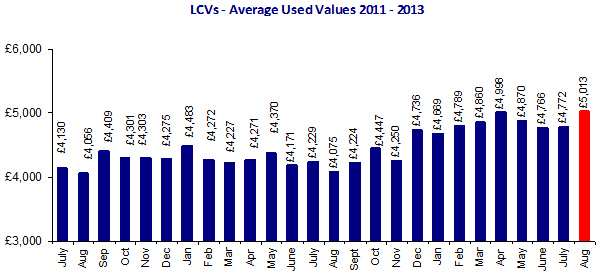
Van operators aren’t willing or able to buy new vans, but they still need to replace existing vehicles, which has led to a supply crunch in the used markets that has driven up auction prices from an average of £4,075 in August 2012 to £5,013 in August 2013 — a 23% increase in one year:

All vans Avg Age (mnths) Avg Mileage Avg Value Sale vs CAP
August 2012 58.31 78,167 £4,075 99.04%
August 2013 58.53 80,621 £5,013 102.81%

The level of demand for decent used vans can be judged by the fact that while average prices have risen by 23%, the average mileage and age of used vans sold at auction have risen slightly over the same period; buyers are definitely not getting more for their money, and are now paying an average of 102% of CAP (book) price, up from 99% last August.

LCV average used values 2011-2013 (August 2013)

Average used LCV values July 2011 – August 2013 (courtesy of BCA)

Commenting on the results, Duncan Ward, who is BCA’s General Manager for commercial vehicles, said:

“Demand has been right across the board during August, from older higher mileage vans through to younger ex-fleet and lease vehicles, while the few late-plate light commercials on offer can make exceptional values.  As always, good condition is the key and vans with a nice specification and in an attractive retail colour are very desirable.”

“The outlook for September is more of the same, as stock remains in very short supply and, with retail LCV activity expected to pick up during the month, the market is experiencing a double whammy.   BCA has already recorded some exceptional results in light commercial sales during the early days of September, so there is every chance that average values could climb yet again this month.”

Will used van prices break another record in September? I’ll be back in a month’s time to let you know.