Category Archives: Van News

News and articles about UK vans – especially information relevant to the van hire market. Coverage of new van model launches from all the major manufacturers – Ford, Mercedes, Volkswagen, Peugeot, Fiat and Citroen.

Americans Falling In Love With Great Euro Vans

More evidence (as if evidence were needed) that the quality and flexibility of European vans is making its mark across the pond.

US car magazine Winding Road has just voted the Dodge Sprinter (a rebadged version of the Mercedes Sprinter) to be one of their ‘Dynamic Dozen’ – their reviewers’ 12 favourite vehicles of 2008.

The other eleven are a diverse mixture of cars but the Sprinter makes it into the top 12 too. Winding Road’s Steven J. Ewing says that “we’re hard pressed to think of things the Sprinter can’t do” and describes it as “easy to live with”, “quite fun to drive” and “versatile”.

Ford Transit Connect SWBFord is hoping to eclipse the success of the Sprinter when it introduces the Transit Connect to the US market later this year. To try and raise awareness of and desire for its capacious, car-sized van, Ford has given away five Connects to small business owners in the US.

The businesses selected include a CPR instructor, dog car company and a kayak company. It will be interesting to see if the Transit Connect takes off in the US – it is a great van, but it is small by American standards and unfortunately won’t benefit from the torquey, modern diesels we get in Europe (thanks to US emissions standards for diesels).

On a completely unrelated but still transatlantic note, it seems that in America, car companies get fined for not meeting fuel efficiency targets. Under CAFE (Corporate Average Fuel Efficiency) rules, financial penalties result if you sell too many gas guzzlers.

2007 saw Mercedes receive a whopping $30m fine, while Volkswagen was fined $4.5m and Porsche $1.2m. Ouch. Although I suppose it isn’t a huge amount when offset against their profits (or motorsport budgets…).

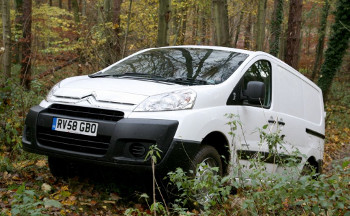
New Citroen Dispatch XTR+ Offers Off-Road Grip

Citroen Dispatch XTR+

Citroen Dispatch XTR+

4WD (or AWD) drive vans are a small and specialist area of the market. Notable contenders have included the VW Transporter Synchro, Mercedes Sprinter 4×4 and most recently the Ford Transit AWD.

Citroen have now added a new vehicle to the mix – the Dispatch XTR+.

Although it isn’t a four-wheel drive vehicle, retaining the Dispatch’s standard FWD configuration, it does offer improved off-road abilities. These are delivered by a limited-slip differential which transfers up to 75% of drive to one wheel in slippery situations and revised suspension and steering setups.

This combination of changes gives the Dispatch XTR+ improved ground clearance, underbody protection and greatly improved traction in ‘soft road’ conditions such as forestry roads and unsurfaced access tracks. The van is aimed at the utility, forestry and agriculture sectors and other buyers who will appreciate the practical and cost benefits it offers over dedicated 4×4 vehicles.

Ford Transit Gains New Options for 2009

The Ford Transit is already one of the most adaptable and customisable vans on the road.

Four wheelbase options, 2 engines, FWD or RWD, 3 roof heights, chassis cab, double cab, panel van and minibus options and a plethora of other choices make it capable of being almost everything to everyone.

To continue this pursuit of ultimate flexibility, Ford have introduced a few more choices for 2009:

  • A new Double Cab Utility Chassis option allows for a double cab with the rear part converted to a fully-enclosed load carrying area (complete with unglazed doors). Afull bulkhead is available to seperate this area from the front cab.This option is designed to enable equipment to be carried internally and securely, without the need for a space-wasting toolbox in the rear load area (e.g. tipper or flatbed).
  • MWB panel van now available in low-roof , FWD configuration – says it all, really.
  • Transit Tourneo now available with light-tinted window glass to meet the needs of private hire operators (apparently local councils require tinted glass, not sure of the details – anyone?)

In addition to these new model variants, all diesel-engined Transits now come with Ford’s new Shift Indicator Light (SIL). This illuminates briefly during acceleration, indicating the optimum moment to change up to the next gear. Observance of the SIL should help reduce CO2 emissions and fuel consumption, as well as wear and tear.

Ford Transit Headed For US Market & Going Electric

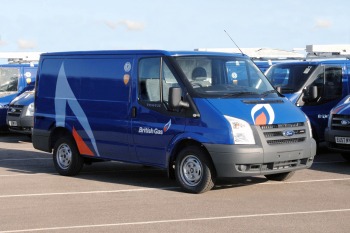
Ford Transit in British Gas liveryIt looks like the European Ford Transit will be joining its smaller cousin, the Transit Connect, in being sold to the US market.

The Transit is scheduled to be introduced to the US market in summer 2009 and Ford CEO Alan Mulally has now admitted that the European model will form the basis of Ford’s promised electric van, due to appear in 2010.

The lightweight, front-wheel drive Transit makes a far more sensible base vehicle for an electric, urban van than Ford’s heavyweight US van, the rear-wheel drive E-Series. The Transit also offers a more modern design and drivetrain than the well-established E-Series.

The introduction of the Transit to the US market is just part of a growing trend in the light commercial vehicle sector – the last few years have also seen the successful introduction of the Ford Transit Connect and the Mercedes-Benz Sprinter (badged as a Dodge) to the US market.

Perhaps the time has come for the automotive divide between the US and Europe to start disappearing, with fewer different models sold across more markets.

What Van? Awards – The Results

The recent What Van? Awards provided an opportunity for the best light commercial vehicles available in the UK to be recognised and celebrated.

So who came out on top? Here are some of the highlights.

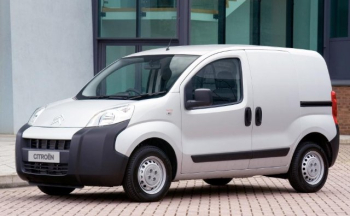
Overall ‘Van of the Year’ award went to the all-new, big-but-small, Citroen Nemo/Fiat Fiorino/Citroen Bipper. Made by the PSA conglomerate, these are all the same van, just badged differently.

Citroen Nemo van

Citroen Nemo van

Category winners included Ford, who gained the Security award in both the Light Van (Ford Transit Connect) and Panel Van (Ford Transit) categories.

Iveco was given the Large Van award for the new Daily van – pipping Mercedes’ Sprinter to the post in what must have been a close competition.

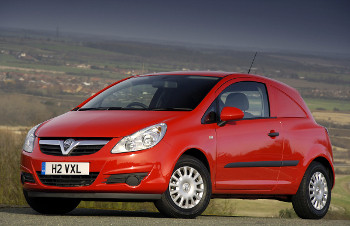
Vauxhall won the coveted small van award with the Corsavan, the latest in a long line of popular car-derived vans from Vauxhall, who seem to have the knack of turning a small or medium sized car into a thoroughly enjoyable (to drive) van:

Vauxhall Corsavan (© GM Corp.)

Vauxhall Corsavan (© GM Corp.)

Finally, the rapidly growing market for buying chassis vans with bodies – as opposed to sourcing the body seperately – is worth a mention.

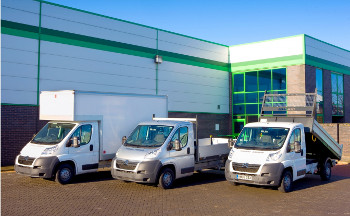
Citroen won the ‘One Stop Shop’ award with its ‘Ready To Run’ range, some of which are pictured below:

Citroen Relay Ready to Run models

Citroen Relay Ready to Run models

Ford were the runners-up in this category, as they were also in the small panel van category – with the ubiquitous Ford Transit, now in its 7th generation.

Ford Transit – Best for Bank Robbers…

Television advertising in the UK is often dull and politically correct to the point of being agonsing to watch.

Fortunately, that’s not true in all other countries.

Check out this advert for the Ford Transit – as made for the Turkish market:

By way of comparison, here is one of the famous “Backbone of Britain” UK ads:

Van CO2 Emissions Now Available Online

As I reported in January and June, the BVLRA (British Vehicle Leasing & Rental Association) has been working hard to make van CO2 emissions publicly available in the same way that car CO2 emissions are.

Van manufacturers have now (reluctantly?) agreed to publish this information in 2009, but the BVLRA has leaped ahead of this and produce its own guide – a free, online tool to compare the emissions of current model light commercial vehicles (vans, pickups, etc.).

You can find the BVLRA’s Van CO2 Emissions comparison tool here, and very good it is too.

If you are interested in comparing the CO2 emissions of different van models – either for rental, purchase or other reasons – then this tool is unique, as far as I am aware, and works very well.

As well as CO2 emisions, the tool compares fuel economy (obviously it is restricted to manufacturers’ published consumption figures) and unladen weight, providing an interesting way to compare and contrast similar vans.

Congratulations to the BVLRA for grasping the bull by the horns and making this happen – you can find the tool here, along with other resources that are part of the BVLRA’s Greening the Fleet initiative.

New Vans Galore: Hannover IAA Van Show Review

Despite the deepening recessions affecting many European economies, commercial vehicle manufacturers are pushing ahead with new models for the next couple of years.

In this article I’ll take a look at some of the new van models that have received their first public airing at October’s IAA Hannover Commercial Vehicle show. Popular trends seemed to be electric and hybrid versions of existing models but there were a smattering of all-new designs.

New Fiesta Van

Ford is pressing ahead with revamping each of its primary car model ranges and the Fiesta is next on the list. As in the past, there will be a dedicated van model of the Fiesta with a panelled out/windowless rear section.

Available in the UK from spring 2009, the new Fiesta Van will have a load length of around 1300mm with a loadspace of at least 1 cubic metre. Engines will be similar to the car variant – 1.25l petrol along with 1.4TDCi and 1.6TDCi diesels.

Nissan Determined To Increase CV Market Share

Nissan have announced it plans to dramatically increase its share of the LCV (light commercial vehicle) market from 2009 onwards.

The first part’s of this offensive are a new small van, to be introduced worldwide next year. It’s based on the NV220 concept vehicle that received widespread publicity when it was first shown thanks to its custom configuration for a marine biologist – including mobile office and dive gear storage.

The real version is likely to be toned down a bit but should still be a modern, high-quality vehicle, if Nissan’s other offerings are anything to go by. (Although I must admit that all the pictures I’ve seen remind me somewhat of the current Nissan Primastar, better known as the Renault Trafic.)

On the hybrid front, the Cabstar Hybrid is also due to be introduced in 2009. Nissan estimate that in a typical urban environment, its hybrid, stop-start technology will reduce CO2 emissions by around 30%.

Mercedes & VW Go Green with Blue

Both Mercedes and VW are now producing models with badges including the word ‘Blue’. This is a reference to the exhaust additive AdBlue, one of two methods available to help diesel engines meet Euro 5 emissions criteria through a process called Selective Catalytic Reduction (SCR).

Although lorries using AdBlue have to fill up regularly, car (and I believe van) AdBlue tanks are designed to be large enough to last from one service to the next, sparing the vehicle’s owner from having to fill up with AdBlue.

Mercedes’ has chosen the BlueEfficiency moniker for their SCR vehicles and its latest offering, debuted at Hannover, is the Vito BlueEfficiency. In addition to its SCR system, it also features aerodynamic improvements and Merc’s latest Stop-Start system, which together are claimed to reduce carbon emissions by 40g/km and fuel consumption by a typical 1.5l/100km.

VW’s latest SCR offering is the Crafter BlueMotion. Featuring VW’s latest Euro 5 SCR engines, the Crafter BlueMotion promises to deliver 3.5 tonne van functionality with combined fuel consumption of 31mpg – not bad going.

LDV Going Maxus

LDV’s Maxus van model has been a steady success across a variety of markets. It offers good value, short lead times and a choice of factory conversion options.

The success of the Maxus brand has led LDV owner’s GAZ to state that they will shortly be re-branding the whole company as Maxus, losing the LDV branding (derived from Leyland Daf Vehicles) altogether.

The IAA Show also saw the debut of the Maxus Electric – a factory-built all-electric version of the Maxus. It is currently undergoing trials and promises not to compromise on payload or loadspace thanks to its batteries being installed between the chassis rails, under the floor.

LDV are also planning the introduction of a smaller van to replace the not-much-lamented LDV Cub of a few years ago. It seems likely that the new van will either be built in partnership with another manufacturer or will be purchased from another company.

When is a Van Not a Van?

When it’s a Citroen C-Crosser Enterprise, to give you the marketing answer.

Citroen’s C-Crosser SUV has been out for a year or so now and Citroen have just released a novel variation on this ‘soft roader’ model.

Instead of having a rear seat and a boot, the whole of the rear has been converted to a van – complete with panelled out windows.

Except…

On the outside, the windows remain – in limo tint privacy glass.

So it looks like a car – it still has rear passenger doors – and it drives like a car, but it’s actually a capable small van with a 734kg payload, a 2.3 cubic metre load compartment and part-time 4WD.

So if your neighbours turn their noses up at your white van and demand something a little more respectable – or you fancy giving yourself a treat and becoming more anonymous, get yourself down to your local Citroen dealer and ask for a C-Crosser Enterprise.

Prices start at £16,995 +VAT (it is a van, after all) and this van version of the C-Crosser is powered by a frugal 2.2HDi diesel engine that returns almost 48mpg. What’s not to like?

New Retro-Fit Hybrid Kit Reduces Van Emissions by up to 24%

A new retro-fittable hybrid power kit has been shown to reduce emissions by up to 24.7% in tests on a Ford Transit van at the government-approved Millbrook emissions testing facility in Bedfordshire.

The HYBRID+ kit is made by Connaught Engineering and is based around a 48V DC electric motor which can be fitted to a van in just one day – meaning minimal interruption to vehicle usage. Test results using a Ford Transit driven over the EU-standard CADC (Artemis) test cycle produced the following reductions in CO2 emissions and fuel usage:

  • Urban: 18%
  • Road: 11.5%
  • Combined: 15%

Other test cycles were also completed, producing results consistent with the CADC tests:

  • New European Drive Cycle (NEDC): 10%
  • T2 City Drive Cycle: 24.7%

The HYBRID+ kit costs from £2,750+VAT fitted and can be fitted to most vehicles within a day – reducing any impact on vehicle availability. Installing the kit does not affect the original manufacturer’s warranty nor does it cause a reduction in payload, thanks to the use of lightweight, modern supercapacitors in place of heavy batteries.

The HYBRID+ solution sounds like it could rapidly pay for itself with van operators who do a lot of urban work. In addition, its envirnmental credentials seem strong – especially as highly-polluting and heavy batteries have been eliminated from the system. It will be interesting to see where this goes – perhaps it will provide the inspiration for a newer generation of factory fit conversions.

To learn more about the HYBRID+ solution, visit Connaught Engineering’s website.