Category Archives: Van News

News and articles about UK vans – especially information relevant to the van hire market. Coverage of new van model launches from all the major manufacturers – Ford, Mercedes, Volkswagen, Peugeot, Fiat and Citroen.

Van Speed Limits – A Potent Reminder

I know I’ve written about van speed limits before – here, here and here, in fact – but the truth remains that large numbers of van drivers simply aren’t aware of them – or choose to ignore them.

As this article in the Scarborough Evening News shows, the police are not in the mood to ignore them and are all too aware of the difference between a small, car-derived van (subject to car speed limits) and most other vans, which are subject to goods vehicle speed limits.

For anyone who needs a reminder, here are the speed limits for vans that are not car-derived and have a gross weight over 2 tonnes:

  • Single Carriageway: 50mph
  • Dual carriageway: 60mph
  • Motorways: 70mph

The speed limits apply to all goods vehicles with maximum permitted weights between 2 tonnes and 7.5 tonnes.

Even if your van has a maximum loaded weight of under 2 tonnes, it might be subject to these limits if it is not car derived – see here for a more detailed explanation of this.

Ford Joins the 4WD Van Club with AWD Transit

All-wheel drive vans have always been fairly specialist and rare finds – offering a combination of load-carrying and off-road driving functionality that simply isn’t required by many people.

One of the longest-running all-wheel drive vans is the Volkswagen Transporter 4Motion (previous called the Transporter Synchro). Other contenders have included the AWD Mercedes Sprinter (a rare but impressive beast) and, I think, a 4-wheel drive version of the original Fiat Ducato. More recently, Citroen have created a 4WD Berlingo – the Berlingo XTR. There is also a 4×4 version of the Iveco Daily.

Ford has not joined the party until now (as far as I know) but it appears to be making up for lost time with the newly-released the All-Wheel Drive version of the current Mk7 Transit. In this review on the Fleet News website, Fleet Van Editor Trevor Gelken found that the new Transit AWD is surprisingly capable off-road but will automatically switch back to RWD when on-road to save fuel.

The new Ford Transit AWD is also available in minibus and chassis cab formats and the AWD technology only adds 50kg to the weight of the vehicle – meaning that payloads are not significantly affected.

For all the (muddy) details, click here.

Friday Fun: The Ford Transit Supervan

There is no doubt that the latest diesel-powered Ford Transits are respectably brisk for vans – but they aren’t really fast, are they?

Not even the desirable Ford Transit Sportvan can lay claim to true high performance credentials, despite its GT40-style go faster stripes.

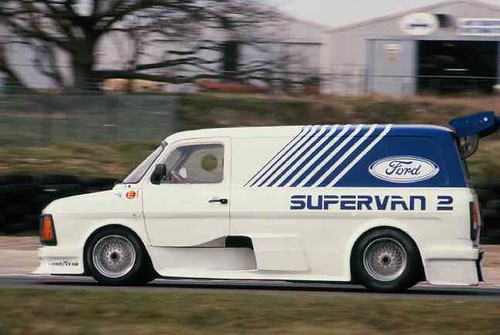
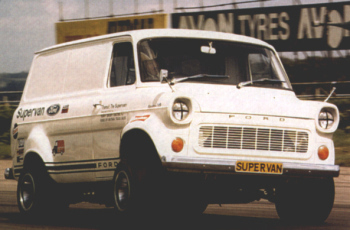
Perhaps that’s why no fewer than three Ford Transit Supervans have been built over the years, starting with the Supervan 1 in 1971:

Ford Transit Supervan 1 (c) www.nsva.co.uk
Ford Transit Supervan 1 (Copyright  www.nsva.co.uk)

The Supervan 1 was powered by a rip-snorting 400bhp V8 engine as used in Ford’s victorious GT40 Le Mans cars. It did 68mph in first gear and was good for 196mph in fifth.

For a time the Supervan 1 reigned supreme – but the launch of the Mk2 Transit meant that the time was ripe for a successor – the Supervan 2, which was unveiled at the Donington Truck Grand Prix in 1984:

Supervan 2

The Supervan 2 was powered by a long-stroke version of Ford-Cosworth’s DFV Formula 1 engine and was later clocked at 174mph at Silverstone. What more can I say?

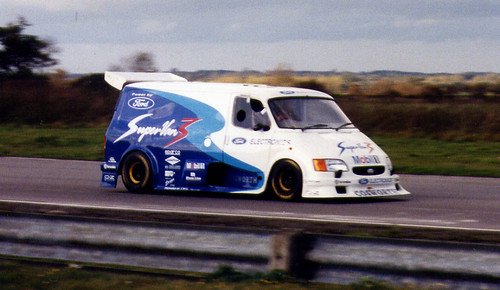
Time took its toll on the Supervan 2 and ten years later the Supervan 3 was born. Although technically a complete rebuild of the Supervan 2, it was virtually a new van and used the then-new Ford Transit Mk3 body shape:

Super Van 3

The Supervan 3 remains in service today and has proved a highly-effective publicity tool over the years. It has an estimated top speed of 150mph and now forms part of the Ford Heritage Vehicle Collection.

Van Speed Limits: Clarity (almost) for sub 2-tonne vans

Although the Highway Code (and the law!) clearly state that goods vehicles (including vans) with a maximum gross weight of over 2 tonnes are subject to different speed limits to cars, there is often some confusion about vans under 2 tonnes, which are exempt from the lower van speed limits as long as they are car derived.

I’ve written about the commonly misunderstood van speed limits before, and the topic has also been the subject of a longish thread in our forums. More recently, van speed limits were the focus of a recent post on the very interesting Courier Business Stuff blog, which is written by a same-day courier business manager named Alec.

In it, he highlights the potential grey area surrounding vans with a maxium gross weight of under 2 tonnes (e.g. Vauxhall Combo, Citroen Berlingo) which aren’t car-derived vans. Should they be subject to the speed limit for car-derived vans with a maximum gross weight under 2 tonnes or not?

Alec emailed the DfT (Department for Transport) to see if they could clarify this point and it seems they can, at least to an extent.

According to the DfT, for vans to be excluded from van speed limits, they must be based on a standard car chassis and must have a body the same as that fitted to a car equivalent as far back as the B pillar (behind the front doors). A box body behind this is acceptable, but only if it is built onto a standard car chassis.

Vehicles not meeting these criteria (such as the current Vauxhall Combo) are technically required to obey the speed limits which apply to goods vehicles up to 7.5 tonnes – 50mph on single carriageways, 60mph on duals and 70mph on motorways.

This comment from the DfT is well worth reading and provides the most detailed and specific explanation I have ever seen on this topic – although I don’t necessarily agree with the logic of it. Why should an Vauxhall Astravan loaded with its maximum 650kg payload be subject to higher speed limits than a Vauxhall Combo with its 595kg payload?

Van Industry News Update

Ford Shifts Transit Production to 4-Day Week…

Ford has announced that production of the Transit van at its Southampton plant will be shifted onto a 4-day week until the end of 2008. The move means that Transit van production will be reduced by 17 days for the remainder of this year.

The decision will be an additional source of anxiety for workers at the Southampton plant, which is already the subject of closure speculation due to Ford’s likely decision to move Transit panel van production to Turkey.

Ford aren’t the only company to be feeling the pinch of reduced demand, however – Vauxhall stopped production of its award-winning Vivaro at its Luton plant for one whole day on the 26th September in response to slowing demand across Europe.

…and Gears Up for New Fiesta Van Release

It’s not all doom and gloom at the blue oval, however. Ford used the 2008 IAA Commercial Vehicle Show in Hanover, Germany, to unveil the latest incarnation of its Fiesta van.

Due to go on sale in spring 2009, the new Fiesta Van will have a loadspace of around 1 cubic metre, offer 65mpg+ fuel efficiency and boast CO2 emissions of just 110g/km from the smaller of the two TDCi engines that will be on offer. It should be a competitive alternative to the two main incumbents in the marketplace, the Vauxhall Corsavan and the Peugeot 207 Van.

More details will be announced closer to launch time.

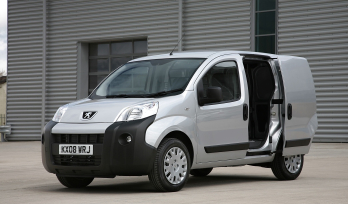
Peugeot Scoops International Award for Bipper

Peugeot Bipper van

Peugeot Bipper van

Also at the IAA Commercial Vehicle Show in Hanover, Peugeot scooped the International Van of the Year award for its new Bipper small van. The jury recognised its originality, compact size and on-road competence when bestowing the award.

The Bipper, which has been on sale in the UK since June, is already proving popular – thanks in no small part to its 62mpg fuel consumption, 610kg payload and sub-120g/km CO2 emissions.

As with the other vans made by the PSA Group, the Bipper is also sold badged as the Citroen Nemo and Fiat Fiorino.

(via TNN)

Mercedes-Benz Releases ECO-Start Sprinter Demo Fleet

I mentioned recently that the new Mercedes-Benz ECO-Start system was being fitted to a number of new Sprinter vans supplied to van hire giant Northgate plc.

Mercedes appear to be pushing had to promote this fuel-saving technology and to ensure that everyone gets a chance to try it out have now put into a service a demo fleet of 50 vans. There is at least one ECO-Start Sprinter at every Mercedes-Benz van dealer in the UK – so if you want to give one a try, you shouldn’t have far to travel.

Thanks to TNN for the tip.

EU Targets Compulsory Reduction in Van Emissions

The European Commission is planning compulsory new CO2 emission and fuel consumption targets for vans and other light commercial vehicles, with trucks and buses likely to follow in the future.

Although not finalised yet, the EC is targeting an improvement in average fuel consumption for vans from the 2002 average of 33mpg to 37.4mpg by 2012. CO2 emissions would have to fall at the same time – from 2002 average levels of  200g/km to 175g/km by 2012.

These targets represent the first stage of the EC’s plans to green up vans – more stringent targets of 40.9mpg and 160g/km are then planned for 2015. According to the SMMT (the Society of Motor Manufacturers and Traders), the EC is expected to finalise legally-binding CO2 emission and fuel consumption targets for vans by the end of 2008.

Since the beginning of 2008, van manufacturers have been required to provide CO2 emissions figures for their vehicles to governments – although not to the public. It’s not hard to imagine that this might result, in the not too distant future, in UK VED (road tax) for vans taking a similar route to that for cars, with different rates being applied dependent upon emissions.

We shall see.

75.17 Reasons Why Hiring A Van Is Better Than Owning One

A new survey by automotive warranty specialists Warranty Direct has found that the average cost of a mechanic is now £75.17 per hour.

And that’s only the average – rates at franchised dealers averaged £94.70 for every hour of spanner-wielding time…

Independents came in notably cheaper at £55.63 per hour, but even at this rate, costs will still add up fast if you need a few hours’ work doing.

The upshot of this is that owning a vehicle can be an expensive liability – especially if anything goes wrong. Many van users – both private and business – only need their vans occasionally. The rest of the time they either get used as cars or, even worse, just sit idle.

If you fall into this category then it might be worth crunching the numbers and working out whether you would be better off selling your van and just hiring a van when you need it.

This approach has a number of potential benefits:

  • No responsibility for servicing or repair costs
  • No insurance or road tax to pay
  • Renting allows you to choose different-sized vans when needed
  • Avoid owning a depreciating asset you don’t use much
  • Own a cheaper, more practical vehicle for everyday use

In addition to these specific benefits, in my experience vehicles that sit unused most of the time suffer at least as many mechanical problems (if not more) than vehicles that are regularly used.

Let’s look at an example:

Ford Transit LWB, used as a van for two weekdays a month.

Rental costs with easyVan

£47.55 per day = £95.10 per month (rental costs valid at time of writing)

Total annual costs: £1,141.20 (excluding fuel)

Ownership Costs

Ownership costs vary so widely it would be pointless for me to try and estimate them here. However, I’ve produced a checklist below for you to work out the cost of owning you van for one year.

  • Road Tax
  • Insurance
  • Servicing & Repairs (perhaps use last year as a guide)
  • Finance/Lease/Contract Hire payments
  • Depreciation – if you own your van, how much less will it be worth in a year’s time?
  • Finally… think about the cost in money and inconvenience of your van suffering a breakdown or being stolen at the wrong time.

Once you’ve calculated this, work out how much a hire van would cost you.

It may be cheaper – it may not. Hiring isn’t a perfect solution but it does have a lot of advantages for occasional users, as long as you can plan your requirements a few days in advance.

New Peugeot Partner & Bipper Reviewed

The original Peugeot Partner / Citroen Berlingo was one of the most successful light commercial vehicles ever made – with sales topping 3 million globally.

The new model looks set to pickup where the old one left off, with improved ability, refinement and safety features coupled with low running costs and reasonably green credentials.

To see if the reality lived up to the hype, Fleet News recently got to review both the New Partner and the equally new but smaller Peugeot Bipper.

Click here to see what they found.

Chinese Can’t Get Enough of Old British Vans

Back in June, I wrote about China’s Jiangling Motors Corporation – the company who are still making Mk5 Ford Transits for their domestic market.

There are plenty of good reasons for this; these vans are robust, practical and simple to maintain.

The same cannot be said for all of the vans that have come out of British factories, however. Take the Austin Maestro van. In its day, a direct competitor to the Ford Escort van – but never as successful, and with a nasty habit of rusting away.

Despite this, it turns out that Masetro vans have been being built in China for some years. Chinese tobacco company Etsong started the trend, but soon sold out to automotive company FAW. They weren’t keen on making such an old design and stopped production, but a company called Chengdu YeMa have now taken up the reigns again and are now making a MPV version of the Maestro van.