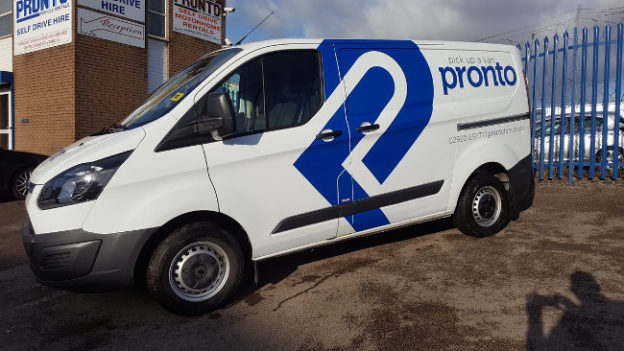
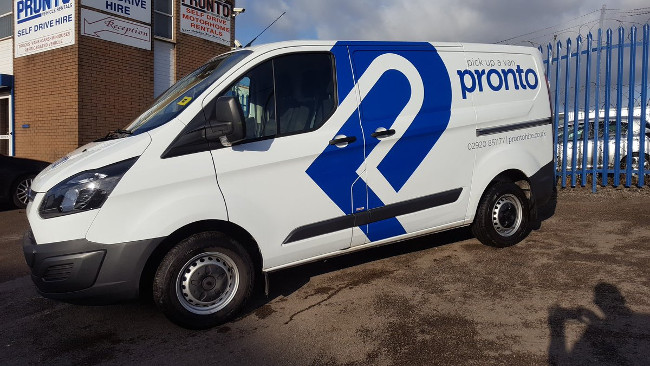
Pronto Vehicle Rentals van

Cardiff-based Pronto Hire adds protection with dashcams

Pronto Vehicle Rentals van

Copyright: Pronto Vehicle Rentals / twitter.com/pronto_hire

One of the biggest fears most customers have when hiring a car or van is that they will be stung with extra charges when they return the vehicle. It’s not unknown for rental firms to claim damage which a customer disputes.

In fairness, the blame can be on both sides. What’s needed is a solution that everyone can trust. This avoids disputes and helps cut costs and provide a speedy resolution in the event of a collision.

Solving the problem

The best way to solve an argument about a vehicle’s condition is often with a photo.

That’s why Cardiff-based Pronto Vehicle Rentals has recently invested in a number of systems aimed at providing photographic evidence that can be used to keep track of a vehicle’s condition and of any incidents in which it’s involved.

The firm’s three-pronged approach starts when a team member uses their tablet to take photos of all existing damage when checking out vehicles with a customer.

The second stage is that the firm’s yard is covered by high-definition CCTV cameras. These provide a video record of the vehicle’s appearance as it’s driven in and out, from several angles.

But the biggest change is that many of the firm’s cars, vans and motorhomes are now fitted with dashcams (dashboard cameras).

Managing Director Naunton Dickins says that these “protect both the business and the customer, they prove to be a saving grace in the event of a bump”.

The use of dashcams is certainly growing. I’d recommend one to anyone who does a lot of driving or who regularly drives in urban areas and on busy routes. By providing evidence of what happened in a collision, they can reduce or avoid costly insurance claims and provide valuable protection from fraud, such as ‘crash for cash’ frauds.

The Honest John website has a great starter guide to dashcams here.

Zipcar petrol-powered VW Transporter in London

UK van and pickup speed limits

Zipcar petrol-powered VW Transporter in London

Did you know that the speed limits for a standard rental van like this one are lower than for a car?

Most drivers know the speed limits for cars, but how many occasional van drivers realise that van speed limits are lower than for cars?

With speeding fines on the up, it doesn’t pay to get caught out — ignorance is no excuse in the eye of the law.

You can find speed limits for all types of vehicle at https://www.gov.uk/speed-limits, but we’ve provided the main limits* needed for vans and pickups below.

The UK van speed limits for the majority of vans are:

  • Single carriageways: 50mph
  • Dual carriageways: 60mph
  • Motorways: 70mph

These speed limits apply to almost all vans.

Certainly all standard ‘Transit’ type vans are covered by these limits. So are most smaller models, such as the Volkswagen Caddy/Ford Transit Connect/Citroen Berlingo.

Are there any exceptions?

Under UK law, two types of vehicle are exempt from these limits:

  • Car-derived vans
  • Dual-purpose vehicles

Speed limits for these vehicles are the same as for cars:

  • Single carriageways: 60mph
  • Dual carriageways: 70mph
  • Motorways: 70mph

But how do you know if you’ve got this type of vehicle?

Car-derived vans: Very few vans qualify as car-derived vans anymore. According to gov.uk, a car-derived van must:

  • Weigh no more than two tonnes (2,000kg) when fully loaded.
  • Be based on a car design or built on a platform that was developed to be used for cars.

As a general rule, the only vehicles which qualify as car-derived vans are models such as the Ford Fiesta Van, Vauxhall Corsa Van, etc.

There are some other van models built on car platforms, but in many cases their maximum laden weight is more than 2,000kg, so they don’t qualify.

Dual-purpose vehicles: These fall into two main categories — pickups and crew vans (also known as kombi vans or double-cab vans).

The definition that applies to all dual-purpose vehicles is:

  • They must weigh no more than 2,040kg when unladen.
  • They should be designed to carry both passengers and goods
  • They must have either four-wheel drive or at least one row of seats behind the driver, complete with side and rear windows.
  • This is technical: the vehicle must have the correct ratio of passenger space to load area. For details on this, see the official government website.

As a general rule, most pickups and crew cabs vans qualify as dual-purpose, so they can be driven at car speed limits.

But there are a lot of grey areas here. For example, some vehicles weight more than 2,040kg when unladen. If in doubt, check your vehicle’s specification and measurements carefully. Seek advice from the DVLA if you’re unsure.

Article last updated: 2 November 2017

*Disclaimer: All information was correct to the best of our knowledge at the date shown above. But speed limits and vehicle classifications may change. Please do your own research if unsure.

Questor Insurance logo

[EXPIRED] Exclusive: SAVE 7% on Questor Insurance in November

Questor Insurance logo

For a limited period only, we have an exclusive 7% discount code for Questor Insurance.

This discount code can be applied to all Questor policies, including car and van hire excess insurance, motor excess, travel insurance and gadget protection.


*** THIS DISCOUNT CODE HAS NOW EXPIRED ***

Please check our Van Hire Insurance page for the latest Questor Insurance discount codes.


Please note this discount code is exclusive. You won’t find it anywhere else before it expires!

Terms and conditions may apply. See Questor Insurance website for details.

Mercedes-Benz X-Class pickup

Mercedes-Benz X-Class pickup is now on sale in the UK

Mercedes-Benz X-Class pickup

The new Mercedes-Benz X-Class pickup is now available to buy in the UK.

The Mercedes-Benz X-Class pickup is now on sale at UK dealers. Prices start from £27,310 +VAT and first deliveries are now expected in January 2018.

Customers who took advantage of Mercedes’ reservation offer earlier this year will be able to get a jump on new buyers, as their vehicles are expected in November/December.

In either case, first impressions are that X-Class buyers will be treated to a high-spec pickup that’s great to drive and is far more than just a rebadged Nissan Navara.

The X-Class is available in a refreshingly small number of combinations. Only three trim levels are available, and all models will feature a crew cab. Here’s a summary of what to expect:

  • Engine: Renault-sourced 2.3l common rail diesel engine. Available with a single turbocharger and 163hp, or with a two-stage turbo setup and 190hp.
  • Payload & towing: A one-tonne payload for the load bed, plus a hefty 3.5-tonne towing capacity.
  • Trim levels: In ascending order of luxury, buyers can choose PURE, PROGRESSIVE or POWER variants. Pure is billed as being for “classic robust use” and features unpainted bumpers and steel wheels. At the other end of the spectrum, Power is “a high-end variant for urban lifestyles” and comes with leather, 18-inch alloys, chrome trim, electric seats and keyless ignition.
  • V6 / AMG model: Of course, this is a Mercedes, so a performance version isn’t optional. A V6-engined X-Class delivering 258hp is expected at some point in 2018. Expect an AMG performance version to follow a little later…
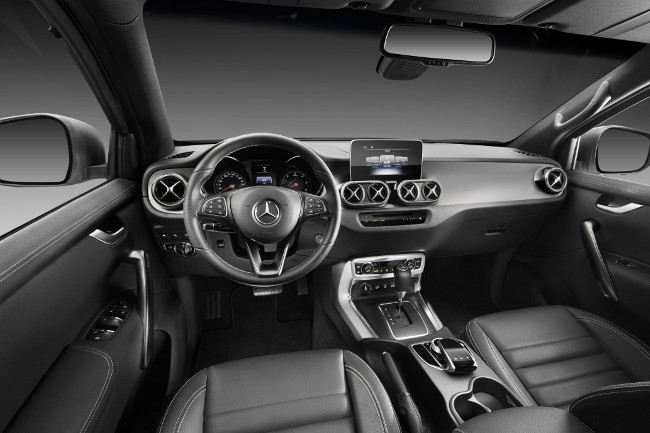
Mercedes-Benz X-Class interior

Inside the Mercedes-Benz X-Class

As you’d expect from a German car maker, there’s a fairly sizeable option list. The X-Class is available with seven option packages, tailored to different trim levels.

For example, X-Class Power buyers can opt for a Style Package with privacy glass, larger alloy wheels and running boards.

At the other end of the scale, buyers of Pure models may want to opt for the Plus Package, which adds parking sensors and a load rail securing system.

Buyers of all models who actually plan to use their vehicles off road may want to consider the optional diff lock, which is available for £495 +VAT. An extra 20mm of ground clearance can be added for £220 +VAT.

In my view, it’s clear that Mercedes is aiming squarely for lifestyle and owner/driver buyers. I don’t see corporate fleets buying many of these.

But early reviews indicate that it’s one of the best models on the market to drive and has a quality interior. Anyone who ends up behind the wheel seems likely to be fairly happy with their choice.

1979 Ford Escort van RS2000 conversion

180bhp Ford Escort RS2000 van goes under the hammer

1979 Ford Escort van RS2000 conversion

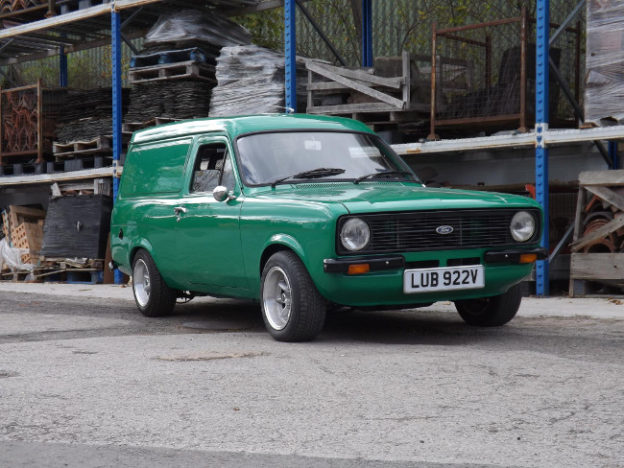
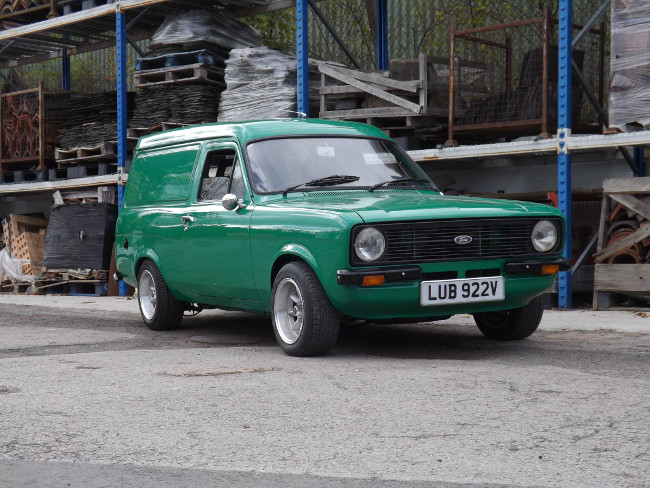
This 1979 Ford Escort Mk2 van with RS2000 conversion will be sold at auction on 2 December 2017.

Before hot hatches came into fashion in the 1980s, there was the Ford Escort RS2000.

The fast Escort had a rallying pedigree and fearsome road performance, with 180bhp under the bonnet. That may not seem all that impressive today, but back then it was pretty amazing.

Although modern vans are available with this kind of power as standard, 1970s vans were rather more pedestrian than today’s models. Until now.

Classic Car Auctions is offering for sale a 1979 Ford Escort van that’s been rebuilt to RS2000 spec, using parts from a genuine RS2000 donor car.

The project started in 2007 and took three years. Invoices totalling over £40,000 will be included with the sale. Highlights of this hot van’s spec include:

  • A modified 2.1 litre Ford Pinto engine
  • Short-shift gearbox and motorcycle carburettors
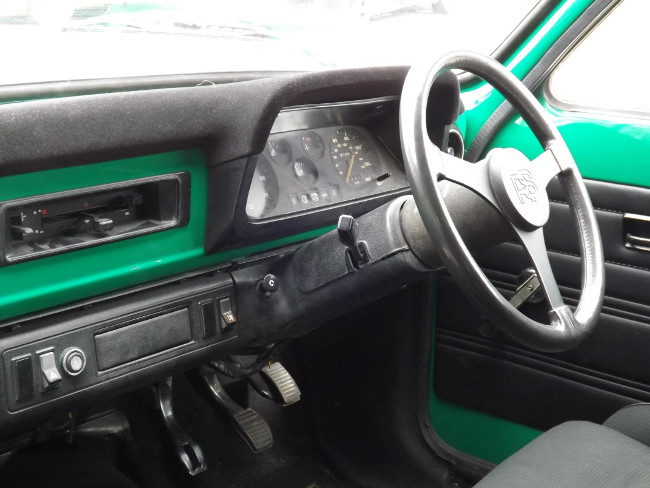
  • An original RS2000 six-pod dashboard, steering wheel and black RS seats
  • Exterior details including Minilite alloy wheels
  • Ford Modena Green paint job
Escort RS2000 van interior

The van features genuine RS2000 interior parts, such as dashboard and seats.

Since its completion, the van has been kept in storage and is reportedly in good condition. This could be an amazing collectable van for Ford enthusiasts, or a great marketing tool for a van hire company or courier business.

If you’re interested, you can find full details of the auction listing on the CCA website, here.

The auction guide price is £12,000 – £15,000 (+ buyer’s premium of 12%). The van will be sold on 2 December at Warwickshire Exhibition Centre.

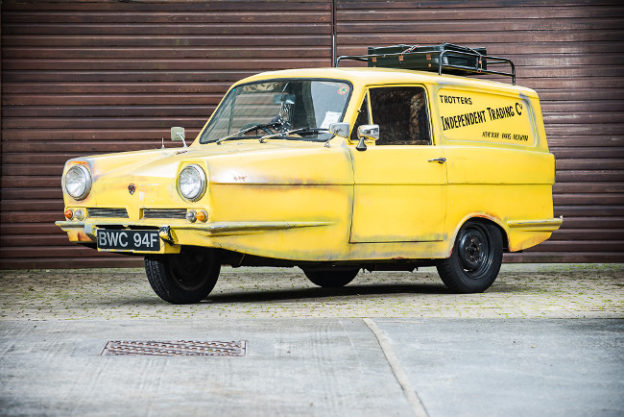
Only Fools and Horses Del Boy van

Del Boy’s Reliant Regal three wheeler goes up for auction

Only Fools and Horses Del Boy van

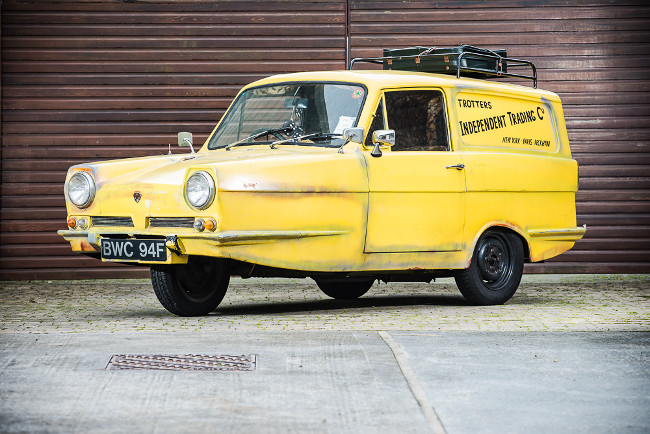
As iconic vans go, Del Boy Trotter’s Reliant Regal must be close to the top of the pile. Instantly recognisable as one of the stars of Only Fools and Horses, this notorious three wheeler is being offers for sale at auction later this month by Silverstone Auctions.

This 1968 model has been heavily reworked and benefits from a reconditioned engine, a synchromesh gearbox, remote start, a DVD player and even a smoke machine to simulate the van’s noxious emissions.

Only Fools and Horses van interior

Notwithstanding these technical improvements, the van remains exactly as it appeared on screen and comes complete with tiger ‘skin’ plush interior, nodding tiger, “Tax in Post” window notice, nodding tiger, roof rack with suitcase, set of furry dice, personalised rubber foot mats and a set of blow-up plastic dolls.

“Del Boy’s Reliant Regal is one of the most distinctive cars of BBC comedy history! Only Fools and Horses has a fan base spanning several generations and is something of a British treasure, so to have the van from the series for auction is a real treat which will no doubt draw the crowds,” explains Nick Whale, managing director, Silverstone Auctions.

With 71,778 miles recorded, the van is supplied with its original owners handbook, an MOT until 9th June 2018 and letters in the history file from the BBC which confirm its authenticity.

It could be a brilliant marketing tool for the right business. Although maybe not van hire…

The Trotters’ van will be offered for sale with no reserve at the Lancaster Insurance Classic Motor Show at the Birmingham NEC on 11th and 12thNovember.

SMMT CV manufacturing Sept '17

UK CV manufacturing output falls 26% in September

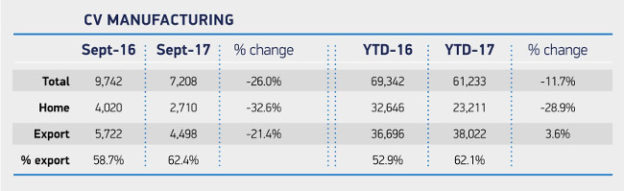
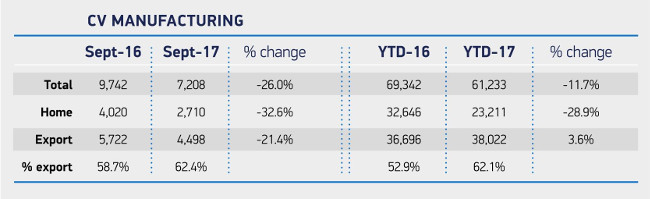
UK commercial vehicle manufacturing output fell by 26% in September, as home demand continued to fall and support from export buyers fell away.

According to the Society of Motor Manufacturers and Traders (SMMT), CV output for domestic buyers fell by 32% in September, compared to the same period last year. Manufacturing for export output fell by 21%, removing support that has helped overall output remain fairly stable up until now.

In total,  7,208 vans, trucks, buses and coaches were built in the UK last month:

SMMT CV manufacturing Sept '17

CV manufacturing output September 2017

Commenting on the figures, Mike Hawes, SMMT Chief Executive, said:

“Domestic demand for commercial vehicles has taken a hit in recent months and this is being mirrored in UK production figures. While fluctuating fleet orders are a natural feature of the market, the decline in business confidence, caused by economic and political uncertainty, has resulted in further disruption to manufacturing output. It is, therefore, critical government safeguards the conditions needed for this vital sector to thrive.”

Are Brexit fears starting to affect buying patterns? Who knows. In my view, perhaps a greater concern is the slump in export demand, which suggests that the increase seen as southern European economies started to recover may not be as durable as hoped for.

Export demand is an increasingly important factors, as CVs built for export now account for 62% of all CV manufacturing output.

Although the overall picture for the year-to-date is more benign, with total CV output down 11%, the trend is still worrying. We await this autumn’s figures with interest.

Vehicle exhaust

Why the new London T-Charge probably won’t affect van hire customers

Vehicle exhaust

The London T-Charge has now taken effect, as of 23 October 2017.

Anyone driving into the London Congestion Zone between 7am and 6pm Monday-Friday will now be required to pay an additional £10 surcharge if their car doesn’t meet certain emissions standards.

The new charge applies to cars, vans, minibuses, motorhomes, horseboxes and almost all motor vehicles except motorcycles.

Which vehicles are affected?

The good news is that anyone driving a hired van probably won’t be affected. That’s because the new charge only applies to cars and vans which don’t meet Euro 4 (IV) emissions standards.

Broadly speaking, this means any vehicle (petrol or diesel) registered before 2005, although there are a few exceptions.

You can check if your car or van is affected on the T-Charge website here.

Will rental vans be affected?

Hired vehicles are covered by the T-Charge. But the good news is that almost all rental vans are much newer than this. Most are less than three years old.

Indeed, here at vanrental.co.uk, we have never heard of a reputable van hire company offering 12-year old vans. So van hire drivers heading into London shouldn’t need to worry about the new charge.

This is one more reason to consider hiring a van for occasional use, rather than owning one.

Does this replace the congestion charge?

No! The existing London Congestion Charge is unchanged.

Drivers hit by the T-Charge will still need to pay the congestion charge, meaning they will have to pay £21.50 per day to drive into the city.

Coming in 2019

There are two further changes planned for 2019. Both will hit drivers of older cars and vans.

5 more low emission zone cities: London isn’t the only UK city with air pollution problems. Birmingham, Leeds, Derby, Southampton and Nottingham are all required to setup Clean Air Zones (CAZ) by 2019. So charges and/or restrictions are likely for drivers of older vehicles in these cities.

London gets tougher: The T-Charge is an intermediate solution that will be replaced in 2019 by the London Ultra-Low Emissions Zone. This is expected to be expanded to include more vehicles than the T-Charge. Presumably this means that vehicles will need to be Euro 5 or even Euro 6 compliant — we don’t know yet.

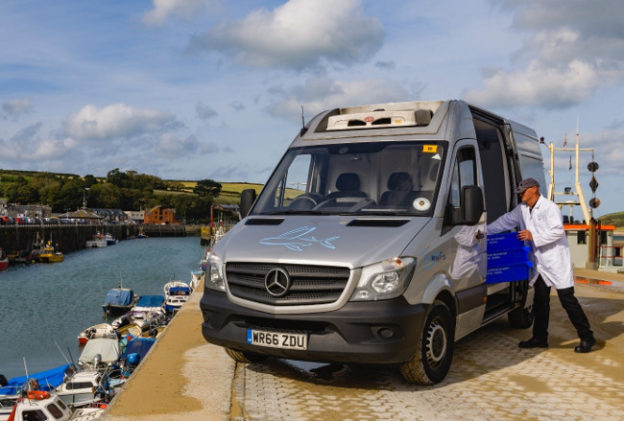
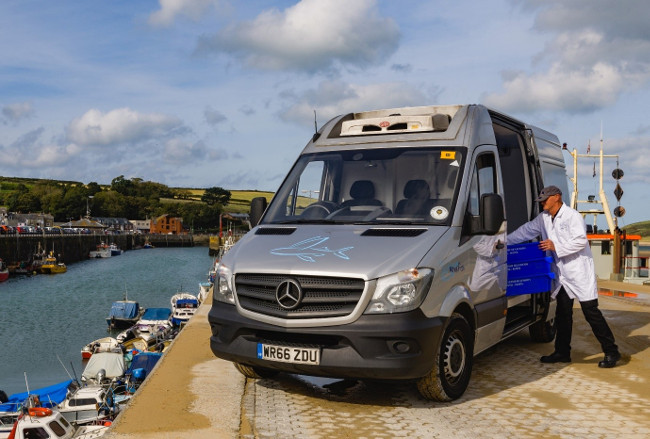
Flying Fish Seafoord Mercedes-Benz Sprinter van

Mile-munching Sprinters stay fresh with Reman engines

Flying Fish Seafoord Mercedes-Benz Sprinter van

Mercedes-Benz Sprinters have a reputation as being some of the most reliable vans you can buy. But when you run a fleet of vans each doing at least 100,000 miles per year, you’re bound to run into problems occasionally.

That’s the situation Flying Fish Seafoods finds itself in. Based by the A30 in Indian Queens, Cornwall, the company’s drivers spend the day collecting fresh seafood from Cornish fish markets, before making overnight deliveries throughout the south of England.

High mileages mean that the vans need routine servicing every couple of months. And while Logistics Manager Harry Squires is at pains to stress that “the vans are superbly reliable”, the company gets extra peace of mind by having access to Mercedes Reman engines in addition to standard warranty repairs.

What this means is that if a van suffers a fault that will require a time-consuming repair, the dealer has the option of fitting a Reman — or remanufactured — engine to the van instead. This means it can be put back on the road quickly and in a predictable timeframe. Essential for high-value, tightly-scheduled delivery work.

Use of a Mercedes-Benz Reman engine means that the vans’ three-year, unlimited mileage warranty is unaffected. Food for thought.

Volkswagen Crafter Luton

Van hire drivers must be aware of low bridge risk

Vehicles which get stuck under low bridges are most commonly lorries. So it’s tempting for drivers of hire vans to think they don’t need to bother about this risk.

However, as a Bristol driver found out last week, low bridges pose a real risk to van drivers too. As you can see in the video footage above, this luton van got stuck under a low bridge in the Brislington area of Bristol.

The bridge in question was labelled with an 11′ height restriction. That’s about 3.3m.

Although this is high enough for most vans to pass under safely, some large box vans such as the Luton model shown in the video do exceed this height.

What to do: If you hire a van with a high roof, it should have a height sticker in the cab area. If it doesn’t, ask the hire company how high the van is — or measure it yourself.

If you get stuck under a low bridge or suffer any other height-related damage, you will usually be liable for the cost of the resulting damage. So it’s worth taking care to avoid a hefty repair bill.