Zero Emission Electric Vans Gaining Traction

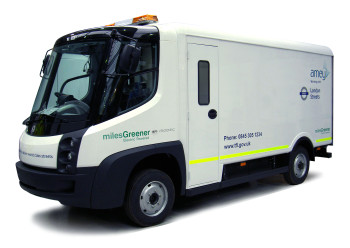
Modec Zero Emission Electric Van

The benefits of all-electric vehicles for urban distribution work are widely acknowledged – zero emissions, low tax, no congestion charge and no requirement (if over 3.5 tonnes) for a tachograph.

There is also a growing body of evidence that whole-life costs for electric vehicles can be lower than those for diesel-engined vehicles used on low mileage work, and that is certainly what office supply company Lyreco seem to be expecting from the Modec electic van they have been trialling.

Although electric vehicles continue to be restricted by their limited ranges – up to 100 miles in the case of the Modec – a surprising number of delivery vehicles don’t do more than 50-100 miles a day. These are typically used in the urban and stop-start environments where the benefits of electric power are greatest. Lyreco, for example, say that 30% of their vehicles do fewer than 60 miles a day and 65% do fewer than 100 miles a day.

The Modec’s maximum speed of 50mph is more than adequate for London deliveries, and its 2 tonne payload makes it a suitable replacement for the Mercedes Sprinter 511 vans Lyreco normally uses. Added bonuses are zero road tax, zero congestion charge and an 8-hour charge cycle – which can easily be fitted in overnight. I wonder if they can benefit from cheap electricity rates during off-peak hours?

Hybrids vs. All-Electric Vehicles

Hybrid’s seem to be the flavour of the month at present and I do think they have a role to play in the future. Pure electric vehicles, however, can potentially solve a greater number of problems and also offer the twin benefits of much greater simplicity and zero emissions at point of use. Although power stations undoubtedly have their own pollution problems, they aren’t in city centres and are relatively few in number – hopefully making it easier for their emissions to be managed and contained as emission reduction technology develops.

Improvements in battery technology and cost seem to be the key to the success of electric vehicles. If range issues can be addressed and battery costs reduced, a major obstacle should be removed. Perhaps a more likely near-future scenario is that of the Chevrolet Volt – an all-electric car with a small on-board petrol engine to charge the batteries (not power the vehicle) whenever needed.

Hourly Van Hire Increasingly Popular for Home Purchases

The growth of eBay and the increasing popularity of DIY removals has created a growing market for hourly van hire – hiring a van by the hour, rather than by the (24 hour) day.

London-based hirers are already served by the Streetvan service but van hire customers elsewhere in the country don’t have many choices.

In fact, there is only one national contender – Europcar that I know of.

Europcar‘s DriveTime service offers hourly van hire from more than 250 UK locations. According to the company, hourly van hire starts from just £6.99 for a Transit-sized van and the maximum hire period is 8 hours – after which it is always cheaper to hire for a day.

To make an hourly van hire booking, simply specify the start and end times you would like when completing your quote – Europcar’s booking system will automatically find the cheapest solution for you. Europcar has recently increased the number of Luton vans with tail lifts in its fleet by 50% – making transporting large or heavy objects much easier than before.

However, loading and unloading goods from a van can be a short cut to back injuries and muscle strains, so to help customers make the most of their hire vans and stay safe, take a look at our tips for safely loading a van and remember to take car when lifting and seek assistance if you can’t manage on your own.

Here is some advice from Europcar on safely lifting and carrying heavy objects:

Assess the situation

· Test the weight of a large object by lifting a corner, can you lift the load safely by yourself or do you need help?

· If the load is too heavy or an awkward shape is it possible to break-down into smaller parts?

· Check how far you have to carry the load and if the path is clear of anything which may cause you to trip. Check that all doors have been opened in advance.

·  Once the load is lifted, will it block your view?

Correct lifting techniques for heavy items

· Before you lift a heavy object make sure you have a firm footing.

· Stand close to the object and centre yourself over it with your feet shoulder width apart, squat down to the ground.

· Before starting to lift make sure you have a good handhold.

· To lift, straighten your knees and rise from the ground in a smooth, steady motion. Concentrate on keeping your back straight and let your legs do the lifting. Tightening your stomach muscles will help to support your back.

· Never bend your back to pick something up.

· Once upright do not twist or turn your body, keep your head up and look straight ahead. Focusing upwards will help to keep your back straight.

Carrying the load

· Hold the object close to your body and keep it steady with your arms bent, the further the object is from your body the heavier it will feel.

· Keep your feet about shoulder width apart, take short steps and move slowly.

· Change direction by turning your feet and once facing in the right direction continue to move forward.

· If you are straining or feel tired set the load down and rest for a few minutes.

· To lower the object, once again position your feet shoulder width apart, tighten stomach muscles and lower to the ground by bending your knees in a smooth and steady action. Only release your grip when the load is securely set down upon a firm surface.

Van Speed Limits: Clarity (almost) for sub 2-tonne vans

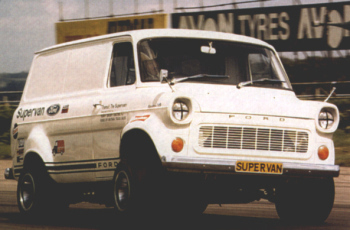
Although the Highway Code (and the law!) clearly state that goods vehicles (including vans) with a maximum gross weight of over 2 tonnes are subject to different speed limits to cars, there is often some confusion about vans under 2 tonnes, which are exempt from the lower van speed limits as long as they are car derived.

I’ve written about the commonly misunderstood van speed limits before, and the topic has also been the subject of a longish thread in our forums. More recently, van speed limits were the focus of a recent post on the very interesting Courier Business Stuff blog, which is written by a same-day courier business manager named Alec.

In it, he highlights the potential grey area surrounding vans with a maxium gross weight of under 2 tonnes (e.g. Vauxhall Combo, Citroen Berlingo) which aren’t car-derived vans. Should they be subject to the speed limit for car-derived vans with a maximum gross weight under 2 tonnes or not?

Alec emailed the DfT (Department for Transport) to see if they could clarify this point and it seems they can, at least to an extent.

According to the DfT, for vans to be excluded from van speed limits, they must be based on a standard car chassis and must have a body the same as that fitted to a car equivalent as far back as the B pillar (behind the front doors). A box body behind this is acceptable, but only if it is built onto a standard car chassis.

Vehicles not meeting these criteria (such as the current Vauxhall Combo) are technically required to obey the speed limits which apply to goods vehicles up to 7.5 tonnes – 50mph on single carriageways, 60mph on duals and 70mph on motorways.

This comment from the DfT is well worth reading and provides the most detailed and specific explanation I have ever seen on this topic – although I don’t necessarily agree with the logic of it. Why should an Vauxhall Astravan loaded with its maximum 650kg payload be subject to higher speed limits than a Vauxhall Combo with its 595kg payload?

Van Industry News Update

Ford Shifts Transit Production to 4-Day Week…

Ford has announced that production of the Transit van at its Southampton plant will be shifted onto a 4-day week until the end of 2008. The move means that Transit van production will be reduced by 17 days for the remainder of this year.

The decision will be an additional source of anxiety for workers at the Southampton plant, which is already the subject of closure speculation due to Ford’s likely decision to move Transit panel van production to Turkey.

Ford aren’t the only company to be feeling the pinch of reduced demand, however – Vauxhall stopped production of its award-winning Vivaro at its Luton plant for one whole day on the 26th September in response to slowing demand across Europe.

…and Gears Up for New Fiesta Van Release

It’s not all doom and gloom at the blue oval, however. Ford used the 2008 IAA Commercial Vehicle Show in Hanover, Germany, to unveil the latest incarnation of its Fiesta van.

Due to go on sale in spring 2009, the new Fiesta Van will have a loadspace of around 1 cubic metre, offer 65mpg+ fuel efficiency and boast CO2 emissions of just 110g/km from the smaller of the two TDCi engines that will be on offer. It should be a competitive alternative to the two main incumbents in the marketplace, the Vauxhall Corsavan and the Peugeot 207 Van.

More details will be announced closer to launch time.

Peugeot Scoops International Award for Bipper

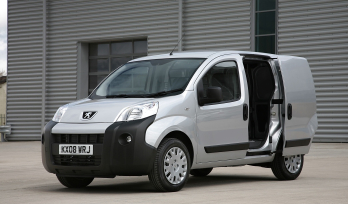
Peugeot Bipper van

Peugeot Bipper van

Also at the IAA Commercial Vehicle Show in Hanover, Peugeot scooped the International Van of the Year award for its new Bipper small van. The jury recognised its originality, compact size and on-road competence when bestowing the award.

The Bipper, which has been on sale in the UK since June, is already proving popular – thanks in no small part to its 62mpg fuel consumption, 610kg payload and sub-120g/km CO2 emissions.

As with the other vans made by the PSA Group, the Bipper is also sold badged as the Citroen Nemo and Fiat Fiorino.

(via TNN)

Can’t get to the bank? Let the (mobile) bank come to you!

Hot on the heels of the hairdressing van, I’ve come accross a story about another innovative van conversion that is bringing important services to local people – rather than making them travel.

The closure of the majority of rural bank branches over the last 10-15 years is old news – all the major banks have done it, claiming that they served too few customers to justify their cost.

However, it seems the tide might be turning slightly with an innovative new service from NatWest. The bank has been showing customers in Somerset, Devon and Cornwall that there is ‘another way’ – by providing a mobile banking service that visits a number of otherwise bankless villages every week to prevent local people having to travel to a nearby town – often 10 or more miles – to do their banking.

The NatWest mobile bank is based on a Ford Transit chassis cab with a specially-designed secure Luton box body that contains a secure area, accessed from the cab, for the two cashiers to work in. Customers enter through a door at the rear into a public area with two counters at which they can be served – just like a regular bank. Customers can pay in cash and cheques, check their balances and make transfers to other accounts – all the most common requirements.

The mobile bank van makes several stops each day and over the course of one week is able to provide banking services to a surprisingly wide area, serving rural businesses and personal customers.

For more details, take a look at this story in the Daily Mail.

UK Fuel Prices Falling – Diesel Down 9p/litre From July

Good news for drivers – fuel prices are still falling.

According to FleetNews.co.uk, the average UK diesel price is down almost 9p per litre from late July. Here are the figures:

Diesel (UK average):

17th September 2008: 124.2p/litre

23rd July 2008: 133.2p/litre

Premium Unleaded (UK average):

17th September 2008: 112.9p/litre

23rd July 208: 119.5p/litre

For more figures and detailed regional breakdowns of current and past fuel prices, click here to visit the Fuel Prices section of the Fleet News website.

Mercedes-Benz Releases ECO-Start Sprinter Demo Fleet

I mentioned recently that the new Mercedes-Benz ECO-Start system was being fitted to a number of new Sprinter vans supplied to van hire giant Northgate plc.

Mercedes appear to be pushing had to promote this fuel-saving technology and to ensure that everyone gets a chance to try it out have now put into a service a demo fleet of 50 vans. There is at least one ECO-Start Sprinter at every Mercedes-Benz van dealer in the UK – so if you want to give one a try, you shouldn’t have far to travel.

Thanks to TNN for the tip.

EU Targets Compulsory Reduction in Van Emissions

The European Commission is planning compulsory new CO2 emission and fuel consumption targets for vans and other light commercial vehicles, with trucks and buses likely to follow in the future.

Although not finalised yet, the EC is targeting an improvement in average fuel consumption for vans from the 2002 average of 33mpg to 37.4mpg by 2012. CO2 emissions would have to fall at the same time – from 2002 average levels of  200g/km to 175g/km by 2012.

These targets represent the first stage of the EC’s plans to green up vans – more stringent targets of 40.9mpg and 160g/km are then planned for 2015. According to the SMMT (the Society of Motor Manufacturers and Traders), the EC is expected to finalise legally-binding CO2 emission and fuel consumption targets for vans by the end of 2008.

Since the beginning of 2008, van manufacturers have been required to provide CO2 emissions figures for their vehicles to governments – although not to the public. It’s not hard to imagine that this might result, in the not too distant future, in UK VED (road tax) for vans taking a similar route to that for cars, with different rates being applied dependent upon emissions.

We shall see.

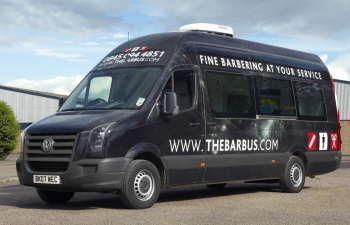
Clean Shaven VW Crafter Conversion Is Mobile Barber

A new van is rather like a blank canvas – with a bit of money and skill, it can be converted into almost anything – from luxury living accomodation to a mobile workshop or restaurant.

This VW Crafter conversion proves that new ideas are always possible – and that they aren’t as complicated as they might seem.

The Barbus - Mobile Barber in Volkswagen Crafter

The Barbus provides a mobile barber service to the good people of Banbury, Oxfordshire and is the brainchild of Stella O’Neill and Louise Viggers, the directors of Barbus Service UK Ltd.

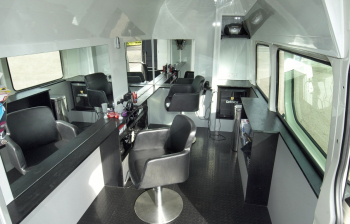
The Barbus mobile barber interior

The conversion took four weeks to complete and involved ply lining and insulating the walls and ceiling in the load area, before covering it in a high gloss flame retardant plastic covering; the floor was covered in black rubber stud tiles; shelving was fitted and a generator was installed to power the heating and air conditioning system.

The van itself is a long wheelbase, high roof Volkswagen Crafter with a 2.5l, 136 PS engine driving a semi-automatic Shiftmatic gearbox.

It certainly looks like a cut above the average van to me and is very well trimmed… I thank you!

500,000 Mile Vauxhall Combo Van – A Record?

Vauxhall Combo with 500,000 mile

© GM Corp.

Like most of the economy, the secondhand van market is slowing down a little at the moment, with buyers only paying top money for high spec, low mileage vans.

However, it’s easy to lose sight of the fact that vans are commercial vehicles and are designed to have a much harder and higher-mileage life than cars – as Nigel Weaver’s 500,000 mile Vauxhall Combo shows.

The 53-year old courier from Maidenhead, Berks, bought his Vauxhall Combo new from Burnham Garage in Slough in 2001, just as the model was making its debut.

Seven years later, after averaging over 75,000 miles a year, Nigel’s Combo has just clocked up its first 500,000 miles, all on the original engine.

Proof - Nigel's 500,000 mile Vauxhall Combo

© GM Corp.

“I bought the Combo because I liked the look of it, the fact it was comfortable and like a car to drive,” said Nigel. “In my job, you need to be comfy as you spend your entire working life on the road, and it seemed a well made van so I bought it intending to run it until it dropped.”

In 2008, the 1.7-litre diesel-engined van is still going strong, and continues to rack up well over 1,000 miles a week in Nigel’s hands, often in continental Europe as well as in the UK.

“I do some work for a brewery and regularly have to take British-brewed beer out to the head office in Amsterdam,” he said. “That gets some funny looks at customs, taking a van load of beer out of the country rather than the other way round!”

Nigel claims the key to his van’s longevity is to stick to a rigorous maintenance programme. “I’ve always ensured the oil is changed as soon as it’s due, and have always used genuine Vauxhall parts,” he added.

The van has had a few running repairs, including a new steering column and reconditioned gearbox at around the 400,000 mile mark.

“I could hardly complain at that mileage!” added Nigel. “It still regularly does over 60mpg, but I’m most impressed at how the interior has held up – the cab scrubs up lovely. I’ve never had the back ply-lined, though, so the rubber mat’s looking a little worn in places these days.”