Are younger drivers unfairly penalised by van hire firms?

vanrental.co.uk vanAge limits remain a problem for car and van hire customers: anyone under 25 is likely to pay a surcharge, while anyone aged 20 or under is unlikely to be able to hire a car — or van — at all.

The problem means, for example, that students are not able to hire a small van to return themselves to university with their belongings (on a one-way hire) but instead must enlist their parents’ help, in most cases.

The Institute of Advanced Motorists (IAM) has been looking into this issue in more depth and believes that the traditional justification given for this discrimination — that young drivers are too high risk — has been overused and is not backed up by statistics.

The organisation points out that while teenagers are a documented high-risk group when it comes to accidents, the risk drops considerably after six months of driving experience and even more so for drivers in their early 20s.

And according to existing government data*, reported killed or seriously injured (KSI) casualties in accidents involving young car drivers have decreased at steady rate since 2000. In 2011, compared with the 2005-09 average, the numbers of KSI casualties in young car driver related accidents in 2011 was 35 per cent lower, and the number of fatalities was 46 per cent lower.

Neil Greig, IAM Director of Policy and Research, points out that car clubs are opening their doors to younger drivers, without problems, and that a sensible, measured approach could actually help drive new business for the hire firms:

“We are not suggesting that inexperienced or teenage drivers should be let loose with a powerful hire car. But younger 20-somethings shouldn’t be penalised to such a degree with expensive premium charges. Safe young drivers could be a potentially fruitful market as the economy picks up. The rise in the popularity of City Car Clubs which do allow 19 year olds to drive shows that demand is out there.”

“Car hire companies should be commissioning research and looking at their real world claims history to see if the age limit can be reduced. It’s a small part of the overall traffic mix on our roads but reviewing the age limit would remove what appears to be a fundamental unfairness for safe young people in their early twenties.”

You can find more information on age limits for van hire here, although do be aware that these conditions sometimes change and that the young driver surcharge can sometimes double the daily rate for a small van!
*https://www.gov.uk/government/uploads/system/uploads/attachment_data/file/236989/young-drivers-2011.pdf

Manheim reports ‘younger vehicles’ entering used market

Last week I speculated that August’s rise in used van prices was due to a change in the vehicle mix, not to absolute rises in the sale prices of like-for-like vans.

A press release from auctioneers Manheim today appears to confirm my theory, as Matthew Davock, head of light commercial vehicle sales at Manheim, explains (my emphasis):

“Our monthly Market Analysis is beginning to reflect the fact that defleet activity is finally returning to normality after several years of post-recession contraction. It is good to see that younger vans – those aged five years or younger – now make up a larger proportion of vehicles at auction.”

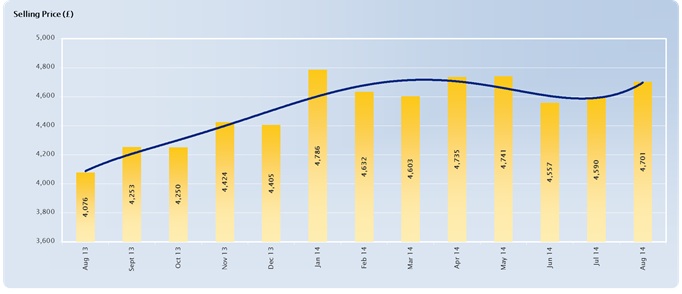
Given this, it’s only natural that realised prices will continue to rise — buyers are getting more for their money. As with the BCA figures, however, Manheim’s latest figures make it clear that used prices are not at all-time highs, which were seen at the start of this year:

Manheim prices Aug 14

Used van selling prices Aug 13 – Aug 14 (courtesy of Manheim)

Admittedly, sales were much stronger than last August, bucking the usual seasonal trend, according to Manheim, as Mr Davock commented:

”We’ve seen a real spike in 4×4 sales this August, at a time when summer breaks and bank holidays usually hold back demand. Our data shows that trade buyers have possibly been tempted to stock up earlier than normal for autumn sales, given the changing seasons and the fact that we’ve tended to see lower mileage, younger vehicles entering the halls.”

Will this strength continue through to the end of the year? Demand for new vans has risen by around 20% this year, which should free up better quality stock for the used market, which in turn should support prices, as buyers will have access to an increased number of younger, lower-mileage vans.

Still, I think this marks a turning point for the used van market — instead of buyers paying more for the same (or less), they are now paying more and getting more. A return to normality, at last?

Toyota concept hints at future urban pick-up

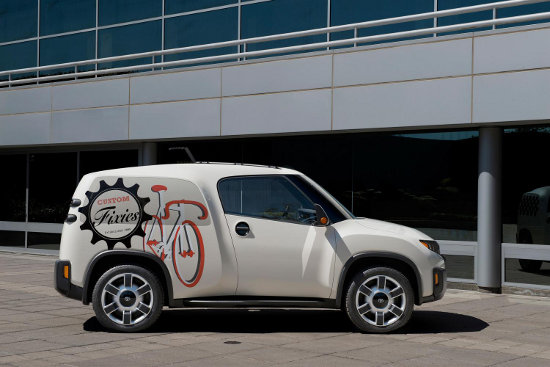
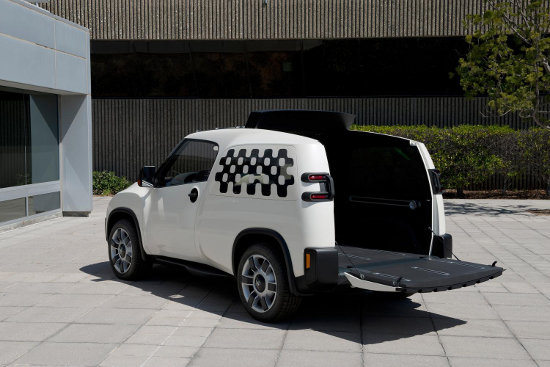
Toyota has released pictures of the U2 — described as a concept car for the US market, from a European perspective, it combines the benefits of a pick-up with the load-lugging efficiency of a small van, by removing the divide between the cab area and the load area and providing a large opening tailgate and roof panel:

Toyota Calty U2 concept

The Toyota Calty U2 concept

The U2 is the work of Toyota’s Calty Design Center, in California, and was inspired — apparently — by the growing DIY and craft movement in the US, as well as by consumers’ desire for smaller but more useful SUVs.

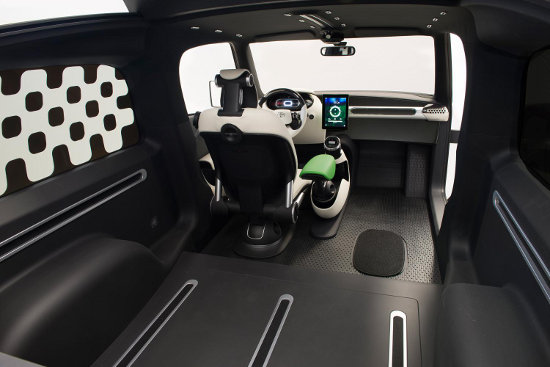
Inside Toyota U2 concept

Inside the Inside Toyota U2 concept car


As a result, the U2 is the size of a compact car, but has the functionality of a traditional pick-up and the spaciousness of a cargo van.

It needed to be easily adaptable for individual on-the-go needs, witnessed in details such as a retractable utility bar that can do anything from hold a desk to provide hooks for shopping bags. The side windows flip up, so it’s easy to reach in from the roadside.

Other highlights include: –

  • Folding, removable front passenger seat
  • Fold-up rear seats
  • New shift design with an intuitive switch for park, drive and reverse
  • New colour and trim material choices

It also answers other urban driver priorities in delivering good fuel economy and being easy to manoeuvre, load and unload, according to Toyota.

Toyota Calty U2 Concept

I can certainly see the market for something like this, although less so in the UK, where it would be likely to be a niche vehicle — more expensive and less practical than a small van like the Citroen Berlingo, albeit with more status.

Volkswagen Transporter brews up 45 winners for Zip Heaters

Zip Heaters Volkswagen TransporterOnce upon a time, a kettle — or in large commercial kitchens a tea urn — was considered a modern way to dispense hot water.

These days, of course, such devices are a little old hat — the designers of high-end kitchens demand instant boiling water on tap, and one of the firms that has driven and profited from the growth of this market is Australian company Zip Heaters.

Having taken a brief look at the firm’s online store, not only can you get instant boiling water on tap, you can also enjoy instant sparkling, chilled and filtered water.

Sadly we can’t stretch to one of these taps here at vanrental.co.uk HQ, but apparently an increasing number of people can.

To deliver and fit these Zip Heaters’ increasingly popular taps in kitchens across the UK, Zip Heaters has just signed a 45-van fleet renewal deal with Volkswagen Commercial Vehicles.

As befits a company with a high-end product, the vans are top-spec Volkswagen Transporter Trendline models, complete with VW’s automated DSG transmission.

David Durance, Technical Support Manager at Zip Heaters, said:

“As a company that sells high quality products, we required a fleet of vehicles that are befitting of this image. The Volkswagen Transporter not only offers an excellent load capacity but also has a reputation for being a stylish, high quality and efficient product, which matches our own brand image perfectly.”

The agreement will see Zip update and extend its existing fleet of 58 Volkswagen commercial vehicles to cover business expansion and ongoing fleet replacement, and Zip says that the new Transporters have been chosen for their exceptional reliability and low running costs.

Time for a cup of tea, I think…

Driving a van over 3.5 tonnes? You need a Driver CPC

As of today, 11 September 2014, all drivers of goods vehicles over 3.5 tonnes need to have a current Driver Certificate of Professional Competence, known as the Driver CPC.

This is a legal necessity and requires drivers to complete 35 hours of training every five years. It’s been widely flagged as a requirement for lorry and bus/coach drivers, but it also applies to vehicles covered by the C1 licence category — goods vehicles between 3.5t and 7.5t.

There are a number of exceptions (see here), the most relevant of which for visitors to vanrental.co.uk is that anyone driving a goods vehicle for non-commercial use (e.g. moving house for yourself) does not need a Driver CPC.

However, if you are hiring a 7.5t lorry, you may find that some hire companies ask whether you have a Driver CPC, in which case you will have to explain (and if necessary prove) that you will not be using the vehicle for commercial purposes.

Most rental vans exempt

The vast majority of vans supplied by van rental companies are under 3.5t and so are exempt from the Driver CPC requirement — so van rental customers are unlikely to need to worry.

However, there are an increasing number of heavy vans with maximum gross weights of between 3.5t and 7.5t on the road, and many of them look very similar to 3.5t vans. Anyone being asked to drive a heavy van professionally by a rental company or employer should note the requirement for a Driver CPC: make sure you know what the maximum gross weight of your van before you agree to drive.

According to Steve Bridge, Managing Director, Mercedes-Benz Vans, the consequences of driving without a Driver CPC may be severe:

“You can be fined up to £1,000 for driving professionally without Driver CPC, and as it would mean that technically you hold an incorrect licence, your insurance could also be void.”

You can find full details of the Driver CPC scheme and how to get started on the Gov.UK website — click here.

Van hire tips for students (and parents) heading to university

Europcar van hire

Europcar van hire starts from just £16 per day

With more students than ever before expected to start university this autumn, the annual migration from home to student digs could be busier than ever.

According to The Guardian More than 400,000 students have a university or college place confirmed for this autumn — and many of those will shortly be making their way up and down the motorways to university, to experience their first taste of life away from home.

Although the family car is the traditional form of transport for these yearly journeys, it isn’t always the best choice, especially as today’s students seem to take more with them — from kitchen equipment to furniture to exercise gear — than previous generations of students.

As I’ve mentioned before, hiring a van for the trip can be a cheaper, less stressful and safer way of making the journey, something that Ken McCall, Managing Director of Europcar UK Group, is keen to emphasise:

“From personal experience, I know that the first year trip to student halls is stressful enough without having to worry about getting everything packed into the family car.

Van hire from Europcar makes a real difference because it offers the flexibility of hourly rates and one way and overnight rentals.  Plus, to reduce the stress even further, we deliver to home addresses through our delivery and collection service.”

If you haven’t got a quote for van hire yet, I’d recommend a quick visit to our price comparison system — plus we also have more information on one-way hire and hourly hire, including from Europcar.

However, if you’ve already sorted out a hire van but have never driven one before, I’d strongly recommend a quick look at these van driving tips, which have been put together by Europcar:

Watch your speed

  • Depending on the size of the van, the speed at which it can be driven may well be slower than the national limit so make sure you check the limits when collecting the vehicle.
  • vanrental.co.uk tip: As a general rule, the speed limit for vans on single carriageway roads is 50mph and on dual carriageways it’s 60mph –for more information on van speed limits, click here.

Handle with caution

  • Take the time to get to know the size and responsiveness of the van before you head out onto busy roads.
  • Remember that the van will handle differently when you collect it empty to how it will feel once it is fully loaded.

Secure the load

  • Even a small amount of movement in a van can cause it to move around dangerously, so ensure items are packed securely.

Know your size: 

  • Make sure you are aware of the additional height and width of the van, remembering to take extra care under low bridges and overhanging trees. Also remember vans need extra room to turn corners, due to the extra length of the vehicle.

Take it slowly

  • Larger vehicles require a much longer braking distance, especially when fully-loaded or in poor weather, so watch your speed. In addition, make sure you take tight bends slowly as vans are more liable to tip over due to their height and increased centre of gravity.

Pick your positioning

  • Take advantage of the higher seat in a van and make sure you look around and use your mirrors often. There is no option to look over your shoulder in a van so make sure you angle your mirror to give you sight at junctions.

Changing lanes

  • Be more cautious when changing lanes and be sure to look out for two-wheeled vehicles and pedestrians.

Mind the doors

  • It might seem obvious, but it is easy to overlook closing the door after packing a van. Make sure both the rear and side doors are securely shut before setting off.

Parking assistance

  • Ask someone to guide you when reversing or parking if the van has blind spots. It might take longer, but it is a lot safer.

Volkswagen Amarok Dark Label limited edition launched

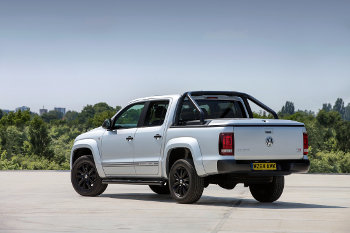
Volkswagen Amarok Dark Label

The Amarok Dark Label special edition goes on sale 22 September 2014. Only 300 will be available in the UK.

Volkswagen has unveiled details of a new special edition Amarok pick-up model, the Amarok Dark Label.

Just 300 of the new model will be available to UK customers when the Amarok Dark Label goes on sale on 22 September 2014, with a price tag of £26,125 OTR +VAT.

The new model is clearly aimed at the prestige small business owner/driver market — perhaps the key market for pick-ups in the UK — and is fully specced-out, both under the bonnet and elsewhere.

Powered by Volkswagen’s top of the range 2.0-litre BiTDI 180 PS engine, the Amarok Dark Label offering up to 420 Nm of torque and a no-nonsense maximum towing capacity of up to 3,200 kg.

Customers can choose between the six-speed manual selectable 4MOTION® (50 vehicles available) or the eight-speed auto-permanent 4MOTION® (250 vehicles available). The automatic version boasts BlueMotion Technology, which includes low rolling-resistance tyres, Start/stop and regenerative braking to provide greater economy and lower emissions.

Both models come with a host of unique styling features, including 18-inch Durban alloy wheels finished in black, extended wheel arches, and a distinctive underride guard below the front bumper. The exterior design package also includes dark tinted rear/side windows, darkened tail lights, matt black side bars and footstep, along with a black rear bumper, black grained door handles and black foil on the B-pillars.

VW Amarok Dark Label interior

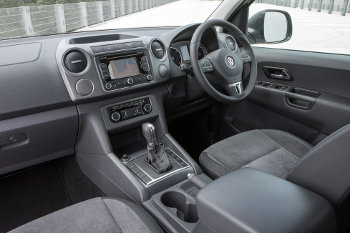
Inside the Amarok Dark Label

Inside, the Amarok Dark Label is equally dramatic with premium anthracite Alcantara upholstery and velour floor mats featuring exclusive Dark Label branding.

Equipment highlights include a multi-functional steering wheel, leather gear knob and gaiter,satellite navigation with a six-inch colour touchscreen,Bluetooth, a multi-function display and heated seats.

Customers also benefit from heated wing mirrors, electric windows and additional door dust seals as standard.

A special anthracite-coloured UV-resistant special coating applied to load area completes the striking look. Customers can choose from three colours: Deep Black, Reflex Silver and Natural Grey.

Customers wanting an even more individual appearance can take advantage of a range of specially selected Amarok Dark Label accessories. These include practical items such as a hard tonneau cover, Dark Label branded seat covers and bonnet protection, and styling items including chrome door handles and roof-mounted styling bar lights.

SAVE up to 33% in the Hertz Van Sale [EXPIRED]

Hertz Newcastle Van SupersiteIf you missed out on our exclusive 10% Hertz van hire discount code last week then don’t worry — the Hertz Global Sale has been extended to include van rental.
** THIS OFFER HAS NOW EXPIRED **

You can save up to 33% on Hertz van rental for bookings made by 26 September and completed by 31 October.

Here are the full details of this great offer:

Offer: The Hertz Van Sale is on! Enjoy up to 33% off Van Rental….

Valid from: 8th September 2014

Expires: 26th September 2014

Discount Code: 999901

Terms and conditions: To get your low price, remember to book by 26 September and complete your rental by 31 October 2014. Applicable to Van Groups B4, C4, D4 and G4.


For more information and full terms and conditions, visit the Hertz website.

Used van values hit all-time high in August — but is vehicle mix changing?

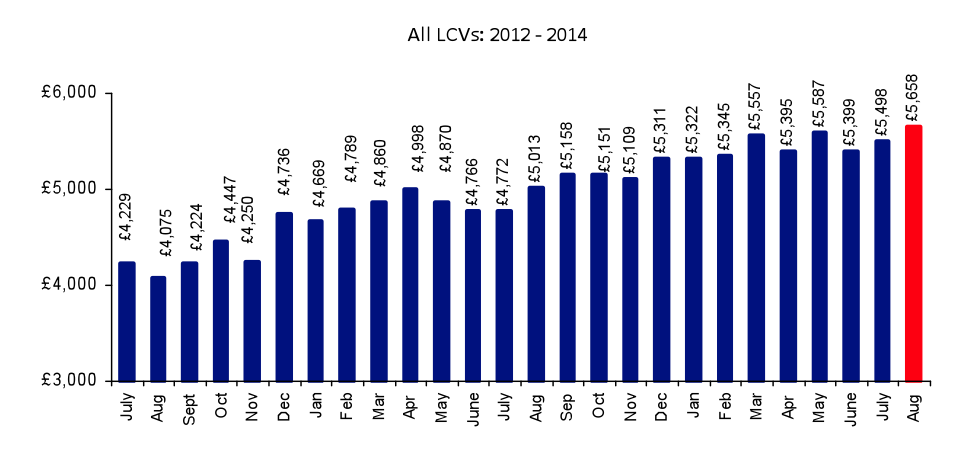
Average used van values hit an all-time high of £5,658 in August, according to the latest sales data from British Car Auctions (BCA). According to the firm, demand from professional buyers remained strong last month and shortages of good retail quality vans continued.

The average van at BCA sold for £5,658 in August, an increase of £160 (2.9%) compared to July and the highest monthly average figure on record.  Fleet & lease and nearly-new values rose, month-on-month, while part-exchange values fell back.  Year-on-year values remain well ahead by £645 (12.8%), with both age and mileage falling and performance against CAP improving slightly.

BCA used van values Aug 2014

Used van values July 2012 – August 2014 (courtesy of BCA)

I obviously have some egg on my face, having been calling for the peak of the used van market for a little while now, but I would like to point out one quirk in the figures, which suggests to me that the outright increase suggested by the graph above may not be the only interpretation of the facts.

[Update 08/09/14: Figures from the Finance & Leasing Association have just crossed my desk, showing that used car purchases by businesses fell by 50% in July, compared to the same period last year, while new car purchases (on finance) rose by 29%. If similar trends are being seen in the new and used van sectors, then we could soon see further downwards pressure on used van prices.]

Mix change?

Although the overall average price was the highest on record in August, the average value of fleet and lease sector vans was lower than in the peak months of February and March. Similarly, the average value of part-exchange vans has fallen continuously since May, while the average value of nearly-new vans was also lower than the peak values of February, March and several other months over the last two years.

In other words, the overall average used value is at an all-time high, but none of the average sector values are.

To me, this suggests the mix of vehicles being auctioned may have changed — BCA don’t specify the relative volumes sold in the fleet and lease, part-ex and nearly-new sectors, but my understanding is that nearly-new volumes are pretty low, while the largest volume comes from the fleet and lease sector.

If this is true, then an increase in the number of ex-fleet and ex-lease vans coming through the salerooms could have boosted the overall average price to a new record high, even if the average price of each van sold did not rise. This is also supported by the continuing rise in new van registrations, which rose by 22% in August, compared to August 2013.

This is only my opinion, of course. If you know better, please leave a comment below or let me know on Twitter (@vanrentaluk) or Facebook facebook.com/vanrentaluk).

Rental companies demand police action on vehicle thefts

Did you know that nearly half of all new vehicles sold in the UK each year are bought buy hire companies?

That may not be so surprising when you learn that the UK vehicle rental industry has a total fleet of around 400,000 cars, vans and trucks — of which an estimated 1,500 are stolen every year.

Against this backdrop, it’s not hard to understand why the British Vehicle Rental and Leasing Association (BVRLA) is calling for more aggressive police action on vehicle crime, in the light of damning findings in a new report from Her Majesty’s Inspectorate of Constabulary.

The report — which describes policing as a ‘postcode lottery’ — concluded that car crime is “on the verge of being decriminalised” because forces have “almost given up”, a finding with which Gerry Keaney, BVRLA chief executive, wholeheartedly agrees:

 “Vehicle theft or fraud is one of the biggest problems facing the rental industry, but our members are largely being left to fend for themselves.”

“We need police forces to take cases of vehicle crime seriously and adopt a much more ‘joined-up’ approach to working with other constabularies.”

UK vehicle rental Operators undertake rigorous training of frontline staff and share access to an industry-wide database of ‘problem renters’, but the sector still suffers an estimated 1,500 vehicle thefts each year, according to the BVRLA, which says that vehicle rental operators are often targeted on a national basis by organised gangs.

“Rental companies are not time-wasters – they know when a vehicle has been stolen and are prepared to work closely with police to solve these crimes”, Keaney added.

To help address this problem, the BVRLA has developed its own Stolen Vehicle Reporting Guidelines to help members report thefts and ensure that police forces are provided with the right evidence and information to conduct an investigation.

The Association of Chief Police Officers and forces up and down the country have been made aware of this information, but it is falling between the cracks as more and more crime-reporting and administrative functions are outsourced, says the organisation.

You can access the full HMIC report into crime here.