Author Archives: Van Rental

UK CV Manufacturing Stalls As Car Output Rises

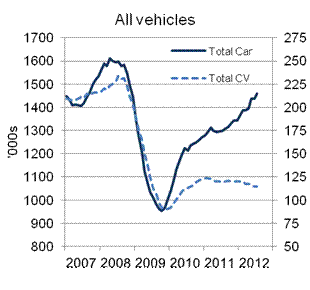
UK Car and CV factory output, 2007-2012 (August 2012, courtesy of SMMT)

UK Car and CV factory output, 2007-2012, courtesy of SMMT

UK Van manufacturing is slumping as domestic and export demand evaporates.

The UK’s vehicle manufacturing industry is larger than many people realise.

In July, 128,886 cars and commercial vehicles were made in the UK, with 941,098 having been made so far this year, according to the latest figures from the Society of Motor Manufacturers and Traders (SMMT).

In addition, more than 1.5 million vehicle engines have been made in UK factories so far this year.

Both export and home demand for British-made cars rose in July; so far this year, home demand is up 21.2% and export demand is up 13.9%.

British cars are in demand…

The good news is that global demand for cars made in the UK — like the new Range Rover Evoque — is climbing. Jaguar Land Rover’s Halewood factory has just moved to a 24-hour shift system to meet demand for the Freelander 2 and Evoque models and the company’s sales rose by 34% in the second quarter.

Other British car manufacturing success stories can be found at Toyota’s Derby factory, Nissan’s Sunderland factory and BMW’s Oxford factory, where the MINI is built.

…British vans are not

Unfortunately it’s not such a bright story for vans. Although some popular van models are built in the UK, no one is buying them at present.

The CV industry in the UK is much smaller than the car industry and has a greater focus on the UK market. Of the 65,100 CVs built in the UK so far this year, 40% were destined for the home market, compared to only 18% of cars. This means that van output is far more sensitive to local economic conditions than the car output, especially as many vans are owned by small businesses that tend to postpone major expenditure during lean periods.

The two main commercial vehicle factories in the UK are Vauxhall’s Luton plant, where the Vivaro is made, and Ford’s Southampton plant, where some Transit variants are built. The trouble is, while these both remain extremely popular models, UK commercial vehicle factory output is down by 7.7% so far this year, with export demand down 6% and home demand down by 10.2%.

Although home demand rose by 16% in July — a somewhat suspicious result — even that wasn’t enough to prevent an overall decline of 1.3% last month.

The graph about highlights how car and CV manufacturing has diverged since 2009 — and I don’t see much prospect for improvement until the UK sees some meaningful economic growth.

Mercedes Celebrates 105 Years of Four-Wheel Drive

It’s been 105 years since Mercedes-Benz introduced the first commercially-available 4×4. Since then, it’s produced some superb 4×4 commercial vehicles, including the legendary Unimog.

In 1907, four-wheel drive was virtually unheard of and certainly not a standard production option — until Mercedes-Benz (or Daimler-Motoren-Gessellschaft, as it was then) introduced the Dernburg-Wagen, the world’s first commercially-available four-wheel drive vehicle.

Not only did it have four-wheel drive, it also had four-wheel steering, something that’s still considered high-tech (if a little eccentric) today. With ground clearance of 32-centimetres and a 6.8-litre, four-cylinder engine developing a modest 35 hp at 800 rpm, the Dernburg-Wagen was a serious piece of kit and could carry five passengers. Solid steel wheels wrapped in pneumatic tyres helped protect the drum brakes from debris.

Since then, Mercedes has produced a succession of superb four-wheel drive vehicles, many of which are aimed at the commercial market. Let’s take a pictorial look down memory lane at some of the finest 4x4s ever made:

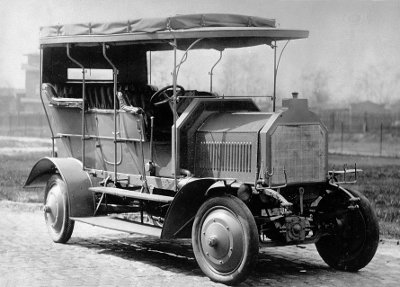
Mercedes-Benz Dernburg Wagen - first ever four-wheel drive vehicle

This is how it all started. The Dernburg-Wagen was the first commercially-available 4x4 model when it was introduced in 1907.

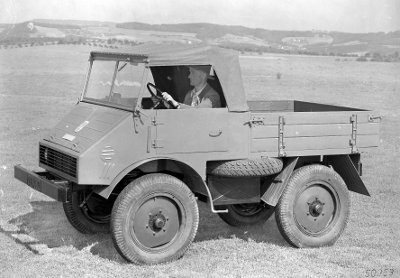
An early Mercedes-Benz Unimog

Early versions of the Unimog were somewhat agricultural in terms of creature comforts, but their off-road abilities, pulling power and toughness were never in question.

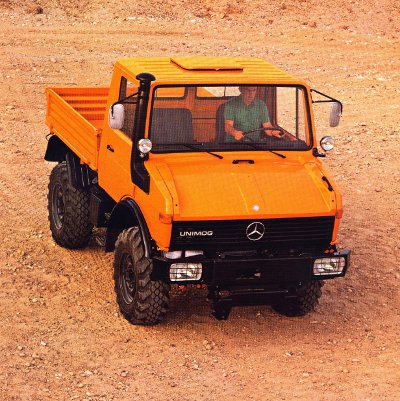
Mercedes-Benz Unimog

The Unimog soon got bigger and better...

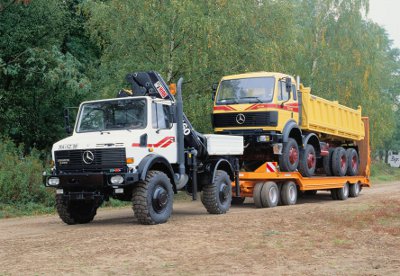
Mercedes Unimog towing trailer with 32-tonne lorry

Don't make the mistake of thinking that the Unimog is just an overgrown pickup -- it's not, as this picture of it pulling a 32-tonne tipper shows.

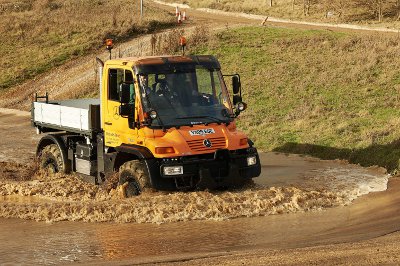
Mercedes-Benz Unimog

The latest Unimog is more capable and technically-advanced than ever, but they still haven't ditched that orange paint!

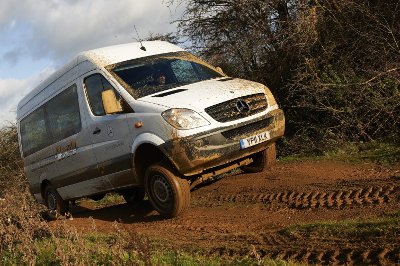
Mercedes-Benz Sprinter 4x4

White van man's ultimate ride? The Sprinter 4x4 is surprisingly capable off road and doesn't sacrifice any of the practicality of the standard van. I want one...

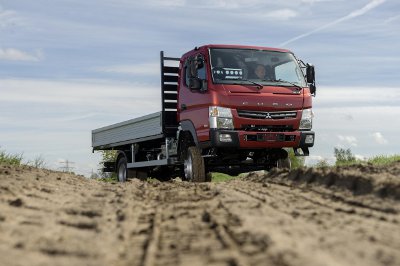
Fuso Canter 4x4

Merc's adopted Japanese cousin hasn't been left out either. The Fuso Canter was already a great workhorse, and the recent addition of a 4x4 option made it even better.

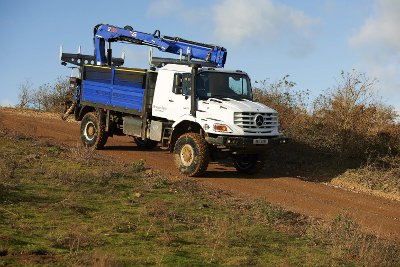
Mercedes-Benz Zetros

Finally, for when a Unimog simply isn't enough... The Mercedes-Benz Zetros is even bigger and more awesome. It offers gross weights of up to 27t combined with genuine off-road ability.

What’s your all-time favourite 4×4? Leave a comment below and let me know.

Van Excellence Operators Now Have Certification Option

The Freight Transport Association (FTA) has now expanded its increasingly popular Van Excellence Code to include two certification options, one for managers of freight van fleets and one for managers of passenger van [minibus] fleets.

The Freight Transport Association is offering two brand new training courses for van operators, the Certificate of Excellence for Van Operators and the Certificate of Excellence for Passenger Van Operators.  The courses are based on the guidelines contained in the association’s Van Excellence Code, which was written with advice and support from many of the UK’s best van fleets and represents an ideal basis for the safe and legal operation of vans and light commercial vehicles.

One course is for individuals managing or supervising freight van fleets, and the other for those managing or supervising passenger van fleets, and both are aimed at raising standards across van operations.

FTA’s Van Excellence scheme was launched in 2010 to promote high standards of van operation and driving by accrediting operators against an industry code of good practice.

Mark Cartwright, FTA’s Head of Vans and LCVs, said:

“Any organisation operating vehicles as part of its business activity must ensure the safety of drivers and the public, as failure to do so can have serious consequences.  These courses will provide van operators with a wealth of best practice guidance for operating safely, legally and efficiently and are designed to help raise standards across van operations.“

The courses cover areas such as vehicle maintenance systems, vehicle administration, driver licensing, securing of loads, speed limits/limiters, towing equipment and driver identification, behaviour and competence.

All delegates will undertake an assessment at the end of the course, and on successful completion will be issued with an FTA Certificate of Excellence, valid for a period of three years.

For more information, visit www.vanexcellence.co.uk.

Olympic Route Network Ends Midnight 14 August

The operation of the Olympic Route Network ends at midnight on Tuesday 14th August, following the completion of the Olympic Games.

Transport for London (TfL) today confirmed that the Olympic Route Network (ORN) will end operation and enforcement at midnight on Tuesday 14 August when the vast majority of athletes, officials and media will have departed the UK following an extraordinary Olympic Games. Roads will return to normal between the Olympic and Paralympic Games.

The 109-mile ORN, which includes 30 miles of Games Lanes in London, has ensured all athletes, officials and the world’s media got to their events on time and helped to keep London moving. ORN measures including stopping and parking restrictions end at midnight on Tuesday. All Games Lanes will be taken out of use overnight ahead of Wednesday morning’s rush hour, although all white line road markings will take a little longer to remove. All physical measures on the ORN will be removed by the morning of  Thursday 16 August.

Paralympic Route Network

Of course, the Paralympics is still to come and TfL will be operating a special route network for these games. However, the PRN will be considerably smaller. TfL has now published some guidance for motorists about the PRN:

  • The PRN is considerably smaller than the ORN and is focused on the east of London
  • It will have only 8.7 miles of Games Lanes on the routes between the City of London, where the International Paralympic Committee (IPC) will be based, the Olympic Park and other venues, including ExCeL, the North Greenwich Arena, Greenwich Park and Royal Artillery Barracks
  • The physical build of the PRN will begin overnight on Saturday 25 August, but it will not come into operation until 06:00 on Wednesday 29 August, the opening day of the Paralympic Games
  • The PRN and Games lanes will end operation and enforcement one day after the end of the Paralympics at midnight 10 September, to aid the efficient departure of athletes, officials and media

You have been warned!

For more information, visit the www.getaheadofthegames.com website.

Renault Launches Britain’s Top Tradesman Competition – Win A Van

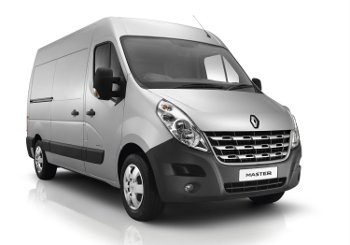
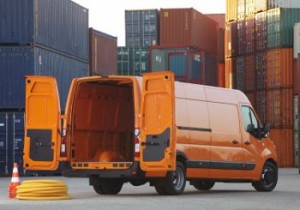
Renault Master rear-wheel drive model with twin wheels

The winner can choose any of Renault's van range, up to the value of £27,000.

Renault UK has teamed-up with Screwfix and national newspaper the Daily Star to help find ‘Britain’s Top Tradesman 2012’ and offer the lucky winner a brand new Renault van worth up to £27,000 on the road.

As Europe’s number one van brand for the last 13 years in a row, Renault is the perfect partner in the country-wide search for the nation’s premier tradesman which last year attracted more than 3,000 entries.

The annual competition is open to all types of tradesmen, whether that be builders, plumbers, electricians or handymen, and seeks to crown someone who not only provides exceptional standards of service, but who also goes that extra mile for customer satisfaction.

Whoever wins the 2012 title will be entitled to select a van up to the value of £27,000 from Renault’s award-winning range. One of Renault’s 100% electric Kangoo Van Z.E vehicles would be ideal for an electrician, for example, while a team of hard-working roofers or glaziers could make excellent use of a Renault Master Crew Van.

“The past twelve months have seen many tradesmen diversify and experiment to improve their business – from embracing new technology to be more efficient, to welcoming young apprentices into their business”, commented Screwfix marketing director John Mewett.

“Tradesmen really are the foundation of any community, ensuring homes and businesses are fit for purpose. This competition has been created to recognise them and the vital work they carry out.”

In addition to the tremendous value and workmanlike qualities of Renault’s LCV range, new Renault  vans come available with the 4+ package – meaning four years warranty, roadside cover, servicing and finance if applicable.

Phil York, Renault UK Marketing Director said

“We are delighted to be working with Screwfix and the Daily Star newspaper by offering a van to the winner of the 2012 Top Tradesman of the Year competiton.  I am sure the winner will find the perfect match for their business needs from our extensive range of vans”.

Tradesmen wishing to enter the contest have until 8th October to submit applications, after which selected regional finalists will go head-to-head. The grand final to determine Britain’s Top Tradesman 2012 will be held in November at an, as yet, unconfirmed location.

To lodge an entry, either visit a Screwfix store or go online at www.screwfix.com/btt

For more information regarding Renault vans visit www.renault.co.uk/vans

Poole Steel Firm Chooses 100% Isuzu Fleet

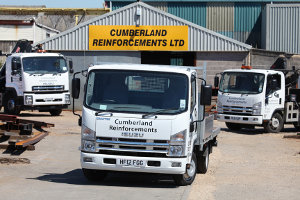
Cumberland Reinforcement's Isuzu Grafter 3.5t

Cumberland Reinforcement's 3.5t Isuzu Grafter

Dorset-based steel stockholder Cumberland Reinforcements has completed a move to a 100% Isuzu-based fleet. After two years of running the marque’s heavier 7.5t and 18t trucks, it has completed its fleet renewal with a 3.5t Isuzu Grafter.

The Poole-based firm operates its vehicles within a 100 miles of its base and specified a flatbed body for its 3.5t Grafter, in a similar specification to the heavier Isuzus.

One of the advantages of the Grafter — like Toyota’s Dyna — is that it is essentially a small truck, rather than a heavy van. This means that it is well suited to demanding work and its cabover configuration maximises the load bed length without increasing overall vehicle length.

Martin Cumberland, the company’s managing director, explains:

“We find that the Isuzu trucks are excellent workhorses for our type of business, giving us everything we need. In addition, we also receive excellent support from the local dealer Ferndown Commercials, which is not only close at hand, but also gives us first-class service.”

For more details on Isuzu commercial vehicles, visit www.isuzutruck.co.uk.

New Nissan NV200 London Taxi Launched

The London taxi is recognisable throughout the world and its distinctive combination of interior space, tight turning circle and robust build have provided maker LTI with a near monopoly for years.

However, competition has increased in recent years and LTI is not the only game in town any more. There are now two mainstream van manufacturers offering London taxi models based on their production vans — both with an eye on the lucrative global urban taxi market.

German contender

Mercedes-Benz Vito Taxi

Mercedes-Benz Vito London Taxi

First on the UK market was Mercedes-Benz, which introduced the Vito Taxi in London in 2008.

The current model is a rear-steer, six-seater variant of the popular Vito van, which comes complete with independent air conditioning for the driver and passengers, Parktronic sensors, flush-fitting electric steps and electrically opening and closing doors.

The passenger and driver space is kept clear of luggage thanks to a large boot and a further, large, versatile space next to the driver, freeing up a substantial one-metre area for stowage. The luggage sits in the rear crumple zone, leaving the passenger safety cell clear for maximum comfort.

Powering the Vito Taxi is a 116 hp, 2,148cc four-cylinder diesel engine. Equipped with a five-speed automatic gearbox, it is Euro 5 compliant, delivers combined fuel consumption of 8.1 (L/100km) or 34.9 mpg and CO2 emissions of 213 g/km.

Mercedes claims that it now has 40% of the UK metropolitan taxi market — but how will the Vito fare against the new competition?

Japanese may do better

Nissan NV200 London Taxi

Nissan NV200 London Taxi

The latest entrant to the London taxi market is the Nissan NV200 London Taxi. It has a strong reputation, having already been chosen as New York’s ‘Taxi of Tomorrow’ and offers a number of benefits over the Vito Taxi, thanks to its modern engine and drivetrain.

The NV200 London Taxi will offer significantly reduced CO2 outputs compared to current taxi models – the NV200 London Taxi’s Euro V engine only emits up to 138g/km of CO2, compared with 209g/km from the ‘greenest’ TX4 model.

An all-electric e-NV200 concept is also set to undergo trials in the Capital.

Save fuel

Nissan’s NV200 also promises a big improvement in fuel consumption over current models.

Nissan NV200 London Taxi interior

Nissan has maintained the traditional London Taxi interior layout, with the front passenger seat removed to make room for luggage

The model’s frugal 1.5 dCi 89 HP EuroV, 6-speed manual drivetrain achieves 53.3mpg on a combined cycle meaning an almost 50% fuel saving over the most efficient TX4, with its combined cycle figure of 35.3mpg. In terms of emissions,

However, Nissan doesn’t seem to specify what the fuel consumption figures will be with an automatic gearbox, which is the norm for London taxis. If a modern automated manual transmission is fitted, then fuel consumption should be broadly unaffected — but the cost is likely to rise. If a more traditional automatic gearbox is fitted, then fuel consumption is likely to rise.

Nissan has a sterling reputation amongst London taxi drivers — it’s old 2.7-litre diesel engine was for many years the standard powerplant in London Taxis and was used in both the Fairway FX4 model and its successor, the TX1.

If Nissan’s new engine can deliver the kind of reliability, performance and fuel consumption it promises, then it is likely to be a winner.

New Van Registrations Jump 10.2% In July – But Really?

New van registrations leapt by 10.2% in July according to the SMMT — but are the numbers all they seem to be?

After months and months of declines, new van registrations jumped by a fairly astonishing 10.2% in July, according to the latest monthly figures from the Society of Motor Manufacturers and Traders. The news provoked some speculation on Twitter about how such a dramatic reversal was possible, given that the economy hasn’t improved.

Contract hire specialist (and legendary self-promoter!) Ling Valentine reckoned it was down to a boost in pre-registered vans, while another commentator tweeted that the boost was due to a huge delivery of new vans to Royal Mail plus a couple of other fleet deals — leaving retail figures broadly unchanged (not good…):

What About The Numbers?

On the face of it, the SMMT van and truck registration figures for July are pretty good:

  • Commercial vehicle registrations (vans and lorries) up 8.1% in July and up 2.9% on a rolling year basis
  • Van registrations up 10.1% in July and stable at -0.1% on a rolling year basis
  • Truck registrations came in at -2.2% in July but are up 22.4% on a rolling year basis, after many strong months

Here’s what it looks like on a graph — the solid dark blue line represents vans:

SMMT Commercial vehicle registrations 2007-2012

SMMT Commercial vehicle registrations 2007-2012 (courtesy of SMMT)

Next month’s figures should give a more accurate idea of whether this is a one-off event boosted by pre-registered vehicles and big fleet deals or a genuine change of trend. Personally, I don’t see why the van market would suddenly improve, given the state of the economy — but stranger things have happened.

Watch this space…

Fiat Extends Tecnico Series With New Ducato & Doblò Versions

Fiat Ducato Tecnico

Fiat Ducato Tecnico

Earlier this year, Fiat launched the Ducato Tecnico model, a new version of the popular Ducato panel van based on the Ducato 35 Van 2.3 Litre 130 MultiJet II LWB HR (L3H2).

Such has been the popularity of the original Ducato Tecnico, which is generously specified for the price, that Fiat has introduced two new Tecnico models.

Ducato Tecnico

The Ducato Tecnico range now includes two models — SWB and LWB:

  • Ducato VAN 30 L1H1 130 MultiJet II Tecnico (£13,995.00 OTR excluding VAT)
  • Ducato VAN 35 L3H2 130 MultiJet II Tecnico  (£16,995.00 OTR excluding VAT)

The Ducato Tecnico spec includes air conditioning, front fog lights, Blue&Me with steering wheel controls, TomTom predisposition on the dashboard, B&M TomTom Live navigator plus cradle, Start&Stop, special wheel trims, reverse parking sensors and eco:Drive Professional software at a competitive price.

Fiat says that these promotional prices provide customers with a saving of up to £10,9001 off the basic list price.

Doblò Cargo

Fiat Doblo Cargo Tecnico

Fiat Doblo Cargo Tecnico

Fiat Professional is also extending the availability of the Tecnico version to the award-winning Doblò Cargo in both standard and long wheelbase versions.

Doblò Cargo Tecnico versions are based on the SX version so the additional standard equipment includes air conditioning, Blue&Me with steering wheel controls, TomTom predisposition on the dashboard, B&M TomTom Live navigator plus cradle, Start&Stop, reverse parking sensors and eco:Drive Professional software.

The front fog lights and special wheel trims included in the Ducato Tecnico spec are standard on the Doblò Cargo SX trim level, so aren’t listed above, but are included.

Doblò Cargo Tecnico versions are available to order in all pastel colours and for an additional £100.00 customers can order the Doblò Cargo Tecnico in metallic paint.

Promotional prices for the Doblò Cargo Tecnico are as follows:

  • Doblò Cargo Tecnico 1.3 MultiJet II 90hp (£10,495.00 OTR excluding VAT)
  • Doblò Cargo MAXI Tecnico 1.6 MultiJet 105hp (£11,995.00 OTR excluding VAT)

As with the Ducato Tecnico versions, the new Doblò Cargo Tecnico versions provide customers with big discounts on list prices, offering a potential saving of up to £6,3002 off the basic list price.

Citroën Extends 4-Year Free ‘Business Class’ Van Offer

Citroen DispatchCitroën has extended its ‘Upgrade To Business Class’ package, which is available at no cost and includes a 4-year servicing and extended warranty deal.

The business class package, which I previously mentioned in June, was previously on offer until the end of July but has now been extended to “for the foreseeable future”, according to a press release issued by Citroën today:

Now the ‘Upgrade to Business Class’ package will continue to be available to qualifying customers on all new Citroën LCVs supplied by participating Citroën dealers and Business Centres for the foreseeable future.

The no-cost Citroën ‘Upgrade to Business Class’ package includes:

  • 4 years/60,000 mile servicing (whichever comes first), allowing customers to have their LCVs serviced annually over this period
  • 4 years Citroën Assistance (provided by the AA), with Roadside Assistance, At Home Assistance, Recovery, Onward travel and European cover
  • Warranty extension to 4 years/120,000 miles (whichever comes first)

Scott Michael, Citroën’s Head of Commercial Vehicles & Business Centre Programme, commented:

“Citroën takes its responsibilities seriously in the matter of reducing the whole life costs of its award-winning LCV range. The continuation of the innovative ‘Upgrade to Business Class’ package means we can continue to provide our customers with long-term economic benefits. This is coupled with other cost reduction and enhanced efficiency benefits introduced this year as part of the ‘Citroën Vans – Business Class’ initiative, which puts Citroën even further ahead of its competition.”

vanrental.co.uk says:

Presumably Citroën is suffering from falling new van sales as badly as most other manufacturers — this no-cost deal seems attractive for tradesmen and low-mileage SMEs and could help swing a few more sales Citroën’s way.