Author Archives: Van Rental

Green Vehicle Hire: What Does It Really Mean?

As drivers and car and van fleet operators get ever more concerned about environmental issues, a new breed of car and van hire business is emerging; green vehicle hire.

The last few years have seen several green car and van hire businesses appear in the UK rental market and the trend looks set to continue – with major hire operators like Hertz also now marketing green car hire.

While environmentally-friendly car and van rental is certainly a worthwhile goal, I must admit to some uncertainty about what it actually means – after all, most of these vehicles are still running on petroleum-based fuels and are still occupying a space on our crowded roads.

To satisfy my curiosity and cure my ignorance, I decided to look into the concept of eco-friendly vehicle hire a little more closely to find out what green vehicle hire companies are really doing to help the environment.

The approach I took was to search the internet for UK hire companies advertising themselves as green, or as offering green/eco-friendly vehicle hire. I then tried to ascertain from their websites what it is they do to make a positive contribution to the environment. Here’s what I found – these are taken from a number of different companies – no one company does all of this, although some come close:

  • Only using vehicles that are exempt from the London Congestion Charge
  • Providing carbon-neutral vehicles
  • Offering hybrid/electric cars and vans
  • Purchasing carbon offsets to equal the emissions from their rental vehicles
  • Making donations to environmental charities/education schemes
  • Offering hire vans and cars that run on 100% biodiesel
  • Running their business in a eco-friendly manner – for example, buying electricity generated from a renewable source, strict recycling, uprated building insulation, etc.
  • Only providing vehicles with the lowest CO2 emissions ratings in their class

As you can see, there are a number of truly worthwhile approaches to car and van hire in the list above – plus a few that are hard to put a value on.

I don’t think there is any doubt that the vehicle rental industry has a role to play in protecting the environment; their short fleet renewal cycles should also mean that they start with an inbuilt advantage over most vehicle operators. Always operating new vehicles should mean that you automatically benefit from the latest low emissions and fuel-saving technology – even without trying!

It’s good to see that some companies are going a stage further in trying to reduce their fleet’s impact on the environment – but if you are considering green van or car hire, make sure you understand exactly what eco-benefits you are getting for your money, as companies’ approaches do vary widely.

Vans To Go (or ‘Would You Like A Body With That?’)

It wasn’t so long ago that anyone who wanted a body put on a van – say a Luton box body – had to buy the van chassis from the manufacturer and then deliver it to a body builder who would add their body of choice to it.

The result was one vehicle with two warranties and effectively two manufacturers. Not the end of the world, but a bit of a cumbersome process. Ford Transit Luton Van

Over the last year or so, however, that’s all changed. Almost all the major van manufacturers (think Vauxhall, Citroen, Fiat, Ford, Renault and Mercedes) now offer a range of pre-built conversions, straight from the showroom.

What this means is that if you want a common type of body – a box, luton, dropside or tipper, for example, then you can order it directly from your dealer – and have them deliver the finished product to you, rather than you having to arrange it yourself.

Some, although not all, are now unifying their warranties too. Vauxhall, for instance, state on their website that “All Vauxhall Commercial Vehicle core conversions carry the full Vauxhall three-year/100,000 mile warranty on both chassis cab and conversion”.

Anyone needing a more specialist body conversion may still need to use the services of an aftermarket bodybuilder – probably no bad thing – but even then, the manufacturers are stepping in to help. Mercedes’ website says that to help buyers needing a custom conversion “We’ll work together with you and local bodybuilders to create a solution that meets your specific requirements.”Renault Master box van

Obviously the van manufacturers also stand to gain from this – gaining control over a whole new slice of activity that used to be out of their control. But for van operators who just need a simple, effective solution, the attractions of being able to order the body you want with your new van seem hard to ignore.

Note: Continuing this theme, I’ve just heard that specialist van racking manufacturer Sortimo will shortly be opening a new facility in the north-west of England. It will be able to complete 4,000 installations each year and will have “the facility for pre-delivery inspections, meaning vehicles can come straight from production lines to Sortimo and then on to the end user.

It’s a growing trend.

A Solution To Misfuelling Problems?

Hot on the heels of my recent post on the number of drivers who fill up diesel vehicles with petrol each year and have to be rescued by the RAC, the good people at DDN Ltd have got in touch to let me know that they have come up with a solution to this problem.

The problem, you’ll remember, comes about because the filler neck of diesel vehicles is larger than that of petrol vehicles – meaning that a petrol nozzle will slip in just as easily as a diesel nozzle.

It’s a problem that seems to be growing, too – in 2007 50,000 RAC members and 20,000 Green Flag members alone managed to fill up with the wrong fuel. Leaving safety and environmental issues from the disposal of the fuel aside, misfuelling has a huge financial impact. Just ask anyone who has had to have their diesel vehicle repaired after running it on petrol…DDN’s Misfuelling Prevention Device

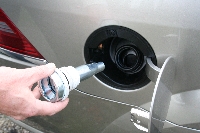
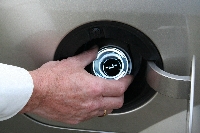
DDN’s solution seems simple. Named the Misfuelling Prevention Device, it’s essentially a cleverly-designed sleeve that fits inside your existing filler neck. Once in place, any attempt to insert a petrol nozzle will be blocked – only diesel nozzles will fit in.

Fitting seems extremely simple and once in place, no further maintenance or adjustment is required. DDN say that it should last the lifetime of the vehicle. DDN MPD fitting part 2

The MPD costs around £50+VAT for fleets and most popular makes and models are or will be supported. The device has been successfully trialled with a variety of fleet operators – including one police force. For more news, see DDN’s website. I’m not sure that it’s available for retail customers yet.

I would imagine that van hire companies could become enthusiastic customers for such a product – anyone driving a rental van who usually drives a petrol car must be a prime candidate for misfuelling. Still, it’s a problem that can affect anyone – as this RAC employee found out! (Although in fairness it is a windscreen fitter’s van, not a breakdown van.)

(All pictures courtesy of DDN Limited.)

116 New Van Hire Branches & 29 New Locations!

It’s been a busy week here at vanrental.co.uk Towers – we’ve been adding new van hire branches and locations until they’ve come out of our ears…Europcar Van Hire UK

We’re very pleased to be able to announce that we have now added all of Europcar UK’s van hire locations to our database, complete with links directly to Europcar UK’s online booking engine.

This means that as well as 116 new branches – giving you more choice all over the UK – we now have van hire branches listed in 29 new locations – including lots of new airport van hire locations:

Aberystwyth
Belfast City Airport
Birmingham International Airport
Blackpool
Blackpool International Airport
Chorley
Colwyn Bay
Coventry Airport
Derry
Derry City Airport
Doncaster Robin Hood Airport
Droitwich
Durham Tees Valley Airport
East Midlands Airport
Falmouth
Fishguard
Guernsey Airport
Humberside Airport
Isle of Wight
Jersey Airport
London New Malden
London Woodford Green
Newquay Cornwall Airport
Norwich International Airport
Penzance
Southport
Stamford
Truro
Weymouth

Europcar are one of the best-known car and van hire brands in Europe and together with their partner company National Van Rental have a combined fleet of more than 6,000 vans in the UK.

Europcar offer four types of van for hire (click on the links for sizes and pictures):

Europcar offer an exceptionally flexible and competitive van hire service, allowing one-way hire throughout the UK at extremely competitive rates – their one-way surcharge for prepaid bookings is much lower than any other company we know of.

Europcar also offers hourly van hire and has regular special offers on van hire – such as discounted mid-week van hire.

Finally, for anyone needing a to hire a van for longer periods – over a month – Europcar offers Month+ Van Hire. It’s the perfect compromise between short-term rental and leasing a van, with the choice of 1 month or 3 month commitments – and the guarantee of a nearly new, hassle-free van.

To learn more about Europcar UK Van Hire or check out their current special offers, just click here.

Budget ’08: How Are Van Owners Affected?

As anyone whose been near a radio, TV or newspaper today will probably know, today was Budget day – time for the Chancellor, Alistair Darling, to set out his stall for the 2008/9 tax year. As ever (or so it seems), the focus was on the sinners – with booze, tobacco and gas-guzzling cars all easy targets for a tax hike.

But what was there for us – van drivers, operators and owners? I’ve been through the full budget document with a fine toothcomb – and it turns out that there are a few measures specifically aimed at vans that will affect us all – for better and for worse.

First, the Good News…

  1. The 2p increase in fuel duty has been postponed until October.
  2. From January 2009, there will be ‘VED incentives’ to purchase Euro V compliant light commercial vehicles – that’s discounted rates of road tax for cleaner new vans to you and me. Even better is that they will last for the lifetime of the van. However, no one’s saying how big these incentives will be, yet.

… and the Bad News

I’m afraid the bad looks likely to outweigh the good – for most of us, anyway:

  1. The 2p increase in fuel duty has only been delayed until later this year – not cancelled. It’s scheduled for October.
  2. On 1st April 2010, fuel duty rates will automatically increase annually by 0.5p above inflation – which probably means another increase of at least 2p-3p per litre.
  3. VED (Vehicle Excise Duty – Road Tax) will be going up for most van owners from 1st April 2009. Vans registered before 2001 with engines bigger than 1549cc will pay an additional £15 in road tax – taking the cost to £200. All vans registered after 2001 will also see an increase of £15 per year from 1st April, 2009.
  4. Finally, the current rules on free fuel benefit for employer-provided vans will be modified so that they are in line with the rules for company cars. Along with this, the current ‘Fuel Benefit Charge’ multiplier for free car fuel benefit is being increased from £14,400 to £16,900. Note: This point was wrong. The only change is that the reimbursement of fuel costs to company van drivers will no longer be taxable (as is already the case with cars). The current £500 fuel benefit for company van drivers remains. My thanks to commenter David Heaton for pointing this out.

Finally, RTFO…

The Renewable Transport Fuel Obligation programme is a new initiative intended to use biofuels to reduce carbon emissions by the transport sector. The basic idea is that fuel suppliers will have to ensure that 5% of fuel sold on UK forecourts is biodiesel. This is the same setup that already exists in France, for example, where regular diesel includes 5% biodiesl as standard.

RTFO is replacing the current biofuel duty differential, where biofuels are subject to lower levels of duty than petroleum fuels. I don’t think it will have any real effect on regular fuel prices – although presumably it will mean 100% biofuels become more expensive.

A Green Budget?

You’ll notice that all of the measures above are very much designed so that they can be justified in terms of lowering carbon emissions. While everyone agrees that’s necessary, it does seem that businesses – which need to operate vans – are being left to pick up the eco-tab without any meaningful alternative being provided.

Cambridge Council Helps Van Hire Company Drive Safe

Drivers driving for work are involved in a substantial proportion of all accidents – almost 20% of accidents in Cambridgeshire in 2005 and 2006 involved drivers driving for work.

That’s why Cambridgeshire County Council have recently introduced their “Road Safety: We Mean Business” training course. Available free to Cambridgeshire businesses, it helps them develop work-related road safety policies and awards a “Road Safety: We Mean Business” certificate to those companies whose road safety policies meet the required standard.

Fittingly enough, the first business in Cambridge to be awarded the “Road Safety: We Mean Business” certificate was a van hire company – Cambridge Car and Van Rental. The company, based on Newmarket Road, offer a wide range of cars and vans for hire in the Cambridge area.

For businesses, these road safety seminars offer several potential benefits, not least their being able to demonstrate that they are taking road safety seriously. This will become an increasingly important issue following the introduction of the Corporate Manslaughter Act in April, under which businesses can be prosecuted for gross breaches of health and safety resulting in the death of an employee.

“Road Safety: We Mean Business” seminars are open and free to all businesses in the Cambridge and Peterborough areas – visit the County Council’s website for more details and a booking form.


2008 Fleet News Awards: Which Van Manufacturers Won?

The 10th March, 2008, saw the UK fleet industry’s equivalent to the Oscars – the annual Fleet News Awards presentation evening. The turnout was strong despite the blustery conditions and all the major van manufacturers had been shortlisted for awards, so anticipation was high.

In the van section, the winners of the Manufacturers awards were:

Best Small Van: Volkswagen Caddy

Best Medium Van: Ford Transit

Best Large Van: Mercedes Sprinter

No real surprises here – the latest incarnation of the Mercedes Sprinter has retained its position as the large van of choice for courier fleets and anyone who values a high quality, prestige van. Ford’s Transit offers the perfect range of size and spec options for the middle of the market, and the VW Caddy has made strong inroads into the popularity of the Transit Connect at the small end of the market.

With these results in mind, it’s no surprise that many van hire fleets continue to purchase Transits, Sprinters and Caddies – popular and reliable choices with good resale values.

How To Drive Green & Save Money

‘Getting the best out of your vehicle’ is something that means different things to different people – but according to new research by the RAC, what it doesn’t usually mean is saving fuel.

Amazingly – given that we have some of the highest petrol and diesel prices in Europe – large numbers of UK drivers don’t seem to know or care how to get the best fuel economy from their vehicles.

According to the RAC, £2.2bn worth of fuel is wasted every year by drivers who ignore basic green driving techniques. That’s 267 Olympic-sized swimming pools full of fuel…

Contrary to popular belief, eco-friendly driving doesn’t mean dawdling along at 50mph on motorways and never accelerating hard. Instead, it’s simply a question of understanding your vehicles a little better and applying some common sense.

Here’s a selection of the RAC’s tips for green driving – tailored to the needs of hire van drivers:

  1. Don’t bother ‘warming up’ the engine before you set off. Modern engines don’t need to be warmed up – infact, they warm up better if you ease off slowly as soon as you’ve started up.
  2. Switch off instead of idling. If you’re going to be stationary for more than a few minutes, idling just burns fuel pointlessly. Switch off and startup again when you’re ready to move.
  3. Don’t thrash it! Modern turbo-diesels of the kind found in vans pull very well from relatively low revs. Make good use of this and keep the revs well below the red band, changing evenly through the gears.
  4. Look further ahead – breaking and accelerating unnecessarily wastes a lot of fuel. Your goal should be a steady, consistent speed. If you can ease off the accelerator slightly well in advance of an obstacle, you’ll use much less fuel than if you brake hard at the last minute and then have to change through the gears again.
  5. Don’t lug around anything you don’t need – extra weight equals increased fuel consumption. It’s all to easy to keep everything plus the kitchen sink in a van – don’t if you don’t need to.
  6. Tyre pressures. Even if you’ve only hiring a van for a few days, keep an eye on them. Low tyre pressures mean higher fuel consumption and an increased likelihood of punctures.

Following this advice ain’t difficult – it’s mostly just good, safe driving. But it’s amazing how many van drivers don’t do it. Are you one of them?

Five Good Reasons Most Drivers Don’t Care About Emissions

Let’s be honest with ourselves. Most of us don’t really care about the CO2 emissions of our cars. There are simply far too many other things that are more important if you’re buying a used car.

Sure, lots of drivers like to talk the eco-friendly talk – but when it comes to parting with their cash, they don’t point their wallets at that low emission 1 litre Wippo Thingamibob. And with good reason.

In fact, with at least five good reasons. Here are drivers’ top priorities when buying a used car, according to a new survey* of UK drivers:Ferrari

  1. Reliability – 77%: The only surprise here is that it isn’t higher. Are there that many people who like fixing their own cars?
  2. Safety – 54%: I suspect this mostly represents buyers with families (and it’s also a popular justification for buying a 4×4!)
  3. Performance – 48%: When you’re paying all that money, you want to enjoy using it – don’t you?
  4. Styling – 33%: It’s all about image and lifestyle for some people.
  5. Space – 32%: In the end, a car is useless if it won’t hold everything you need to carry – although it’s quite interesting that styling comes just above space…

*Source

So do any used car buyers care about emissions at all? The good news is that 26% of used car buyers rate Car exhaust tailpipe emissions emissions as important when choosing a vehicle.

The bad news is that this figure has fallen since 2006 – when 29% of people rated emissions as important!

Of course, this is only in the UK. To get some balance, let’s look at things in the USA.

Here, the latest J.D. Power study has found that only 11% of new car buyers – i.e. the ones with more money – are ‘very willing’ to pay more for an environmentally-friendly vehicle. Oh dear.

Despite people’s general concerns about greenhouse gases, it looks like helping the environment is going to have to wait until car makers can sell green cars and vans at the same prices as dirty ones, doesn’t it?

Europcar & National Combine Van Fleets

In a move that should result in much greater availability of rental vans for both Europcar and National Van Rental customers, Europcar UK and National Car Rental are pooling their rental fleets, allowing customers of either brand to hire vans from both fleets.

The changes mean that from early March, Europcar and National will offer a combined rental van fleet of more than 6,000 vans from over 250 locations across the UK. The rental car fleets of the two companies have also been combined, resulting in a combined UK fleet of over 60,000 vehicles.

Europcar UK Group’s Fleet Director Tim Bailey stressed that “The importance of vehicle availability should not be underestimated in the current marketplace.”

Both the Europcar and National brands are owned in the UK by Europcar UK Group, so the rationalisation appears to make good business sense and should also offer noticeable benefits for customers, giving a wider choice of vehicles at all locations.