Author Archives: Van Rental

New Ford Transit undergoes torture tests:

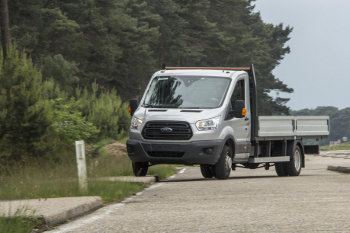
Ford Transit durability testing off road

Testing the new Ford Transit off road — all in a day’s work for the average builder!

Like its small sibling, the Transit Custom, Ford has ensured that the all-new Transit will survive 10 years of the toughest treatment by using an especially punishing accelerated ageing process as part of its development.

Durability tests included the equivalent of driving 11 million kilometres – or 275 round-the-world trips – at state-of-the-art proving grounds and in extreme conditions across the globe where temperatures ranged from +40 to -40 deg C.

“I don’t think many customers would believe what this vehicle has been through,” said David Gregory, Transit chief programme engineer, Ford of Europe. “We inflict the worst possible treatment that a van could endure, and we’re only satisfied when our new vehicle comes through with flying colours – just as the Transit has done.”

As the first Transit to be sold in both Europe and North America, the all-new model was subjected to this testing both at Ford’s facilities in Lommel, Belgium, and in Romeo, Michigan.

At Lommel, the all-new Transit, including van, chassis cab and minibus versions, was put through more than 30 punishing vehicle tests. These included the trailer tow general durability test, conducted at maximum weight with a fully loaded trailer and being driven at top speed non-stop for two months, pounding over rough gravel roads, and through salt- and mud-baths. The prototypes also were tested for corrosion resistance in high-humidity chambers for 12 weeks and put through non-stop figure-of-eight manoeuvres for one month.
Ford Transit durability test kerb impact

Couriers are forced to do this around 100 times per day — but not usually at 37mph!

Engineers have driven the all-new Transit more than 5,000 times over an extreme course of potholes and bumps, and conducted a strength test by driving it at 60 km/h (37 mph) into a 14 cm high kerb.

Ford also tested the Transit prototypes from the Austrian Alps to Death Valley: in Europe, North America, Africa and Asia.

Vehicles faced the 40 deg C heat of Arizona, Dubai and South Africa, the bitter -40 deg C cold in Finland (where it won the annual Arctic Van Test) and Canada, as well as challenging journeys through Europe, the Middle East, Russia, Turkey and the U.S.

Prior to launch, the new model covered more than 300,000 miles of tough real-world use with high-mileage Transit customers. In the test labs, the all-new Transit’s 2.2-litre Duratorq diesel engine was subjected to 46 days of continuous high-load urban driving on specialised rigs, as part of tens of thousands of hours of engine testing.

Component test rigs were used to simulate real-world punishment, replicating the full 10-year vehicle lifecycle in just 30 days.

Ford Transit durability test salt water

There’s nothing like a salt bath to keep your bodywork in good condition

Ford has made more than 100 significant improvements to the Transit as a direct result of its testing regime including the redesign of the side rail on jumbo van models, and strengthening of the rear cross-member on chassis cabs.

“Pushing the van to the limit and beyond helps us to deliver a stronger, more robust product. This translates directly into every-day reliability for the customer, however tough their working environment,” Gregory added.

The all-new two-tonne Transit is the flagship of the completely redesigned and expanded Ford Transit range, and is now on sale in the UK and across Europe alongside the Transit Custom, Transit Connect and Transit Courier models.

Ford’s made a video showing some of the highlights of the testing, take a look below to see the tests as they happened:

Vans targeted in ‘crash for cash’ claims

White van man’ is increasingly being targeted by criminals running dangerous crash for cash fraud rings, according to new research.

According to law firm Hill Dickinson, which has a fraud database with 200 million records and details of 10 million insurance claims, only one van — the Ford Transit — appears in the top 20 for general insurance claims, but five vans appear in the top 20 vehicles targeted in ‘crash for cash’ scams in the last 12 months.

As a result, light commercial vehicles have been involved in almost a third of all deliberate collisions caused by ‘crash for cash’ gangs in a worrying trend that has emerged in the last 12 months, suggesting vans are being deliberately targeted.

Fraudsters target professional vehicles like vans because they are most likely to be fully insured, and their drivers are often working to a tight deadline and are therefore less likely to dispute liability, according to anti-fraud firm APU’s team of former Police officers and forensic investigators.

One in seven personal injury claims – some 69,500 a year – are linked to suspected crash for cash scams, costing the motor industry £392 million annually. Neil Thomas, APU’s Director of Investigative Services and a former Detective Inspector of West Midlands Police, said:

“This is yet another example of how criminal fraud gangs are becoming more sophisticated – they are thinking quite hard about exactly who they target on the roads and it’s based on solid logic.

“Britain’s LCV drivers are a hard-working lot and are very often pushed for time, so they are less likely to stand by the side of the road arguing the case about a collision. The criminals are banking on the fact that they will simply exchange insurance details and move on. It’s cynical but it works.”

Indeed, these figures suggest that the Transit is the most frequently-targeted vehicle in induced accidents, and along with the Mercedes Sprinter, Vauxhall Vivaro, Citroen Berlingo, Volkswagen Transporter and tipper vans, account for 31% of induced claims.

No Induced % No General Insurance Claims %
1 Transit 15.2 1 Focus 10.21
2 Astra 11.4 2 Astra 10.2
3 Vectra 9.1 3 Corsa 8.9
4 Corsa 6.9 4 Fiesta 8.6
5 Focus 6.82 5 Transit 7.3
6 Golf 6.8 6 Golf 6.94
7 Sprinter 6.1 7 Mondeo 4.75
8 Punto 4.55 8 Clio 4.6
9 206 3.8 9 Megane 4.3
10 Fiesta 3.79 10 Zafira 4.2
11 Vivaro 3.78 11 206 4
12 Discovery 3.03 12 Vectra 3.85
13 Megane 3 13 Polo 3.64
14 Mondeo 3 14 Civic 3.25
15 Berlingo 2.3 15 Micra 3.18
16 Transporter 2.27 16 Passat 3
17 Range R 2.2 17 Punto 2.9
18 Land R 2 18 307 2.2
19 106 2 19 Avensis 2
20 Tipper 1.52 20 Yaris 1.94

With an average value of £30,000, the crash for cash scam is when a vehicle driven by a member of the fraud gang causes a deliberate collision with that of an innocent victim. Traditionally, this involves the fraudster pulling in front of his chosen target and slamming on the brakes, allowing little time for the innocent party to avoid a collision.

Last summer, APU revealed the worrying new tactic, which it dubbed ‘Flash for Crash’, which involves innocent drivers being beckoned out of a junction by the flash of headlights, only to be hit by the criminals’ car. The almost undetectable tactic makes it harder for an innocent driver to prove fault in the resulting ‘their word against mine’ dispute.

How should you specify a new van?

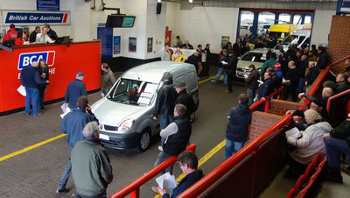
BCA LCV auction saleChoosing the specification on any new vehicle is always a case of finding a cost-effective balance between ‘need’ and ‘want’, but where commercial vehicles are concerned, cost constraints mean that buyers often restrict their options choices to ‘must have’.

However, this approach isn’t necessarily the best way to maximise resale value, according to Duncan Ward, who is General Manager, Commercial Vehicles Sales at vehicle remarketing specialists BCA:

“A van is a working tool, so getting the right specification for the job is a given.  But, equally, getting the right added extras will make any van more attractive to used buyers a few years down the line when it is time to sell. The auction buyer will seek out the best vehicle they can buy with the budget they’ve got – and if a van with two side loading doors, a bulkhead and aircon is on offer that will be the one they bid for, if all the other vans available are basic models.

“Generally a better specification will make a van more desirable and saleable with higher-spec vehicles often selling more quickly, improving cash-flow for the seller. The key is, knowing which features are worth paying for when it comes to resale value.”

To help van buyers optimise their specification levels, BCA has provided a checklist of top option choices for van buyers:

Interior ply-lining is one of the best value extras for any van buyer.  It’s expected by buyers and, importantly, it protects valuable company vehicles from ‘inside-out’ damage that is likely to occur day-to-day.   Value-wise ply-lining might add £100, but the real benefit is that the van is much more likely to be in a more saleable condition after three or four years’ hard work.

Side-loading doors are another key consideration for buyers.  And these are just as essential for smaller vans as they are for the larger one tonne and 3.5 tonne vehicles.  BCA believes that, at the very least a van should include a single nearside sliding door, but two side-loading doors will be particularly appealing for businesses whose drivers are going to work in tight, urban conditions.  Potential value in the used market can increase by around £150 for a single and £250 for two side-loading doors, depending on the vehicle.

Factory-fitted satnav does not, however, make a huge difference to the selling price because most mobile and smart phones now offer this facility.  Similarly, in-van entertainment and blue-tooth connectivity may only add a marginal increase of £50 at resale. Parking sensors for the 3.5 tonne market where low-speed reversing damage is more common might also add £50.

Still inside the cab, air-conditioning is highly valued when combined with a bulkhead, otherwise all that cool air dissipates into the load area and simply burns money. Similarly, if a van is being used for start-stop urban deliveries air-conditioning is considered wasteful, because the driver will be in and out of the cab and not getting the benefit.  However, air-con is appealing for vans that do longer distances or where the vehicle doubles as the family transport at the weekends for a tradesperson.

The key message is that spending a little more when you specify a vehicle can pay dividends when it comes to selling, as it will help you secure a fast sale with a strong resale value, effectively lowering the total cost of ownership of your van.

Chipped vans promise up to 15% fuel savings for Homeserve

Jadon Silva, HomeServe’s Director of Procurement‘Chipping’ vehicles — or remapping their engine control units — is usually associated with improving performance, and generally has a slightly racy image.
However, these days it’s not all about speed: commercial vehicle operators are getting in on the act, in the hope of cutting fuel bills by improving engine efficiency and emissions.

A case in point is Walsall-based home assistance provider HomeServe, which is currently having around half of its fleet remapped by specialist firm Viezu Technologies, who have a solid reputation for commercial-quality remapping solutions (in 2012, it remapped 20,000 vans for BT).

Viezu is deploying its BlueOptimize technology to reducing the fuel consumption and emissions of HomeServe’s existing fleet, and estimates that BlueOptimize can cut fuel use by up to 15 per cent.

Commenting on the initiative, Jadon Silva, HomeServe’s Director of Procurement said:

“I am very proud of the initiative we have introduced with Viezu.  Not only have we been able to make significant reductions in our vehicles emissions, we expect to cut fuel costs by 15 per cent.

The introduction of this technology into our fleet of vans represents both an opportunity to protect the environment whilst also ensuring the fleet continues to operate to its maximum capability.”

The technology is being installed to half of HomeServe’s van fleet, with the remainder set to be completed later this year. The technology consists of bespoke software which includes a combination of throttle, rev, speed and power limiting.

[EXPIRED] EXCLUSIVE: Save 10% On Questor Van Hire Excess Insurance

** THIS OFFER HAS NOW EXPIRED **

Save 10% on Questor van hire excess insurance — EXCLUSIVE to vanrental.co.uk

We’ve teamed up with the good people at Questor to offer you an exclusive 10% discount code for Questor insurance.

Van hire excess insurance provides cover for the excess on your van rental insurance policy, protecting you from a big payout in the case of any accidental damage.

Here are the details:

Valid from: 16th June 2014

Expires: 31st October 2014

CODE: SYY2075

Visit the Questor website for more information on excess insurance.

Ford pipes 200 new vans to National Grid gas fleet

National Grid Ford Transit CustomFord has bagged a total of 15 awards for its new range of vans over the last 12 months, and was recently chosen as ‘Van Manufacturer of the Year 2014’ at the Van Fleet World Awards. The company’s critical success is translating into sales, too, as news of a 200-van delivery to National Grid confirms.
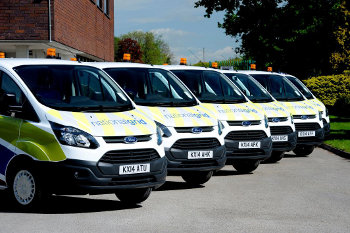
The utility giant has taken delivery of 200 new Transit Custom vans for use by engineers who maintain the firm’s gas supply network. The order is a relative drop in the ocean for National Grid, whose fleet numbers around 3,350 vehicles, but the majority of these also bear the blue oval, making the company a very important customer for Ford UK.

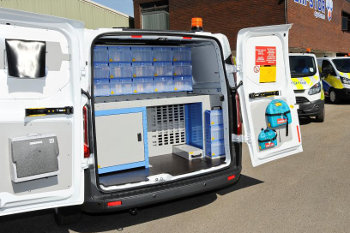
The fully-liveried Ford Transit Custom ECOnetic models, powered by the Dagenham-built 2.2-litre TDCi 100PS diesel engine, are now fully operational throughout the National Grid fleet, equipped with racking systems, first aid equipment and special lighting. The vans are used for emergency call-outs and day-to-day by engineers, including the fitment and repair of gas metering equipment.

Comprehensive racking and safety equipment

The new vans have been comprehensively fitted with racking, first aid and lighting equipment.

Ford direct sales manager Stephen Gafson, said:

“The new Transit Custom is ideally suited to its role with National Grid and financially it clearly makes sense to the company, too. We are very pleased that Ford’s long association with National Grid is to continue.”

The new Transit Custom sold more than 10,000 units in its first year and has been a major success for Ford, bringing its van range into line with manufacturers such as Volkswagen and Mercedes-Benz, who have long offered two different sizes of vans where Ford has managed with a single Transit model.

The Transit Custom is the equivalent to the Transporter (VW) and Vito (Merc) models and will shortly be joined on UK roads by Ford’s new two-tonne Transit, which will give the firm a direct challenger for the Sprinter, Crafter, Ducato and Relay.

AA takes 90 Volkswagen Transporters for VW contract, natch…

AA Roadside Volkswagen Transporter

Some of the silver-liveried VW Transporters the AA will use on its dedicated VW roadside assistance service.

In business, ‘eating your own dog food’ is often a key measure of credibility — and many firms expect this loyalty to extend to their customers, too.

It is no surprise, therefore, that Volkswagen is supplying the AA with 90 new VW Transporters to use for its dedicated Volkswagen Commercial Vehicles roadside assistance service.

The silver vans are fitted with specialist tools and the latest VAS equipment, including a diagnostic interface that connects to customers’ vehicles to identify problems quickly. The system also allows technicians to carry out the latest software updates at the side of the road.

As well as boosting its fleet with new Transporters, the AA is also investing in a dedicated call centre at its headquarters in the West Midlands that will handle all customer roadside assistance enquiries. Technicians will be on hand 24-hours a day, seven days a week, and all will be specially trained to work on Volkswagen Commercial Vehicles.

The new roadside assistance partnership means the AA will be available to Volkswagen Commercial Vehicles customers anywhere in the UK. The service includes home assistance, European cover, a dedicated UK-based customer service centre and delivery of customers’ cars to any UK destination including Volkswagen’s dedicated Van Centre network.

The new AA Transporters will be equipped with state-of-the-art equipment, carry only genuine Volkswagen Commercial Vehicle parts and tools, and patrol staff will be Volkswagen trained technicians, to ensure the best possible care.

Nissan launches e-NV200 electric van — the shape of things to come?

Nissan has launched its e-NV200 electric van, which the firm claims offers a 106 mile range, a top speed of 76mph and fuel costs as low as 25% those of a diesel-fuelled van.

Nissan e-NV200 electric van

The Nissan e-NV200 electric van

These claims should be more realistic usual, too, as the e-NV200 has been one of the most widely-trialled vehicles of recent years, thanks to trials with a number of large fleet operators.

At least one trial customer, British Gas, has already placed a 100-van order, suggesting that the e-NV200 does live up to expectations.

For my money, Nissan could sell a lot more e-NV200 vans than LEAFs, thanks to the more predictable and repeatable usage cycles of vans, many of which travel less than 60 miles a day on a fixed route, every day for years, returning each night to off-road parking in a secure yard, where they can be easily and safely charged.

Compare that to the average private car usage scenario: vans have the edge, and as I’ve mentioned many times before, I believe vans, not cars, will be the first vehicles to achieve commerical success in the electric vehicle marketplace. Indeed, I’d go so far as to say the the e-NV200 could be the van that tips the balance.

What about the van?

I digress. Getting back to the e-NV200, the van itself is based on Nissan’s NV200 diesel-powered van, while the e-NV200’s drivetrain comes from the Nissan LEAF, the firm’s electric car offering.

Nissan e-NV200 motor

The view under the bonnet — far fewer oily mechanical bits than usual. Plus it’s almost silent.


However, it isn’t just mash-up of two existing vehicles — 30% of the e-NV200’s parts are unique to the model, and the chassis, interior, battery pack and regenerative braking system have all be altered from their original (NV200 or LEAF) specifications.

The e-NV200 has a cargo volume of 4.2 cubic metres and can carry two Euro pallets.

Nissan e-NV200 can carry 2 euro pallets

The Nissan e-NV200 can carry two Euro pallets in its 4.2 cubic metre load compartment.

Scheduled maintenance costs are expected to be 40% lower, thanks in part to the lack of engine oil, engine belts and conventional gear box and clutch.

Although the e-NV200 van will be built at Nissan’s plant in Barcelona, the UK — a major European manufacturing base for Nissan — will get some of the action, as Nissan’s battery plant in Sunderland will produce the van’s lithium-ion battery cells.

Nissan e-NV200 cab interior

Inside the cab, it’s almost like a normal van — just a few control differences. Ideal for van drivers switching between vehicles.

The battery can be recharged overnight in 8 hours using a domestic 16-amp single-phase 3.3 kW charger, or in just four hours if the optional 6.6kW/32-amp charger is fitted and a suitable supply is used.

Alternatively, a dedicated CHAdeMO DC 50 kW quick charger can recharge the battery to 80 percent capacity in as little as 30 minutes, if the battery still holds some charge, meaning that e-NV200 can be charged while it is being loaded with goods for another delivery, for example.

In my view, it all adds up — especially as the e-NV200 has been priced in the UK to go head-to-head with diesel vans, with prices starting from just under £14,000.

Nissan e-NV200 plugged in to charge

Used van prices hit new record with 3.5% rise in May

BCA LCV auction saleDespite my predictions, average values for commercial vehicles reached record levels in May, the fifth time in the last six months a new record has been set according to the latest figures from remarketing specialist BCA.

The vehicle auctioneer said that demand for LCVs remained strong throughout the month, and that top quality stock remained in short supply, contributing to a rise in average sales prices, which rose by 3.5% in May, to £5,587.

Year-on-year values remain well ahead, up by £717 (14.7%) over the twelve month period.  Compared to a year ago, age is static at 58 months, while mileage has decreased marginally over the same period.  Average CAP performance is down slightly compared to May 2013, and May’s sales came in slightly below book, with sale prices averaging 99.79% of the equivalent CAP book prices.

After April’s surprise drop in values, May’s strong performance was a return to normal, according to Duncan Ward, BCA’s General Manager – Commercial Vehicles:

“The market returned strongly in May, with conversion rates improving over April and values rising yet again, despite volumes remaining relatively high.  Competition is typically intense for retail quality used stock, with values rising as a result and BCA Live Online buyers continue to play a significant role, accounting for around 30% of volume sold.”

“There can be little doubt that the improving economic background is giving a boost to the used LCV market, and small and medium-sized enterprises (SMEs) remain positive about future prospects.  As this group are the biggest buyers of used LCVs we should expect demand to remain relatively strong in the months ahead.”

Prices have risen relentless since 2012, as this graph shows — the average LCV sale price at BCA auctions has risen by 31% since April 2012:

BCA Used LCV prices April 2012 - May 2014

BCA Used LCV prices April 2012 – May 2014 (graph courtesy of BCA)

Manheim says shortage of large vans is driving up sales of smaller vans

Manheim logoCommercial vehicle buyers are purchasing more car-derived vans (CDVs) and small panel vans, due to a chronic lack of larger panel vans (over 3.5t) in the market, according to the latest market analysis from vehicle remarketing firm Manheim.

According to Manheim’s sales figures, the volume of smaller vans entering the used market has risen by around 8% over the last year, while the number of larger panel vans (>3.0t) reaching Manheim’s salerooms has fallen by 14%.

Manheim’s figures show that the that price of a larger panel van (>3.0t) — a traditional fleet workhorse — peaked at £5,297 in May, prompted by continued high demand and a modest fall in average age and mileage, which fell from 62 months to 61 months and 86,062 to 84,510 miles respectively.

Manheim van selling prices May 2013-2014

Average LCV selling prices at Manheim, May 2013-14 (courtesy of Manheim – click to enlarge)

Across the market as a whole, the average value of a used van has risen by 9.2% to £4,741 over the last year, despite an increase in the total volumes of vans hitting the used market, as Matthew Davock, head of LCV at Manheim, explains:

“2014 has seen a continuation of the record levels of demand in the used van market. We have seen two months of significant year on year increases in van de-fleets; these vans have been snapped up by eager buyers looking to secure price range quality stock.

“Interestingly, the mix of vans has changed over the past twelve months, with many more car-derived and small panels vans coming up for sale. Conversely, the lower volumes of larger panel vans we’re seeing is, we believe, driving a shift in buyer behaviour toward smaller vehicles.”