
Category Archives: Van News

News and articles about UK vans – especially information relevant to the van hire market. Coverage of new van model launches from all the major manufacturers – Ford, Mercedes, Volkswagen, Peugeot, Fiat and Citroen.

French posties set environmental example with 5,000 Renault electric vans

Renault Kangoo Z.E.Renault has been one of the most enthusiastic advocates of electric power in the European car and van market, and as you’d expect, the organs of French government have backed this — in this case through France’s state-owned postal service, La Poste, which operates nearly 25,000 means of electric transport out of a total fleet of 69,000 vehicles.

Among La Poste’s electric fleet are 5,000 light vans, 1,000 electric quad bikes, 18,000 electrically-assisted bicycles and — most recently — 100 STABY electric three wheelers. Of course, as this is France, all these vehicles are supplied and built by French companies — Renault for the vans, Ligier for the quads and three wheelers and Cycleurop and Arcade for the bikes.

Looking at these figures, you can only draw two possible conclusions: electric vehicles are a collosal white elephant, or that we are on the verge of seeing electric vans and delivery vehicles join the mainstream.

As I’ve written many times before, my money is on the latter: while electric cars remain impractical for many drivers, electric vans make perfect sense for a great many organisations. Take Royal Mail, for example, which is continuing its love affair with diesel: all the Royal Mail sorting offices I’ve ever seen have secure off-road parking for all of their vans, which are only used during the day, mostly on regular, low-mileage routes that are well within the 70km daily range La Poste claims to get from its Renault electric vehicles — and an ideal setup for overnight charging.

On 31 October, La Poste took delivery of the 5,000th Renault Kangoo Z.E. to roll off Renault’s production lines, and the two firms’ chief executives signed a new partnership, aimed at extending their cooperation on eco-mobility solutions. The two groups will conduct a watch, carry out tests, and dialogue on new vehicles measuring up to 17 m3 for mail use and in respect of competition law. Several new ideas have already emerged, including in the 8 m3 segment, the “service” vehicle segment and the small urban vehicle segment.

Citroën earns green awards for LCV range

Citroën Relay 35 L3H2 (l) and L1H1 (r)

Citroën has been awarded the GreenFleet LCV Manufacturer of the Year Award in recognition of the environmental credentials of its LCV range.

The largest van in Citroën’s range is the recently-updated Relay, for which fuel economy figures have improved by up to 15% – with combined cycle fuel economy in the 37.7-42.8mpg range. These are impressive figures a large panel van in the up to 3.5 tonne gvw sector.  Citroën  has also cut CO2 emissions with the new Relay, and has managed to get CO2 emissions under 200g/km for all models up to 3.5 tonnes.

Emissions will be helped by the specification of a six-speed gearbox on all new Relay models and by the specification of Stop & Start on many models.

Citroën is also taking a more holistic approach to cutting emissions, specifying all new Relay panel vans (and their small Berlingo and Dispatch siblings) as standard with sophisticated Teletrac satellite navigation and stolen vehicle tracking systems.  The use of this advanced telematics platform significantly improves vehicle productivity and efficiency, as well as cutting unnecessary mileage, reducing driver stress levels and improving safety.

CV manufacturing down 31.1% in September — SMMT

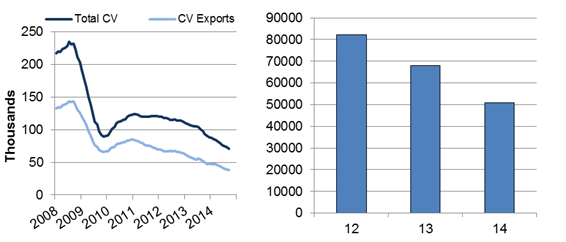
September’s commercial vehicle manufacturing update from the SMMT was short but not sweet. Production fell by 31.1% compared to the same period last year, leaving CV manufacturing output down by 25.2% on the year to date:

CV manufacturing Sep-13 Sep-14 % Change YTD-13 YTD-14 % Change
Total 6,997 4,818 -31.1% 67,887 50,746 -25.2%
Home 3,817 2,522 -33.9% 31,600 24,474 -22.6%
Export 3,180 2,296 -27.8% 36,287 26,272 -27.6%
% export 45.4% 47.7% 53.5% 51.8%

Source: Society of Motor Manufacturers and Traders (SMMT)

Mike Hawes, SMMT chief executive, stuck to well-worn script, blaming the impact of plant restructuring over the last year and the introduction of new models:

“UK commercial vehicle production remained negative in September, while key manufacturing facilities adjusted to new models,” said Mike Hawes, SMMT Chief Executive. “We expect monthly output to level off in the coming months, with the restructuring of operations last year now only affecting the year-to-date figures.”

If the last of last year’s restructuring has now fallen out of the figures, then that’s good news. In theory, monthly production should now be broadly flat — it will be interesting to see whether this actually happens, and whether the remaining manufacturers manage to generate any growth.

It is important to stress that the scale of the reduction in UK CV manufacturing over the last few years is huge, as these SMMT graphs show:

CV output rolling year & YTD totals

CV output rolling year & YTD totals (courtesy of SMMT)

Not a pretty picture, I’m afraid.

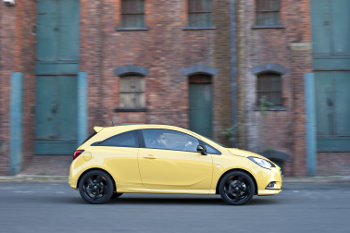
Is this the new face of the Vauxhall Corsavan? We drive the new Corsa

A Corsavan version of the new Corsa will follow shortly

The new 2014 Vauxhall Corsa — a new Corsavan model could up the stakes in the car-derived van market

Disclosure: I received no payment for this review but I did receive one night’s accommodation and hospitality paid for by Vauxhall.

Genuine car-derived vans are thin on the ground these days. Peugeot opted not to replace the 207 Van and MINI abandoned the Clubvan after a short flirtation with the UK van market.

As a result, there are only two real players — the Ford Fiesta Van and the Vauxhall Corsavan. Both models are popular and well-respected, but there’s no denying that the current Corsa is getting a bit long in the tooth, compared to its Dagenham competition.

Luckily, Vauxhall has just launched a new version of the Corsa, and I suspect that a new Corsavan model will break cover in the near future.

This could be good news for Corsavan drivers, as having driven the the new Corsa car at its UK launch, I can report that it’s by far the best Corsa yet — and a big step up from the outgoing model.

You can read my full review of the new Corsa here, on SimpleMotoring.co.uk, but here are some of the main highlights:

  • New engines: the reworked 1.3CDTi diesel engine likely to be popular with mile-munching van drivers promises in excess of 80mpg. However, there’s also an all-new 1.0-litre turbo-charged petrol engine that could be a much better choice for urban van operators.
  • Improved interior: the cabin of the new Corsa is significantly improved — comfort, quality and specification are all better than in the old model.
  • Driving: The new Corsa has a smooth, six-speed gearbox that’s far superior to the old Corsa’s rather notchy effort. If you’re behind the wheel all day, you will really notice and appreciate the improvement. Handling and ride are also much better, although they continue to lag the market-leading Fiesta.

Watch this space for more details.

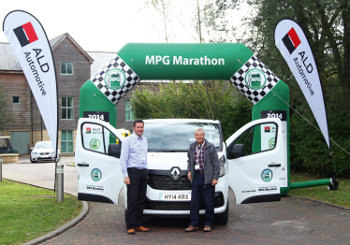
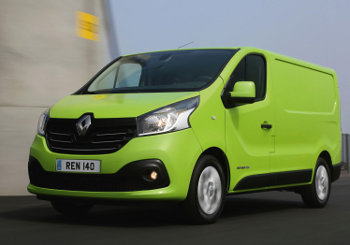
New Renault Trafic takes Best MPG crown at 2014 MPG Marathon

New Renault Trafic wins 2014 MPG Marathon

All-New Trafic crowned best performing LCV at the 2014 MPG Marathon

Renault’s all-new Trafic van has triumphed as the best-performing Light Commercial Vehicle at the 2014 MPG Marathon winning the titles of “Best MPG”, as well as “Best percentage improvement” compared to manufacturer claimed economy figures, in the LCV category.

Held on the 8th – 9th October, the MPG Marathon is a grueling two-day economy challenge designed to put fuel economy performance claims and eco driving techniques under the spotlight.

Behind the wheel of Renault’s All-New Trafic SL27 ENERGY dCi 120 Business+, Dan Gilkes, Editor of Van Fleet World, and co-driver, Ray Penford drove the 330-mile varied road route through the Cotswolds and South Wales achieving an overall economy figure of 55.55mpg to take the “Best MPG” title for an LCV.

That figure is some 15.98 per cent higher than the Trafic’s official EU combined cycle figure of 47.9mpg which was enough for All-New Trafic to also scoop the award for “Best percentage improvement” in the LCV category.

It’s also significantly more than the 42mpg which is the best I’ve ever achieved in my 12-year old Transit — highlighting just how much the technology has improved over the last decade.

Commenting on the Trafic’s performance in the MPG Marathon, Dan Gilkes said:

“With a combined fuel figure of 47.9mpg, the Energy dCi 120 Twin Turbo Trafic is already one of the most economical vans in its class, making it tough to improve upon. But, as a number of vehicles struggled to even reach their advertised combined figure, we were more than happy with a final result of 55.5mpg – the most economical van in the MPG Marathon.

“The Trafic never missed a beat and was a pleasure to drive, with a quiet comfortable cab and effortless controls. Though maintaining low rpm throughout for maximum economy, the new 1.6-litre twin turbo engine delivers plenty of torque, even at lower engine speeds, allowing higher gears to be used. Even in normal driving conditions, customers should find Trafic an economical yet rapid van.

“Having covered 311 miles over the two days, the van was still showing more than 900 miles of available range when we finished! Now that’s a marathon.” added Gilkes.

The all-new Renault Trafic went on sale in the UK in September available in a choice of three bodystyles – Panel Van, Crew Van – to carry up to six people and equipment – and Passenger, which seats up to nine people in comfort.  All-New Trafic is available with a choice of four efficient turbodiesel engines.

The new Trafic boasts the best load capacities on the market with clever solutions to make the loading area more practical. Innovative features such as keyless entry, touch-screen infotainment, mobile office storage and functionality and sophisticated stability control are available.

Used van prices up 10.3% on 2013 in September, says Manheim

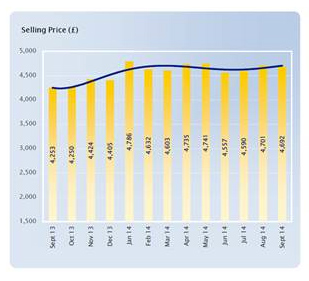
Manheim selling prices Sept 14

Manheim selling prices, Spetember 2013 – September 2014 (courtesy of Manheim)

I may have spoken too soon: remarketing specialist Manheim has reported that the average value of vans sold during September 2014 was £4,692, which is £438 or 10.3% higher in comparison with the previous year, despite an increase of one month in average age and 263 miles in average mileage.

On the face of it, this suggests buyers are returning to their old habits, and are willing — or forced — to pay more, for older, higher mileage vans.

However, as always, the devil is in the detail.

First of all, it’s interesting to note that BCA’s average used van value during September was £5,560, whereas Manheim’s was just £4,692. I think it’s reasonable to assume that this difference is caused by some combination of a different age mix or a different model mix — there’s no way to such closely-matched competitors could sell the same mix of vehicles at such different prices.

Secondly, it’s worth noting that prices are down from the £4,786 peak reached in June this year, so it’s a rise relative to last year, but still lower than buyers were paying earlier this year.

Despite this, it’s clear that the used van market remains in rude health. The strong values in the used van market are also reflected in the percentage of original new price, Manheim’s unique comparison between the used and new price of vans. This measure shows that vans are currently achieving 28% of their original price, compared to 26% a year ago.

Looking at the data in more detail, Manheim’s analysis for September 2014 shows that the average selling price of small panel vans grew by 14.8% to £4,733 over the past year. Large panel vans over 3 tonnes saw a rise from £4,815 to £5,335 (10.8%) and car derived vans increased by £132 to £3,363 over the same period.

Matthew Davock, head of light commercial vehicles at Manheim, believes that van prices will continue to increase as winter approaches:

“The market performance has remained very healthy in the recent weeks, but stock shortages have remained a concern, which will maintain demand and prices. Vendors are typically enjoying conversion rates of 80% plus and when stock profile matches buyer requirements 100% sales are the norm, even with damaged product being snapped up in the absence of cleaner vans. We don’t see any significant changes in volume trends, which will only contribute towards a continued strong marketplace for the remainder of the year.”

A bull market will often run for longer than anyone expects, and so it is here: the shortage of good quality used stock is the consequence of the fall in new van registrations after the financial crisis.

However, I continue to believe that used van prices have now peaked: the continued rise in new van registrations must surely be weighing against used demand — and when increased volumes of new vans from 2012 onwards start to hit the used market, the pendulum may start to swing the other way.

Is the used van market turning in favour of buyers?

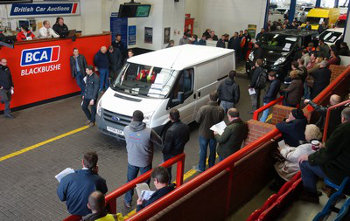
BCA van auctionAverage used van prices fell slightly in September, according the latest data from auctioneer BCA, despite the average age of vans coming under the hammer at auctioneer BCA continued to fall.
This marks the continuation of a trend I flagged up in August and which appeared to be confirmed by sales data from Manheim last month.

In my view, we’re now seeing a gradual fall in used van prices, although it’s worth emphasising that the used market does remain very strong, with prices at near-record levels and average sale prices of more than 100% of CAP values.

Falling age is key

Although the average price realised on used vans by BCA was £5,560 in September — the third highest figure on record — average age fell by three months, or nearly 5%, to 56.39 months, compared to the same period last year. This resulted in a corresponding fall in the sales vs. CAP price ratio, suggesting that vans are becoming slightly more reasonably priced:

All vans

Avg Age (mnths)

Avg Mileage

Avg Value

Sale vs CAP

Sept 2013

59.33

80,217

£5,158

105.19%

Sept 2014

56.39

80,591

£5,560

103.94%

Data courtesy of British Car Auctions (BCA)

Duncan Ward, BCA’s General Manager – Commercial Vehicles, says that economic and seasonal factors, combined with the long-running shortage of used supply is keeping demand strong:

“There can be little doubt that the improving economic background is giving a boost to the used LCV market, and small and medium-sized enterprises (SMEs) remain positive about future prospects.  The shortage of good retail quality stock is helping to keep values firm and competition is high for well-presented vans in good colours.”

“We are now moving into the time of year when the demand for parcel, courier and delivery vans of all types and capacities starts to ramp up, and this will help to keep values firm over the coming weeks.”

I don’t expect any dramatic changes in market conditions for the rest of this year, but I wouldn’t be surprised to see things quieten down a bit in the New Year, especially if the current strong growth in new van registrations — which ultimately increases the supply of and reduces demand for used vans — continues.

New van registrations rise by 14.1% in September

New van registrations continued to rise in September, climbing by 14.1% compared to the same period last year, according to the latest figures from the Society of Motor Manufacturers and Traders (SMMT).

So far this year, 242,071 new vans have been registered, an 18.1% increase on the first nine months of 2013.

Truck sales were down 12.3% compared to September 2013, continuing a year-long decline which the industry is blaming on the introduction of Euro 6 emissions rules for lorries: many truck operators chose to bring fleet renewals forward and buy new Euro 5 trucks just before the Euro 6 rules were introduced.

UK van and truck registrations: 2014 and % change on 2013

September % change Year-to-date % change Rolling year % change
Vans 49,123 14.1% 242,071 18.1% 308,140 19.6%
Trucks 5,374 -12.3% 27,385 -20.3% 49,251 7.8%
Total 54,497 10.8% 269,456 12.6% 357,391 17.8%

Data courtesy of SMMT (www.smmt.co.uk)

According to Mike Hawes, the SMMT’s chief executive, the van market is also getting an extra boost from operators who are downsizing from small trucks to improve utilisation and cut operating costs:

“With businesses feeling increased economic confidence and downsizing from larger vehicles, the van market has delivered another strong performance. This has also yielded growth in the whole commercial vehicle market, continuing the positivity seen throughout the majority of the year.

We are yet to see the truck market show signs of significant recovery following a flurry of registrations ahead of the Euro-6 introduction last year, which tempered demand going in to 2014.”  

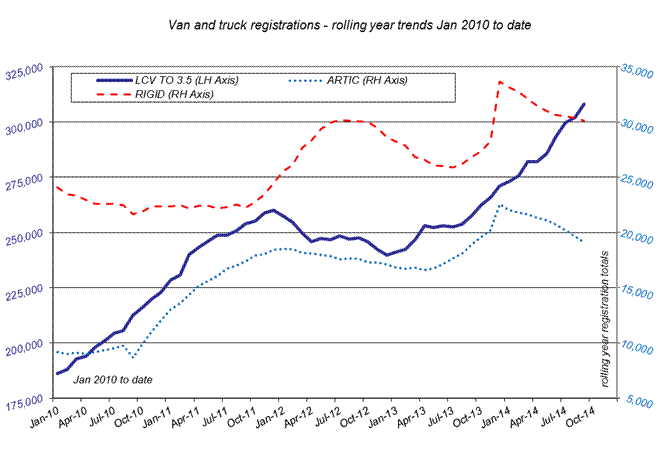
The recovery in new van registrations has been impressive over the last four years: rolling year registrations have risen from less than 200,000 at the start of 2010, to more than 300,000 today.

SMMT van and truck registrations 2010 - Sept 2014

SMMT van and truck registrations 2010 – Sept 2014 (courtesy of SMMT)

As I’ve commented a number of time in recent months (most recently here), I believe the strong recovery in van registrations over the last couple of years is beginning to soften conditions in the used van market.

Although prices still appear to be rising, a closer look at the data suggests that this is because the average age vans entering auction is falling, not because age-adjusted values are still rising.

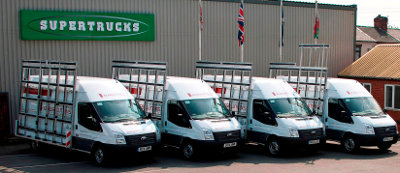
Supertrucks Is First To Gain EC Type Approval For External Glass Racks

Supertrucks glass carrier vansFrom 29 October this year, all new commercial vehicles must have full European Community Whole Vehicle Type Approval.
This means — for example — that a new van cannot be supplied, pre-registration, to a converter to have body conversion fitted, unless that conversion has EC type approval.

While the Department for Transport has introduced some small-scale, common-sense exclusions — such as ply-lining — by and large, all modifications to the ex-factory van will need type approval.

This means that converters have two choices: send each van they convert for Individual Vehicle Approval tests — time-consuming and expensive — or obtains Whole Vehicle Type Approval for their conversions.

There is a third option, too — buy a van, register it and then supply it to the converter for modification: modifications made after a vehicle has been registered do not require type approval. However, as well as  being cumbersome, this is against the spirit of the rules and could affect the vehicle’s future resale value, as the vehicle’s body type may have changed since it was registered.

One company that has taken the type approval bull by the horns is bodybuilder Bevan Group, which obtained EC Whole Vehicle Type Approval for its vehicle bodies as long ago as 2009. The company acquired glass rack manufacturer Supertrucks last year, and has now announced that Supertrucks’ external glass racking products, which are known as frails, have passed whole vehicle type approval testing — making the firm the first to gain EC Whole Vehicle Type Approval for such products.

This achievement means that Supertrucks’ frails can now be fitted to unregistered vans and sold without any further checks — in complete compliance with current EC regulations. As Lee Dimmock, operations director at Bevan Group, explains, this is a major benefit:

“Having audited all of our systems, as well as Supertrucks’ products, VCA has now cleared Bevan to produce groups of vehicles fitted with glass racks, which will comply with current Type Approval regulations. The potential advantage in terms of reduced lead times is huge.”

Lee says some glass carriers have been exploiting a loophole in the regulations by purchasing and registering unmodified vans, then having them fitted retrospectively with external racks.

“But that means the vehicle which eventually goes on the road is not the one that was registered, and this can cause problems further down the line,” says Lee. “Responsible operators prefer to do things properly and ensure that their vans are fully finished, and approved, with quality racking systems and other features such as additional lighting already in place, prior to registration.”

The European Community Whole Vehicle Type Approval regulations are designed to ensure that new light commercial vehicles meet environmental, safety and security standards.

Supertrucks Manager Dave Hill adds:

“We have modified significantly the design of our frails to meet the requirements of the approval scheme, while maintaining the superior quality of the equipment. Our racks and other glass-carrying systems are widely acknowledged to be the finest in the industry, and are already exported to a number of European countries. The fact that we can produce and Bevan can now fit our systems here in the UK is a further step forward for the two businesses.”

Renault opens new van production line and confirms will build Fiat ‘Trafic’

Renault Trafic

The all-new Renault Trafic will be manufactured at Renault’s Sandouville plant, in Normandy, northern France.

Renault CEO Carlos Ghosn and France’s Minister for the Economy, Industry and Digital Sector, Emmanuel Macron, came together at Renault’s Sandouville plant in Normandy to inaugurate the company’s new production line, which will manufacture the new Trafic van.

Mr Ghosn also took the opportunity to confirm that, as expected, Renault will build a new van for Fiat from the second quarter of 2016, based on the new Trafic platform. The firm didn’t say whether it will simply be a rebadged Trafic or a re-worked model — with, say, Fiat engines.

Today was significant for Renault and the workers at the Sandouville plant, as it will be the first time this plant has ever produced light commercial vehicles.It will continue to produce the outgoing Laguna and Espace models in addition to the new Trafic until these cars are replaced.

Renault says that €230m of investment has been needed to prepare the plant and its staff for the new Trafic, but today’s opening means that Renault now produces all of its Europe-bound LCVs in France — a notable achievement, albeit one backed by a 2013 deal with the French government, called the ‘Contract for a new dynamic of Renault growth and social development in France’.

Renault is a major player in the European LCV market, holding a 14.5% share of the market at the end of 2013. At end-August 2014, global sales of Renault’s LCVs had increased by a further 5.7% — or 8% if all Group LCVs are taken into account.

The new Trafic is the sister model to the new Vauxhall Vivaro, which will be built at Vauxhall’s Luton plant, like the outgoing model — pretty much single-handedly propping up British LCV manufacturing in the process.