Tag Archives: Nissan

Nissan unveils e-NV200 electric 7-seater

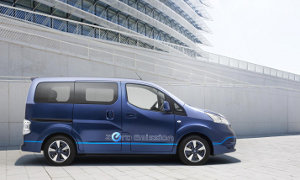
Nissan e-NV200 7-seater

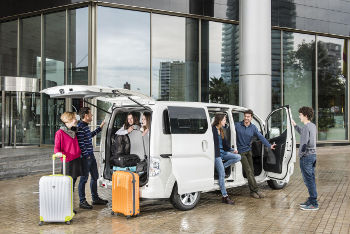
The Nissan e-NV200 7-seater still leaves ample luggage room behind the third row of seats. Both rows can be folded out of the way.

Growing demand has prompted Nissan to bring forward the launch of the latest variant of its popular e-NV200 electric van, a 7-seater people carrier or minibus model.

Nissan Europe’s director of electric vehicles, Jean-Pierre Diernaz explains the introduction, commenting:

“We have always planned to offer a higher-seating capacity version of the Nissan e-NV200. Marketplace demand has meant we have moved this introduction forward by several months to satisfy this need.

Nissan has had requests from taxi companies, VIP transfer services, hotels and private motorists who are interested in buying this uniquely flexible and capable vehicle.”

The seven seat version of the e-NV200 is configured with two seats in the front, three in the middle and two in the rear. Both the second and third rows can be folded to allow for larger quantities of luggage to be carried, making the new variant a hugely flexible vehicle for commercial or private use.

The second row rolls forward and the third row folds to the sides to open up an enormous 2.94 cubic metres of cargo capacity, which is enough to transport three bicycles with the wheels in place, unique in this class. With all three rows in place, the luggage capacity is 443 litres under the tonneau cover, and up to an impressive 870 litres when measured to the roof line, allowing the possibility to carry seven people and a large volume of luggage.

To increase passenger comfort the seven seat passenger version comes equipped with additional rear air conditioning to ensure a more even temperature through the cabin, even for those in the third row of seating.

The new model is available with the CHAdeMO quick charging system, which gives the access to the most widely installed rapid charging system in Europe today with over 1,500 accessible points. The quick charging option allows businesses or drivers to extend journeys or do multiple short journeys in a day with a quick top up. Already, users of the e-NV200 like Taxi Electric in the Netherlands and C&C Taxis in the UK have installed their own quick chargers to increase utilisation and flexibility.

The van and five seat versions of the e-NV200 were launched last summer and have already met with a very positive reception with orders from taxi companies across Europe in addition to large fleets like DHL Express in Italy, and APM, part of the Maersk group.
University of Birmingham takes delivery of Nissan e-NV200 electric van

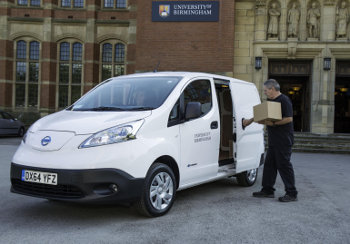
University of Birmingham Nissan e-NV200 electric vanThe University of Birmingham – one of the first fleet operators in the UK to place an order for the trailblazing Nissan e-NV200 all-electric van – has taken delivery of the vehicle.
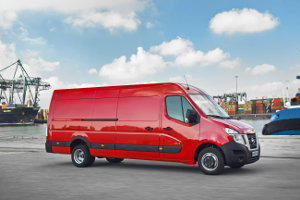
The e-NV200 Acenta is now in service as a postal vehicle delivering mail across the world-renowned university’s impressive and historic Edgbaston campus.

The revolutionary model – which can cover 106-miles on a single charge and costs just two pence per mile to run – joins a 98-strong fleet believed to be one of the most sustainable in the country.

Offering true zero-emissions mobility it will contribute to the university’s strict carbon management plan and help it qualify for additional funding from the Higher Education Funding Council.

Monica Guise, University of Birmingham’s Post, Portering and Transport Manager, said:

“We had been eagerly awaiting the launch of the e-NV200  for about two years and so we were delighted to be the first to place an order and one of the first to take delivery.

We began trialling electric vehicles six years ago and it’s fair to say we’ve had good and bad experiences in that time.

But we were really excited by the arrival of the e-NV200 for a long time as we knew as it had been built from the ground-up to function as a van should. We’ve been really impressed by its performance, versatility and handling.”

As I’ve suggested before, one of the ways to encourage organisations to take-up new technology is to make sure it pays — and this is clearly a motivator for the University, as Monica Guise explains:

The van will only cover about 4,000 miles per year, doing 25-35 miles per day, so we only need to charge it a couple of times a week. But in terms of the emissions, the e-NV200 will help us deliver on our environmental commitments and will play a big role us meeting the carbon targets that trigger additional central funding.

Anything we can do to reduce the CO2 emissions from within our fleet directly impacts on our funding from government. That’s one of the reasons we’re aiming to have 40% of our fleet fully electric by 2020.”

Interestingly, the van is not being purchased direct from Nissan but is being leased through Lex Autolease, which is a significant step into the mainstream for electric vans, in my view, as Ms Guise explains:

“All of a sudden we’re in the position where fleet managers don’t have to manage the financial risk that comes with new technology – that’s a massive shift.”

Based on the Nissan NV200 – International Van of the Year 2010 – and utilising the proven technology of the record breaking Nissan LEAF, the new e-NV200 offers a class-leading 4.2m3 capacity and 703kg payload  and is priced from £13,393 in panel van form (incorporating PiVG).

In addition to low running costs and emissions, users will also benefit from low maintenance costs that make for unrivalled total cost of ownership – £1,200 lower than a conventional diesel van over four years – and an unbeatable proposition for businesses large and small.

Nissan showcases updated NV400, Navara & e-NV200 concept

Nissan NV400 XLWB RWD model

The new Nissan NV400 in extra-long, rear-wheel drive guise.

Nissan has released detailed of updates to its commercial vehicle range at the IAA Hannover show this week.

NV400 large van

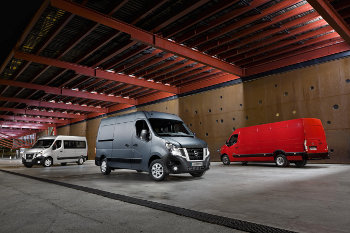
The Nissan NV400 is, of course, a rebdaged Renault Master, and the NV400 has now been updated in-line with the new Renault Master model, deliveries of which are due to start this month.

Among the changes are Renault’s new twin-turbo engines, which are designed to provide more power, better torque at low revs and improved fuel efficiency.

A pair of single turbo units produce 110hp/285Nm (previously 100hp) and 125hp/310Nm and these are joined by the newly developed Twin Turbo units, developing 135hp/340Nm and 165hp/360Nm.

Also available is a 150hp/350Nm version of the engine that has a variable geometry single turbo and is available only with a robotised semi-automatic gearbox.

It is estimated that the new 165hp NV400 will consume up to 1.5 litres/100km less than its 150hp predecessor, a significant saving of up to €1,500 over three years.

Other new features include Extended Grip, the electronic limited slip differential system which can be used to provide improved traction on mud and snow, along with Hill Start Assist, Trailer Sway Control and the new Wide View Mirror, which is essentially a blind spot mirror fitted on the passenger side sun visor.

Nissan NavaraNavara pick-up

The Navara now gets 17-inch alloy wheels and Vehicle Dynamic Control, while two new metallic body colours — bronze and grey — have been introduced.

Trim quality has been improved on SE and LE models, and buyers can now opt for a 144hp version of the SE spec; a lower-powered engine previously only offered on the fleet-spec XE model.

The other two engine options are a 190hp version of the dCi engine, while the top of the range LE models – accounting for around 10 per cent of all Navara sales – are also available with the smooth and potent 231hp 3.0L V6 diesel which is coupled to Nissan’s advanced seven-speed automatic gearbox.

e-NV200 luxury MPV concept

Nissan e-NV200 VIP concept

The Nissan e-NV200 VIP concept MPV

I’ve made no secret of my admiration for the way in which Nissan has trialled and launched its all-electric e-NV200 van, nor for the potential it has to be a genuine game changer: according to Nissan, in Europe, almost a third of van users never drive more than 120kms in a business day.

This means that at least 200,000 diesel vans each year could be replaced with a zero emission electric van, which could be charged once a day at home or at the base.

Nissan is continuing to press home the potential advantages of this model, this time with a luxury MPV concept vehicle aimed at urban VIP transport — a perfect application for electric vehicles.

The high-spec concept model is an upgraded version of Nissan’s e-NV200 Evalia people carrier, and comes in a two-tone metallic paint job, white leather seats and ‘limousine-like space’, according to Nissan.

The cabin contains two luxury rear seats with armrests and leg rests, and the cabin houses a 21.5″ screen which can be connected to passengers’ digital devices, along with LED lighting and individual reading lamps, a drinks fridge, plus ample luggage space.

The vehicle’s driver also benefits from a rear-view display, powered by a high-definition camera at the rear of the vehicle, which neatly addresses the impracticality of having a traditional rear-view mirror in a van-derived model that’s likely to have a privacy bulkhead when used for VIP transport.

Euro NCAP test results: Nissan e-NV200, Citroen Berlingo & Peugeot Partner

I’ve remarked before on the tendency for new van models to score relatively poorly in the Euro NCAP safety tests, compared to contemporary cars.

Ford has somewhat bucked the trend with its all-new range of vans, but most manufacturers are continuing to specify their vans and van-derived MPV models with fewer, more basic safety systems than purpose-built cars.

Euro NCAP has just published its latest round of test results, which tend to confirm my theory, with even the smallest supermini car models outscoring several new van-derived MPVs:

  • Mercedes-Benz GLA-Class: Five Stars
  • Toyota Aygo (also Citroën C1 and Peugeot 108) cars: Four stars
  • Renault Twingo: Four stars
  • Nissan e-NV200 Evalia: Three stars
  • Citroën Berlingo / Peugeot Partner MPV: Three stars

Let’s take a closer look at the reasons for these poor scores.

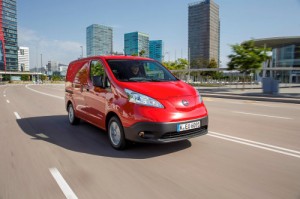
Nissan e-NV200 electric van

The MPV version of the e-NV200 only managed a three-star score in the latest Euro NCAP tests — compared to five stars for the new Qashqai.

Nissan e-NV200 Evalia

The e-NV200 Evalia is an electric people carrier version of the recently-launched e-NV200 van. Although the van model has won widespread praise from fleet trial users, its three-star safety test result highlights several weaknesses.

While Nissan’s new Qashqai model — similar in size — scored five stars in the same test earlier this year, the e-NV200 Evalia was let down by a poor 38% score in the Safety Assist category of the test, compared to 79% for the new Qashqai.

Although both models have an electronic stability system, the Evalia had a non-compliant speed limiter system, no seat-belt reminder for rear seats, and no optional lane departure or autonomous braking systems — all of which were available as standard or as options on the Qashqai.

Peugeot Partner / Citroën Berlingo

Citroën’s new Berlingo MPV model (which is identical in safety terms to the Peugeot Partner) also scored three stars in the 2014 Euro NCAP tests.

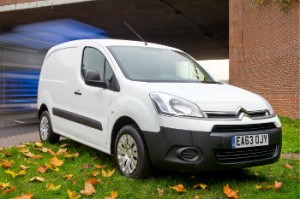
The 2014 Citroën Berlingo

The MPV version of the new Berlingo scored three stars in the latest Euro NCAP tests.

Despite its larger size, the Berlingo scored just 56% and 74% for adult and child occupancy safety — compared to 80% in both categories for the new supermini C1 model.

The Berlingo also faired worse in the Safety Assist tests, scoring only 48%, against the C1’s 56%. In fairness, Citroën’s C-Elysée saloon model, which was also tested earlier this year, also scored worse than the new C1, suggesting that one cause for this might be the older origins of the current Berlingo design, compared to the C1.

However, I think that most consumers would expect a larger vehicle to be safer for occupants than a smaller car of the same age.

Should van drivers worry?

It’s important to remember that these scores are all relative — in reality, today’s new cars and vans are considerably safer than most older models. It’s just surprising that van-derived models seem to continue to lag car designs.

Things are generally improving, however — the Ford Transit Custom scored five stars last year in its Tourneo guise, while the VW Transporter Kombi and Mercedes-Benz Citan Kombi also managed four-star scores in last year’s test.

The main sticking point this year appears to be a relative lack of safety systems, such as lane departure and autonomous braking, in new vans — areas which are receiving greater emphasis in this year’s test.

Nissan launches e-NV200 electric van — the shape of things to come?

Nissan has launched its e-NV200 electric van, which the firm claims offers a 106 mile range, a top speed of 76mph and fuel costs as low as 25% those of a diesel-fuelled van.

Nissan e-NV200 electric van

The Nissan e-NV200 electric van

These claims should be more realistic usual, too, as the e-NV200 has been one of the most widely-trialled vehicles of recent years, thanks to trials with a number of large fleet operators.

At least one trial customer, British Gas, has already placed a 100-van order, suggesting that the e-NV200 does live up to expectations.

For my money, Nissan could sell a lot more e-NV200 vans than LEAFs, thanks to the more predictable and repeatable usage cycles of vans, many of which travel less than 60 miles a day on a fixed route, every day for years, returning each night to off-road parking in a secure yard, where they can be easily and safely charged.

Compare that to the average private car usage scenario: vans have the edge, and as I’ve mentioned many times before, I believe vans, not cars, will be the first vehicles to achieve commerical success in the electric vehicle marketplace. Indeed, I’d go so far as to say the the e-NV200 could be the van that tips the balance.

What about the van?

I digress. Getting back to the e-NV200, the van itself is based on Nissan’s NV200 diesel-powered van, while the e-NV200’s drivetrain comes from the Nissan LEAF, the firm’s electric car offering.

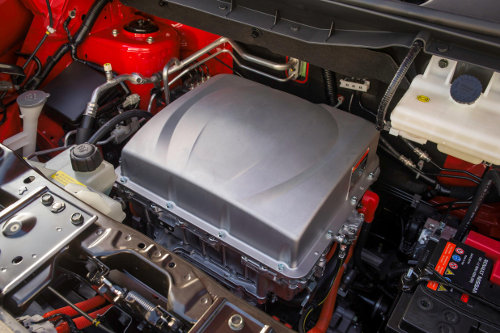
Nissan e-NV200 motor

The view under the bonnet — far fewer oily mechanical bits than usual. Plus it’s almost silent.


However, it isn’t just mash-up of two existing vehicles — 30% of the e-NV200’s parts are unique to the model, and the chassis, interior, battery pack and regenerative braking system have all be altered from their original (NV200 or LEAF) specifications.

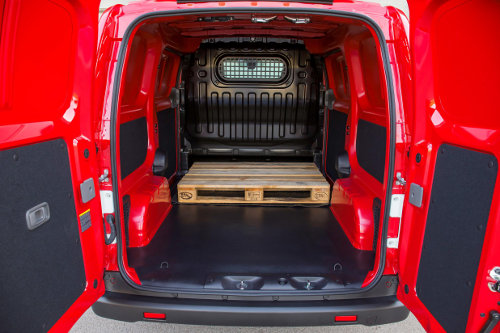
The e-NV200 has a cargo volume of 4.2 cubic metres and can carry two Euro pallets.

Nissan e-NV200 can carry 2 euro pallets

The Nissan e-NV200 can carry two Euro pallets in its 4.2 cubic metre load compartment.

Scheduled maintenance costs are expected to be 40% lower, thanks in part to the lack of engine oil, engine belts and conventional gear box and clutch.

Although the e-NV200 van will be built at Nissan’s plant in Barcelona, the UK — a major European manufacturing base for Nissan — will get some of the action, as Nissan’s battery plant in Sunderland will produce the van’s lithium-ion battery cells.

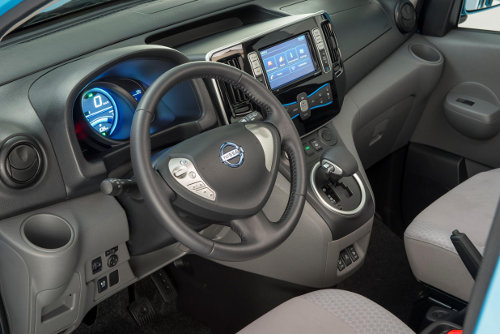
Nissan e-NV200 cab interior

Inside the cab, it’s almost like a normal van — just a few control differences. Ideal for van drivers switching between vehicles.

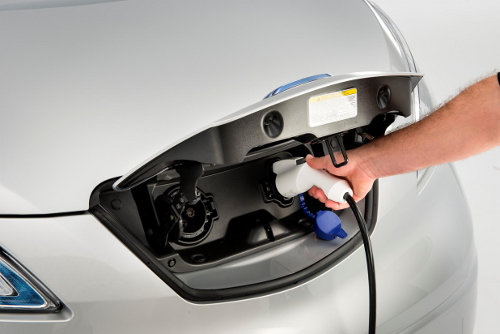
The battery can be recharged overnight in 8 hours using a domestic 16-amp single-phase 3.3 kW charger, or in just four hours if the optional 6.6kW/32-amp charger is fitted and a suitable supply is used.

Alternatively, a dedicated CHAdeMO DC 50 kW quick charger can recharge the battery to 80 percent capacity in as little as 30 minutes, if the battery still holds some charge, meaning that e-NV200 can be charged while it is being loaded with goods for another delivery, for example.

In my view, it all adds up — especially as the e-NV200 has been priced in the UK to go head-to-head with diesel vans, with prices starting from just under £14,000.

Nissan e-NV200 plugged in to charge

Nissan e-NV200 electric van prices go head-to-head with diesel

Nissan e-NV200 electric van at CV ShowNissan has announced pricing details for its e-NV200 electric van, which will be available from July in the UK. As I’ve written before, I believe this vehicle could be the tipping point for electric vans, and indeed British Gas has already ordered 100 e-NV200 vans following its extended winter trial of the model.
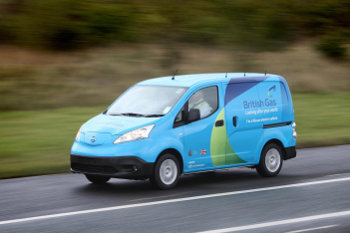
Prices have been set to start from just £13,393, after the £8,000 government plug-in van grant has been subtracted — meaning that the cost to buyers will be almost exactly the same as a standard diesel-powered van, such as the new Ford Transit Courier, which starts at £13,350.

It’s worth noting that this price applies to the ‘Flex’ purchase option, which means that you buy the vehicle, but lease the batteries, which cost from £61 per month. An outright purchase option for van and batteries is also available, and this puts the van’s starting price at £16,562, again after the government plug-in grant has been subtracted.

Nissan claims that electricity costs will be just 2p per mile, whereas a similar diesel-powered van will cost 12p – 14p per mile in fuel, meaning that the fuel savings from switching to electric are considerable — as long as you don’t need to exceed the e-NV200’s claimed 100-mile range, and have the facilities available to recharge it every night.

Although the additional cost of the batteries — whether leased or purchased — has to be factored into total cost of ownership calculations, so too does the van’s zero-rating for road tax and London Congestion Charge exemption, and in my view, it looks very competitively priced.

The e-NV200 will initially be offered in two trim levels, Acenta and Tekna, and two body styles — a panel van, and a five-seat combi.

British Gas orders 100 Nissan e-NV200 electric vans following winter trial

Nissan e-NV200 British Gas trial van

One of the Nissan e-NV200 electric vans trialled by British Gas over the last winter.

It’s all going to plan for Nissan: the e-NV 200 electric van has come through a series of well-publicised long-term operational trials with flying colours and has now received a 100-van order from trial partner British Gas, ahead of the e-NV200’s official launch in June.

The order was announced at the start of the CV Show in Birmingham today, and is part of British Gas’ wider commitment to electrify 10% of its 13,000-strong fleet by 2017. British Gas will receive 50 vans as soon as possible and a further 50 by the end of 2014.

As I have been saying for many years, the logical opportunity for mainstream adoption of electric vans isn’t the private car market, where usage is often inconsistent and unpredictable, it’s the van market — many vans operate on fixed routes and schedules which make range anxiety and charging requirements irrelevant.

British Gas’ winter trial of the e-NV200 was the UK’s largest electric van evaluation to date, and saw 28 e-NV200s cover in excess of 60,000 miles between them, to verify how the vans performed in winter conditions, during typical British Gas home services daily usage patterns. Proof of the trial’s success was that some drivers were reluctant to hand back their vans.

Colin Marriott, general manager, fleet at British Gas said:

“We have been extremely impressed with the performance of the Nissan e-NV200 during our winter trial. The feedback from our engineers speaks for itself, with the majority saying they would be happy to keep the van permanently.

“Taking on 100 of these vehicles on a permanent basis demonstrates our continued commitment to leading the adoption of this technology amongst large vehicle fleets in the UK.  With technology and infrastructure improving all the time, we look forward to expanding this number in the coming years.”

The e-NV200 will be available to purchase from June 2014.

Nissan NV400 van gets higher spec, lower emissions

Nissan NV400 rangeNissan has announced improvements to its NV400 range including a low emission Euro 5 engine and a number of specification upgrades on both panel vans and factory-built conversions.
The four versions of the chassis, tipper and dropside turbo engine have been replaced with a single 2.3 litre turbodiesel engine which boasts an improvement in fuel economy and sees the NV400’s CO2 emissions fall by 8g/km.

The updated variants maintain their nimble performance and generous load space, with the improvements meaning the NV400 becomes an increasingly viable option to businesses looking to reduce the emissions of their fleet.

Additional specification now included on the E grade panel van as standard includes deadlock, power mirrors, front electric windows, FM audio system with MP3 / iPod compatibility, USB / AUX socket input and Bluetooth connectivity, cargo floor load mounting hooks and immobiliser and alarm.

All panel van, crew van, tipper and dropside conversions now have a Thatcham approved Category 1 alarm and SE grade panel van, crew van and Crew Bus SE derivatives now have remote control locking with a three-button key, while the Crew Bus also has a standard immobiliser and pre-wiring for alarm.

All rear wheel drive panel vans, crew vans and chassis now come with twin rear wheels.

Nissan corporate sales director Barry Beeston commented:

“The improvements to the NV400 will further increase its appeal to businesses both large and small. Its comfort and reliability on long journeys is now matched by the efficiency of a high performance engine which will deliver tangible cost savings.

“The extra security features on both the E and the SE models will also provide drivers and fleet operators with extra peace of mind that their vehicles and loads will be safe and secure when left unattended.”

As the Nissan NV400 is a rebadged Renault Master (a van also sold as the Vauxhall Movano), then I wouldn’t be surprised to see similar updates from Renault and Vauxhall in the near future

Manheim predicts sparky future for electric vans

Nissan e-NV200 British Gas trial van

Manheim’s head of commercial vehicles believes that the June 2014 launch of the Nissan e-NV200 electric van, see here on extended trial with British Gas, could be a tipping point for electric vans.

With impeccable timing, given the smog blanketing much of the UK, vehicle auctioneers Manheim have declared that 2014 could be the tipping point for electric van adoption.

James Davis, head of commercial vehicles at Manheim, says that technical and economical hurdles remain for electric vans in the used market:

These vans were expensive to buy new and were often funded from major PLC marketing budgets to satisfy their ‘green’ agendas.

In the used market, a buyer has to justify their price premium versus tried, tested and trusted heavy oil technology; without the budget or turnover of the original PLC owner. Diesel will win the day for a long time yet, until LCV running costs and taxes are more closely linked to emissions.

Nervousness over longevity and battery lease agreements are also deterring buyers, says Davis, although occasional hybrid models have seen strong demand at auction; Davis cites two AshWoods Transit hybrid conversions, which sold for between 125% and 131% of their CAP book prices at a sale in late 2013.

However, Davis suggests that that tipping point could come this year:

“Looking ahead, the official launch of Nissan’s e-NV200 in June 2014 will be a major landmark in the eVan market. A volume fleet order, most likely from one of the PLC fleets currently on trial, will surely launch used electric OEM vans as a real alternative to fossil fuels, with a viable dealer and charging network to follow.”

Strangely enough, Davis’ views about the Nissan e-NV200 echo my own exactly — as I explained in a post on this site at the start of March.

I strongly believe that the van market is currently the most realistic target for volume sales of electric vehicles. Time will tell if I’m right, but frankly, the competition from other alternative fuels is pretty thin. Hydrogen and fuel cells are still too experimental and complex, while looking back, LPG might have been a good idea, but the economic advantages were only ever based on fuel duty rates, not underlying fuel costs, and as Manheim’s James Davis explains, the game is now nearly over:

“In our view, LPG is all but extinct among mainstream fleets. Operation, tank size and its position in the payload area, coupled with a fragmented refuelling network infrastructure, conspire against the technology.”

I’m bullish on electricity and believe that when combined with range-extender and hybrid technology, it’s a logical and complementary way for internal combustion engined vehicles to evolve, while retaining the practicality we all value so highly.

Indeed, I’ll go further and say that in a few short years, hybrid technology will become a standard feature on many new models — to the point that it isn’t even badged anymore. After all, I remember a time, not so long ago, when vehicle manufacturers badged their vehicles to advertise the presence fuel injection, catalytic converters and turbos (on diesel engines).

Today, any new car or van without these features wouldn’t be fit for purpose, and I’m pretty sure the same thing will happen with hybrid technologies.

Nissan ousts Citroen from PH Jones fleet after 4-week trial

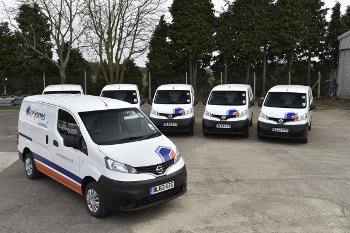
PH Jones Nissan NV200 fleet

Vans from PH Jones’ 227-strong fleet of Nissan NV200 vans, which replaced the firm’s previous Citroen Berlingo and Dispatch vans.

Nissan’s efforts to expand its UK van business appear to be paying off, after the firm managed to replace Citroen as the main provider of vans to British Gas subsidiary PH Jones, which recently took delivery of 227 Nissan NV200 SE vans.

The decision to switch from Citroen Berlingo and Dispatch vans — both favourites with SMEs — to the NV200, a relative newcomer, came after PH Jones undertook a four-week trial of a NV200 SE, complete with full racking, to test whether the van would be the appropriate vehicle for its fleet daily usage patterns.

Drivers praised the NV200 SE for its comfort plus its ability to safely house all of their repair tools and equipment.

The new vans are all in PH Jones livery and will cover around three million miles per year. Commenting on the decision, on Marshall, PH Jones fleet manager said:

“This is a very large order for us so it was important we undertook an intensive vehicle trial to ensure the vans would be fit for purpose. As well as being a hit with the drivers thanks to the handling and air conditioning, the support from Nissan throughout has been excellent and we look forward to continuing to work together in the coming months.”

Originally established in 1963 as a local heating contractor in the North West and Wales, PH Jones has expanded to become a social housing provider to homes across the country providing central heating installations, heating service and repair and electrical services.