Increased Congestion Hitting UK Business

Increased congestion is hitting the effectiveness of British businesses, according to a new survey by car and van rental giant Europcar.

70% of the 300 businesses surveyed said that congestion was impacting the efficiency of their staff when travelling for work, with 42% of those who responded saying that up to 20% of business travel time was spent in congested traffic.

80% of those surveyed felt that traffic congestion is getting worse in the UK – no arguments there. David McNeill, Corporate Sales Director at Europcar feels that it’s time for all road users to take responsibility for minimising their contribution to congestion:

“…what this survey has clearly shown is that we must all take responsibility to identify the ways in which we can reduce congestion on our over-stressed road network.  Challenging times lie ahead and the survivors will be those that tighten their belts and explore all the options to work as efficiently as possible.”

Europcar are one of the world’s leading car and van hire companies and their combined UK fleet (which includes National Car & Van Rental) amounts to more than 60,000 cars and vans.

CO2 emissions of new vans to be published – Soon…

It looks like the BVRLA’s ongoing campaign to persuade van manufacturers to publish their vans’ CO2 emissions may be nearing a triumph.

Back in January I reported on the BVRLA’s (British Vehicle Rental and Leasing Association) plans to create a public database of van emissions, similar to that which is already available for cars. From 1st January, 2008, manufacturers have had to give their new vans a CO2 rating – but they aren’t yet required to disclose them.

This has made it difficult for fleet buyers whose businesses may have set emission reduction targets or who may simply wish to try and do their bit for the environment. However, it now appears that the manufacturers have agreed to publish the CO2 ratings of new vans and the Society of Motor Manufacturers & Traders (SMMT) is now in discussion with the Department of Transport to bring this about in an effective way – probably “via the Vehicle Certification Agency“, according to BVRLA Director General John Lewis.

The decision has come none too soon; according to the Department for Transport (DfT), vans are now the fastest growing source of CO2 emissions on our roads. With 340,000 new vans hitting the roads last year, it’s not hard to imagine why.

The SMMT is keen to point out that these figures are far from perfect. Unlike cars, whose profile and payload rarely varies significantly, vans can nearly double in weight when loaded and can be typically be specified with different roof heights, for example. Both of these options will affect a van’s CO2 emissions and since CO2 ratings are currently calculated based on rolling road tests with no payload, we can expect the manufacturers’ ratings to be somewhat optimistic for many van users.

The European Commission is planning a consultation exercise to try and work out how to bring more realism to these figures, but this could take years. In the meantime, hats off to the BVRLA, as their six-month campaign has finally bore fruit, providing van operators with some much needed data!

Charities Weigh In To Biofuels Debate

A leading charity has joined the calls by top scientists for compulsory EU biofuel targets to be reconsidered.

Barbara Stocking, CEO of Oxfam GB said that “Recent estimates suggest that increased demand for biofuels accounts for 30% of recent food price rises, while mounting scientific evidence shows biofuels are having an overall negative impact on climate change.”

The UK government has already promised to review their target of making 5% of transport fuels biofuel within two years. However, the EU has continued discussing even more ambitious targets – despite the widespread evidence that the carbon footprint of biofuels can be larger than that of fossil fuels.

Stocking said that “the urgent review of compulsory biofuels targets in rich countries to stop their inflationary impact” was “a priority”.

I’ve been writing articles on the unwanted side effects of increased biofuel use for some months now and over that time the case has only got stronger. Environmentalists, poverty campaigners and scientists all agree that we need to take a step back and look at the bigger impact of biofuels.

So what does the EU do? Plough onwards with plans to make increased use of biofuels compulsory

European Van Hire from Admiral Self Drive Van Hire

European van hire – taking a hire van from the UK to mainland Europe and back – is an increasingly common practice. A few of the more popular reasons for crossing the Channel in a rental van are:

Here at vanrental.co.uk, Birmingham is our second most popular van hire search location.  Admiral Self Drive Van HireWalsall-based Admiral Self Drive Van Hire are perfectly positioned for both Birmingham and Walsall customers and are also one of the few companies in the area who offer a comprehensive European van hire service.

Admiral have a wide range of vans and minibuses available for European use. These Include Transits, VW Transporters, Mercedes Sprinter 4.3m long-wheelbase hi-tops and Mercedes-Benz Lutons with tail lifts. Admiral also have specially built 950cu.ft mini furniture removal vans (pretty much the biggest possible 3.5 tonne vans). All rental vans can be driven on standard car licence.

To ensure that your European trip is as stress free as possible, Admiral also provide comprehensive European RAC rescue and recovery cover. European driving insurance and documentation is arranged at no extra cost and there are no additional charges for extra drivers.

Admiral are ideally located for most of the West Midlands, just off Junction 10 of the M6.

If you’ve got any questions about Admiral’s European van rental service or would like a quotation, you can call them free on 0800 197 8875. For details of their vans, check out their website here.

New Van News from Smith Electric Vehicles, Fiat & Vauxhall

The last few weeks have seen an interesting range of new vans come to market in the UK. Here’s a run down of what’s new to the market.

Smith Electric Vehicles

British company Smith Electric Vehicles have emerged as one of the world’s leading manufacturers of all-electric vehicles over the last few years.

Their Ford Transit-based Edison has proved especially popular with urban and other low-mileage users and they have now announced a new, smaller van, the Ampere, to complement it. The Ampere is based on the hugely popular Ford Transit Connect so should be equally successful.

The Ampere has an 800kg payload, a 100 mile range and a top speed of 70mph.

Fiat

Alongside the launch of Fiat‘s new small van, the Fiorino (the same vehicle as the Peugeot Bipper/Citroen Nemo), the company have also launched their ‘BforB’ range – Built for Business. This is a range of pre-built chassis van models such as tippers, Lutons, box vans and crew cabs which can be ordered directly from the dealer.

Fiat aren’t the first manufacturer to do this. Companies such as Renault and Vauxhall are already offering similar deals and they are proving to be popular – not least due to extremely fast delivery times. Fiat claim that a completed van can be delivered in two weeks, which is pretty fast.

Vauxhall

Finally, Vauxhall have added a new factory conversion to its existing range, this time based on the Movano van.

The Movano Luton offers a payload of 1,385kg and 17.2 cubic metres of load space – quite big, even for a Luton. It’s one of the current crop of streamlined lutons, where the overcab area is curved to reduce wind resistance and help fuel efficiency. It does however reduce quite how much can be carried in this area, although for most users it’s not a big issue.

The Movano Luton comes with Vauxhall’s 2.5CDTi engine which can be specified at 100bhp, 120bhp or 146bhp ratings. The van and its aluminium Luton body are covered by Vauxhall’s three-year/100,000 mile manufacturer’s warranty and can be ordered directly from Vauxhall dealers.

Medium Panel Van Buyers Guide

Warm on the heels of their recent small van buyers guide, the good people at Fleet News have now published a medium panel van buyers guide, which provides an overview of all of the major contenders in this popular sector of the market.

These vans generally have a gross vehicle weight (GVW) between 2.5 and 3.0 tonnes (except the VW Transporter, which also comes in a 3.2t version).

Vans covered in the buyers guide are:

  • Citroen Dispatch
  • Fiat Scudo
  • Ford Transit
  • Mercedes-Benz Vito
  • Nissan Primastar
  • Peugeot Expert
  • Renault Trafic
  • Vauxhall Vivaro
  • Volkswagen Transporter

You can see the full guide here.

Citroen Nemo vs. Peugeot Bipper (+New Partner & Berlingo)

It’s all change on the small van front this summer. Peugeot and Citroen are going head to head with two major new models, the Berlingo/Partner and the Nemo/Bipper.

I list them like that because they are of course competing against each other with the same vehicles – all Peugeot and Citroen vans (and most Fiats) are the product of PSA, so the only difference is badging and sometimes engine options.

Needless to say, the new Berlingo-Partner is bigger than the vehicle it replaces – although the current model will continue to be sold as the Berlingo First and Partner Origin. It’s still a great no-frills, economical van and will no doubt continue to sell well, especially in these increasingly budget-concious times.

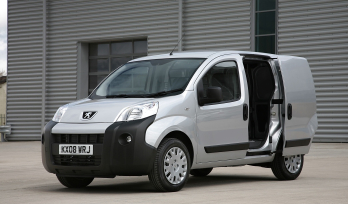
The Bipper – Nemo is a smaller van, fitting between a hatchback like the 207 Van and the Berlingo. Here’s a picture of a Peugeot Bipper:

Peugeot Bipper van

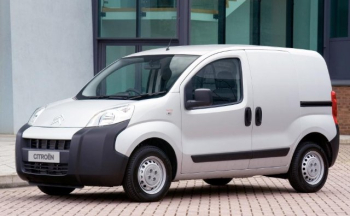
It will have an impressive payload of 610kg, 2.5 cubic metres of load space and a neat overall length of just 3.86m. All of these features no doubt contributed to it winning the 2008 Fleet World ‘Best New Van’ Award and it should be a success, as should its Citroen-badged twin brother, the Citroen Nemo (see the similarities?):

Citroen Nemo van

For more details on all of these new models, see the excellent round up on the Fleet News site.

Green Motion Supports Green Education

vanrental.co.uk advertiser Green Motion is helping primary school children in Oxford to learn about environmental issues through their sponsorship of Oxford City Council’s ‘Greenvision’ programme.

Green Motion, which has a branch in Oxford, is a car and van hire company specialising in environmentally-friendly vehicle hire. Energy saving, recycling and pollution control are core parts of their business strategy and Max Jacobs, owner of Green Motion’s Oxford branch, says that “it’s great to be able to actively support local education” – especially when it promotes environmental issues.

To learn more about Green Motion or book a green hire van or car, visit www.greenmotion.co.uk.

Record Rise For Diesel Prices – But What Next?

In my last article about fuel prices, I highlighted just how much of the pump price goes to the Treasury.

I’m afraid that this time the news is equally bad!

May has seen the highest rise in diesel prices ever recorded, according to the latest fuel price report from the AA.

Diesel rose by an average of 6.76p per litre from 117.41p to 124.17p between mid-April and mid-May. This means that the 68 litre fuel tank on my Transit now costs an extra £4.60 to fill up. For vehicles with a smaller 50 litre tank, the cost of a tank full of diesel is up by £3.38.

Most of this increase has taken place in the first half of May, but it is interesting to see how the price differences between supermarket garages and non-supermarket garages have grown. Supermarket garages are now an average of 2.5 pence per litre cheaper for petrol and a surprising 4p per litre for diesel.

Surprising to me, anyway! The pump prices at my local Sainsbury and Morrisons are pretty much the same price as the Shell garage I usually use, although some other local forecourts are more expensive than the supermarkets.

Unsurprisingly, London is still the most expensive place to buy fuel and Yorkshire & Humberside the cheapest.

As the AA comments, the most worrying aspect of this is that the rise in oil prices appears to be primarily the result of speculative investors putting money into oil in an attempt to make a quick buck from the rising prices.

The old ‘rising demand, limited supply’ argument is being trotted out by those with vested interests, but the facts appear to suggest that increased demand for oil is not the real culprit (remember when people were saying that house prices had to rise because there weren’t enough houses?).

I’m going to stick my neck out and predict that oil prices will start to fall in the next six months – but I will also predict that petrol and diesel prices won’t fall as far…

Anyone care to disagree?

Van & Minibus Hire in Reading: New Branch

We are very pleased to welcome Practical Car & Van Rental in Caversham, Reading, to the  Practical Car & Van Rental Readingvanrental.co.uk van hire directory.

Practical are based on Ardler Road, in Caversham, which is to the north of Reading city centre. They are a national chain with more than 150 van, minibus and car hire locations throughout the UK.

Practical’s Reading branch covers the Theale, Wargrave, Whitchurch, Wokingham, Henley, Sandhurst and Purley areas and can provide a ‘meet and greet’ service at local railway and coach stations if required.

A wide range of hire vans and minibuses are available for hire from Practical in Reading, including:

  • Short, medium and long wheelbase panel vans (e.g. Ford Transit, Mercedes Sprinter)
  • Small vans (e.g. Vauxhall Combo, Citroen Berlingo)
  • Luton vans (with and without tail lifts)
  • 7.5 tonne trucks
  • 9, 12, 15 and 17 seat minibuses

A full range of hire cars are also available.

Practical pride themselves on providing a flexible service and one-way van hire is available to most of their other hire locations in the UK. It’s also possible to arrange one-way hire to most major airports and many other locations.