Author Archives: Van Rental

Europcar Wins Green Award

Car and van rental company Europcar has been named the World’s Leading Green Transport Solution Company at the 2008 World Travel Awards. It was also named World’s Leading Leisure Car Rental Company.

The World Travel Awards are the Oscars of the travel industry and awards are decided by the votes of 167,000 travel professionals worldwide – making them highly prestigious.

Last year, Europcar’s commitment to green issues made it the first company in Europe to be awarded the Bureau Veritas Green Charter. Bureau Veritas are the world leader in inspection and certification services for areas such as the environment, health and safety and quality.

Ford Transit – Best for Bank Robbers…

Television advertising in the UK is often dull and politically correct to the point of being agonsing to watch.

Fortunately, that’s not true in all other countries.

Check out this advert for the Ford Transit – as made for the Turkish market:

By way of comparison, here is one of the famous “Backbone of Britain” UK ads:

Van Rental Increasingly Popular As Recessions Bites

Van Hire firms are reporting strong business as the UK economy moves into recession.

According to several major van rental companies, rentals are up and durations and frequency are increasing, as many businesses start considering short-term van hire as a serious alternative to owning or leasing vans.

As uncertainty over future business prospects increases, the attractions of on-demand van hire with no future financial commitments are also increasing. Van operators are choosing to delay replacing vehicles or even to sell their fleet and rent when necessary instead.

Ian Lawrence, Managing Director of van rental firm Sixt, says that the company has already seen customers saying that “they’re thinking of cashing in their fleets and want to rent a CV from us on a long-term basis.” He also comments that renters are “returning vehicles immediately after the job is done” – a sentiment echoed by Chris Sharp of Burnt Tree, who says that “over the last three months we’ve seen a marked increase in the number of enquiries regarding flexible fleet arrangements”.

Source: RoadTransport.com

RAC Survey Confirms Cost Matters, Environment Doesn’t

A new survey by the RAC has confirmed what I have always believed – people will adjust their driving habits in response to increasing costs, but won’t make changes solely for environmental benefits.

The RAC surveyed the attitudes of 1,040 British motorists as part of its 2008 RAC Report on Motoring. It found that 77% of motorists have changed their driving habits in the last year due to the higher cost of fuel – but just 6% had changed driving habits out of concern for the environment.

The cost vs. environment theme continued, with 77% of drivers saying that they would buy a greener car – if the tax incentives were better. In other words, they would buy a greener car if it was cheaper than a more polluting vehicle!

At the risk of sounding cynical, this is exactly what I expected – and to be honest, exactly what I do. My concerns are firstly for the health of my vehicle, secondly for reducing fuel consumption and other costs and thirdly (if that) for the environment.

Given the cost of owning and running a vehicle, no other approach really makes sense to me.

What do you think?

If you’d like to learn how to save money, save fuel and save the environment, check out my better driving tips here and learn why raising road tax on polluting vehicles won’t necessarily lower emissions.

RAC Trials Aftermarket Hybrid+ Solution

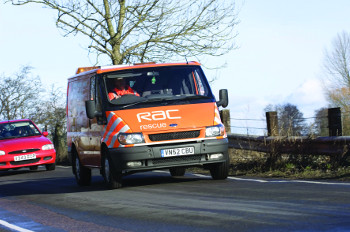
RAC Ford Transit rescue van

The RAC is currently trialling the an aftermarket hybrid conversion kit on two of its Ford Transit patrol vans.

The RAC have chosen the Connaught Engineering Hybrid+ solution, a bolt-on, aftermarket hybrid conversion which uses a 48V electric motor and promises fuel savings around the 20% mark.

RAC Quality Manager Steve Lydon explains how it works: “The Hybrid+ system is bolted on to the engine of the vehicle. When you pull away, it kicks in and turns the engine using the electricity it has stored, as opposed to fuel. ”

The Hybrid+ solution uses capacitors to store energy, rather than heavy batteries. This means it does not affect the payload or weight of the vehicle. It’s simple retro-fit nature also means that it can be completely fitted in one day and according to Connaught, does not affect the manufacturer’s warranty.

At present available for Ford Transits, fitting the Hybrid+ system only takes one day, causing minimal disruption to vehicle availabilty. Check out Connaught Engineering’s website for more details.

Morrisons Biodiesel B30 & Hired Vans – Don’t Do It!

If you ever fill up at Morrisons fuel stations you may have noticed that some of them are  now offering additional alternative fuels – including biodiesel B30 (30% biodiesel) and Bioethanol E85.

Van users with green consciences may be tempted to fill up their hire vans with B30 biodiesel – that’s a fuel made with 30% biodiesel and 70% mineral diesel – but you probably shouldn’t.

Not all manufacturers approve the use of B30 – and although the vehicle will probably run on the fuel without problems, use of it may invalidate the manufacturers’ warranties.

Ford, Fiat, Mercedes-Benz, Nissan, Renault, Toyota and Volkswagen are just some of the van manufacturers who have NOT approved the use of B30 in their vehicles. If you are renting a van, stick with regular diesel, save fuel and ease your green conscience by driving in a more fuel-efficient manner instead.

Don’t use anything other than normal diesel unless your van hire company gives you permission to do so.

To learn more about biodiesel usage in the UK – all diesel now includes 2.5% biodiesel – click here.

Van CO2 Emissions Now Available Online

As I reported in January and June, the BVLRA (British Vehicle Leasing & Rental Association) has been working hard to make van CO2 emissions publicly available in the same way that car CO2 emissions are.

Van manufacturers have now (reluctantly?) agreed to publish this information in 2009, but the BVLRA has leaped ahead of this and produce its own guide – a free, online tool to compare the emissions of current model light commercial vehicles (vans, pickups, etc.).

You can find the BVLRA’s Van CO2 Emissions comparison tool here, and very good it is too.

If you are interested in comparing the CO2 emissions of different van models – either for rental, purchase or other reasons – then this tool is unique, as far as I am aware, and works very well.

As well as CO2 emisions, the tool compares fuel economy (obviously it is restricted to manufacturers’ published consumption figures) and unladen weight, providing an interesting way to compare and contrast similar vans.

Congratulations to the BVLRA for grasping the bull by the horns and making this happen – you can find the tool here, along with other resources that are part of the BVLRA’s Greening the Fleet initiative.

Guildford & South-east Van Hire: Kendall Cars

I’d like to welcome Kendall Cars to the vanrental.co.uk van hire directory. Founded in 1969 and based in Guildford, Kendall Cars has van rental branches throughout the Hampshire / Surrey / London area:

Kendall Cars offers a very wide range of hire vans – ranging from small vans (e.g. Peugeot Partner), through larger panel vans (e.g. Ford Transit LWB) and up to 7.5t (Iveco Cargo) and 18t lorries. They do of course also offer Luton box vans with tail lifts – essential for house and furniture moves.

Kendall also offers a number of other light commercial vehicles, such as 3.5t Transit tippers and 4×4 pickups like the Toyota Hilux – offering additional flexibility for commercial hire requirements.

Kendall Cars also offers minibus and MPV hire.

If you’d like to see your van hire company listed on vanrental.co.uk, click here for details of our advertising options.

Van Hire in Kentish Town, North London: H&H Van Hire

I’d like to welcome H&H Van hire of Kentish Town, North London, to the vanrental.co.uk van hire directory.

A family-run business that was founded in 1994, H&H offers a comprehensive range of small, medium and long wheelbase Transit vans plus Lutons with tail lifts from its base on Bartholomew Road, Kentish Town.

H&H operates a ‘no hidden extras’ policy which means that all of the following are included in its standard van rental rates – unlike some companies:

  • Insurance included
  • AA Recovery included
  • Free additional drivers
  • Unlimited mileage
  • Free 24-hour drop-off facility
  • Discounts for long-term hire
  • Free use of trolley and straps
  • NO charge for young drivers aged 21-25
  • Free parking for customers’ cars

It’s a great package and H&H Van hire also offers minibus hire, although drivers must be over 25 to hire a minibus.

If you’d like to see your van hire company listed on vanrental.co.uk, click here for details of our advertising options.

Diesel Losing Ground to Petrol – As Predicted

Back in July (when diesel prices were around 135p/litre), I suggested that petrol-engined cars might experience a resurgence in popularity against diesels, thanks to lower fuel costs and improved fuel economy.

Much of diesel’s recent popularity has been due to its superior fuel economy, but now that it is so much more expensive than petrol (14p/litre more at my local garage) the differences in fuel economy have become much less impressive.

For example:

Diesel car/van travels 40 miles at 40mpg: Fuel cost £4.75 (£1.079/litre)

Petrol car/van travels 40 miles at 30mpg: Fuel cost £5.50 (£0.939/litre)

Although the petrol vehicle still costs more to fuel, the difference is much smaller than it was – especially when you factor in the greater purchase and maintenance costs of diesels.

New figures from GE Capital Solutions’ Fleet Services division suggests that the swing back to petrol might already be underway in the fleet car market – albeit in its early stages.

10.7% of those surveyed reported that there had been an increase in the number of petrol-engined vehicles in their fleet over the last 12 months – against only 3% for diesel.

These figures aren’t yet backed up by new registration figures, which show that fleet registrations of diesel cars are up this year, from 486,000 in the first ten months of 2007 to 511,000 in the same period this year.

However, I do believe that the balance of fuel choice will tip back towards petrol a little over the next few years. Not entirely – modern diesels are very practical for high-mileage applications – but for lower mileage drivers at least.

Source: Fleet News