
Category Archives: Van News

News and articles about UK vans – especially information relevant to the van hire market. Coverage of new van model launches from all the major manufacturers – Ford, Mercedes, Volkswagen, Peugeot, Fiat and Citroen.

Ford Vans Are Most Reliable Say Fleet Managers

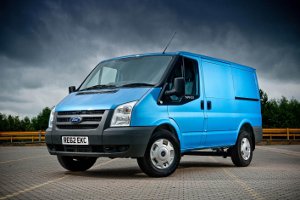
Ford Transit mk7

Ford Transit: the most reliable van in the UK

Ford commercial vehicles are the most reliable in Britain, according to the managers of the 50 largest fleets in the UK.

The Brentwood-based blue oval replaces Volkswagen as the most reliable manufacturer, according to the results of the FN50 survey, which surveys the 50 largest UK contract hire and leasing companies.

Commenting on the results, Stephen Briers, editor of Fleet News, said:

“Van reliability is arguably more important than car reliability. A van driver can’t work from home if he or she needs to deliver vital equipment or provide a necessary service. Ford’s commitment to ensuring the Transit and Transit Connect perform well in the key area of reliability should help strengthen its position as the biggest manufacturer in the UK van market.”

The Ford Transit came top of the van reliability survey with the Ford Transit Connect, retaining its second place from a year ago. In the manufacturer table, Ford moved up into the top spot ahead of Volkswagen, who also fell behind fellow German manufacturer Mercedes-Benz, in what must be a disappointing result for VW.
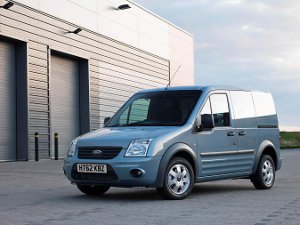
Ford Transit Connect

The Ford Transit Connect came second in the FN50 survey to find the most reliable van in the UK.

Here are this year’s top ten most reliable vans (last year’s position in brackets):

1 Ford Transit (4)
2 Ford Transit Connect (2)
3 Mercedes-Benz Sprinter (1)
4 Volkswagen Transporter (5)
5 Volkswagen Caddy (3)
6 Mercedes-Benz Vito
7 Vauxhall Vivaro
8 Renault Trafic
9 Vauxhall Movano
10 Citroen Berlingo

Top 10 most reliable van manufacturers (last year’s position in brackets*)

1 Ford (2)
2 Mercedes-Benz (3)
3 Volkswagen (1)
4 Vauxhall (-)
5 Citroen (-)
6 Renault (5)
7 Nissan
8 Peugeot
9 Fiat (4)
10 Toyota

(*2011 tables ranked only top five)

Those responding to the survey have a combined LCV fleet size of 160,000. The FN50 reliability survey is the largest study of its kind in the UK. For more information on the survey see www.fleetnews.com.
New Van Registrations Down 8.1% In October

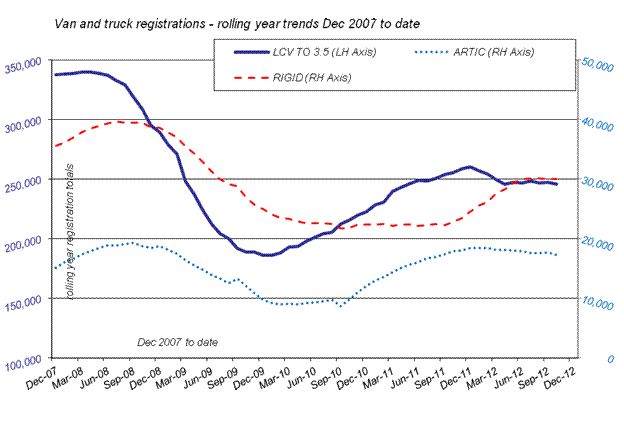
New van registrations fell once more in October, according to the Society of Motor Manufacturers and Traders (SMMT), dropping 8.1% compared to October 2011 and giving a 6.5% fall for the year to date.

Unfortunately, as I predicted last month, September’s 1% gain was only down to the ’62’ plate change and we are now back to normality. Van registration remain below both 2010 and 2011 levels and are 3.6% down on a rolling year basis.

Despite truck registrations (>3.5t) being up 13% on the year to date, they also fell by 8.1% in October, and as the graph below shows, van and truck registrations appear to be drooping as we approach the end of 2012:

Commercial vehicle registrations 2007 - October 2012 (courtesy of SMMT)

Commercial vehicle registrations 2007 - October 2012 (courtesy of SMMT)

Van registrations fell in all categories of except for the pick-up and 4×4 categories (which are included as light commercial vehicles). Pick-up registrations rose by 18.7% in October, while 4×4 registrations gained 9.5%.

Truck registrations were dragged down by big falls in the 3.5t – 6.0t category (which remains up 41% on the year to date) and the 3-axle artic category, where sales fell by 19.6% in October, taking the fall for the year to date to 8.8%. Registrations rose in all of the other truck categories.

Ford Remains Dominant

Ford hit the news recently when it announced the closure of its Ford Transit plant in Southampton, but it remains the dominant manufacturer in the UK’s light commercial vehicle market, with 29.4% of market share in October and 26.7% for the year to date.

In second place, Volkswagen has arond 12.5% of the market, just above Luton-based Vauxhall, which has around 11%.

Peugeot, Mercedes, Citroen and Renault account for a further 31% of the market, followed by Nissan, Toyota, Fiat, Land Rover, Mitsubishi and Iveco.

VW Amarok Now Available In BlueMotion Spec

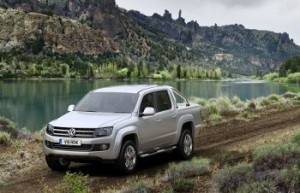
Volkswagen AmarokVolkswagen has updated its Amarok pick-up model and has moved right-hand drive production to Hanover, where it will now be built in the same factory as the Transporter van.

The updated spec for the big pick-ups includes Bluetooth, front and rear parking sensors, heated washer jets, tachograph preparation, cornering fog lights and 19-inch alloy wheels.

Perhaps more usefully, there is a power upgrade for the 163 PS BiTDI engine to 180 PS and  towing limits have been increased from 2,800 kg to 3,000 kg for manual models, while the new eight-speed automatic model boasts an impressively high towing limit of 3,200 kg.

BlueMotion = Green

The other big change is that the Amarok is now available in eco-friendly BlueMotion guise — something that also became available recently on the Transporter.

BlueMotion Technology improves fuel economy and lowers emissions by using low rolling resistance tyres, Stop/Start and regenerative braking.  This means that although the 180 PS BlueMotion Technology is over 10 per cent more powerful than the previous 163 PS model, it is 3.9 per cent more economical, with a combined fuel economy of 37.2 mpg compared to 35.8 mpg.  Better still, emissions drop by 10 g/km to 199 g/km.

Torque for the eight-speed automatic transmission increases from 400 to 420 Nm, delivered at 1,750 rpm.  It is available exclusively as a Highline model with BlueMotion Technology and permanent 4MOTION for a retail price of £25,105 (plus VAT).  It achieves combined fuel economy of 35.3 mpg with emissions of 211 g/km – the same as the standard manual model.

For more information, check out VW’s Facebook page.

New Transit Custom Offers Car-Like Fuel Consumption

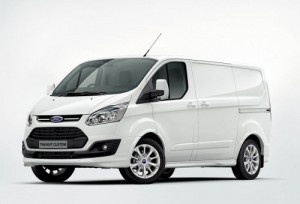
The new Ford Transit Custom is now in production

Ford’s one-tonne Transit Custom ECOnetic matches Ford S-Max car on fuel consumption.

The new Ford Transit Custom ECOnetic provides fuel economy on a par with the company’s large people carrier, the S-Max*, according to the Brentwood-based company.

The Transit Custom ECOnetic achieves best-in-class fuel consumption from 46.3mpg, a reduction of eight per cent against its predecessor, and CO2 emissions from 162 g/km. This is pretty impressive but what interested me most is how Ford is achieving these gains.

The key is control

One of the new systems fitted to the Transit Custom ECOnetic is called Acceleration Control. This is an electronic gadget that limits acceleration to levels achievable when the vehicle is fully laden, enabling significant fuel savings when the vehicle is unladen or part-laden.

This is a concept I first wrote about in 2010, when it became available as an aftermarket system from a company called Zeta. Currently, there’s also a device called Econospeed that you can buy as an aftermarket fitment that also does the same job.

The concept is simple and, I imagine, devastatingly effective. Anyone who is honest and has driven a modern van knows that when empty, they can be remarkably fast, as long as you don’t mind paying the fuel bills. Acceleration Control solves this problem from a van operator’s point of view and should also offer other benefits, such as reduced tyre and brake wear. I suspect it will fast become standard fitment to all commercial vehicles, especially larger ones.

What else?

Ford ECOnetic Technology badgeAcceleration Control isn’t the only thing that helps the Transit Custom ECOnetic to save fuel.
Powered by a 100PS version of Ford’s 2.2-litre Duratorq diesel engine, the ECOnetic model also offers standard Auto-Start-Stop that can reduce fuel consumption and CO2 emissions by up to 10 per cent in urban driving.

Additional fuel-saving features include a switchable 70mph speed limiter, a unique engine calibration, a coolant bypass valve for quicker warm-up, optimised gearing with a six per cent longer final drive ratio, low rolling resistance tyres and aerodynamic wheel trims. As an option, customers can also specify fixed speed limiters for speeds of 56mph, 62mph and 70mph to suit their own operating requirements.

Drivers…

Like it or not, the name of the game is saving fuel and cutting costs — and that’s not going to change anytime soon, if ever.

*The Duratorq diesel 2.0-litre 140PS Ford S-MAX with PowerShift transmission achieves 47.1mpg and CO2 emissions of 159 g/km

New Renault Master ECO Uses 7% Less Fuel

Renault Master ECO

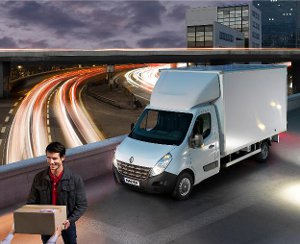
The Renault Master ECO is available in most popular body styles, including box van, panel van and chassis cab variants like tippers.

Renault has joined the low emission van club with a new version of the Master, the Master ECO. 

According to the manufacturer, the Master ECO uses up to 7% less fuel than its predecessor.

Commenting on the new package, which Renault says is aimed at cost-conscious operators (are there really still operators who aren’t cost conscious?), Nigel Butler, Renault Trucks Commercial Director, says:

“With significantly lower consumption, the new Renault Master ECO provides excellent fuel efficiency. The 100 and 125hp versions are already available and, with enhanced low rates of finance on LCVs, this is a fantastic offer.”

The practical Renault Master ECO is available in a wide range of body styles including panel van, chassis cab, crew cab, minibus and platform cab versions, with gross vehicle weights of 2.8 to 4.8 tonnes.

Front wheel drive models benefit from new air suspension, as well as a new radio and sat-nav system, but Renault didn’t go into specifics about how the fuel savings are achieved — perhaps revised gearbox ratios and low rolling resistance tyres?

Productivity is increased through improved payload and load space, with the Renault Master ECO panel van benefiting from up to 17m3 of usable volume and 2,254kg of payload; while the chassis cab version has a payload of up to 2,529kg.

Cheap finance

For a limited period, Renault Trucks Financial Services is giving customers the opportunity to take advantage of lower interest rates on all LCVs registered until 31st December 2012. A competitive range of finance offers includes three years at an interest rate of just 0.99%, which could save operators around £45 a month, four years at 1.49% and five years at 1.99%.

Citroën Trims Berlingo Emissions, Boosts Fuel Consumption

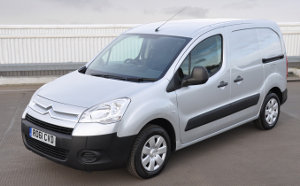
Citroen Berlingo 2012 modelCitroën has increased mpg on Berlingo Airdream models by up to 4.5%.
Continuous product development is a concept many companies pay lip service to but fewer actually deliver. In this case, Citroën seems to have come up with the goods, cutting CO2 emissions and increasing fuel consumption on its existing Berlingo Airdream models.

The Airdream models are the most fuel-efficient in Citroën’s range — the equivalent of VW’s Bluemotion models — but CO2 emissions have now been cut by between 2% and 5%, depending on the model you choose. Similarly, fuel consumption has been improved by between 2% and 4.5% on the combined cycle.

Unsurprisingly, the most-improved model is the e-HDi EGS6 L1 625LX – the short wheelbase, lower payload model with automated transmission. This now boasts CO2 emissions of just 118g/km and official combined fuel consumption of 62.8mpg.

Scott Michael, Citroën’s Head of Commercial Vehicles & Business Centre Programme, comments:

“The advanced Berlingo Airdream e-HDi micro-hybrid vans were already among the most fuel efficient and lowest CO2 emitting in their class.  With the latest improvements these vans now go to the top of their class thanks to fuel economy gains of up to 4.5% and CO2 emissions reductions of up to 5g/km.”

Ford Confirms Closure Of Southampton Transit Plant

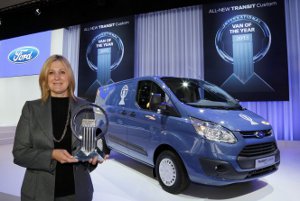
Ford Transit Custom International Van Of The Year 2013

The new Ford Transit Custom the first of four new commercial vehicles Ford plans to introduce over the next two years to overhaul its van offering.

Ford has confirmed that it is to close its UK Transit plant at Southampton and another UK manufacturing operation at Dagenham.

Following from yesterday’s announcement that it would close its plant in Genk, Ford has confirmed that its Southampton and Dagenham plants are also to close as part of a wide-ranging reorganisation intended to mirror the success of its North American reorganisation and return Ford Europe to profitability.

Ford Europe is currently expected to post a £930m loss in 2012.

What’s closing?

Ford currently makes Transit chassis cabs at its Southampton plant but the majority of Transits are now built in Turkey, and the Southampton factory only produced 28,000 vans last year — far below the normal capacity for such plants.

The closure at Dagenham will only affect stamping operations — the larger diesel engine plant at the same location will remain open.

Both Southampton and the Dagenham stamping facility will be shut in the next year.

Why’s it happening?

The European automotive industry is suffering from excess capacity. Ford’s plant closures are unlikely to be the last. As I’ve reported many times in recent months, demand for new vans has fallen since 2007. Similarly, Ford’s figures show that demand for cars in Western Europe has fallen by 20% over the last five years and Ford expects industry-wide sales to be flat, at best, next year.

Ford is losing money and needs to return to profitability — something it has already managed to do successfully in North America, where the car industry was suffering from a similar excess of capacity.

Unfortunately, it can make enough vehicles to meet demand with fewer factories than it has at present — and with no imminent sign of a major recovery, that’s what it’s going to do. Ford hopes it can limit redundancies to 1,100 by relocating 300 affected staff, but the closure will no doubt have a wider knock-on effect.

In France, the government has taken the opposite approach and offered Peugeot Citroen a £5.55bn state financing package on the basis that it puts back the planned closure of its Aulnay plant near Paris, which would save 6,500 jobs. However, this deal is not yet done and you could argue that it isn’t a great solution — more debt plus excess capacity isn’t likely to help Peugeot to return to profitability. What’s more, it is only three years since the French government last tried to bail out its car industry, when it provided Peugeot and Renault with €6bn of low-interest loans.

Given this, Ford’s sharp, decisive approach may well prove to be best in the long run, despite the job losses it will cause.

Ford Fiesta Van ECOnetic Wins Green Van Award

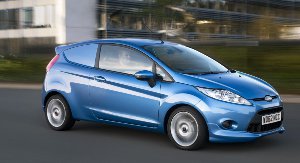
Ford Fiesta Van ECOnetic

The Ford Fiesta Van ECOnetic - Britain's greenest van?

Ford’s Fiesta Van ECOnetic is the winner of the Green Van category at this year’s British Insurance Vehicle Security Awards (BISVA), run by Thatcham. The Ford Fiesta Van has been awarded the top spot in the category for three years running.

The Green Van Award is given to the vehicle with the lowest CO2 emissions. With its lowered suspension, low rolling resistance tyres and a specially-calibrated Duratorq 1.6-litre TDCi engine, the Fiesta Van ECOnetic emits an ultra-low 87g/km CO2, while achieving 85.6mpg.¹

Peter Shaw, Chief Executive at Thatcham, said:

“Congratulations to Ford, who having won the ‘Green’ category with its Ford Fiesta Van for the last three years has proved that commercial drivers can do their bit for the environment, without compromising security.”

Anthony Ireson, Ford Britain marketing director, said:

“We are once again thrilled that Britain’s best-selling small van, the Fiesta Van, has maintained its position at the top of the ‘Green’ class. With the new Fiesta Van available in showrooms from early 2013, offering further driver assistance technologies and safety features, we hope to continue our award’s success next year.”

Ford has sold 2,525 Fiesta Vans in the UK for the year-to-date 2012, up from 2,407 for the same period last year. Prices start from £10,800. A number of van hire companies offer Fiesta vans for hire — although as I have discussed before, these small car-derived vans are not as popular as they used to be, with Peugeot and Renault having both discontinued their car-derived models (208 and Clio, respectively).

European Van Hire? You Need This 5-Point Checklist

EU flagTaking a hire van across the Channel (or North Sea) to Europe is surprisingly popular — a lot of people come to vanrental.co.uk looking for our European van hire page.
However, there are a few things you need to do to keep it legal and safe — and while most reputable hire companies will ensure you are properly prepared, it is always good to know what’s required for yourself.

In addition, if you are not familiar with driving on the wrong side of the road — especially in a van — then you need to take extra care.

Here’s a simple 5-point checklist to run through when arranging European van hire:

1. To use a hire van abroad, you need a VE103B Vehicle On Hire certificate, which proves that you have the hire company’s permission to take it out of the UK. You must have one of these and it must be an original — not a copy. More info here.

You will also need to know the van’s dimensions (height and length) when booking your ferry — make sure you ask the hire company.

2. You may also need extra insurance — check with the van hire company that their insurance provides cover in the countries you plan to visit. Most rental companies provide European breakdown cover as they don’t want their vans stranded abroad, but check — you may need to pay for it yourself. If the van doesn’t have a modern EU-style licence plate with the blue GB section, you will need a GB sticker (click  here for details).

3. Be aware of country-specific requirements. These include the need to carry a basic breathalyser in France and two reflective warning triangles in Spain. Many European countries require you to carry reflective yellow vests (hi viz) for use if you are forced to exit the vehicle after a breakdown or accident.

For a full, up-to-date guide, check the AA’s guide to compulsory equipment when driving in Europe.

4. Make sure you have maps or a sat nav that cover the areas you will be driving through. Remember that speed detectors and speed camera POIs on sat navs are illegal in some European countries. Leave your speed camera detector at home and switch off your sat nav POIs.

Don’t overestimate how far you can get in one day — driving distances tend to be longer than in the UK. Google Maps and The AA provide good European route planners.

5. Finally, take care when your are driving abroad. Make sure mirrors are adjusted carefully as this will help compensate for the different visibility you get when driving on the ‘wrong’ side of the road. Remember at all times you should be driving on the right: although it’s not difficult, it’s all too easy to get this wrong in a moment of carelessness.

The secret is concentration and what I call ‘driving deliberately’ – your driver’s autopilot might be ok in the UK, but it won’t work in Europe. Never just hop into the van and scoot away whilst carrying on a conversation or thinking about something else. Stop for a second, visualise your path onto the road/across the junction, and drive deliberately into the right position on the road.

After all of that, try to enjoy the experience — driving in Europe is generally more fun than driving in the UK and you can often see some amazing scenery on much less congested roads!

Volkswagen Adds New Models To Caddy & Transporter Ranges

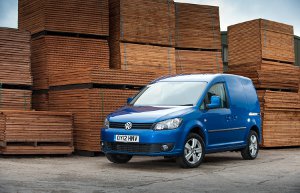
Volkswagen Caddy Highline

Volkswagen Caddy Highline

Volkswagen has added Highline and Trendline models to its Transporter (medium van) and Caddy (small van) ranges. The main benefit of this is that you get a bundle of attractive options at less than the individual list price for the options.

The Trendline is the lower spec of the two and comes includes the following extras.

Caddy Trendline: Bluetooth connectivity, an upgraded CD/radio with ParkPilot display for rear parking sensors, cruise control, electric windows, height adjustable passenger seat, heated and electrically operated door mirrors, storage compartments under the front seats, vanity mirrors in the sun visors and a cover for the dashboard centre storage compartment.

Externally, the Trendline is enhanced with wheel trims and body-coloured bumpers, door mirrors and door handles.

The Caddy Trendline includes specification worth up to £1,555 (plus VAT), but only costs £900 (plus VAT) more than the standard model.

Transporter Trendline: Upgraded CD/radio with ParkPilot display and AUX-IN socket, Bluetooth, trip computer and multifunction display, cruise control, full bulkhead (panel van), driver’s seat armrests, Comfort pack and Premium dashboard, Tasamo cloth upholstery, wheel trims, rear parking sensors and body-coloured bumpers, door mirrors and door handles.  Kombi Trendline models also have privacy glass plus armrests and height and lumbar adjustment for single passenger seat.

The Transporter Trendline costs an additional £1,100 for the panel or £1,250 for the kombi, representing savings of £750 and £800 respectively against the actual value of the added specification.

Highline models: The Highline spec for both Caddy and Transporter includes all the Trendline enhancements, plus Climatic air conditioning, a leather-covered steering wheel and gear knob, alloy wheels, front fog lights and an alarm (Thatcham approved on the Transporter).

Trendline and Highline will no doubt be popular with owner-drivers as they represent a good value way to get a fully-loaded spec.