Category Archives: Van News

News and articles about UK vans – especially information relevant to the van hire market. Coverage of new van model launches from all the major manufacturers – Ford, Mercedes, Volkswagen, Peugeot, Fiat and Citroen.

UK CV Manufacturing Stalls As Car Output Rises

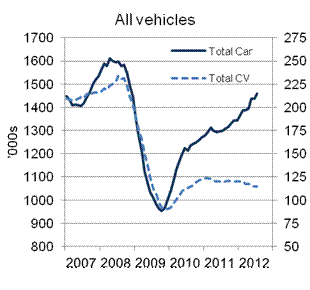
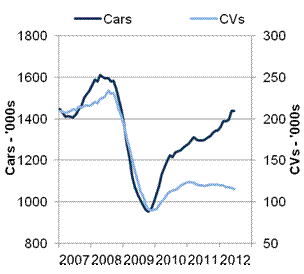
UK Car and CV factory output, 2007-2012 (August 2012, courtesy of SMMT)

UK Car and CV factory output, 2007-2012, courtesy of SMMT

UK Van manufacturing is slumping as domestic and export demand evaporates.

The UK’s vehicle manufacturing industry is larger than many people realise.

In July, 128,886 cars and commercial vehicles were made in the UK, with 941,098 having been made so far this year, according to the latest figures from the Society of Motor Manufacturers and Traders (SMMT).

In addition, more than 1.5 million vehicle engines have been made in UK factories so far this year.

Both export and home demand for British-made cars rose in July; so far this year, home demand is up 21.2% and export demand is up 13.9%.

British cars are in demand…

The good news is that global demand for cars made in the UK — like the new Range Rover Evoque — is climbing. Jaguar Land Rover’s Halewood factory has just moved to a 24-hour shift system to meet demand for the Freelander 2 and Evoque models and the company’s sales rose by 34% in the second quarter.

Other British car manufacturing success stories can be found at Toyota’s Derby factory, Nissan’s Sunderland factory and BMW’s Oxford factory, where the MINI is built.

…British vans are not

Unfortunately it’s not such a bright story for vans. Although some popular van models are built in the UK, no one is buying them at present.

The CV industry in the UK is much smaller than the car industry and has a greater focus on the UK market. Of the 65,100 CVs built in the UK so far this year, 40% were destined for the home market, compared to only 18% of cars. This means that van output is far more sensitive to local economic conditions than the car output, especially as many vans are owned by small businesses that tend to postpone major expenditure during lean periods.

The two main commercial vehicle factories in the UK are Vauxhall’s Luton plant, where the Vivaro is made, and Ford’s Southampton plant, where some Transit variants are built. The trouble is, while these both remain extremely popular models, UK commercial vehicle factory output is down by 7.7% so far this year, with export demand down 6% and home demand down by 10.2%.

Although home demand rose by 16% in July — a somewhat suspicious result — even that wasn’t enough to prevent an overall decline of 1.3% last month.

The graph about highlights how car and CV manufacturing has diverged since 2009 — and I don’t see much prospect for improvement until the UK sees some meaningful economic growth.
Mercedes Celebrates 105 Years of Four-Wheel Drive

It’s been 105 years since Mercedes-Benz introduced the first commercially-available 4×4. Since then, it’s produced some superb 4×4 commercial vehicles, including the legendary Unimog.

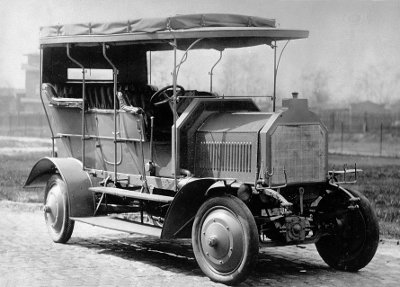
In 1907, four-wheel drive was virtually unheard of and certainly not a standard production option — until Mercedes-Benz (or Daimler-Motoren-Gessellschaft, as it was then) introduced the Dernburg-Wagen, the world’s first commercially-available four-wheel drive vehicle.

Not only did it have four-wheel drive, it also had four-wheel steering, something that’s still considered high-tech (if a little eccentric) today. With ground clearance of 32-centimetres and a 6.8-litre, four-cylinder engine developing a modest 35 hp at 800 rpm, the Dernburg-Wagen was a serious piece of kit and could carry five passengers. Solid steel wheels wrapped in pneumatic tyres helped protect the drum brakes from debris.

Since then, Mercedes has produced a succession of superb four-wheel drive vehicles, many of which are aimed at the commercial market. Let’s take a pictorial look down memory lane at some of the finest 4x4s ever made:

Mercedes-Benz Dernburg Wagen - first ever four-wheel drive vehicle

This is how it all started. The Dernburg-Wagen was the first commercially-available 4x4 model when it was introduced in 1907.

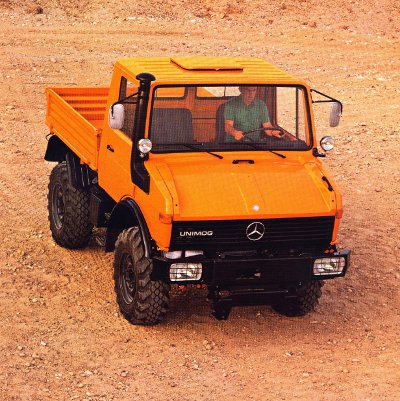
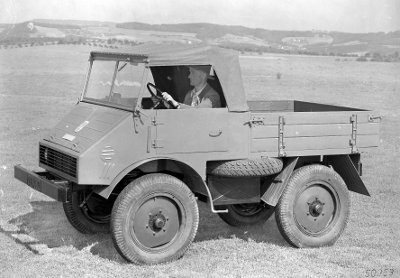
An early Mercedes-Benz Unimog

Early versions of the Unimog were somewhat agricultural in terms of creature comforts, but their off-road abilities, pulling power and toughness were never in question.

Mercedes-Benz Unimog

The Unimog soon got bigger and better...

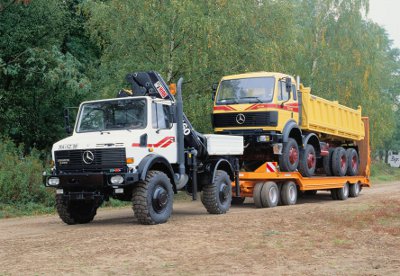
Mercedes Unimog towing trailer with 32-tonne lorry

Don't make the mistake of thinking that the Unimog is just an overgrown pickup -- it's not, as this picture of it pulling a 32-tonne tipper shows.

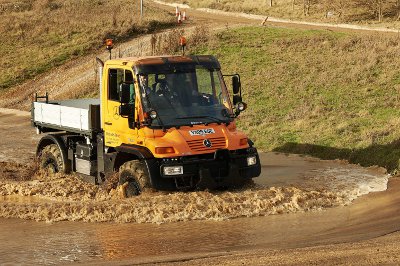
Mercedes-Benz Unimog

The latest Unimog is more capable and technically-advanced than ever, but they still haven't ditched that orange paint!

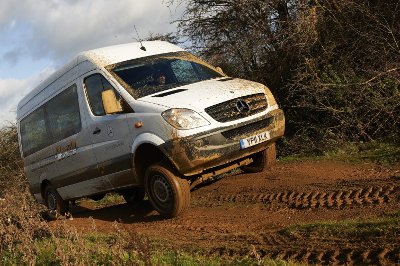
Mercedes-Benz Sprinter 4x4

White van man's ultimate ride? The Sprinter 4x4 is surprisingly capable off road and doesn't sacrifice any of the practicality of the standard van. I want one...

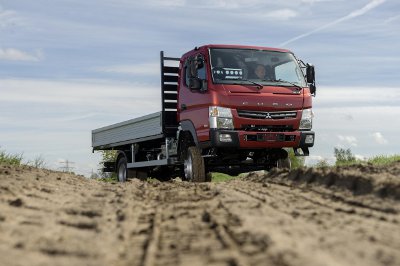
Fuso Canter 4x4

Merc's adopted Japanese cousin hasn't been left out either. The Fuso Canter was already a great workhorse, and the recent addition of a 4x4 option made it even better.

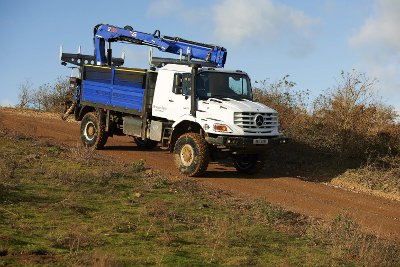
Mercedes-Benz Zetros

Finally, for when a Unimog simply isn't enough... The Mercedes-Benz Zetros is even bigger and more awesome. It offers gross weights of up to 27t combined with genuine off-road ability.

What’s your all-time favourite 4×4? Leave a comment below and let me know.

New Van Registrations Jump 10.2% In July – But Really?

New van registrations leapt by 10.2% in July according to the SMMT — but are the numbers all they seem to be?

After months and months of declines, new van registrations jumped by a fairly astonishing 10.2% in July, according to the latest monthly figures from the Society of Motor Manufacturers and Traders. The news provoked some speculation on Twitter about how such a dramatic reversal was possible, given that the economy hasn’t improved.

Contract hire specialist (and legendary self-promoter!) Ling Valentine reckoned it was down to a boost in pre-registered vans, while another commentator tweeted that the boost was due to a huge delivery of new vans to Royal Mail plus a couple of other fleet deals — leaving retail figures broadly unchanged (not good…):

What About The Numbers?

On the face of it, the SMMT van and truck registration figures for July are pretty good:

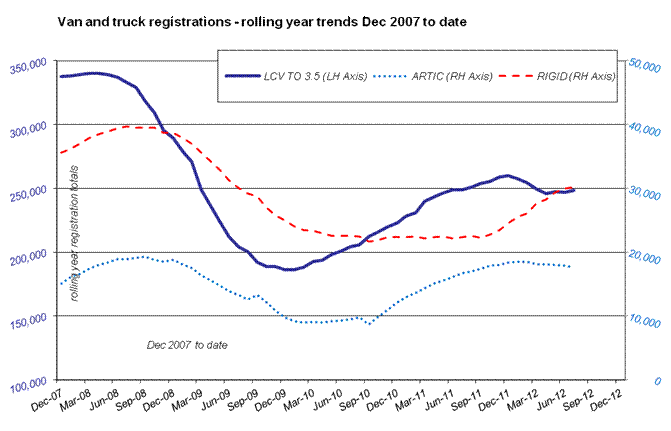
  • Commercial vehicle registrations (vans and lorries) up 8.1% in July and up 2.9% on a rolling year basis
  • Van registrations up 10.1% in July and stable at -0.1% on a rolling year basis
  • Truck registrations came in at -2.2% in July but are up 22.4% on a rolling year basis, after many strong months

Here’s what it looks like on a graph — the solid dark blue line represents vans:

SMMT Commercial vehicle registrations 2007-2012

SMMT Commercial vehicle registrations 2007-2012 (courtesy of SMMT)

Next month’s figures should give a more accurate idea of whether this is a one-off event boosted by pre-registered vehicles and big fleet deals or a genuine change of trend. Personally, I don’t see why the van market would suddenly improve, given the state of the economy — but stranger things have happened.

Watch this space…

Fiat Extends Tecnico Series With New Ducato & Doblò Versions

Fiat Ducato Tecnico

Fiat Ducato Tecnico

Earlier this year, Fiat launched the Ducato Tecnico model, a new version of the popular Ducato panel van based on the Ducato 35 Van 2.3 Litre 130 MultiJet II LWB HR (L3H2).

Such has been the popularity of the original Ducato Tecnico, which is generously specified for the price, that Fiat has introduced two new Tecnico models.

Ducato Tecnico

The Ducato Tecnico range now includes two models — SWB and LWB:

  • Ducato VAN 30 L1H1 130 MultiJet II Tecnico (£13,995.00 OTR excluding VAT)
  • Ducato VAN 35 L3H2 130 MultiJet II Tecnico  (£16,995.00 OTR excluding VAT)

The Ducato Tecnico spec includes air conditioning, front fog lights, Blue&Me with steering wheel controls, TomTom predisposition on the dashboard, B&M TomTom Live navigator plus cradle, Start&Stop, special wheel trims, reverse parking sensors and eco:Drive Professional software at a competitive price.

Fiat says that these promotional prices provide customers with a saving of up to £10,9001 off the basic list price.

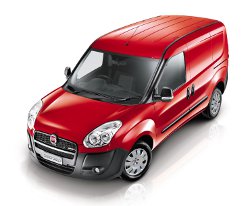
Doblò Cargo

Fiat Doblo Cargo Tecnico

Fiat Doblo Cargo Tecnico

Fiat Professional is also extending the availability of the Tecnico version to the award-winning Doblò Cargo in both standard and long wheelbase versions.

Doblò Cargo Tecnico versions are based on the SX version so the additional standard equipment includes air conditioning, Blue&Me with steering wheel controls, TomTom predisposition on the dashboard, B&M TomTom Live navigator plus cradle, Start&Stop, reverse parking sensors and eco:Drive Professional software.

The front fog lights and special wheel trims included in the Ducato Tecnico spec are standard on the Doblò Cargo SX trim level, so aren’t listed above, but are included.

Doblò Cargo Tecnico versions are available to order in all pastel colours and for an additional £100.00 customers can order the Doblò Cargo Tecnico in metallic paint.

Promotional prices for the Doblò Cargo Tecnico are as follows:

  • Doblò Cargo Tecnico 1.3 MultiJet II 90hp (£10,495.00 OTR excluding VAT)
  • Doblò Cargo MAXI Tecnico 1.6 MultiJet 105hp (£11,995.00 OTR excluding VAT)

As with the Ducato Tecnico versions, the new Doblò Cargo Tecnico versions provide customers with big discounts on list prices, offering a potential saving of up to £6,3002 off the basic list price.

Citroën Extends 4-Year Free ‘Business Class’ Van Offer

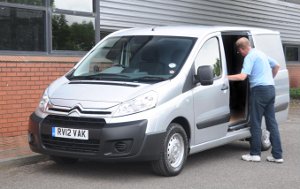
Citroen DispatchCitroën has extended its ‘Upgrade To Business Class’ package, which is available at no cost and includes a 4-year servicing and extended warranty deal.
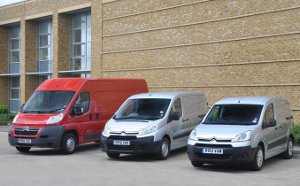
The business class package, which I previously mentioned in June, was previously on offer until the end of July but has now been extended to “for the foreseeable future”, according to a press release issued by Citroën today:

Now the ‘Upgrade to Business Class’ package will continue to be available to qualifying customers on all new Citroën LCVs supplied by participating Citroën dealers and Business Centres for the foreseeable future.

The no-cost Citroën ‘Upgrade to Business Class’ package includes:

  • 4 years/60,000 mile servicing (whichever comes first), allowing customers to have their LCVs serviced annually over this period
  • 4 years Citroën Assistance (provided by the AA), with Roadside Assistance, At Home Assistance, Recovery, Onward travel and European cover
  • Warranty extension to 4 years/120,000 miles (whichever comes first)

Scott Michael, Citroën’s Head of Commercial Vehicles & Business Centre Programme, commented:

“Citroën takes its responsibilities seriously in the matter of reducing the whole life costs of its award-winning LCV range. The continuation of the innovative ‘Upgrade to Business Class’ package means we can continue to provide our customers with long-term economic benefits. This is coupled with other cost reduction and enhanced efficiency benefits introduced this year as part of the ‘Citroën Vans – Business Class’ initiative, which puts Citroën even further ahead of its competition.”

vanrental.co.uk says:

Presumably Citroën is suffering from falling new van sales as badly as most other manufacturers — this no-cost deal seems attractive for tradesmen and low-mileage SMEs and could help swing a few more sales Citroën’s way.

Citroën Adds Enterprise Pack Option To Berlingo, Dispatch & Relay

Citroen Relay, Dispatch and Berlingo Enterprise models

The Citroen Relay, Dispatch and Berlingo are now available with an optional Enterprise pack

Citroën already makes an Enterprise version of its popular vans, but it is now going to give buyers of other models the choice of an optional Enterprise pack.

The new Enterprise Packs are available on Berlingo LX, Berlingo XTR+, Dispatch and Relay panels vans.

Priced from just £600 + VAT, Enterprise Packs include rear parking sensors, Connecting Box (Bluetooth® & USB port) and air conditioning.

The Enterprise Packs can save customers up to £420 + VAT compared with specifying the individual options. The pack prices also reflect the price differential between the existing stand-alone Enterprise models and the model on which they are based.

Scott Michael, Citroën’s Head of Commercial Vehicles & Business Centre Programme, comments:

“Thanks to their high specification and competitive pricing, Enterprise versions of the Nemo, Berlingo, Dispatch and Relay vans have proved very popular. These optional Enterprise Packs represent fantastic value for money and enable our LCV customers to further enhance the safety, driver comfort and communications of other Citroën vans to the same high level.”

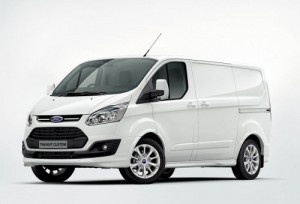
Ford Transit Custom Enters Production

Production of the new Ford Transit Custom and Tourneo Custom models is now underway at the Brentwood-based firm’s Turkish factory.

The new Ford Transit Custom is now in production

The engines for the new models are made at Ford’s Dagenham plant. Both models are powered by Ford’s latest 2.2-litre Duratorq diesel engine, which comes in 100PS, 125PS or 155PS versions and offers class-leading fuel consumption of 42.8mpg (Transit Custom) and 43.5mpg (Tourneo Custom).

The arrival of the Transit Custom van and Tourneo Custom people mover marks the first step in a complete transformation of Ford’s global commercial vehicle range by the end of 2013.

“The Transit Custom is a completely new kind of one-tonne vehicle from Ford,” said Stephen Odell, chairman and CEO, Ford of Europe. “This is a stylish, modern van that customers will be proud to have on their driveway, with the hard-working attitude that they expect from a Transit.”

“The Tourneo Custom is a fantastic-looking people mover – inside and out. It offers outstanding day-to-day, real world practicality as well as being great to drive,” added Odell.

The new Transit Custom sits between the smaller Transit Connect and the larger Transit van in Ford’s commercial vehicle line-up; and is also offered as an eight- or nine-seat people-mover, the Tourneo Custom.

The chassis dynamics have been developed to offer a rewarding driving experience in both models, while car-like interiors and stylish modern exteriors are aimed at broadening the iconic Ford Transit appeal.

UK Van Manufacturing Depends On Exports – Home Sales Falling

Commercial vehicle production figures for the first half of this year show that the UK is making fewer vans and trucks, and more of them are being exported.

The UK’s commercial vehicle manufacturers are increasingly dependent on export markets for their survival.

In June, home sales of UK-made vans and trucks fell by 45%, reducing reducing the market share of British-built CVs to 37.2%.

Exports rose by 12.2%, absorbing some of the slack and taking exports up to 62.8% of total production. By my reckoning, that translates as an overall reduction in production, something that has been the trend throughout the last two years, as this graph shows:

Graph showing UK car and CV output, rolling year totals

CV (commercial vehicle) production has failed to keep up with the recovery in car production.

Year to date

Looked at over the longer period of the first half of this year, the picture looks even more bleak. Overall production of commercial vehicles in the UK has shrunk by 8.7% so far this year, with exports falling by 4.9% and home sales dropping by 14%.

It’s worth noting that car production is doing much better and rose by 14% in the first half of this year. Total UK car production so far this year is 756,116, while van production is just 56,096 — so the increase in car volumes more than compensates for shrinking van volumes.

Who makes vans?

The two biggest commercial vehicle manufacturers in the UK are Ford and Vauxhall. Ford’s Southampton plant makes some Transit variants, while Vauxhall’s Luton factory manufacturers the ever-popular Vivaro medium van.

There are a number of other smaller manufacturers of more specialist vehicles.

What’s next?

I have long believed that vans registrations are a barometer of the overall health of the economy. New van registrations have fallen more or less continually throughout this year.

The decline in commercial vehicle sales — especially vans — is indicative of the fact that the UK economy has not really recovered from the 2008/9 downturn and is some way from doing so. Van registrations have remained much lower than they were before the recessions, despite a growing shortage of decent quality second-hand vans.

It all adds up to a pretty bleak picture.

Warwickshire Fire & Rescue Gets New Command Support Unit

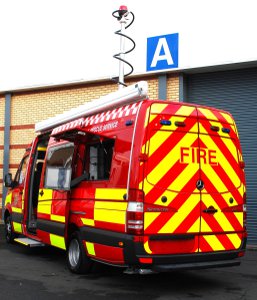
Warwickshire Fire & Rescue Command Support Unit

Warwickshire Fire & Rescue's MacNeillie Command Support Unit

Warwickshire Fire & Rescue Service has taken delivery of one of specialist converter MacNeillie’s command support units, which are designed to provide a centralised command and communications facility for major incidents. The unit will be deployed by Warwickshire Fire & Rescue whenever five or more fire appliances are called to an incident.

Warwickshire’s new unit looks broadly the same as the Sprinter conversion taken by Merseyside Fire & Rescue last year, so it could be that this model is becoming a favourite with UK Fire & Rescue services. MacNeillie is also active in the defence industry, with models such as this one.

All systems are fully integrated within the compact overall dimensions of an extra long wheel base high roof Mercedes Sprinter 515 CDI XLWB panel van.  In transit mode, the vehicle can carry a crew of up to five, with the three rear cabin seats being suitable for forward facing travel – or swivelled for use at workstations.

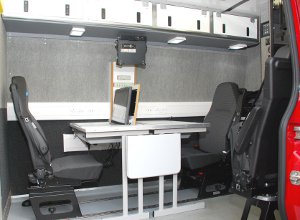
The control room area is fitted with two fully equipped IT desk and screen display positions down the offside of the vehicle.  A full height 19” rack is installed on the nearside of the vehicle, which carries all the electronics required to run the CSU functionality.  An adjacent half height 19” rack houses the computer systems required to operate further functionality within the vehicle.

MacNeillie Sales and Business Development Manager, Phil Peel says:

“The systems and technology which we are now able to build into these units significantly enhances incident management and communications capability, as well as enabling critical decisions to be made with much better and more detailed levels of real-time information.  In addition, the unit can act as a central co-ordinating hub for inter-agency and external communications channels which might be required, particularly during the emergency stages of a major incident.”

Inside the MacNeillie CSU are full IT and comms facilities

Inside the MacNeillie CSU are full IT and comms facilities

A robust, heavy duty awning system is fitted to the nearside of the vehicle extending rearwards from the cab door.  When erected, it can be enclosed with separately attached side, front and skirt panels to create a 4.6m x 3.0m external briefing area.

A 40” external display screen is mounted on the nearside of the vehicle within the awning area and an adjacent fold-out workstation is available for the Incident Commander if required.

The unit can be fully self-sufficient in operation and carries an 8.0kW mains generator set, which is capable of running all onboard systems and equipment.

Input provision for external power is also included via a fully protected mains distribution board.  The rear doors open to reveal a generous equipment compartment, the roof section of which is reinforced to carry a satellite dish if required.

Apart from normal audio visual warning and conspicuity equipment, the unit also carries a public address system.  Externally, the communications antennae, for VHF, Airwave and 3G, are mounted on a 1.8 metre extendable Clark mast, together with a red / white incident control beacon.

Toyota To Sell Rebadged PSA Vans In Europe

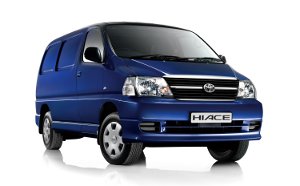
Toyota Hiace

Toyota Hiace panel van - discontinued in the UK from 2012

Back in January, I lamented the passing of the Toyota Hiace, puzzling over why Toyota had claimed to have no suitable Euro 5 engines, when clearly it did.

The answer may now be clear — the Japanese company will be selling rebadged PSA Peugeot Citroën vans in Europe from mid-2013. The new van will be based on the Citroën Dispatch / Peugeot Expert — near enough a direct replacement for the Hiace.

The agreement also includes collaboration on next generation vehicles which are to be produced by PSA Peugeot Citroën.  The collaboration is expected to last beyond 2020.

Toyota Motor Europe will participate in the development and industrial investment costs for the next generation product. There are no plans for the two companies to enter into capital tie-ups or joint production.

Toyota Motor Europe President and CEO, Didier Leroy:

“The Light Commercial Vehicle segment is an important one for us in many markets throughout Europe. By joining forces with PSA Peugeot Citroën, we have found a good solution for our loyal customers following the recent discontinuation of our own Hiace model.  We already enjoy a successful joint-venture partnership with PSA Peugeot Citroën in the small car segment and they are a leader in the European light commercial vehicle market, with a solid reputation for quality and versatility.”

As mentioned above, PSA and Toyota already collaborate in the small car segment — the Peugeot 107, Citroën C1 and Toyota Aygo are all the same car.

Not the real Hiace

The tie-up probably makes sense for Toyota, as it will no longer have to produce a separate version of the Hiace for European markets.

The bonneted Hiace model (pictured above) that was sold in European markets is a special European design — the standard Hiace is a cabover configuration (here’s a picture on Toyota’s Australian website). This model is the ‘real’ Hiace and sells well in Asia, the Middle East and Africa but is not acceptable in Europe — as far as I can tell, because it doesn’t comply with our crash test requirements (but I stand ready to be corrected).

Update: The European model Toyota Hiace was built at Toyota’s Ovar factory in Portgual. According to this article on Just-Auto.com, just 152 have been built so far this year and only 304 were built in 2011. It looks like the time had come for the Euro Hiace to make a dignified exit.