Category Archives: Van News

News and articles about UK vans – especially information relevant to the van hire market. Coverage of new van model launches from all the major manufacturers – Ford, Mercedes, Volkswagen, Peugeot, Fiat and Citroen.

Transit Retains ‘Most Stolen Van’ Title

Ford Transit Super Sport Van - Transits are the most stolen van in Britain

The Ford Transit is the most stolen van in Britain

The Ford Transit has retained its status has the most stolen van in the UK (click here for last year’s results).

Coming in second was the Land Rover, followed by the Mercedes-Benz Sprinter and then the Volkswagen Transporter.

HPI’s hit rates for stolen vans tell the story – 17.6% of Ford Transits that undergo a HPI Check turn out to have been stolen, compared to 11.8% of Mercedes Sprinters and VW Transporters.

The Ford Transit is also most likely to have been involved in an accident and written off, too.

A whopping 15% of Transits that undergo a HPI Check are found to have been previously written-off as a total loss by an insurance company. This figure is much higher than for any other van – the next highest van on the list is the Volkswagen Transporter, with 8% of those checked having been written-off by an insurance company.

It all adds up to a stark warning – if you are buying a used van, use the HPI Check service to make sure that the van is not stolen, has no outstanding finance (another common problem) and has not been written-off by an insurance company.

Source: Fleet News

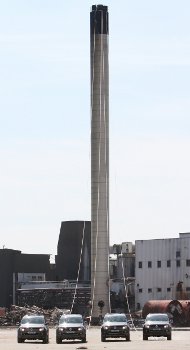
Volkswagen Amarok Roks On, Topples 140 Tonne Chimney

Volkswagen Amarok pulling down chimneySorry, but with a name like Amarok, what does VW expect?

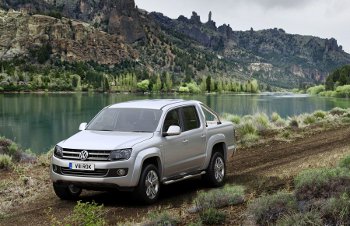
In case you have not heard of it, the Amarok is the latest 4×4 luxury crew-cab pickup to enter the market. Beloved status symbols of small business owners all over the UK, these large pickups do have some practical uses, too.

They are great tow vehicles, they work off road and you can carry about 1 tonne in the back while still seating 5 in comfort. On the other hand, the load beds aren’t that big, thanks to the double cab.

If you are Volkswagen, you can also use four of them to demolish 140 tonne chimneys in Reading, too.

The stunt, which took place back in May, was part of VW’s publicity campaign for the launch of the Amarok.

Four 200m lengths of rope were rigged to the top of the chimney and attached to the towbars of four standard Amarok pick-ups, each with Volkswagen’s latest four-cylinder, 2.0-litre TDI engine producing 163 PS of power. For this demonstration they were fitted with a ‘quick release’ safely mechanism for the towing ropes, ensuring the safety of the stunt drivers in the unlikely event of the structure falling in the wrong direction.

Engines Keep Getting Smaller

On a more serious note, one of the interesting things about the Amarok is its 2-litre diesel engine. It is, I believe, the same unit that will be used in VW’s new Crafter large van and as a result, both vehicles can claim the unusual distinction of having the smallest engines in their class.

Volkswagen Amarok

As with the Crafter, the most powerful (163PS) engine specification utilises two turbochargers to provide oodles of torque and power without requiring excessive revs (a chimney-toppling 400Nm of torque is available from 1500-2000rpm on the 163PS model).

At the same time, the engine’s modern design and diminutive capacity (for a vehicle with a 5,500kg gross train weight) mean that its emissions will be relatively palatable for a commercial vehicle – 199 g/km of CO2 for the 122PS version and 209 g/km of CO2 for the 163PS model.

Iveco Prepares To Launch New Daily Van

Iveco will launch the latest version of its Daily van in September 2011. The model is one of a long line of Dailys, 2 million of which have been sold to date. Dailys have always been reasonably popular at the large end of the van rental market, so regular hire van users are likely to end up driving one sooner or later.
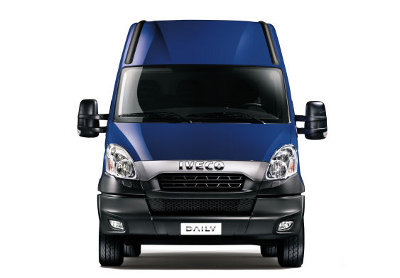
Iveco Daily new 2011 model

Engines

As usual at present, most of the new features in the van relate to engines, emissions and safety.

Two diesel engines will be available with the new Daily – a updated version of the current 2.3l Multijet model, which now generates 320Nm of torque, and a new 3 litre model with twin turbochargers, 205bhp and a massive 470Nm of torque. Between them, the engines offer something appropriate for every use and weight – the Daily has long been the heaviest of vans, with maximum weights from 2.8t to 7.0t.

Both engines meet Euro 5 standards and heavy duty models meet the higher EEV (Enhanced Environmentally-Friendly Vehicle) standard, currently the most stringent of the European emissions standards (it is basically a halfway house to Euro 6, which is coming soon).

Iveco have managed to avoid introducing the unpopular AdBlue-based SCR (Selective Catalytic Reduction) system and is using an updated EGR (Exhaust Gas Recirculation) system combined with a DPF (Diesel Particulate Filter) to manage exhaust emissions.

Safety

Built on a seperate chassis, Daily vans are essentially small lorries that have been engineered down to a van, rather than a light van that’s been beefed up, as is the case with some smaller van models on the market. It’s heavy duty, rear-wheel drive nature suits it to a variety of uses, including heavy towing and other demanding work. Some of its new safety features reflect this and are aimed squarely at maximum weight and towing usage scenarios.

The new Daily will come with a bewilderingly large array of safety features, each of which has its own acronym. I quote from Iveco’s press release:

Standard equipment also features the new ESP 9 safety system with active sensors and comprises ABS (ant-lock brakes), EBD (electronic brake force distribution), ASR (traction control), MSR (engine speed management to control engine over-run braking), ESP (stability control), HBA (hydraulic brake assist to ensure emergency braking is as effective as possible), Hill holder, LAC (load adaptive braking control), TSM (trailer sway mitigation), HRB (hydraulic rear wheel brake boost), HFC (hydraulic brake fade compensation), RMI (roll movement intervention) and ROM (roll over mitigation).

Cab Comforts

The cab has been updated in the new Daily and the van’s standard specification now includes an adjustable steering column and an increased range of adjustment for both driver and passenger seating.
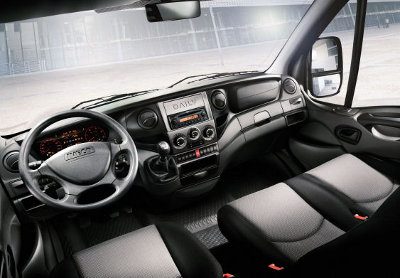
Iveco new Daily - cab interior

For those unfamiliar with the brand, Iveco is part of the Fiat Industrial company and is the brand used for Fiat’s vans, lorries and coaches.

Volkswagen Launches New Crafter Van

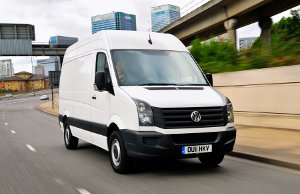
Volkswagen Crafter vanVolkswagen has just launched the new version of its Crafter van. The Crafter is VW’s largest van and has never been as popular in the UK as the Mercedes-Benz Sprinter, despite the two vans being built in the same factory and being very nearly identical, except for having different engines.
The engine appears to be the biggest difference again – VW has replaced the 2.5TDi engine that was previously used in the Crafter with the same 2.0l, 4-cylinder engine that is used in the VW Transporter.

VW says that the engine has been retuned for use in the Crafter so that it provides more torque at lower engine speeds, reducing wear and tear and improving the driving experience. The new engine will be available with approximately the same power levels as the 2.5l unit it replaces – 109PS, 136PS, 143PS and 163PS.

Despite this, the engine will meet not just Euro V emissions standards but the EEV (Enhanced Environmentall Friendly Vehicles) standard, which is something of a halfway house between Euro V and Euro VI. VW says that in Bluemotion trim, the Crafter’s CO2 emissions will start from just 199g/km, very impressive for a large van.

Fleet News was impressed with the new Crafter when they drove it recently and it will be interesting to see if it makes any further headway against the Sprinter, especially in the van rental market.

VW’s official fuel consumption figures look impressive; the 109PS engine is expected to be the most popular and should provide an 11% improvement in fuel consumption on the outgoing model, according to VW’s figures for the combined cycle. Whether it will gain market share against the Sprinter and Iveco Daily is another question.

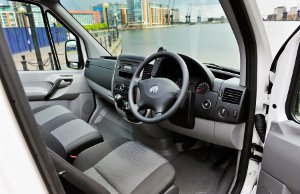
Volkswagen Crafter cab interior

The new Crafter's cab - a very nice place to spend time

Mercedes has a powerful brand advantage – the Sprinter’s reputation is legendary, as is the mileage some Sprinter engines reach. One concrete advantage the Sprinter has always had has been its low maintenance chain cam engine.

VW has always favoured a cambelt-driven engines meaning that the belt requires periodic replacement, as with most car engines. However, maintenance intervals keep getting longer on all vehicles and VW says that owners can opt to run the new Crafter on LongLife oil – meaning service intervals of up to 25,000 miles or 24 months, depending on how the van is used.

Update: In what is perhaps a deliberate move to try and break into the 3.5t fleet market currently dominated by the Sprinter, VW has announced that it will be making 80 Crafters available to large fleet customers for an extended six-month ‘try before you buy’ demo period. These vehicles will be in addition to VW dealer’s regular demo vans. Full details on Fleet News.

The Nottingham Band That Was Born In A Van

Nottingham band The Barnum Meserve had its origins in the van that singer Leon Wiley used to live in between stints working offshore on an oil rig. Readers from the East Midlands may remember going to see them at Nottingham‘s Rock City and Junktion 7 venues before the band split in 2005.

The band is back together now and finalising plans for its debut album – although they are still searching for a record deal. In the meantime, I suspect The Barnum Meserve will be doing as much gigging as possible – perhaps with the help of a hired splitter van.

The band’s music was recently used in the BBC documentary ‘An Abuse Of Trust’ and you can hear some of its latest songs and see the video for the band’s single ‘Broken Window’ on its Myspace page.

For more information on band van hire, click here.

Volkswagen Launches Ultimate Transporter

Van specifications are rising continually, to the point where they come close to many car spec levels. Electric windows, air conditioning, decent stereos (and soundproofing so that you can hear them), comfortable, multi-adjustable seats – the list is endless.

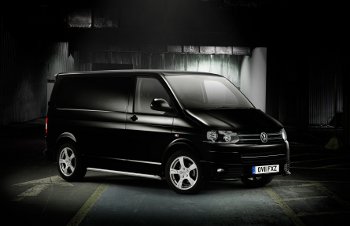
Volkswagen Transporter SportlineThat’s obviously not enough for some van buyers, however, as several manufacturers now offer top-specification van models with sports trim. Vauxhall has offered the Sportive trim level on its vans for several years and Ford went further with a limited edition Transit SportVan.
Volkswagen has joined the party too and has recently launched an updated version of its Transporter Sportline, which offers car-like performance and specification:

  • 2.0-litre BiTDI 180 PS diesel engine
  • Choice of six-speed manual or 7-speed DSG automatic gearboxes (the latter is usually found in Audi & VW cars)
  • Colour coded bumpers and upgraded exterior trim, including a roof spoiler, stainless steel side bars and smoked rear lights
  • 18-inch Sportline 5-spoke alloy wheels
  • Air-conditioning, a combined multimedia and sat nav system that’s controlled by a 7-inch touchscreen
  • ABS, Electronic Stabilisation Programme (ESP) and Electronic Brakeforce Distribution (EBD)

The result is a very desirable van from a driver’s point of view, although the combination of high-powered engine and 18-inch low profile tyres is likely to mean that both fuel and tyre bills are higher than you would expect on a van of this size. Still, it will be fun and should not be a big problem for low-mileage users.

The Transporter Sportline is available in both panel van (SWB and LWB) and Kombi versions – visit Volkswagen’s UK van site to learn more.

Ford Launches Transit SuperSportVan At NEC

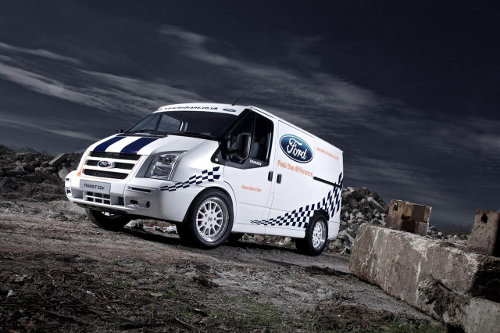
Ford has a proud tradition of producing one-off high performance versions of the Transit – now it has done it again with the Transit SuperSportVan.

Ford Transit SuperSportVan

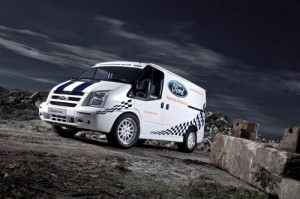
The Transit SuperSportVan( SSV) is basically a production short wheelbase Transit Sport Van with the addition of the 200PS, 3.2 litre TDCi diesel engine that is usually only fitted to the largest, heaviest Transits. Add a custom paint job and pretty much all the extras on the option list, and you have the Transit SSV*.

The SSV is on display at the Birmingham NEC this week, as part of Ford’s contribution to the Commercial Vehicle Show.

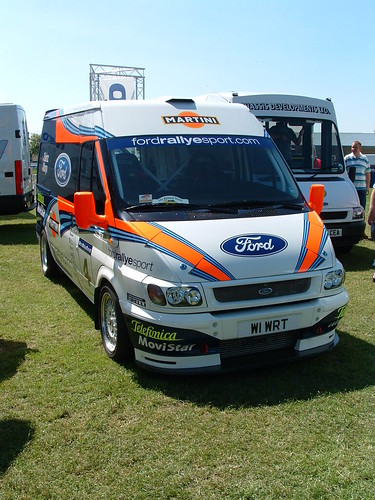
The Transit SSV is the fourth such Transit that Ford has built over the years – the most recent was a Ford World Rally Transit, which came complete with a sub-8 second 0-60mph time, internal roll cage, rally-style data logger, lowered suspension and a Ford Martini World Rally livery:

Ford transit rally van

You can see pictures of the first three Transit Supervans here.

*I have to admit that although it is pretty tasty, the Transit SSV does seem just a little bit tame when compared to earlier Transit Supervans. The original 1971 Transit Supervan, for example, was powered by a 400hp V8 petrol engine taken from Ford’s Le Mans-winning GT40 supercar… Come on Ford – you know you want to!

Ford Expands Transit Econetic Range For 2011

Ford is to expand the range of Transit models that are available in Econetic form in 2011. Ford’s Econetic badging is used to signify the company’s lowest emission, most fuel efficient vehicles.

At present, only one Transit Econetic model is available, the FWD, short wheelbase, low roof 280 with a 115PS engine and a 1 tonne payload. 2011 will see this range of Econetic choices expanded to include longer wheelbase models and some other variants.

Ford is also introducing a new Euro V engine to replace the current Euro IV options in the Transit. This will bring the company in line with other panel van models, such as the Mercedes Sprinter  and Volkswagen Transporter, which are already available with a range of Euro V engine options. At present, only the current Transit Econetic is available with an engine that meets Euro V emissions standards.

Like other Ford Econetic models, the Transit Econetic uses a combination of altered gearing, engine mapping and aerodynamic changes to minimise fuel consumption and CO2 emissions. These improvements are said to result in an approximate 10% improvement in both fuel consumption and CO2 emissions compared to the standard models.

The current Transit Econetic model has an official combined fuel consumption figure of 39.2mpg. As a comparison, the best I have managed in my (mk6) Transit is 37mpg, and that was lightly loaded and with much higher CO2 emissions, thanks to the older engine design. Whether many fleet drivers will achieve the official 39.2mpg figure is another question, but there should be a relative improvement in fuel consumption compared to the standard van models, in any case.

Renault Bags Van of the Year At What Van? Awards 2011

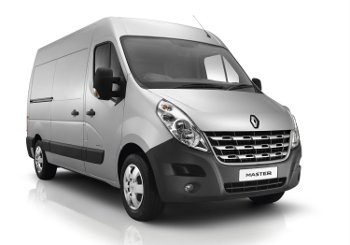
The new Renault MasterRenault has won four awards at the recent What Van? Awards 2011, including the prestigious Van of the Year and Large Panel Van of the Year awards for its all-new Renault Master model. This follows on from its Fleet World Best New Van award earlier this year.

The Master is available in both front and rear-wheel drive and comes in a variety of payloads and lengths that mean it offers a realistic challenge to almost all the other large panel van models on the market.

The new Master is also being rebadged and sold as the Vauxhall Movano, continuing the long-standing partnership arrangement between Vauxhall/Opel and Renault.

What Van? editor Paul Barker said that the new Master was “…an excellent new addition to the light commercial vehicle market” and that the “increased breadth of range, including rear-wheel drive models for the first time, and the industry-leading levels of interior functionality and practicality in particular swayed the judges’ decision.”

You can read our thoughts on the Renault Master here – suffice to say that if quality and reliability are up to scratch, it looks like a formidable market player that is a big improvement on the old model.

Renault’s other What Van? awards were for the introduction of its latest customer service initiatives, Renault iCare and Renault Pro+ and for its forthcoming Renault Kangoo Van Z.E. electric van, the first all-electric van to be built completely by a mainstream vehicle manufacturer.

Banish Overloading Worries With Berlingo First 750

Overloading of small vans is a perennial problem – the temptation to fit in everything possible regardless of weight is sometimes too strong, especially for vans used on local work.

Perhaps it is in response to this problem that Citroen has launched an updated version of its Berlingo First van ( the First is basically the old model Berlingo). The Berlingo First previously had a reasonable small van payload of 600kg. This has now been upgraded to 749kg, with the new van designated as the Berlingo First 750.

The Berlingo First 750 has uprated suspension to cope with the extra weight and also now comes with an underbody protection plate – perhaps because it is likely to be popular with builders and get bounced around building sites.

The increased payload takes the van’s maximum gross weight up to 1,955kg, and its towing capacity has also increased to 1,070kg. Powered by a Citroen’s popular 1.6HDi diesel engine, this makes a pretty flexible and capable package and is likely to be popular.