Tag Archives: Ducato

Fiat Ducato Euro 6

Fiat steers clear of AdBlue for Euro 6 Ducato vans

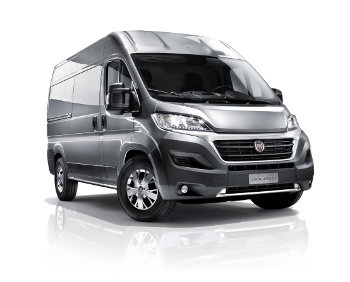
The Fiat Ducato is now available with Euro 6 engines. But unlike some manufacturers, the Italian firm has opted to avoid using AdBlue to meet the Euro 6 emissions standard.
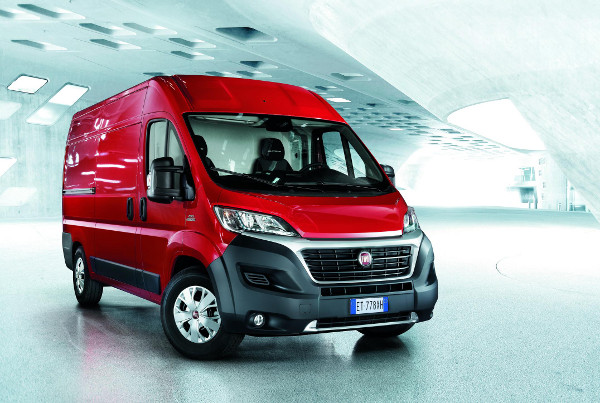
Fiat Ducato Euro 6

Euro 6 Fiat Ducato vans will not require AdBlue, thanks to an updated EGR system.

AdBlue is required for Selective Catalytic Reduction (SCR), the process used by most vehicle manufacturers to meet Euro 6. The other main approach to emissions reduction for diesel engines is Exhaust Gas Recirculation (EGR).

Fiat has developed a system it calls Low Pressure Exhaust Gas Recirculation (LPEGR) which the firm says avoids the need for SCR by channelling exhaust gasses away after the diesel particular filter (DPF), cooling them in a low-pressure EGR cooler and recirculating them ahead of the turbo charger.

Interestingly, the LPEGR system will be fitted to van and motorhome versions of the Ducato. Minibus versions of the Euro 6 Ducato will use SCR and will have a 15-litre AdBlue tank with a filler point next to the diesel tank cap.

New engine choices for Ducato

Alongside the switch to Euro 6, Fiat has introduced a new range of engines for the Ducato.

At the bottom of the range is a new entry-level 2.0-litre MultiJet II 115hp LPEGR engine. This will replace the current Euro 5 2.3-litre 110hp model and offer fuel consumption of up to 47.9mpg on the combined cycle. I’d probably only choose this engine for urban/short wheelbase vans, though.

In the middle of the range are updated versions of the firm’s  core 2.3-litre MultiJet II 130hp and 150hp engines. Both engines now have LPEGR to meet Euro 6 standards.

At the top of the range, a new 180hp 2.3 MultiJet II has been introduced to replace the previous 3.0-litre 180hp version. Fiat says that the new, smaller engine will offer a significant improvement in efficiency and emissions, with a combined cycle figure of 46.3mpg and CO2 emissions of 160g/km.

The FIAT Professional Ducato Euro 6, with LPEGR, is available to order now priced from £21,445 plus VAT and on-the-road charges.
Ambulance service trials solar panels to aid fuel consumption

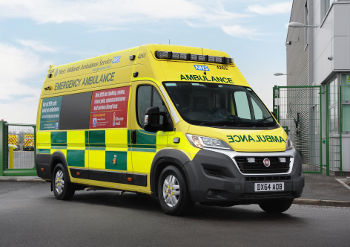
WMAS Fiat Ducato Maxi ambulance

One of WMAS’s new Fiat Ducato Maxi ambulances

Ambulances need a lot of electricity: indeed, with the latest models carrying approximately one mile of electrical wiring and an extensive range of extra electrical equipment, it has long been standard practice to fit uprated alternators to ambulances. This ensures that the electrical load can be met at all times and that battery charge is maintained at healthy levels.

However, alternators don’t magic electricity out of thin air — they are engine-driven, and extra electrical load means extra fuel consumption, especially when idling or running at low speeds.

To try and address this problem and reduce both the carbon footprint and the fuel bills generated by its ambulances, without sacrificing performance, the West Midlands Ambulance Service (WMAS) is about to begin trialling solar panels on five of its newest vehicles.

The trial vehicles are part of a 101-vehicle order for new front-line ambulances, all of which will be based on the Fiat Ducator Maxi panel van, plated at 4,250kg gross vehicle weight.

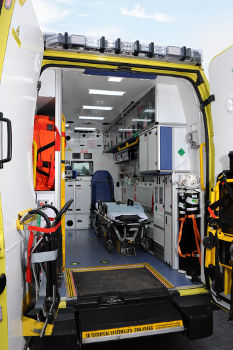
Inside WMAS Fiat Ducato ambulance

Inside one of the new WMAS Fiat Ducato ambulances

Ambulances are fairly heavily loaded at all times, and the use of the Maxi chassis — which has uprated suspension and larger wheel sizes — will help provide a more robust and stable ambulance platform, without sacrificing the cost and maneuverability advantages offered by the choice of a panel van rather than box body.

The vans are long wheelbase, extra-high roof models powered by Fiat’s 3.0-litre 180bhp diesel engine, and have air suspension fitted to further aid ride stability under emergency conditions.

WMAS has been operating the FIAT Ducato in front line ambulance operation for a number of years and by the time the last of the 101 new units are delivered, two thirds of its entire ambulance fleet (240 of 360 vehicles) will be Fiat Ducato based.

According to Tony Page, General Manager Fleet Services with West Midlands Ambulance Service NHS Foundation Trust:

“The Ducato provides the Trust with a platform to build a front line ambulance that provides a good working space for our clinical colleagues to deliver a high level of patient care, the 3.0 diesel engine is more than capable of getting the vehicle and crew to serious incidents in a timely manner, good dealer support and fuel economy are also an important aspect of the FIAT Ducato’s offering.

Early signs with the first 40 units of the latest model Ducato in operation are they are step change improvement for us, feedback from our crews so far has been very positive.”

The choice of the Ducato Maxi is an interesting variation from the more commonly specified 5-tonne Mercedes-Benz Sprinter box body ambulance conversion preferred by many ambulance services — almost without a doubt the Ducato panel van is far cheaper option, so it will be interesting to see how much of a foothold it gains elsewhere in the UK.

New Fiat Ducato beats Relay & Boxer with higher GVW and auto gearbox

Revised 2014 Fiat Ducato

The revised 2014 Fiat Ducato

Fiat has released details of its new Ducato van, one day later than its PSA partners Citroën and Peugeot, who published details of their new Relay and Boxer models yesterday.

As with previous models, all three vans are essentially the same vehicle, but also as with previous models, Fiat has chosen to put its own spin on the Ducato, resulting in some distincitive differences that could make the difference for certain groups of buyers.

The biggest change — which affects all buyers of the Ducato — is that Fiat will continue to offer its own 2.3-litre Multi Jet diesel engines, rather than the Peugeot/Citroën 2.2HDi engine. The 2.3-litre engine will be available in 110hp, 130hp and 150hp versions, and the engine range is topped with a 180hp, 3.0-litre model. (Peugeot also offers a 3.0-litre option, so perhaps it’s using the Fiat 3.0-litre Multi Jet engine too?)

The second thing that makes the Ducato stand out, especially in the European motorhome market, where it dominates all other manufacturers, is that Fiat offers its ComfortMatic automated manual transmission as an option with all engines, except the entry-level 110hp 2.3l unit. As far as I can tell, neither Peugeot nor Citroën offers an auto gearbox option for the Relay/Boxer.

The final difference between the Ducato and the Boxer/Relay is that Fiat has beefed up the suspension a little more and the heaviest Ducato model has a maximum GVW of 4.25 tonnes — 200kg more than the 4.05 tonnes on offer from the Peugeot/Citroën ranges. According to Fiat, the new Ducato will boast the best Gross Vehicle Weight (up to 4.25 tonnes); best weight on the rear axle (up to 2.5 t) and best van payload (up to 2.1 t) of the ‘single wheel’ segment.

In truth, I suspect that both the auto gearbox option and the 4.25 tonne weight option are mostly aimed at specialist conversion markets, such as the motorhome, ambulance and minibus sectors, where the extra weight will be useful and automatic gearboxes are a much more popular choice. Most van operators will be reluctant to operate vans at 4.25 tonnes, unless they really need the extra weight over a 3.5t van, as it will mean that drivers are required to use a tachograph and work to much more stringent and complex working hours regulations.

Fiat Adds UK Market Share With 50% Rise In Sales

New Fiat Ducato panel vanThe Fiat Professional brand recorded January-June sales figures of 7150 units during the first half of 2013 – up more than 50 per cent over the same period in 2012. The rise in sales means that Fiat’s share of the UK LCV market has risen by 1.3% compared with last year.
The addition of new Tecnico versions on the Ducato, Doblò Cargo and Fiorino models has been well received by customers and offer good value for money in terms of specification, with highly-competitive fuel consumption and CO2 emissions.

Fiat says that the Doblò Cargo range, which has recently been expanded to include new additions such as the Doblò XL and Doblò Maxi Crew Van versions, is continuing to perform strongly.

Fiat Professional’s versatile Ducato, which competes in the demanding large van market, now includes ESP (electronic stability programme) as standard across the entire range of Ducato vans, chassis cabs, combis and minibuses.

Commenting on the half year figures, Sebastiano Fedrigo, director, Fiat Professional UK said:

“We are delighted with the results achieved so far and it is particularly pleasing to see more and more customers driving our products.

“The Fiat Professional brand is growing and continues to make significant strides within the UK market. We are growing both in the corporate fleet sector and the retail sector where our  strong network restructure has proven very successful with June 2013 network registrations up 80 per cent higher than in the same period in 2012.

“We will be working hard to consolidate these results and are looking forward to further new appointments across the network in the very near future – testimony to the strength of our product offering and network back up.”

Fiat Adds ESP To All Ducato Vans

New Fiat Ducato panel vanFiat Professional has made Electronic Stability Programme (ESP) standard on all versions of its Ducato large van. The change was introduced in April, in anticipation of any future legislative requirement for the system, which is already required on new cars.
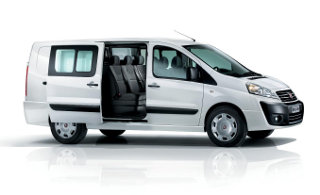
ESP is an important safety device which uses information supplied by various sensors to check whether a vehicle is cornering safely or not. If the ESP computer believes the vehicle is going to skid, it brakes the appropriate wheel or reduces engine power.

ESP isn’t just a single system and incorporates a range of sub-systems, which are each designed to prevent a skid or loss of control under certain circumstances:

  • Load Adaptive Control identifies the size of the load and the vehicle’s centre of gravity to enable the systems to work at peak effectiveness;
  • Hill Holder makes starts on slopes easier by holding the brake on momentarily after the driver’s foot has released the pedal;
  • Hydraulic Brake Assist increases braking pressure under emergency conditions;
  • Anti-Slip Regulation acts on the individual brakes and/or temporarily reduces the power delivered to the engine in order to counteract the effects of one or both drive wheels skidding;
  • Motor Schleppmoment Regelung ensures torque remains at the wheels following a sudden downshift on an incline.

Too much technology?

Some drivers may claim that there’s too much technology in vehicles these days, and that real drivers ought to know how to manage without nanny systems watching your every move.

In response to such an argument, I would make two points:

  1. Driving isn’t a form of entertainment nor is it a skill contest. Most driving is done for necessity, not fun, so the safer it can be made, the better. No one dreams about how good it would be to have aeroplanes that were harder to fly and crashed more often, do they?
  2. Cars are faster, easier to drive, and more insulated from the outside world than they used to be, but human beings are just as slow-witted, easily distracted and error prone as they have always been. Given how many accidents happen every day, we obviously need all the technological help we can get.

Gripping stuff

Getting back the Ducato, one traction-related system that will remain an option is Traction+, which effectively uses the ESP system to simulate the effect of a locking differential on the front (drive) axle. When one wheel spins, torque is taken away from it until it grips again, until traction is regained. Traction+ only costs £150 and doesn’t require any extra mechanical hardware, making it far lighter and cheaper than a traditional 4×4 system.

Similar systems are now available on a number of car models, and I can see that systems like Traction+ may gradually reduce demand for 4×4 vehicles, since if combined with winter tyres, they would provide all the grip necessary for all-season use on all types of road surfaces, relegating 4×4 systems to their traditional roles — off-road and heavy towing.

Fiat Professional Fields Large Display At CV Show

Fiat Scudo Crew Van

The new Fiat Professional Scudo Crew Van, which will be on display at the Birmingham CV Show from 9-11 April 2013

Fiat Professional will be fielding an impressive seven-vehicle display on its stand at the Birmingham CV Show, with further vehicles displayed outside.

The display is intended to demonstrate the breadth of Fiat’s range, especially its range of conversions. The display on Fiat’s indoor stand at Birmingham will include the following vans:

  • Scudo Crew Van (NEW)
  • Ducato  Van  Tecnico
  • Ducato Tipper (NEW)
  • Doblò Work Up
  • Doblò XL Cargo
  • Fiorino Cargo
  • Fiorino Crew Van  (NEW)

Outdoors, one of the vehicles on display will be Ducato Luton, showcasing another conversion on this popular base vehicle.

New Scudo Crew Van

Fiat Professional’s new Scudo Crew Van is powered by Fiat’s 2.0 MultiJet 130hp engine and is available on both short and long wheelbase bodies. The Scudo Crew Van has been developed with Snoeks Automotive, a leading European specialist in this sector that produces a range of double cab conversions for popular vans. The Scudo conversion will offer six seats and a semi-glazed configuration with the specific components being supplied by Snoeks and assembled directly on the assembly line.

The rear cabin features a comfortable three seat bench which has individual head rests and each seat has a three-point seatbelt. The rear seats feature the same upholstery as that of the front seats. A bulkhead with window is positioned behind the rear seats providing protection against load intrusion into the cabin.

Ducato Conversions

Fiat Professional will be exhibiting two Ducato conversions at the show, the new Ducato Tipper, and a Ducato Luton conversion by Trucksmith Vehicle Body Builders on display outside.

The new Ducato Tipper is based on a MWB chassis and has been developed with VFS (Southampton) Ltd, a leading commercial vehicle converter specialising in high quality Tipper and Dropside conversions. Further details will be available at the show.

The popular and Ducato Tecnico panel van model will also be on display — I’ve written about this edition before and it does seem good value and attractively specified.

The Birmingham CV Show takes place at the Birmingham NEC from 9-11 April 2013. Visit www.cvshow.com for more details.

New Fiat Ducato Launched with Euro 5 Engines

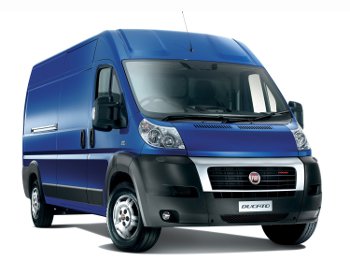
New Fiat Ducato panel vanFiat has launched the latest version of its Ducato large van, complete with an all-new range of Euro 5 engines. As with the recent Volkswagen Crafter and Iveco Daily launches, the engines are the big news and buyers should expect:

  • Euro 5 compliance on all models;
  • Improved fuel consumption;
  • Reduced emissions;
  • Improved power and torque;
  • Improved performance and refinement.

Initial reviews of the Ducato have been very positive, especially with in terms of the performance, handling and comfort of the new van.

Engines & Transmission

The new UK model range is built around two engines – a 2.3l diesel and a 3.0l diesel. The 2.3l engine will come in three power outputs for the UK – 110bhp, 130bhp and 150bhp. Each will have a six-speed manual gearbox and Fiat says that the entry level 110bhp model will offer a 10% improvement in fuel consumption, 11% reduction in emissions and a 20% increase in torque when compared with the 100bhp 2.2l model it replaces.

The range-topping 3l engine offers 177bhp and a stonking 400Nm of torque from just 1,400rpm – an improvement on the old engine’s 1,700rpm figure for the same torque.

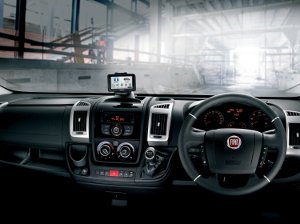
Dashboard of new Fiat Ducato, showing optional TomTom Blue&Me setup

The dashboard of the new Ducato, showing the optional TomTom Blue&Me system

Service intervals on all of the new Ducato engines have been extended from 25,000 to 30,000 miles and all engines have a timing chain designed to last the lifetime of the engine – so no cambelt changes will ever be required.

Fiat’s Comfort-Matic automated manual transmission is available as an option with the 3-litre engine. This is a traditional manual transmission except there is no clutch pedal and the manual linkage to the gearbox is replaced by actuators controlled by a Transmission Control Unit. The shift is either performed automatically or the driver can use the gear lever to prompt changes by pulling backwards or pushing forwards.

The 2.3-litre engines (110, 130 and 150) are available with Fiat’s Start&Stop system. This automatically stops the engine when the van comes to a halt and is put in neutral. Releasing the brake or pushing the clutch re-starts the engine automatically. It’s estimated this can reduce fuel consumption by 15 per cent around town.

Sizes & Conversion Options

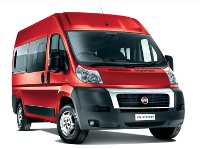
New Fiat Ducato minibusThe new Ducato panel van is available in a range of sizes and shapes:
  • Three wheelbases
  • Four lengths
  • Three heights
  • Gross vehicle weight of 3,000kg – 4,000kg
  • Payloads from 1,000kg to 2,000kg

A range of conversion options will also be available, including a minibus and single and twin cab chassis cab models.

Interior

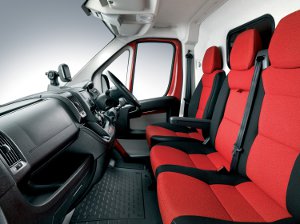
New Fiat Ducato interior showing upgraded cab seats with red fabricThe interior of the Ducato has been upgraded for this new model. The new cab features improved materials, upgraded seats, better sound proofing and more storage, as well as an adjustable steering wheel.

It is also possible to specify a TomTom ‘my port’ when ordering the van. This can then be used with a TomTom Blue&Me system to gather date for Fiat’s eco:Drive fleet management software, which allows drivers and fleet managers to monitor fuel consumption and driving habits in order to reduce running costs.

Final Thoughts

The Ducato has never been massively successful in the UK panel van sector, with neither courier firms nor tradesmen embracing the model very widely. Despite this, there are a lot on the road and it does have a strong presence in the conversion market, where its low, wide, front-wheel drive chassis cab platform has been hugely successful. The Ducato dominates the motorhome market throughout Europe and has sold more than 2.2m units in total in the 30 years it has been in production.

This new Ducato may look similar to its predecessor, but under the skin there are a raft of worthwhile improvements – not least the new engine range, which should provide improved performance with lower fuel consumption and emissions. It remains to be seen whether the Ducato will gain a stronger foothold in the UK van rental market – but initial impressions are good.