Gilgen Door Systems van racking

Sliding doors open for Volkswagen fleet deal

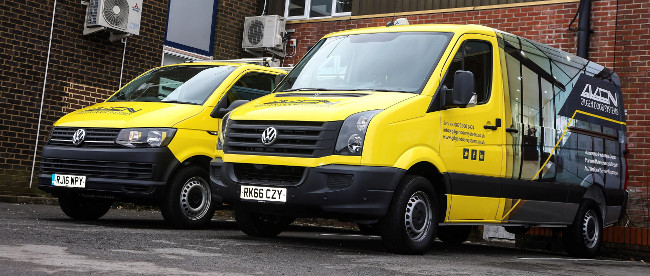
Door fitting specialist Gilgen Door Systems has purchased 24 new Volkswagen vans as part of a fleet renewal programme which will eventually see VW supply the firm’s entire fleet.

Gilgen Door Systems Volkswagen vans

Gilgen’s latest order was for 20 new Transporter vans and four Crafter panel vans. These follow on from an order last year for four Crafters and 10 Transporters. The new Transporters are T32 Startline LWB 2.0 TDI BMT models, while the Crafters are CR35 LWB 2.0 TDI BMT panel van models.

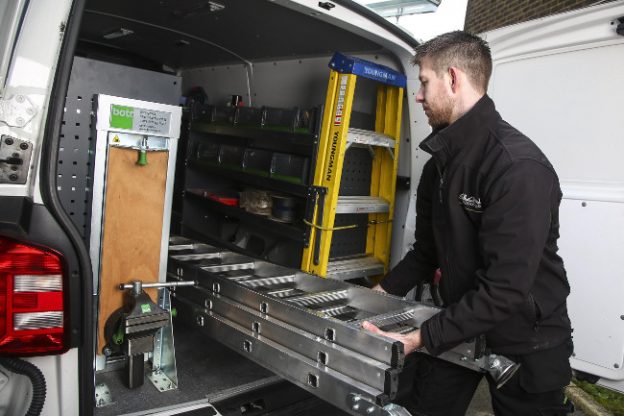
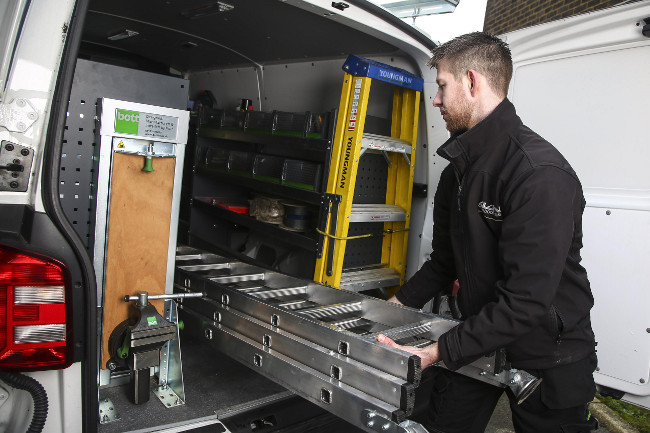
The vans have been fitted out with specialist racking and full Gilgen livery. They will be used by the firm’s service engineers to carry replacement parts and perform servicing and maintenance on customer sites.

Gilgen Door Systems van racking

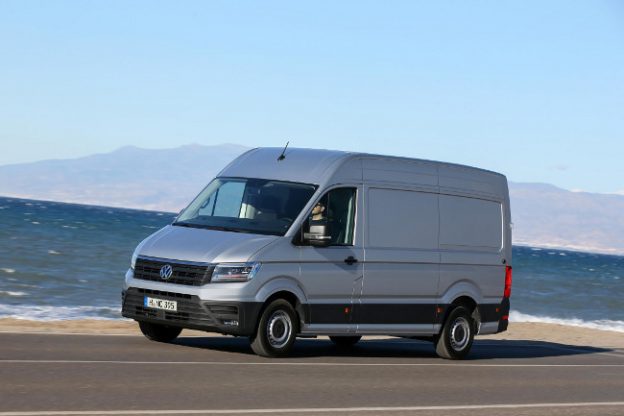
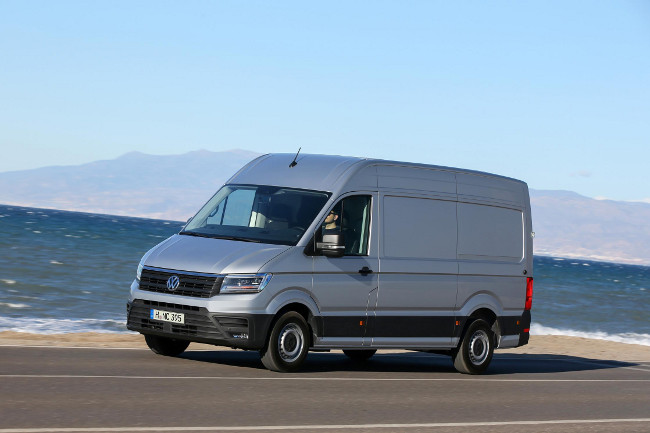
Gilgen’s new VW vans are fitted with specialist racking to hold tools and spare parts. Pictured: Volkswagen Transporter

Roger Massey, Marketing Manager at Gilgen Door Systems UK Ltd, commented:

“Volkswagen Commercial Vehicles has worked closely with us to develop a package that suits our exact business needs. As a business, we were able to specify our fleet requirements with the sales team and they helped to source the racking for vehicles through their accredited converters. This meant that the vans were ready to go as soon as they were delivered.”

Gilgen Door Systems is a leading global manufacturer of automatic doors, industrial doors and sliding walls, with more than 50 years’ experience in this sector.

VOSA van enforcement checkpoint

Speeding drivers face tougher penalties from April

Speeding fines are set to get tougher in April, and van drivers could face harsher sentencing as a result of their professions.

A VOSA/Police checkpoint

The penalties for driving while using a phone have also been increased. Offenders will receive a compulsory 6 points and £200 fine.

The new guidelines have been issued by the Sentencing Council, whose role it to provide sentencing guidelines for the courts in England and Wales.

There will be several major areas of change:

  • Tougher penalties for speeding with mandatory points and temporary disqualfication
  • Speeding fines for most serious offences increased from 100% to 150% of weekly income, although the upper limit remain fixed at £1,000 or £2,500 on a motorway.
  • The court will consider aggravating factors, such as whether the offender is a licenced professional driver from whom higher standards should be expected. Other examples of aggravating factors include bad weather and being near a school.
  • The penalty for driving while on the phone will be doubled to £200 and six points, with no option to avoid points by taking a driver education course

Here’s a summary of the new sentencing bands for speeding offences. Note the more severe penalties for serious speeding (the second column):

Speed limit (mph) Recorded speed (mph)
20 41 and above 31 – 40 21 – 30
30 51 and above 41 – 50 31 – 40
40 66 and above 56 – 65 41 – 55
50 76 and above 66 – 75 51 – 65
60 91 and above 81 – 90 61 – 80
70 101 and above 91 – 100 71 – 90
Sentencing range Band C fine (125-175% of relevant weekly income*) Band B fine (75-125% of relevant weekly income*) Band A fine (25-75% of relevant weekly income*)
Points/disqualification Disqualify 7 – 56 days OR 6 points Disqualify 7 – 28
days OR  4 – 6 points
3 points

Source: Sentencing Council (https://www.sentencingcouncil.org.uk/offences/item/speeding-revised-2017/)

*Upper limit remains unchanged at £1,000 or £2,500 on a motorway.

The Sentencing Council’s goal with these changes is to “to ensure that there is clear increase in penalty as the seriousness of offending increases”. The point here is that the risk of injury to pedestrians or other drivers rises dramatically with speed.

According to road crash victim support charity RoadPeace, the chance of killing a pedestrian in a 20mph speed limit rises from 1% at the speed limit to 83% at 41mph.

Historically, the difference in penalties between the different bands of speeding has not reflected the increased likelihood of causing death. These changes, which come into force on 24 April 2017, are aimed at redressing this imbalance.

Purple Parking fleet with Vredestein tyres

New Vredestein Comtract tyres gain fleet foothold with Purple purchase

Dutch tyre firm Vredestein has scored an early goal in its campaign to gain a bigger share of the UK fleet sector.

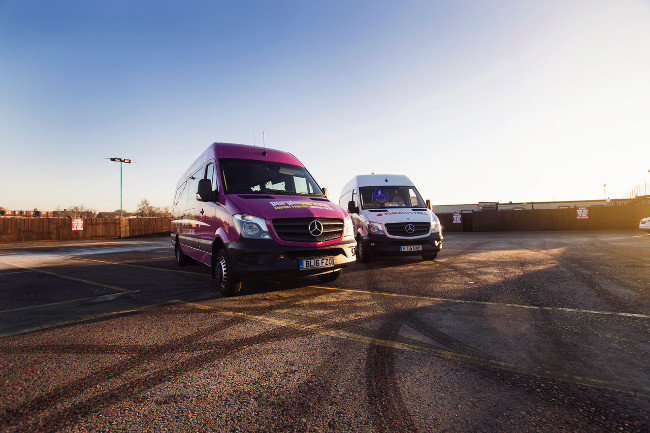
Purple Parking fleet with Vredestein tyres

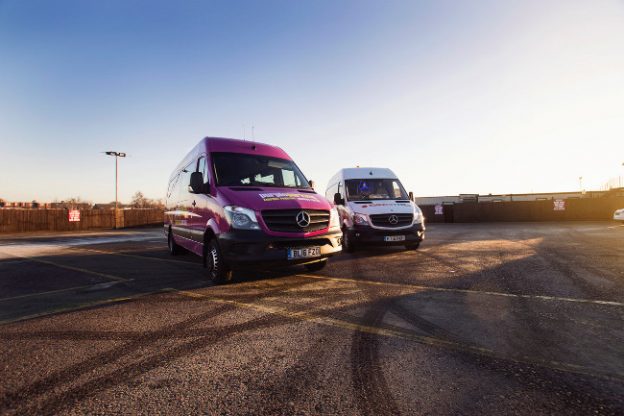
Purple Parking will now use Vredestein Comtrac and Comtrac 2 All Season tyres on its minibus fleet.

The group’s Comtrac and Comtrac 2 All Season van tyres have been chosen by major airport parking operator Purple Parking for its fleet of minibuses. These are used to ferry passengers between the group’s airports and long-stay car parks, so receive heavy use throughout the year.

Vredestein’s 185/75/16 Comtrac and new 235/65/16 Comtrac 2 All Season tyres were fitted to Purple Parking’s fleet of minibuses in a series of tests carried out by tyre supplier Tomato Tyres, which maintains the fleet. According to the firm, Tomato’s tests showed that Vredestein Comtrac LV tyres were lasting at least twice as long as the existing brands used on the fleet and, in some cases, by up to four times as much.

“We were obviously keen to select the best tyre package for our fleet,” said Purple Parking Operations Manager Steven Rowlerson. “In our business, downtime due to problems with our vehicles is something to avoid at all costs; fitting premium quality tyres actually results in cost savings and increased safety, whilst Vredestein’s warranty provides even extra peace of mind.”

The deal has also been extended to allow Purple Parking staff to enjoy preferential terms when buying tyres for their own cars. Vredestein Fleet and Lease Manager Ricky Mitchell expects the parking group’s new purchasing policy to provide “substantial annual financial savings for Purple Parking”.

Vules Partagés Citroën Berlingo electric van

Electric van sharing scheme goes live in Paris

I wrote last week about Ford’s plans to trial 20 plugin hybrid electric vans in London. But as I mentioned in the same piece, a number of European countries are already embracing electric vans with much more enthusiasm than UK operators.

Postal services in France and Norway already operate thousands of electric delivery vehicles. Germany is set to follow suit this year. Today in Paris, a new scheme has gone into operation offering businesses access to electric vans through a vehicle sharing scheme.

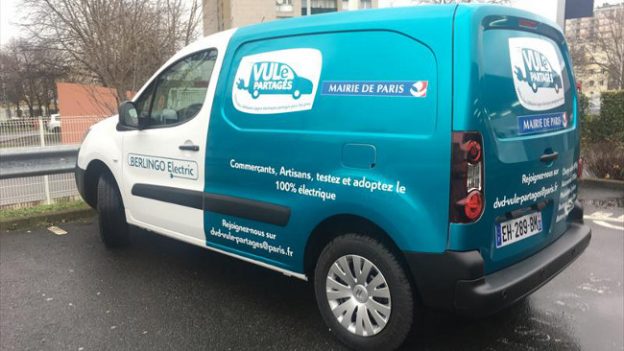
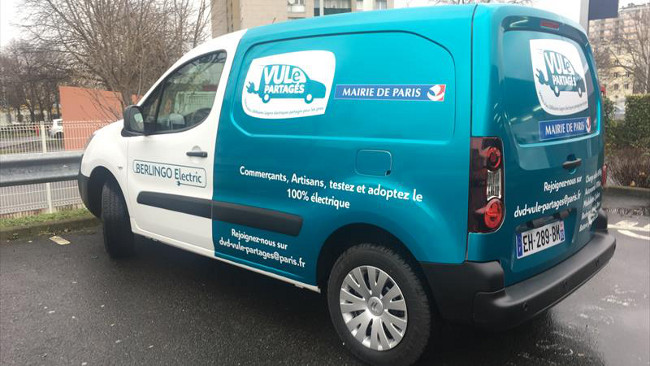
Vules Partagés Citroën Berlingo electric van

Vules Partagés Citroën Berlingo electric van sharing scheme.

The service, known as VULe Partagés, will be available in the 2nd and 3rd arrondissement of Paris and will make ten vans available, including 4 Peugeot Partner and 4 Citroën Berlingo electric vans.

Small businesses in the city can register on the the scheme’s website in order to use the service.

France’s PSA Group — which includes Peugeot and Citroën — has been producing all-electric vehicles since 1995. The group currently sells five electric models, including two vans, the Peugeot Partner and the Citroën Berlingo (which of course are essentially the same vehicle).

Ford Transit Custom PHEV

Ford launches plugin hybrid electric van van trial in London

On a typical weekday in London, commercial vehicles make 280,000 journeys, covering a total distance of 18 million miles. 75% of the freight vehicles involved in these movements are vans, covering an average of 64 miles per day.

These are staggering figures, especially when you consider that the vast majority of the vans and trucks involved are diesel vehicles. Urban pollution from diesel is already a major public health issue.

While the Euro 6 emissions standard promises to achieve a reduction where Euro 5 failed, diesel-fuelled air pollution is still a concern, as is the noise pollution caused by all these rattly diesel engines — still far louder and more raucous than petrol equivalents.

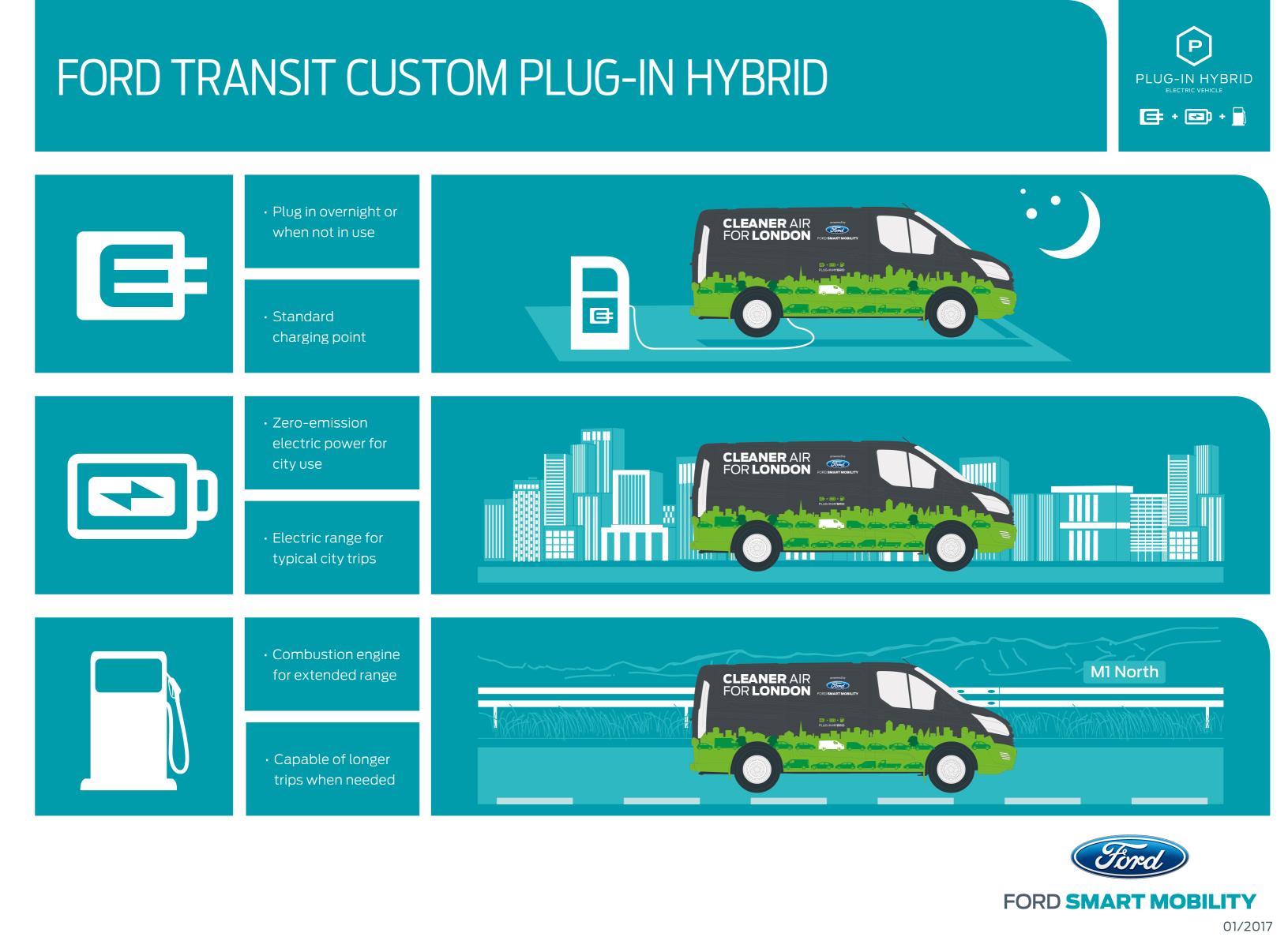
In an effort to improve the situation and prepare the ground for a large-scale move into the electric vehicle market, Ford has partnered with Transport for London to launch a 12-month trial of 20 plugin hybrid electric vehicle (PHEV) Transit Custom vans.
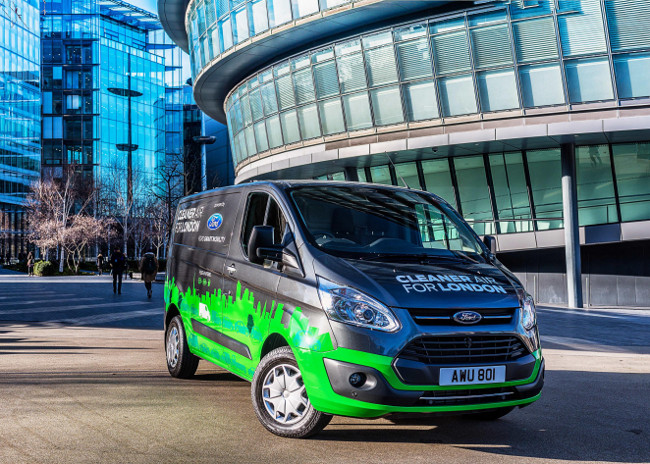
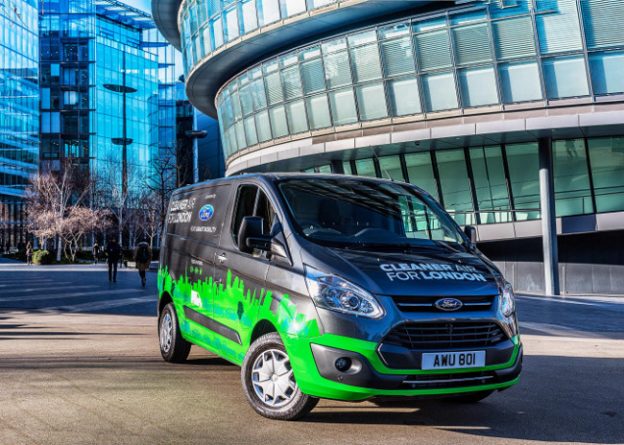
Ford Transit Custom PHEV

One of the 20 new Ford Transit Custom PHEV due to go start a 12-month trial in London later in 2017.

Ford will provide 20 PHEV Transits to a range of commercial fleets across London, including Transport for London’s fleet, to explore how such vans can contribute to cleaner air targets while boosting productivity for operators in urban conditions. The project is supported financially by the government-funded Advanced Propulsion Centre.

These vans are forerunners of the Transit Custom PHEV production model that’s scheduled for commercial production in 2019. Ford is the first company to offer PHEV functionality in the van sector.
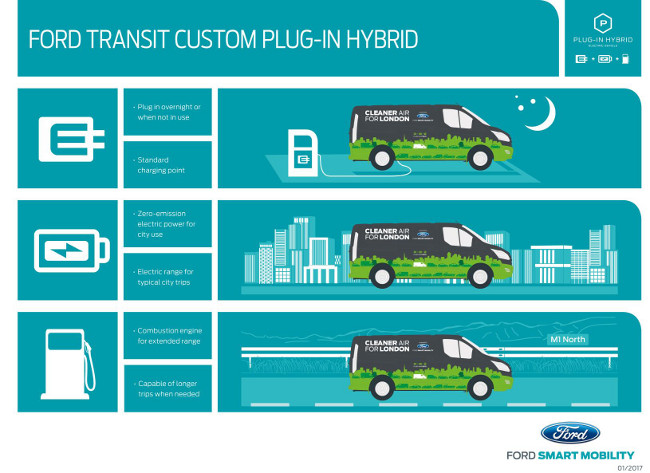
How a PHEV van works

How the Ford Transit plugin hybrid electric vans will be used in and around London (click to enlarge)

The idea is that the vans can be charged from the mains and will run solely on electric power for the majority of the time they’re operating in Central London. They will however retain the ability to cover longer distances without recharging using their standard engines.

“The freight sector’s transition to ultra-low emission vehicles is central to cleaning up London’s toxic air,” said Sadiq Khan, Mayor of London. “Transport for London continues to lead by example by increasing the number of its own vehicles that are electric and will find the data from these trials an invaluable resource for the LoCITY programme, which encourages the uptake of low emission commercial transport.”

Ford is planning to launch 13 electric vehicles globally in the next five years. The Transit Custom PHEV is one of these. In my view, the operating case for electric vans in cities has already been made several times over. It remains a mystery to me why — for example — large postal operators in other European countries are buying thousands of electric delivery vehicles, while Royal Mail chooses only bicycles and diesel vans.

Hopefully London Mayor Khan will be a more forceful and effective advocate of electric vans than his predecessor. It’s high time that London and the UK started to lead the way in modernising Europe’s transport infrastructure and vehicle parc.

Volkswagen Crafter

All-new Volkswagen Crafter now on sale in UK

The all-new Volkswagen Crafter is now available to order from UK Volkswagen Van Centre dealers, with prices start from £23,920 +VAT. The model will receive its UK launch at the CV Show in April. First deliveries are expected in May.

Volkswagen Crafter

The new Volkswagen Crafter is now available to order in the UK. First deliveries are expected in May 2017.

Unlike previous models, the new Crafter is not based on the Mercedes-Benz Sprinter. It’s an all-Volkswagen effort on a new platform and will also be sold under the group’s truck-focused MAN brand.

All variants will be powered by a 2.0-litre TDI (Euro 6) diesel engine which Volkswagen says has been developed specifically for commercial vehicles. The point here is that previous versions of the Crafter were powered by VW engines lifted from the group’s large cars and smaller vans. They sometimes lacked pulling power when heavily loaded — something Volkswagen says won’t be a problem with the new model.

Up to four choices of power output will be available — 102, 122, 140 and 177 PS — depending on the variant selected. Buyers will be able to choose between front, rear and all-wheel drive models featured VW’s 4MOTION system.  Manual and automatic gearbox options will also be available.

Up to three different vehicle lengths are available, depending on the model chosen: 5.9 m, 6.84 m or 7.39 m. Panel van variants also come with one of three different roof heights: 2.35 m, 2.59 m or 2.79 m.

In line with the Caddy and Transporter ranges, three trim levels will be on offer — Startline, Trendline and Highline. Prices will start from £23,920 exc. VAT for the basic Crafter Startline.

Here’s a summary of the specification features for each time level:

Panel van Startline from £23,920 (basic ex VAT)

  • Automatic Post Collision Braking
  • Cross-wind assist
  • Driver alert system
  • 180-degree opening rear wing doors
  • Composition audio radio
  • Bluetooth

Panel van Trendline from £25,270 (basic ex VAT) in addition to Startline

  • Front assist including emergency braking system
  • Cruise control with speed limiter
  • Electrically heated and adjustable wing mirrors
  • 270-degree opening rear wing doors
  • Composition Media Radio with DAB+
  • Multi-function steering wheel
  • Comfort driver’s seat
  • Wooden floor in load area
  • Grab handles on rear entry pillars 

Panel van Highline from £29,220 (basic ex vat) in addition to Trendline

  • Adaptive Cruise Control
  • Passenger airbag
  • Front and rear parking sensors
  • Heated windscreen
  • Front fog lights with cornering function
  • Comfort-plus driver’s seat

For more detailed pricing or any other queries, contact your local VW Van Centre dealer.

Questor Insurance logo

Discount code: Save on Questor van hire excess insurance [EXPIRED]

Questor Insurance logoWhen you hire a van (or car), one of the best ways to save some cash is often to buy excess insurance from a specialist insurer, rather than the hire firm.

Doing this will reduce the excess amount due in the event of any damage to your vehicle.

It’s usually cheaper than buying additional insurance cover from the hire firm.

Excess insurance also sometimes adds additional cover, such as tyres, glass or undercarriage.

** THIS OFFER HAS NOW EXPIRED **

We currently have a 5% discount code for van hire excess insurance from Questor Insurance:

  • SAVE: 5% on van hire excess insurance from Questor Insurance
  • Discount code: Jan2146
  • Valid until: 31 Jan 2017


StreetScooter Work electric van

Deutsche Post DHL will put 2,000 StreetScooter electric vans on the road in 2017

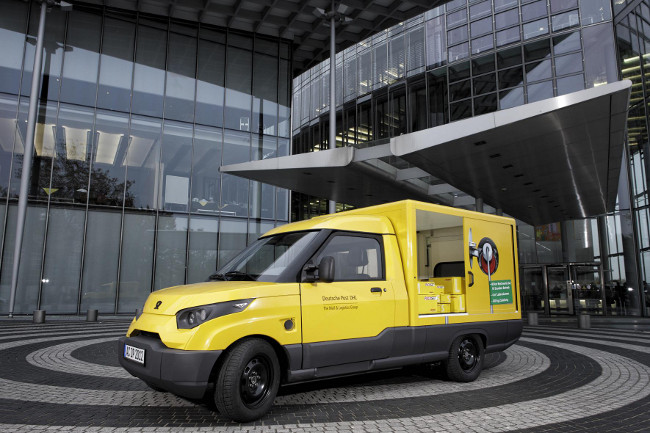
StreetScooter probably isn’t a name you’re familiar with. But that could soon change. This German startup was founded in 2010 to make affordable electric vehicles for urban use. It caught the eye of Deutsche Post  DHL Group. The German postal group liked it so much, it bought the company in 2014.

StreetScooter Work electric van

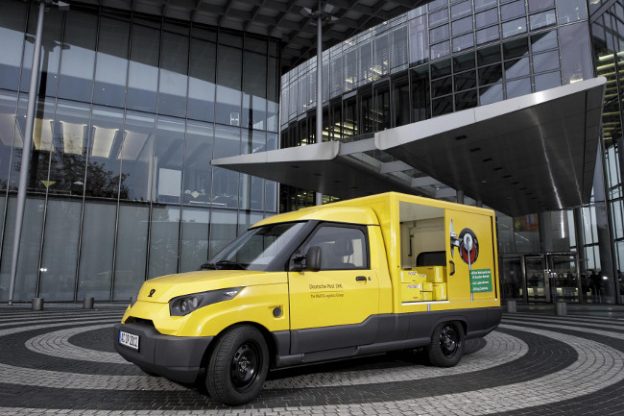
The StreetScooter Work electric van in Deutsche Post DHL colours — the post and parcel firm owns StreetScooter.

After a successful trial of 50 vans, the German postal group is now planning to deploy 2,000 StreetScooter electric vans into its urban delivery fleet by the end of 2017. These will be in Germany, but as StreetScooter ramps up its production capacity, surplus vehicles are expected to be available to third-party buyers.

I’d also guess that if the StreetScooter proves successful in Germany, Deutsche Post DHL may start to experiment with using the vans for DHL parcel deliveries in other major European cities.

According to the StreetScooter website, the Work van has a range of 50-80km and takes 4.5 hours to charge up to 80% capacity. A full charge takes 7 hours, but most urban delivery vans don’t operate for more than 14 hours a day, making a 7-hour charging period perfectly acceptable.

The model described on StreetScooter’s website has a payload of 650kg, and a maximum laden weight of 2,130kg, putting it on a par with popular small vans such as the Citroen Berlingo and Ford Transit Connect. Indeed, the electric version of the Citroen Berlingo uses the same GKN e-Drive electric drivetrain as the StreetScooter.

Deutsche Post DHL is ultimately targeting a 100% electric delivery fleet. This year’s plan to put 2,000 new StreetScooter vans into service is an important step in the right direction.

Vredestein Comtrac 2 all-season tyre

Vredestein launches new Comtrac 2 all-season tyre

As long-time readers may now, I’m a huge fan of all-season tyres. I’ve used them on my cars and vans for years and consider them ideal for UK weather, especially in rural areas.

All-season tyres have gradually been gaining traction in the UK market over the last few years (sorry!). Well-regarded Dutch tyre manufacturer Apollo Vredestein has just released the Comtrac 2 All Season, a new version of its Comtrac All Season tyre for vans and light trucks.

Vredestein Comtrac 2 all-season tyre

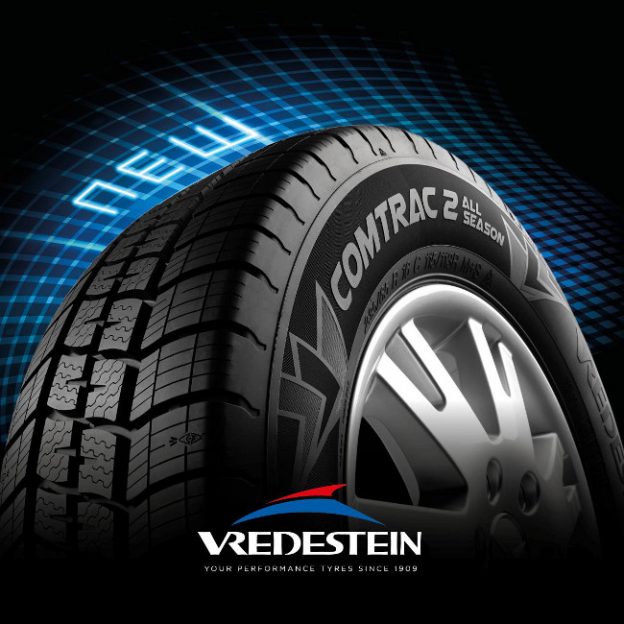
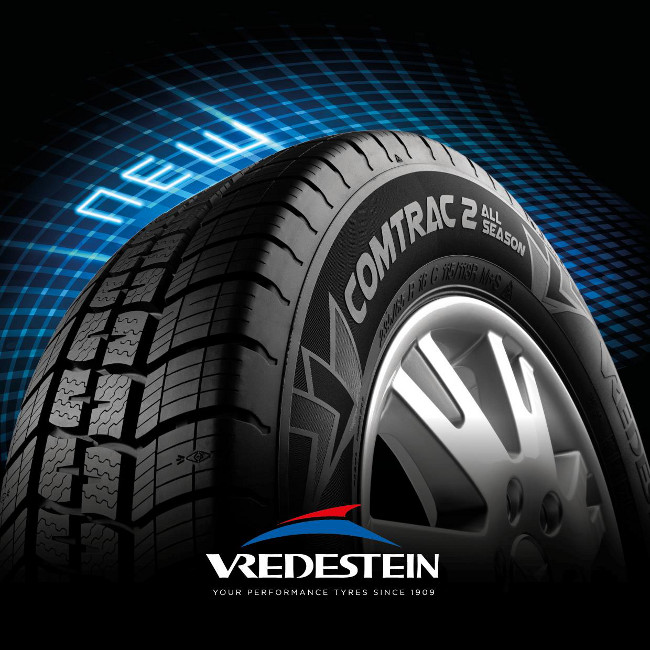
The new Vredestein Comtrac 2 all-season tyre

As with other tyres in this sector, the Comtrac 2 All Season boasts a silica compound and tread design that are designed to provide good water dispersion and good grip in cold and snowy conditions.

The firm says improvements have been made in three specific areas:

  • open lateral shoulder grooves and wider longitudinal grooves to optimize water dispersion;
  • improved shape of footprint and new silica compound for better grip on wet roads and lower rolling resistance to reduce fuel consumption;
  • increased tread stiffness and new sipe design for more balanced pressure distribution and reduced deformation under load.

These changes are said to reduce wet braking distance at 50mph by 11.7m compared to the original Comtrac tyre. Stability under heavy loads has been improved by 10% and rolling resistance reduced by 5%, according to Vredestein.

The new Comtrac 2 will be available from launch in ten sizes:

235/65R 16C 115/113 R
225/65R 16C 112/110 R
215/65R 16C 109/107 T
205/65R 16C 107/105 T
195/65R 16C 104/102 T
215/75R 16C 116/114 R
195/75R 16C 107/105 R
225/70R 15C 112/110 S
215/70R 15C 109/107 S
195/70R 15C 104/102 R

The Comtrac 2 will get receive its global launch at the biennial AutoZum show in Salzburg, Austria, from 18-21 January, 2017. For more information, visit www.vredestein.co.uk.

Renault Master Z.E. electric van

Renault charged up with new electric Kangoo and Master vans

Renault has launched a new longer-range version of its Kangoo Van Z.E. and an all-new electric Master Z.E. at the Brussels Motor Show.

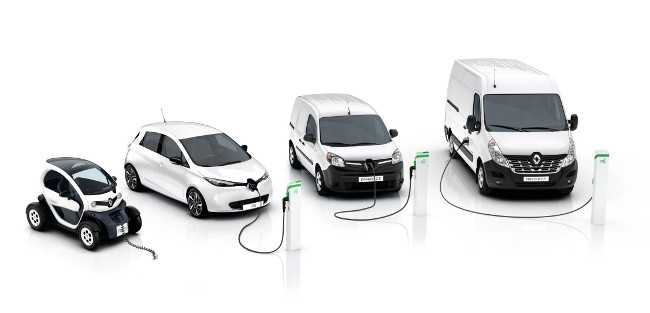
Renault Zero Emission LCV fleet

By the end of 2017, Renault will offer four electric vans in its Z.E. range

The new Kangoo Van Z.E. boasts a theoretical range of 168 miles, which is 50% more than the outgoing model and — says the firm — the longest of any electric van.

Meanwhile the Master Z.E. (Z.E. stands for Zero Emissions) has been introduced to target urban distribution operations and low-mileage municipal work.

Both vans are available with new, faster charging technology which promises to improve the usability and appeal of electric vehicles.

Kangoo Van Z.E. update

The Kangoo Van Z.E. was one of the first real-world usable LCVs to go on sale anywhere, and has been Europe’s bestselling electric van for the last six years.

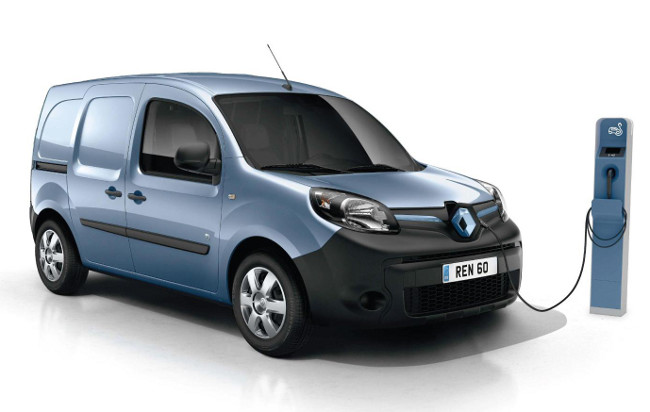
Renault Kangoo Z.E. electric van

The Renault Kangoo Z.E. electric van

The latest update features a new Z.E.33 33kWh battery pack and a new R60 44kW motor. Combined, these help to increase the range of the electric Kangoo to a specified maximum of 168 miles. Faster charging will also be possible. A new 7kW 32A charger will be available that can fully charge the Kangoo in just six hours.

The new Kangoo Van Z.E. will go on sale in Europe from the middle of 2017.

New Master Z.E.

Large electric vans are thin on the ground at the moment. So urban operators interested in reducing their carbon footprints and avoiding the cost and hassle of running diesel vans that are essentially unsuited to such operations may be interested in the new all-electric Master.

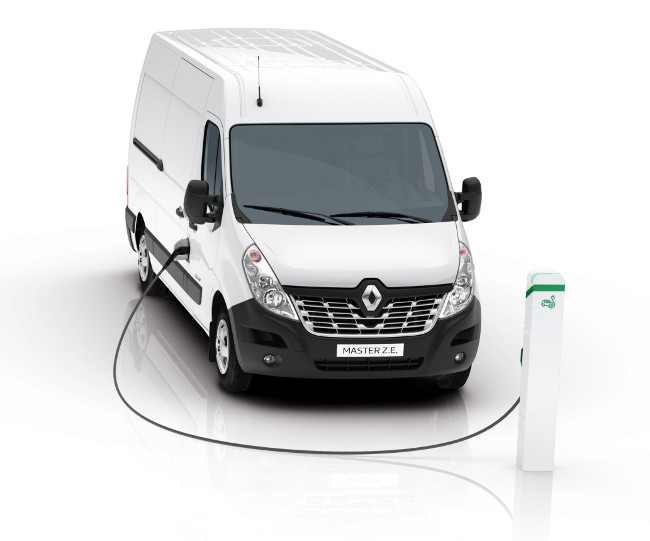
Renault Master Z.E. electric van

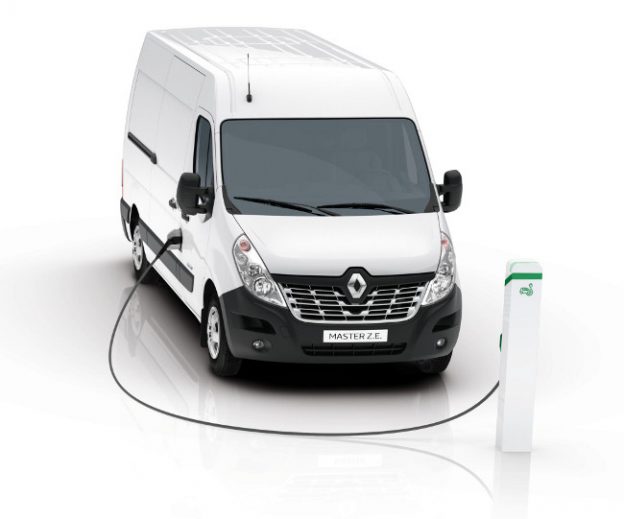
The Renault Master Z.E. electric van

It uses a larger R75 57kW motor but will be powered by the same Z.E.33 33kWH battery pack as the Kangoo. This inevitably reduces range somewhat, but Renault says the new Master Z.E. will be capable of up to 124 miles between charges. That’s pretty respectable.

As with the Kangoo, a full charge from Renault’s 7kW Wall Box charger will take six hours. I guess 13A charging will also be possible, albeit at a much slower pace.

The Master Z.E. will go on sale in the European market at the end of 2017.

What’s next for electric vans

It’s interesting to see how rapidly electric vehicle ranges are starting to increase. The Renault ZOE is now available with a Z.E.40 battery that gives this small car a range in the region of 200 miles.

Longer ranges were always inevitable as the technology matured — I suspect faster charging is the next logical step. I’m sure we’ll start to see this over the next couple of years.