
Author Archives: Van Rental

Tees Valley Property Company Vela Orders 129 Citroën Vans

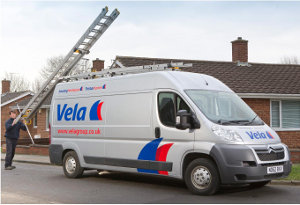
Citroën Relay operated by The Vela GroupTees Valley property company The Vela Group has ordered 129 Citroën vans to replace the majority of its 200-strong vehicle fleet.
Vela, which owns and manages former council housing in Stockton and Hartlepool, has ordered 120 Citroën Dispatch L2 1200 vans, eight Citroën Relay 35 L3 H2 HDi 130 vans and a Nemo 1.3 HDi Stop & Start van, as well as some cars.

The order will be fulfilled by Gateshead dealer Springfield Citroën and the vans will be used by Vela’s maintenance teams to provide a 24-hour service to customers across its 17,000 properties in Stockton-on-Tees and Hartlepool.

All the vans are ply-lined and have been specified with passenger airbags, full steel bulkheads, reversing warning systems and parking sensors. Eighty of the vehicles are fitted with roof bars or tilt and slide ladder racks, and one of the Relays is fitted with an external glazing rack – all installed by Lyndon Security.

All of the vehicles are fitted with Teletrac satellite tracking to minimise response times and to help Vela meet its commitment to health and safety and the environment. Around half of the Citroën vehicles in this Vela Group order have been funded through Citroën Contract Motoring 3 or 4 year, 30,000 or 40,000 mile with-maintenance contract hire agreements – with the remaining vehicles being purchased outright.

Mike Kay, Group Director of Property Services at Vela, said:

“We went through a rigorous selection and procurement process, which included user groups made up of trades operatives, managers and supervisors to evaluate the options offered by the leading vehicle manufacturers. The decision to go with Citroën was based on a comprehensive assessment of suitability, vehicle data, ergonomics and cost.”

Volkswagen Transporter Roadside Assistance Conversion: Close Up

You can convert a panel van to do almost any job, including some surprisingly heavy tasks. A good example is for use as a roadside assistance vehicle, with built-in tool storage and a fold-out recovery trailer.

The AA and RAC have been using these for a while now, but I’ve not seen a close-up of a conversion before. However, Allianz Global Assistance has recently ordered a fleet of 79 roadside assistance vehicles based on Volkswagen Transporters — and VW has kindly provided these photos.

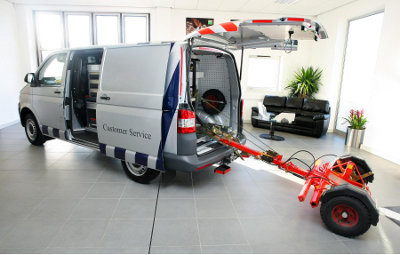
Allianz Global Assistance Volkswagen Transporter roadside assistance vehicle

One of the Allianz Global Assistance Volkswagen Transporter roadside assistance vans with the trailer folded out.

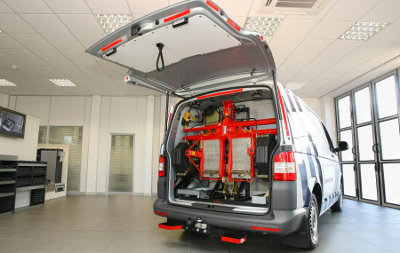
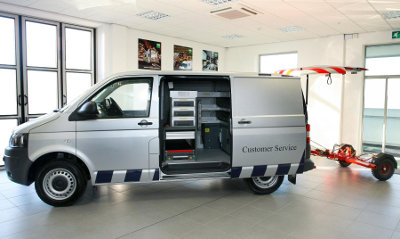
Inside a VW Transporter with roadside assistance conversion

The same van with the recovery trailer folded away into the storage position.

Fold-out recovery trailer on roadside assistance van

A closer view of the fold-out recovery trailer

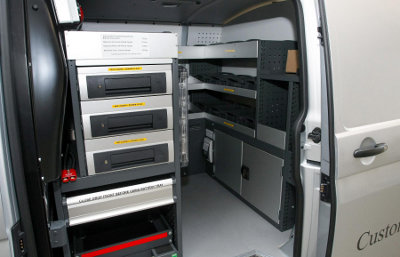
Every Transporter has been converted to enable its technicians to carry all the essential equipment they need while on the road, including a compact recovery trailer, diagnostic equipment and dedicated storage for jack, axle stands, tools, common vehicle parts and car batteries.

Racking and tool storage inside the Transporter roadside assistance conversion

Racking and tool storage inside the Transporter roadside assistance conversion

The new Transporter fleet will be supplied from the Birmingham Volkswagen Van Centre, which has worked with Allianz Global Assistance to ensure the vehicles have been converted to the bespoke specification required, and delivered on time.

UK CV Manufacturing Fell 20.5% In January

UK commercial vehicle manufacturing fell by 20.5% in January 2013, compared to January 2012.

Falling export demand caused UK commercial vehicle manufacturing output to slump 20.5% in January this year, compared to the same period last year. CV output fell from 9,844 units to 7,822 vehicles, despite a 3.2% rise in domestic demand.

You can see the full horror of the figures below — export demand for UK-built CVs dropped by 37.2% in January:

CV manufacturing Jan-12 Jan-13 % Change YTD-12 YTD-13 % Change
Total 9,844 7,822 -20.5% 9,844 7,822 -20.5%
Export 5,778 3,626 -37.2% 5,778 3,626 -37.2%
Home 4,066 4,196 3.2% 4,066 4,196 3.2%

Source: SMMT

Mike Baunton, the SMMT Interim Chief Executive, commented that this is a continuation of a trend that started in the final quarter of last year:

“Manufacturing of commercial vehicles in the UK covers a diverse spectrum of vehicles from light panel vans to heavy trucks, as well as minibuses, double-deckers and luxury coaches. UK registrations of trucks were strong through most of 2012, but dropped off in the final quarter impacting output. However, domestic demand for buses and coaches grew significantly through 2012 on the back of government incentives and a wider focus on public transport.”

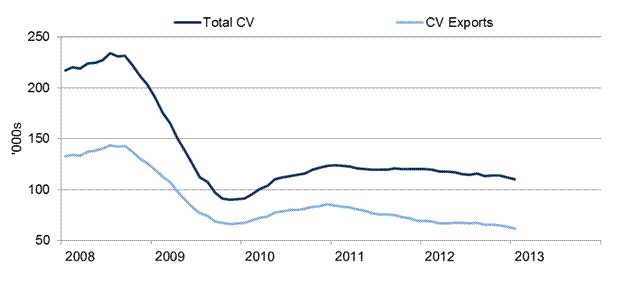
The big problem for the industry, however, is that output shows no sign of recovering to anywhere close to its 2008/9 highs, as this graph shows:

SMMT CV output rolling year to Jan 2013

Commercial vehicle manufacturing output from Jan 2008 – Jan 2013 (graph courtesy of SMMT)

February’s data may provide a more uplifting picture, but somehow I doubt it. Part of the problem, at least, is that there aren’t many  volume van manufacturers left in the UK. Many of the manufacturers are niche or low volume (trucks and buses sell in far smaller numbers than vans) and with the upcoming closure of Ford’s Southampton plant, this situation will just get worse.

Just as well the car manufacturing industry is doing well, with forecasts now suggesting that output could approach 2 million cars per year by 2016 (up from 1.58 million in 2012).

All-Season Tyre Review: Hankook RA10 (Part 2 – Winter, Snow)

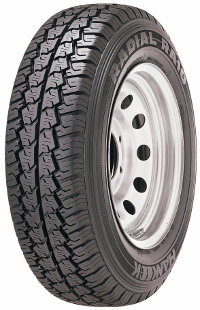
Hankook RA10 All-Season Tyre

Hankook RA10 All-Season Tyre

Disclosure: I paid for these tyres myself and have no relationship with the tyre manufacturer or the tyre supplier.

Back in September, I reported on how I’d decided to put my money where my mouth was and replace the worn-out tyres on my van with a set of all-season tyres, rather than summer tyres.

My reasoning was that for most of the year, the weather in northern England where I live is decidedly wintry, and certainly not warm or dry. In addition, I wanted to see if all-season tyres provide an advantage in snow and ice — whether they lived up to their billing as a good compromise between summer and winter tyres.

I decided to go for a set of Hankook RA10 all-season tyres, a mid-range option. You can click here to see the first part of my review, which covers summer and general impressions.

Winter wonderland

Given the weather we’ve had this winter, I’ve now had a chance to try these tyres out in a wide range of conditions, including snow, ice and very wet conditions.

Overall, the RA10s have lived up to my expectations, delivering better grip in cold and wet conditions, especially in snow and ice.

They certainly aren’t as good as a set of winter tyres, but I don’t need them to be and I’m happy to compromise in order to use them all year round. To round off my review, I’ve compared them against the same criteria I used last summer, to see how they performed against my previous Goodyear Cargo summer tyres:

How do they compare? I’ve compared the Hankook RA10 tyres to my previous Goodyear Cargo G26 tyres below, after using them in a wide range of conditions this winter.

Dry grip: In colder conditions, the advantage of the all-season compound becomes more obvious.

Wet grip: The Hankooks definitely provide a better grip on cold, wet or frosty surfaces than the Goodyears.

Snow & Ice: A clear improvement — there’s definitely more grip and a more confident feel. I haven’t got stuck and the impression I get is that they sit nicely between summer and winter tyres in terms of grip, as you’d expect.

Noise: The Hankook’s remain noiser than my Goodyear tyres were, although perhaps less so in cold weather.

Fuel consumption: No noticeable difference.

Wear: Too early to say. As always, keeping them correctly inflated and cornering sensibly will help prolong tyre life.

Conclusions

Overall, I’m happy with my switch to all-season tyres and intend to continue using them in the future. Wet weather and snow/ice performance is definitely better, and everything else is roughly the same or good enough — which seems like a fair swap to me.

I don’t expect them to last quite as long as good quality summer tyres, but this isn’t necessarily a problem unless you do high mileages.

What do you think? Am I talking rubbish or are you a fan too? Leave a comment to let me know.

Snow Delivers Jolly Good Van Hire Business To Shrewsbury!

Jolly Good Van hire logoShropshire-based Jolly Good Van Hire has been celebrating the arrival of snow, according to Shrewsbury branch manager Jason King, who told Shropshirelive.com that the company’s workload “more than doubled” during the recent snow.

King said that reasons for the surge in business varied, with some customers needing replacement cars for accident-damaged or broken-down cars, while others needed 4x4s or additional delivery vans to cope with road conditions and courier and postal delays.

Jolly Good offers a range of cars and vans, including small vans, short and long-wheelbase vans, luton vans and 9-seater minibuses. The company also offers a range of cars and recently added a six-seater crew cab van to its fleet.

Of course, you can find Jolly Good Van Hire’s branches on the vanrental.co.uk:

For more information, to get a quote or make a booking, visit Jolly Good’s website at:
www.jollygoodvanhire.co.uk.


If you run a van or minibus hire business that you’d like to list on vanrental.co.uk, visit our advertising page to get started.

Ford Launches Transit24: A 24-hour Service Promise

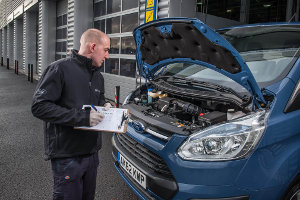
Mechanic inspecting Ford Transit Custom as part of Ford's Transit24 serviceFord has launched Transit24, a service level agreement designed to provide fast and consistent aftersales services to its commercial vehicle customers.

Part of Ford’s on-going investment into the UK’s largest dealer network, Transit24 will help to minimise vehicle downtime and reduce whole life costs for Ford customers. The new initiative comes in the wake of the launch of the Transit Custom, which forms the first part of the complete renewal of its commercial vehicle line-up by 2014.

More than 90 of Brentwood-based Ford’s 200-plus commercial vehicle authorised repair network will be identified as “Transit24 Dealers” to provide first class service, maintenance and repair for all commercial vehicles. They will provide priority treatment for all urgent work and aim to complete vehicle-off-road repairs on the same working day, or within 24 hours.

Each Transit24 site employs Ford-trained technicians and offers specialised workshop equipment, tools and training, and can look after all service, maintenance and warranty work. They will offer while-you-wait servicing to suit the customer, including late night appointments at least once a week, and will respond to online service booking requests within 20 minutes.

Collection and delivery of vehicles can be arranged and every vehicle leaves the dealership washed and ready for work. Fleet National Pricing for 25-plus fleets ensures the best prices for routine servicing and fixed-content jobs.

Jon Wellsman, Ford of Britain Customer Service Director, said:

“This initiative from Ford provides added value and convenience for our customers. Ford offers a class-leading range of commercial vehicles and technologies and with the most accessible dealer network in the country, the aim is to offer the best and most widespread care and assistance for Ford customers.”

Other benefits include using only genuine Ford parts, whether in stock or delivered to the dealership by 9am the next day, and a sophisticated internet-linked vehicle diagnostics system. Other dedicated back-up from Ford includes an electronic recalls programme and the support of a dedicated team at the Ford Fleet Service Centre.

Every Ford Transit and Transit Connect comes with a comprehensive three year/100,000-mile manufacturer’s warranty and with Ford Assistance, a premium roadside assistance package which includes ‘load continuation’, so that in the event of a breakdown, the load can be delivered before the vehicle is taken to a repairer. Ford also offers a free Fleet Accident Management service to all business customers.

This could be a deal that appeals to busy van hire companies and trade operators, for whom every hour of lost availability directly equates to lost earnings.

BT Fleet & TomTom Business Solutions Join FTA’s Van Excellence Scheme

BT Fleet and TomTom Business Solutions have joined Hertz, ATS Euromaster and Route Monkey as Industry Partners of the Freight Transport Association (FTA) backed scheme Van Excellence.

The Van Excellence scheme was launched by the Freight Transport Association (FTA) in 2010 to promote high standards of van operation and driving by accrediting operators against an industry code of good practice. The scheme has grown strongly since it was launched and its membership list now includes many industry and household names, such as Tesco, British Gas and BT.

The two latest companies to join, BT Fleet and TomTom Business Solution, has joined as ‘industry partners’, as Mark Cartwright, the FTA’s Head of Vans and Light Commercial Vehicles, explains:

Industry Partnership of Van Excellence is the perfect opportunity for two such highly respected organisations as BT Fleet and TomTom Business Solutions to become involved the scheme

Other companies that have already joined Van Excellence as industry partners include car and van rental firm Hertz and tyre network ATS Euromaster.

Industry Partners are an important addition to Van Excellence helping to promote and endorse the Van Excellence Code amongst their customers and encourage its standards to be adopted and followed throughout the light commercial vehicle sector.

In addition to supporting Van Excellence, the Industry Partners will be working with FTA on a number of different initiatives throughout 2013, including a Van Excellence supplement, developing best practice guides, and three new conferences throughout the UK.

For more details about Van Excellence and a full membership list, visit www.vanexcellence.co.uk.

Drive Away In A New VW Van From £199 A Month

Volkswagen Transporter BlueMotion

The Volkswagen Transporter BlueMotion

Volksagen is aiming to boost new van sales to sole traders and small businesses with a new set of contract hire and finance lease offers which make it possible to drive a new Volkswagen van from  £199 a month (plus VAT and initial deposit) with deposit contributions from Volkswagen of up to £1,000.

The finance offers are available on the entire Volkswagen van range.  This means the Caddy is currently available from £199 a month (excluding VAT), a Transporter from £239 (excluding VAT), or the big Crafter from £309 (excluding VAT).

These offers also include a generous initial rental contribution from Volkswagen of £1,000 for customers financing a Caddy or Crafter, or £500 for the Transporter. These offers are available until the end of March 2013*.

Alternative finance options, such as traditional hire purchase or lease purchase methods, are also available with a competitive flat rate of 3.79 per cent interest, plus a £1,000 deposit contribution for Caddy and Transporter models, or a £2,000 deposit contribution for any Crafter models.

“Low rate finance, stronger residual values, plus a choice of efficient engines using BlueMotion Technology, significantly reduce the whole life costs of our vans, and make them exceptionally good value,” said Alex Smith, director of Volkswagen Commercial Vehicles.

*For more details and full details of the finance offers, visit www.volkswagen-vans.co.uk.

Used Van Prices 2nd Highest On Record In January

The latest BCA auction figures show that van prices remained firm in January, with the LCV average of £4,669 the second-highest on record since 2005.

BCA’s latest Pulse data shows average LCV values remained on a high in January, with fleet & lease values increasing and dealer part-exchange falling slightly from the exceptional prices seen in December, when lack of stock, a shorter trading period and changing mix contributed to the values achieved.

The average January figure of £4,669 for LCVs was the second highest on record for any month since Pulse began reporting in 2005.  Both average age and mileage rose over the month to 56.6 months and 80,700 miles respectively.  There was strong demand from professional buyers across the widest range of commercial vehicles and sold volumes rose significantly compared to December.

BCA used van prices January 2012

As the numbers below show, buyers are now paying more for an older van with higher mileage than they were this time last year, providing a graphic demonstration of supply and demand (and inflation):

All vans Avg Age Avg Mileage Avg Value Sale vs CAP
Jan 2012 55.37 75,814 £4,483 100.02%
Jan 2013 56.64 80,736 £4,669 102.24%

*Data courtesy of BCA

Duncan Ward BCA’s General Manager – Commercial Vehicles commented commented:

“Although the headline value declined compared to December, January essentially delivered more of the same – a shortage of stock allied to decent levels of demand that generated exceptionally strong prices in the used van market.”

“With stock remaining thin on the ground, buyer demand is focused on the best quality commercial vehicles and this is driving values up, particularly for corporate sellers where average values reached a new highpoint in January.  Sale conversion rates also rose in January as buyers competed for stock and BCA saw lots of activity in the online arena with nearly a quarter of all vehicles being purchased by internet bidders.”

He added “The rise in average prices at the ‘value-for-money’ end of the market continues unabated and dealer part-exchange values have stepped up significantly over the past two months.  This is likely to be a side-effect of the tough economic climate.  With continuing redundancies across a range of business sectors from retail to manufacturing, many people will be tempted strike out on their own and one of the first things they will buy with their redundancy money is a van.”

I’m not sure when the pressure on used van supply will end — used van purchases are rarely discretionary and are usually driven by business need, so van operators are going to have to continue paying more in order to acquire second-hand vans.

DfT Introduces Common-Sense Exclusions For Van Type Approvals

Vauxhall and VFS Movano caged tipper conversionWith new EU Type Approval rules due to be introduced in April, UK van converters were beginning to worry that even such mundane modifications as ply-lining would need individual type approval.

(Even though, as I pointed out here, the DfT has always emphasised that type approval only applies to vehicles before they are registered — there are no restrictions on modifications after this point*.)

Whatever the case, there was still a grey area of uncertainty and doubt that suggested that the van industry was going to have to face a monumental paperwork headache come April this year. Luckily, common sense has prevailed (along with a bit of lobbying by the SMMT) and a solution has been found.

SMMT has announced today that it has successfully negotiated a valuable Van Enhancement Scheme that removes the requirement for UK-based van manufacturers and bodybuilders to seek Type Approval on basic vehicle modifications.

Under legislation set to hit N1 category vehicles from April this year (and N2 vehicles from October 2014), any modification would have required separate Whole Vehicle Type Approval (WVTA). The Enhancement Scheme, secured by SMMT with VCA and VOSA, removes the requirement for basic modifications (ply-lining, basic racking, etc) to be approved.

“SMMT has worked hard to achieve this crucial Type Approval change that will avoid unnecessary paperwork and save UK businesses thousands of pounds every year,” said SMMT Commercial Vehicle Manager Nigel Base. “We have found a solution that works for all parties while maintaining safety standards for those converters making basic modifications to panel vans. This sort of administrative burden could have forced some firms out of business, but thanks to close collaboration with industry partners and government this will now be avoided.”

Over the past 10 months SMMT has worked with a group of van manufacturer and converter members, the VCA, VOSA and the Department for Transport to try and reduce the regulatory burden of Type Approval. The process has achieved a result that will see around 80% of vans sold in the UK avoid the burdensome Type Approval requirements, with another 15% of the market benefiting from an enhanced process of application and approval of multiple vehicle types.

Those  converters that need to go through the Enhancement route will benefit from an upgraded version of SMMT’s online Type Approval guide – SENTA (www.smmt.co.uk/SENTA). The tool guides companies through all combinations of Whole Vehicle Type Approval, streamlining the process and saving companies time and costs.

*Disclaimer: This article is my opinion only and is definitely not a guide to the new rules. Contact VOSA or the VCA if you want to know the facts, don’t trust me!