Tag Archives: Transit

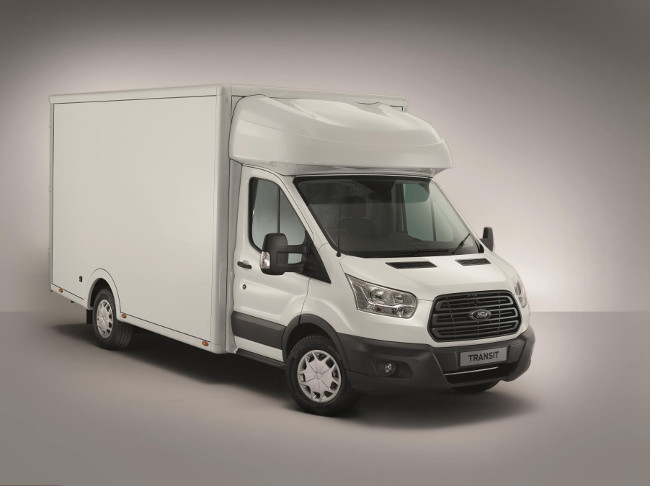
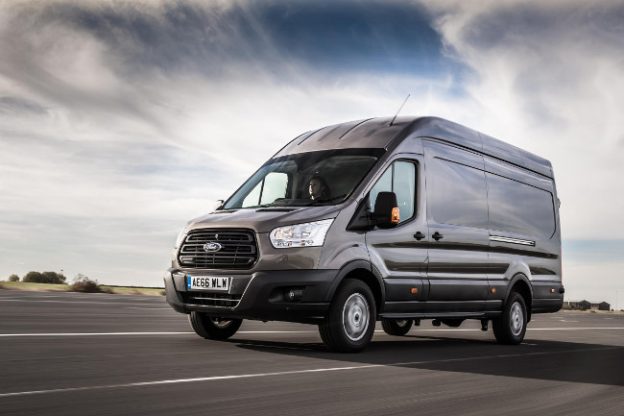
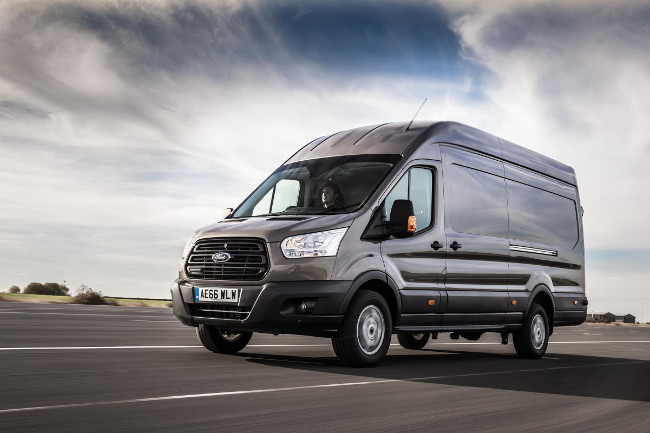
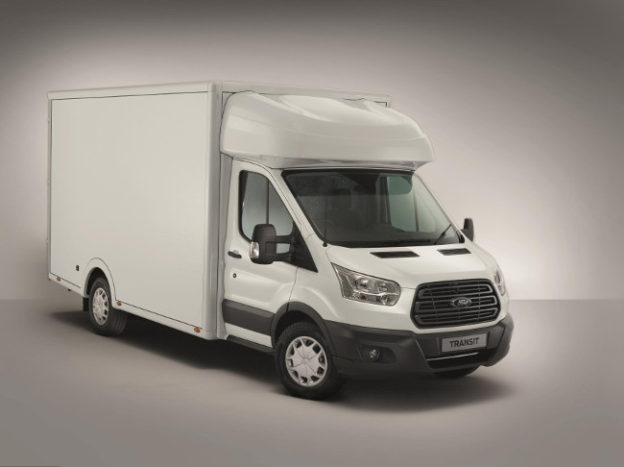
Ford Transit Skeletal chassis cab

Ford adds low-floor chassis option for bigger removal vans

Ford Transit Skeletal chassis cab

Ford Transit Skeletal chassis cab is based on the front-wheel drive model and provides a lightweight low-floor base for conversions. It should be a popular choice for removal vans.

Anyone planning to move house with a rented van may want to check if their local rental company offers a low-floor jumbo luton, sometimes known as a dropwell van.

As their name suggests, their built like a standard luton van but with a low floor that boosts the available load space for large-but-light items. Such as furniture.

Ford already dominates most sectors of the UK van market. But the company has now decided to target this niche sector of the market with a new lightweight chassis cab model that’s aimed specifically at conversions requiring a low load floor.

The big numbers

The new Transit skeletal chassis cab offers a 100mm lower chassis height than a standard front-wheel drive Transit and weighs 200kg less than a standard chassis cab. That’s a big difference in weight.

This big weight saving means that the payload of the converted van should remain competitive, even with the added weight of a large box body. Finished models will normally be built to have a maximum weight of 3.5 tonnes, so anyone with a standard car licence should be able to drive them.

Customers will be able to choose three wheelbase lengths and the model will be powered by Ford’s 2.0-litre EcoBlue diesel in 130PS or 170PS power output. A choice of six-speed manual or automatic gearboxes will be available.

Ford Transit Connect

Ford will release new Transit Connect and Transit Courier in 2018

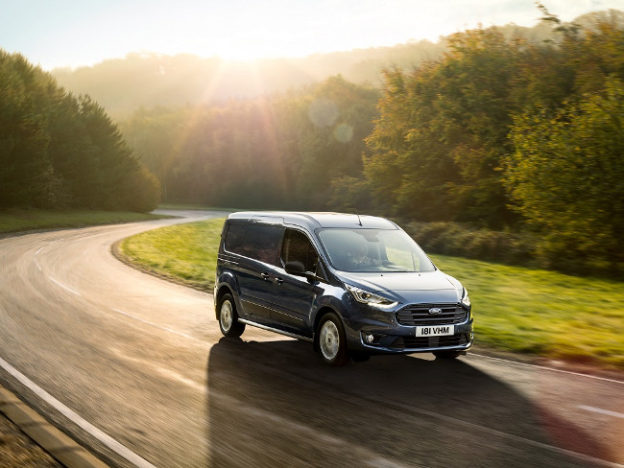
Ford Transit Connect

The new Ford Transit Connect will go on sale in mid-2018

Ford will release updated versions of the Transit Connect and Transit Courier vans in mid-2018. The updated models will follow the new Transit Custom onto the market.

These models don’t sell quite as many as their larger sibling, but they’re important for Ford. In the UK, both have been the best-selling models in their respective segments so-far in 2017, with more than 20,000 sales — a quarter of Transit nameplate sales.

As expected, the majority of changes are in three areas:

  • An updated front end
  • Improved choice of more efficient petrol and diesel engines
  • New cabin interior

Ford Transit Connect

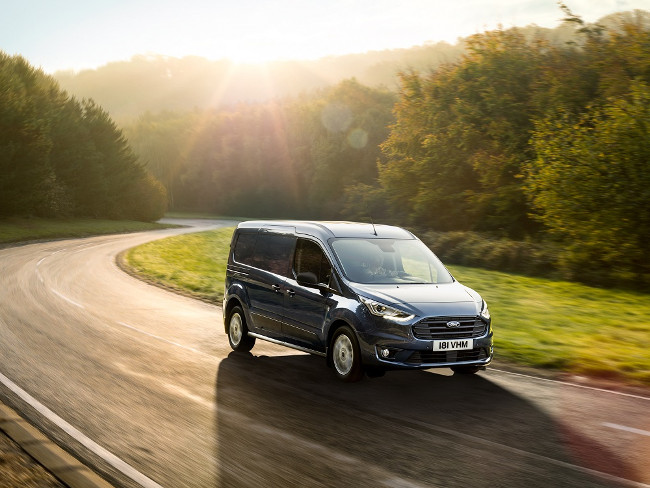
I won’t waffle on about the new front end design, as you can see from the picture above, it adopts the distinctive three-bar Transit grill and includes a modified headlight design. But what’s more interesting are the technical and interior changes.

Engines

Buyers of the updated Transit Connect will be able to choose from Ford’s new 1.5-litre EcoBlue diesel engine or the latest version of its widely-used and popular 1.0-litre EcoBoost petrol engine.

The EcoBlue diesel will achieve Euro 6.2 emissions standards and will also be available with a new eight-speed automatic transmission — a rarity in vans. The petrol engine will include sophisticated features such as cylinder deactivation to run on two cylinders at low loads.

All engines get a six-speed manual transmission as standard.

Service intervals have also been extended in a bid to cut ownership costs. The manual diesel models will now offer “best-in-class variable intervals of up to two years/25,000 miles”.

Personally I’m not keen on this. It doesn’t seem right to me that any vehicle can run on the same oil and without an inspection for such long periods. Long service intervals may not cause problems for a vehicle’s first owners, but I suspect that they are likely to increase wear-and-tear and age-related problems for later owners. Still, that’s probably not Ford’s primary concern. 

New interior

Rant over, here’s a picture of the new interior which will be fitted to Transit Connects. The design language will be familiar to drivers of other small and mid-sized Ford cars and vans, and looks likely to be comfortable and highly functional:
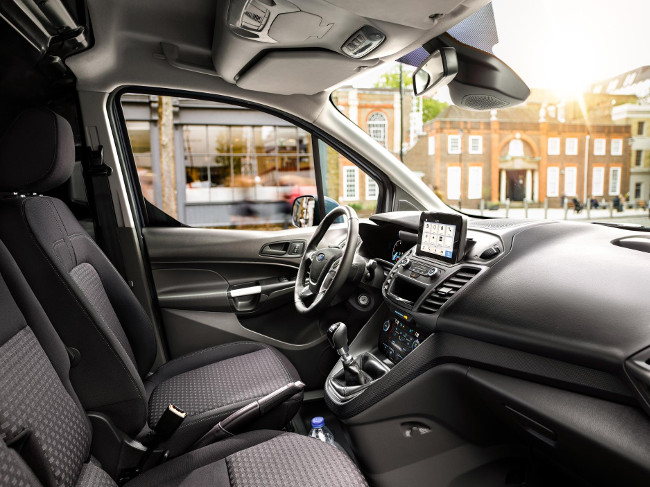
Ford Transit Connect cabin

When the updated Ford Transit Connect goes on sale in mid-2018, it will have an attractive new cabin.

Ford Transit Courier

Changes to the new Transit Courier — Ford’s smallest van — are very similar.

An updated front-end design is combined with a new cabin to provide a fresh and improved feel for this popular small van.
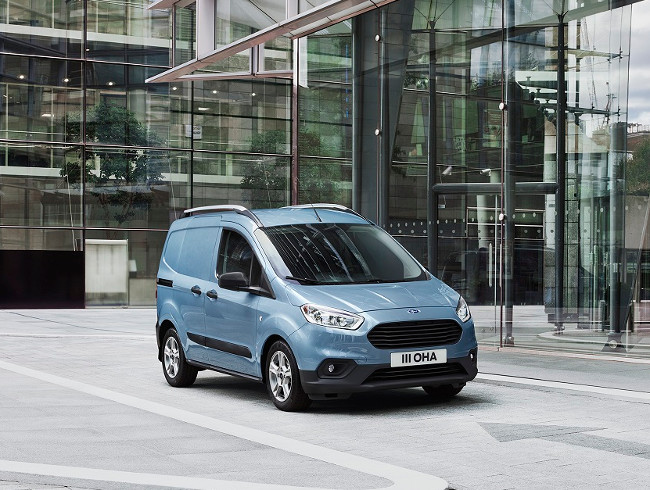
Ford Transit Courier

The updated Ford Transit Courier will be available from mid-2018.

The engine line-up will be similar to the updated Transit Connect. Buyers will be able to choose between an older-generation 1.5-litres TDCi diesel (apparently not the new EcoBlue engine) and Ford’s 1.0-litre EcoBoost petrol. All will get a six-speed manual in place of the outgoing five-speed manual. This should help to improve real-world fuel efficiency.

A new fuel efficiency package will be offered as standard on diesel models, including Ford’s Active Grille Shutter. This is used to closed the radiator grill when the engine is cold in order to retain heat and reduce the engine’s warm-up time — diesels generate less heat than petrol engines and traditionally take longer to warm up, reducing fuel efficiency.

The Transit Courier will be available in a choice of van and kombi styles, with payload capacity from 500-590kg. Drivers wanting a little extra will now be able to choose between the range-topping Sport model or a more luxury-oriented Limited variant.

SSE Ford Transit Custom

Smart meter roll-out sparks SSE order for 507 Transit Custom vans

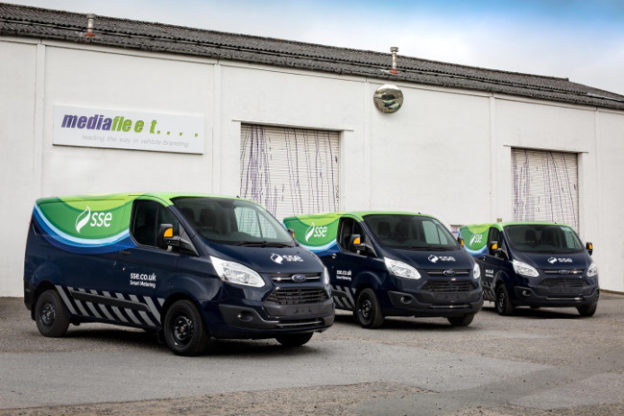
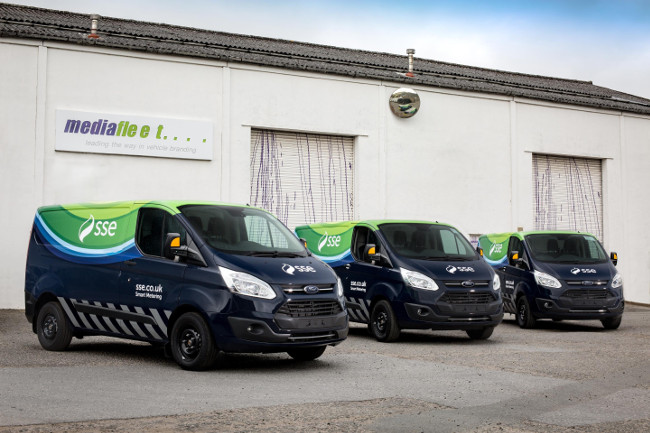
SSE Ford Transit Custom

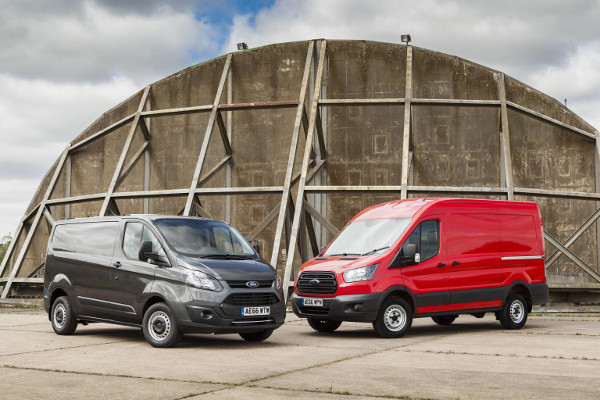
SSE’s new Ford Transit Custom vans will be used for its smart meter rollout programme.

Utility giant SSE has placed an order for 507 Ford Transit Custom vans as for its smart meter installation teams to use.

The new vans take Ford’s share of SSE’s 6,000-strong fleet up to 30%. Each van is specified with Ford’s 2.0-litre 130PS EcoBlue TDCi engine, with Auto-Stop-Start technology.

Inside, the vans are fitted with internal storage and racking systems at Qi Van Systems of Telford, Shropshire, and liveried at Mediafleet of Witney, Oxfordshire.

Delivery of the 507 Transit Customs will be completed by November and the vans will be in service across the UK.

“We chose the Ford Transit Custom for this role for a number of reasons,” said Gemma Trew, SSE van and truck fleet manager. “It was not simply a question of economics – although the Transit does offer excellent whole-life costs – driver comfort and load area convenience were significant factors too. The Transit’s load space shape is ideal for the job.”

The Transit Custom was the top-selling van in the UK last year, a record it’s maintained so far this year, in which the model has accounted for nearly 14% of all vans registered in the UK.

Purdy the Transit

Rare Mk 2 Transit ‘Purdy’ needs your help to stay on the road

Purdy the Transit

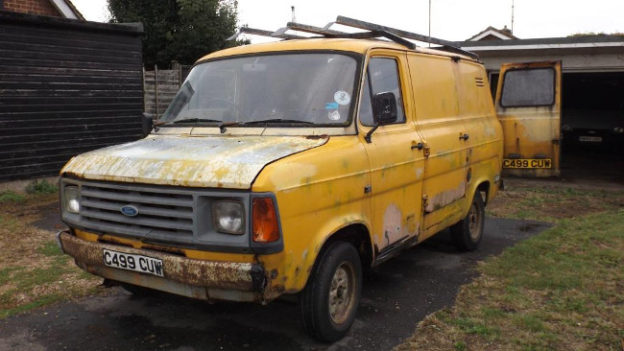
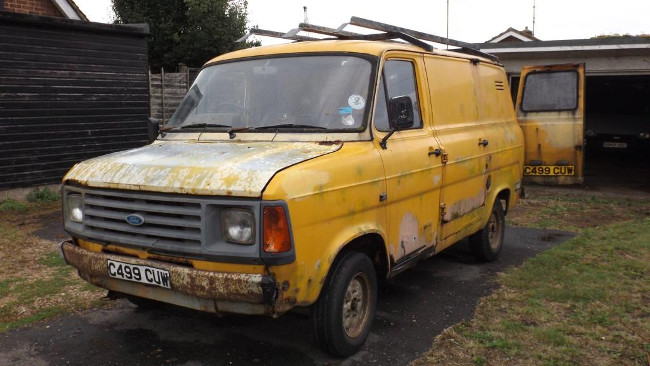
Purdy is an ex-BT Ford Transit Mk 2 — an increasingly scarce model.

Purdy is a rare ex-BT Ford Transit Mk 2 that’s owned by Penny Panagi from St Leonards-on-Sea. This van is well-known around Hastings and among the classic car community, but has fallen on hard times in recent years and is now in urgent need of some serious TLC.

As part of Ford’s celebrations of 100 years of commercial vehicles, Purdy will appear on the Ford stand at this year’s FordFest, which will take place at the Santa Pod drag strip on Sunday, 17 September.

The van is currently described as “too far gone to be economically viable to repair”, but owner Penny is determined to rescue this increasingly rare model and get it back on the road. She’s hoping that UK Transit fans will dig deep and help to fund some of the restoration work this great lady needs.

Such is Purdy’s fame that she even has her own Facebook page, where you can keep up to date with progress on the restoration and chat with other supporters or volunteer your help.

If you’d like to support Purdy’s restoration directly, she also has a crowdfunding page where you can donate: https://www.gofundme.com/23ztpmk.

FordFest event director, Phil Weeden, said:

“It’s imperative that, having survived this long, Purdy remains on the road. Most vans have a very hard life and few live to being over 30 years old, especially ex-utility vehicles such as this one. Penny adores Purdy and the van has become something of an icon among Transit fans and classic vehicle preservationists alike, so we’re hoping that her presence at FordFest will be sufficient to help raise enough funds to continue the restoration. What better way to celebrate 100 years of Ford Commercial Vehicles than to contribute towards the preservation of one so iconic?”

Apparently Purdy does still run, but she’s no flyer and won’t be taking part in the FordFest Drag Race. But visitors to the event should be rewarded with a feast of Ford delights, as more than 2,000 cars are expected to be on display.

Other highlights planned for the show are magazine cover style photo shoots from Blue Pig Photography, where showgoers can have their car modelled on the front of a mag for just £40, plus a Show and Shine sponsored by ValetPRO, entrance photography by Photography UK and stands from the leading Ford titles, Fast Ford and Classic Ford.

Ford Model TT loaded with straw

From Model TT to Transit: Ford celebrates 100 years of vans

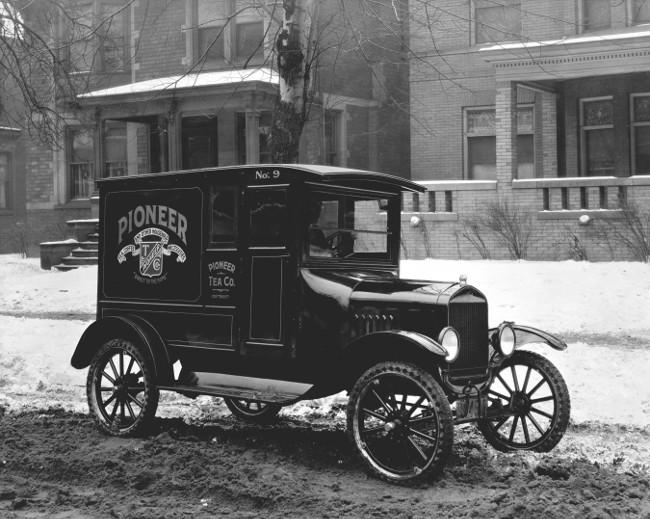
Ford Model TT van in 1917

The Ford Model TT van was launched in 1917 and was the company’s first purpose-built van.

Did you know that 2017 marks the 100th anniversary of the first purpose-built van made by Ford? I didn’t either, but it turns out that back in 1917, Ford launched the Model TT.

The TT was a purpose-built one-tonne van, making it the direct equivalent of today’s Transit Custom. Obviously much has changed. But as these pictures from the Ford archives make clear, in some ways very little has changed. Like the Transit Custom, the TT provided a flexible and highly customisable way for businesses to transport more or less anything.

Ford Model TT loaded with straw

The Ford Model TT loaded with straw. Obviously wide loads weren’t such an issue then as they might be now…

The TT had solid tyres and was started with a crank handle. Operators wanting more comfort could specify air-filled rear tyres, which were something of a luxury at that time.

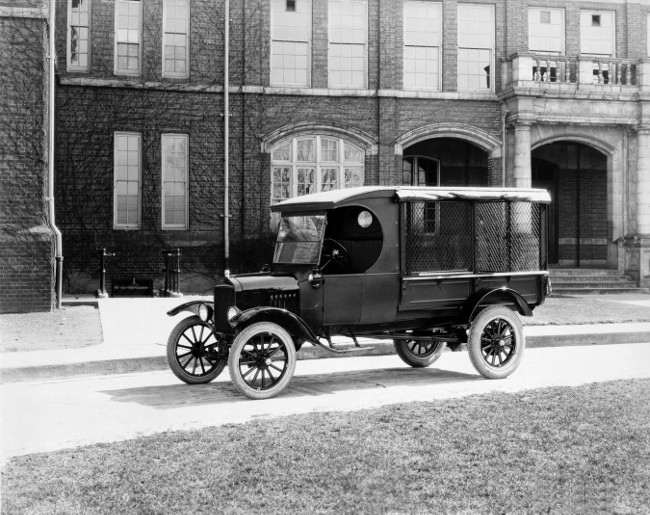
Ford Model TT with caged rear body

A Ford Model TT with a caged rear body — as used by gardeners and scrap dealers today!

I’ll leave you with this fascinating titbit. According to a study commissioned by Ford, 46% of Britons believe that a “Transit” refers to a specific size of van. Almost a quarter of those questioned used the word “Transit” to describe a typical panel van.

Like it or not, the Transit really is part of the fabric of life in the UK.

Ford Transit on stormy day

Did Doris Day winds make driving tough? Ford has the answer

“The road is closed to high-sided vehicles” is a common traffic news comment in stormy weather. High winds can make it unsafe to drive on exposed roads. And while even the biggest of vans are not true high siders, they can be severely buffeted around when empty.

Ford Transit on stormy day

The answer appears to lie in the electronic stability control systems that are now fitted as standard to most modern vehicles. It’s commonly thought of as traction control but is actually able to do much more, using a clever combination of sensors and brake control.

For example, Ford now fits its Side Wind Stabilisation system to all new Transit and Transit Custom vans. At vehicle speeds of more than 50mph, the Side Wind Stabilisation system monitors stability sensors 100 times per second. If a sudden gust is detected, the system will apply the brakes on one side of the vehicle in order to counter the effect of the wind.

You can see the Side Wind Stabilisation system in action in this video from Ford:

“No-one likes that feeling when your vehicle gets caught by a wind gust, or you are passing close to a fast-moving truck,” said Marc Suermann, chassis controls supervisor, Ford of Europe. “This new technology will help make driving less stressful for Transit drivers, particularly on those dark and stormy winter days.”

The new Side Wind Stabilisation system was part of a package of new driver assistance systems introduced on the Transit and Transit Custom alongside Ford’s new EcoBlue diesel engine. Other measures include Pre-Collision Assist emergency braking, which is the first in its segment to include pedestrian detection technology.

Ford Transit Custom Colour Edition

Ford expands Sport range for Transit Custom buyers

Ford has introduced some new models to its Transit Custom range. The new Colour Edition and Sports series models will target buyers looking eye-catching looks and those looking for improved driving dynamics and more aggressive styling.

Ford Transit Custom Colour Edition

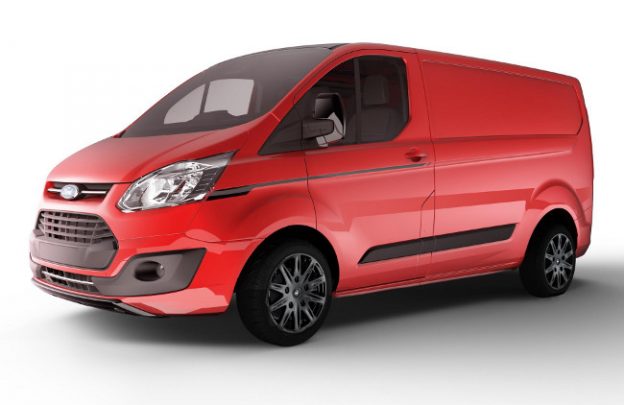
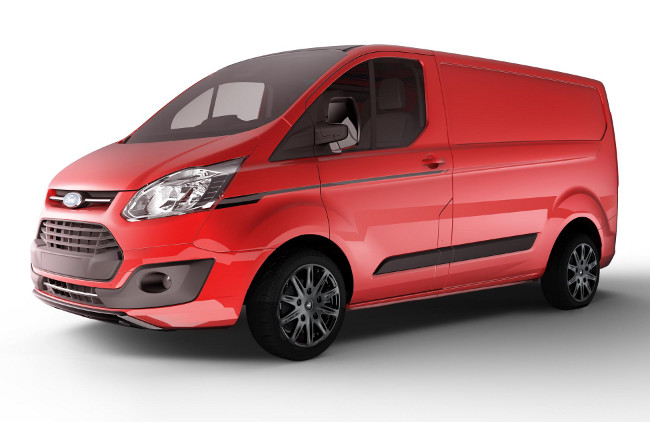
Ford Transit Custom Colour Edition in Race Red

Colour me happy

The new Colour Edition models are all about style. They will be available in four colour schemes, Race Red, Deep Impact Blue, Frozen White and Shadow Black. Each van will have a contrasting roof, mirror caps, skid plate and side straps, along with black 17-inch alloy wheels.

All models will have a short wheelbase and a standard roof, and will be based on the 290 Trend model. Under the bonnet will be Ford’s new 170PS 2.0-litre Ford EcoBlue diesel engine, with a 6-speed manual transmission. The enhanced chassis settings used on the Sport series van will also be used on the Colour Edition, which should sharpen the driving experience.

The Colour Edition will be available for delivery in Spring 2017, but UK availability will be limited to just 400 units. There’s no word on price, but with so few vans, it might be worth contacting your local dealer if you’re interested.

Sport series gains new body choices

The Transit Custom Sport has hitherto been available in just one body style, the single cab short wheelbase van. Ford has heard the cries from its customers and has now expanded the Sport series to include no fewer than six different variants.

As before, the range-topping Sport series will feature a body kit and a fully colour-coded exterior, including body-colour bumpers, side mirrors and door handles. There will also be body-side mouldings and wheel arch extensions that have been redesigned for the latest model.

The van’s bold appearance will be complemented by new 17-inch alloy wheels in a two-tone silver and black design – with optional silver 18-inch alloy wheels – and twin bonnet stripes in a contrasting colour.

Inside, the seats will boast half-leather trim and the latest interior technologies such as the Ford SYNC connectivity package.

The Sport vans will use the same 170PS Ford EcoBlue diesel engine as the Colour Edition, but buyers will be able to choose between a 6-speed manual and the new 6-speed SelectShift automatic transmission option on three of the Sport series variants.

All Sport models are based on the 290 series Transit Custom, with driving dynamics enhanced by a unique chassis specification that’s expected to deliver improved handling, ride and feel.

Changes include a thicker front anti-roll bar and the addition of a rear anti-roll bar. On the van model, this is combined with softer rear springs for increased comfort when lightly laden, along with unique damper tuning, with firmer settings on the rear, for enhanced ride and steering control. Double-cab-in-van models have different spring and damper settings optimised for both handling and rear passenger comfort.

The expanded Transit Custom Sport series is available to order at the end of the year for customer delivery in spring 2017.

Ford Transit EcoBlue

Ford: Transit EcoBlue could save £1,250 over 80,000 miles

Ford’s best-selling Transit and Transit Custom vans will now benefit from a reduction in fuel consumption and a significant fall in CO2 emissions, thanks to the firm’s all-new EcoBlue diesel engine.

Ford Transit EcoBlue

The Ford EcoBlue 2.0-litre diesel will replace the 2.2-litre TDCi engine previously used across the Transit and Transit Custom ranges. EcoBlue promises to deliver improvements in fuel efficiency of up to 13% and CO2 emissions from just 157g/km, along with improved low-end torque.

The new engine is avaialble now and offers three power levels, 105PS, 130PS and 170PS. Low-end pulling power is said to be improved across the range, with 20% more torque available at 1,250rpm. That means responsive, relaxed performance during regular driving — and fewer gear changes.

Transit models equipped with the new engine and optional Auto-Start-Stop will deliver average fuel consumption of 42.8mpg and CO2 emissions of 174g/km, says Ford. The equivalent figures for the smaller Transit Custom are 46.3mpg and 157g/km.

Ford believes the engine’s improved fuel efficiency could save van operators up to £1,250 over 80,000 miles, based an operator replacing an outgoing Transit Custom 100PS model with an EcoBlue 105PS model.

Service intervals have also been extended and are now two years/36,000 miles for both Transit and Transit Custom models. Personally, I like the idea of such long intervals for high mileage users. However, I can’t help feeling personally that two years is just too long for a vehicle to go without an oil change and mechanical inspection. Maybe I’m just old fashioned…

New Transit AWD

Ford also used the IAA Commercial Vehicle Show in Hanover as an opportunity to showcase an updated all-wheel drive system for the Transit.

The new intelligent Transit AWD system combined the front differential and AWD coupling into a single unit, reducing weight by 10kg and allowing the driveline to be packaged more efficiently around the EcoBlue engine.

The electronically-controlled coupling can vary front/rear torque distribution by between 0:100 and 50:50. Auto AWD mode is used for standard driving, while an AWD Lock mode is available for times when permanent four-wheel drive is required.

Transit AWD models can be specified with either the 130PS or 170PS Ford EcoBlue engines, across a range of panel van and chassis cab body styles. The new Transit AWD will be available to order later this year for delivery in 2017.

Improved auto gearbox

No one can accuse Ford of resting on its laurels. In addition to the new EcoBlue engine and AWD system, the firm unveiled a new six-speed SelectShift automatic transmission for Transit and Transit Custom vans at the IAA Show.

The new system is based on a design that’s been proven in the North American market, where it’s been used in front-wheel drive vehicles with a torque capacity of more than 415Nm. The new system will be available in Transit Custom and front-wheel drive Transit models specified with 130PS or 170PS engines. Auto-Start-Stop will be standard on all automatic variants.

Ford says that the SelectShift system has an average gear shift time of less than 0.5 seconds and has been optimised for commercial users. Manual shifting is available if required, using a switch on the gear lever.


Ford Transit key

New Ford key fob promises lifetime reliability for van drivers

Little things can make a big difference when you’re working hard.

Like being able to lock and unlock your van reliably, without having to worry about whether your key fob will still work after having been dropped in a puddle.

Vehicle key fobs fail or need new batteries with tedious regularity. But Ford is determined to rescue hard-working van drivers from this minor form of purgatory.

The company has introduced a new ignition key for Transit and Transit Custom vans that promises to be almost indestructible and should never need a new battery.

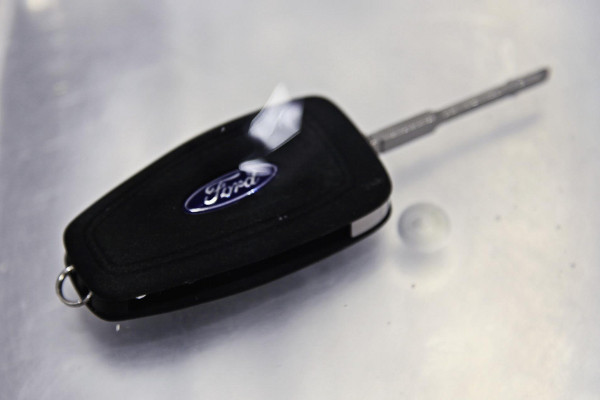
Ford Transit key

Ford tested the key – for Transit and Transit Custom vans – to ensure it could survive being submerged underwater for 30 minutes, dropped 50 times onto a concrete floor and exposed to temperatures from 60deg C to – 20deg C.

Engineers also tested the key using using climatic chambers in temperatures simulating everything from desert heat to arctic cold, and in humidity levels of up to 100 per cent. Further tests included ensuring:

  • Dust resistance – five hours surrounded by a fine, penetrating dust
  • Chemical resistance – up to 96 hours continuous exposure to diesel, petrol, ethanol, detergents and sweat
  • Pocket simulation – four hours non-stop vibration with coins and other keys
  • Button durability – 10 button presses with 12 times the usual force
  • Endurance – 100,000 activations in temperatures ranging from 50deg C to -10deg C

The new Transit key fob looks like any other ignition key, with a keypad to lock the vehicle and a flip-style key blade. However, to ensure it is completely waterproof, it is permanently sealed shut, with the two halves of the plastic housing joined by friction welding. The inside of the key is carefully designed to resist typical workplace impacts, and a rechargeable battery cell is charged whenever the key is placed in the ignition, to ensure it never runs out of charge.

Personal experience backs up Ford’s claims of ignition key quality. I recently sold a 2001 Transit which I’d owned for eight years. The key fob still worked perfectly.

In contrast, the key fob for my much newer Peugeot car has needed fixing twice in the last three years.

Just another reason to own a Transit, I guess.

Ford Special Vehicl Preparation unit

Ford Transit Custom tops emergency services wish list

Few vehicles are more versatile than medium-sized vans, like the Ford Transit Custom, which fulfils functions as varied as luxury VIP transport and builder’s van.

While the Transit Custom does have peers, few offer the same mix of reliability, price, volume availability and specification choice that Ford can offer. Unsurprisingly, the Transit Custom is becoming one of the most popular choices as a van and people carrier with UK police forces.

Nowawdays, emergency services club together in regional consortia to get the best possible deals when buying vehicles. In a recent ordering round, Ford received an order for 1,100 new vehicles, 760 of which were Transit Customer medium vans. A further 110 were smaller Ford Transit Connect vans, while 30 Ford Ranger pick-ups were also included.

The firm’s Kuga is also becoming a popular choice thanks to its optional 4×4. Of the 1,100 vehicles ordered, 200 were Kuga models.

Ford Special Vehicl Preparation unit

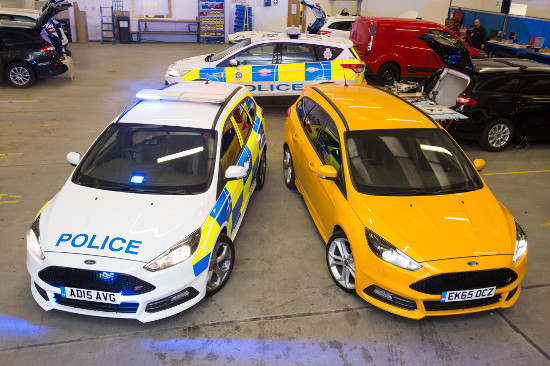
Work in progress at the Ford Special Vehicl Preparation unit

Roughly half of the Transit Custom vans will be supplied by Ford as cell vans. The conversions will be undertaken by Ford’s Special Vehicle Preparation (SVP) operation in order to make the van capable of transporting two detainees and up to five police offers.

“Ford has a long history of working with emergency services spanning 50 years,” said Terry Adams, Ford direct sales manager.  “The stylish and capable Ford Kuga has established itself as their rural beat car of choice with all-important all-wheel drive necessary for winter conditions.”

British Transport Police, South Wales and Dyfed Powys are other forces with Ford Kugas on their fleets.  The market-leading Ford Transit Custom is used in every police region in the country, with roles as cell vans, crime scene units, dog carriers and camera vans.

The Transit Custom is winning fans elsewhere, too. Ford has recently been chosen as the exclusive supplier of cars and vans for the Team Sky cylcling team. While the team’s mainstay for race work will be the Mondeo estate, two Ford Transit Jumbo’s will be used to transport all of the team’s gear to and during races, while two nine-seat Tourneo Customs will be used as minibus shuttles to transport team members as needed.