Nissan Launches Ready-To-Roll NV200 Fridge Van

Nissan NV200 Fridge

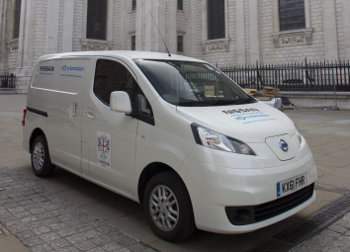
The cooling unit hardly protrudes above the roofline in the Nissan NV200 Fridge – the bulk of the unit is inside, as the picture below shows.

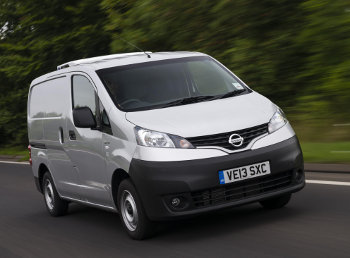
Nissan has launched a refrigerated conversion of its NV200 van that will be available directly from main dealers, with prices starting from £19,375.

The firm says that the decision to offer a fridge van conversion is the result of strong fleet and business demand and highlights that buyers of the new van will get Nissan’s standard three-year warranty, which will include the insulated cell and the cooling unit.

The conversion itself is carried out for Nissan by French converter Gruau, which will install a moulded polyester-polyurethane insulated cell with a cubic capacity of 2.2m³and a Carrier low-profile roof-mounted cooling unit, which will cool the van down to 0°C.

Unlike many aftermarket fridge conversions, where box-like cooling units are bolted on top of the front of the roof, this cooling unit barely protrudes above roof level and maintains the original look and aerodynamic qualities of the van — the majority of the cooling unit is inside the van, although not in such a way as to be likely to affect the usable loadspace.
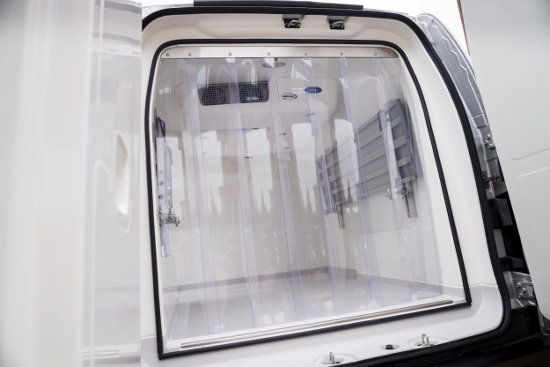
Nissan NV200 Fridge van insulated cell

Inside the Nissan NV200 Fridge van.

Nissan says that the entire conversion adds just 215kg to the weight of the vehicle, leaving a useful 524kg of payload.

The NV200 Fridge Van also comes fitted with a mains connection, so that it can be plugged into a standard 13A socket overnight to maintain the temperature in the refrigerated compartment.

The van is powered by Nissan’s ever-present (and very good) 1.5 dCi diesel engine, which boasts an official fuel consumption figure of 57mpg, although I would imagine the fridge might reduce this a bit.

Barry Beeston, Nissan corporate sales director said:

“A lot of great work has gone into developing the NV200 Fridge as the ideal solution for any fresh food company’s transportation needs. With the conversion adding little weight to the vehicle, the driving quality and the nimble performance of the base NV200 is maintained. ”

The standard version of the NV200 Fridge includes rear doors only and starts from £19,375, but a model with an additional sliding side door is also available, from £19,675. The van is available to order now from Nissan dealers.
Could Van Hire Companies Cut Insurance Costs With Accident Cameras?

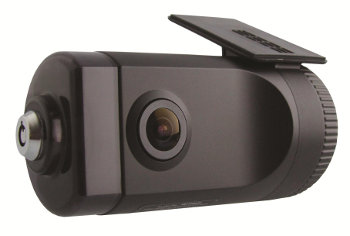
Smart Witness accident camera

The Smart Witness accident camera is compact and discreet and is unlikely to be noticed by anyone outside the vehicle.

If you mention an in-cab camera to most drivers, their first reaction will probably be that they don’t want to be spied on and that having such a camera is a sign they aren’t trusted.

The truth, however, may be the complete opposite. One of the biggest problems with insurance claims is the “he said, she said” type of argument that often results when there are no independent witnesses to a collision.

Having video footage can immediately establish the truth of what happened, reducing insurance claims and protecting innocent drivers from unfair accusations.

This recent story is a great example:

Shocking video footage captures the moment a motorcyclist veers across a winding country lane and is involved in a terrifying collision with a truck. The video shows the bike being smashed to smithereens after driving into the HGV.

Miraculously, the biker escaped with just a broken shoulder after narrowly avoiding being crushed.

The police were called and the HGV driver was allegedly accused of speeding, dangerous driving and poor lane discipline.

His truck was fitted with a Smart Witness Vehicle Accident Camera which proved that the HGV was NOT to blame for the collision.

The video proved that he was travelling at just 27mph at the point of collision and driving safely on the correct side of the road.

As soon as the police viewed the footage, the motorcyclist’s complaint was dismissed and a messy and expensive insurance battle was avoided.

Reading this made me wonder whether van hire companies could also benefit from fitting devices such as the Smart Witness camera to their fleets.

In the event of an accident, rather than being forced to lodge an insurance claim against the other driver using a second-hand and possibly unclear description of events from the driver of the rental van, hire firms would be able to view footage of the accident and provide this to police — and if necessary the other driver’s insurance company — to provide a simple and rapid resolution of the claim.

Top of the range in-vehicle camera models such as Smart Witness’ SVC100GPS accident camera provide video, GPS speed and location data, and a shock sensor for impact measurement. This enables police accident investigators to rapidly work out what happened, and who was at fault. The Smart Witness unit costs £239, but cheaper cameras without GPS are also available from other manufacturers, which would cut the cost of a fleet-wide installation and would still provide the unique benefit offered by video footage.

Installation requirements are minimal and although there would be a risk that the device would be stolen or interfered with by rental customers, I reckon that by avoiding just a handful of insurance claims each year, a system like this could easily pay for itself for hire companies.

In the meantime, in case you are unlucky enough to have an accident in a hire van, why not check out our accident and breakdown guide?

New FUSO Canter Is Prize Catch For Salmon Fishery

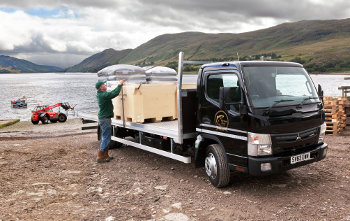
Wester Ross Fisheries FUSO Canter 7.5t truck

Wester Ross Fisheries’ new FUSO Canter 7.5t truck.

West Highlands-based salmon farmer Wester Ross Fisheries has just replaced its four-year old 7.5-tonne FUSO Canter with a like-for-like replacement, highlighting the firm’s satisfaction with this no-nonsense light truck model.

One of the Canter’s biggest strengths over European models is its superior payload — Wester Ross’ new flat-bed Canter has a 4,085kg payload, which is, as Gilpin Bradley, the firm’s managing director points out, “as good as it gets for a 7.5-tonner”.

The new Canter is fitted with a 20ft alloy platform body and is a range-topping 7C18 model, with a 175hp engine and DUONIC automated manual transmission.

The truck will be used for general purpose duties, and undertakes a wide variety of tasks, such as moving pens and other materials between sites, all of which are within an hour’s drive of each other, collecting ice used when harvesting, and transporting fish for primary processing.

Although the Canter’s cab may not offer the level of sophistication found in European truck models like Mercedes’ own Atego, its compact dimensions and light weight are far more important for this kind of short-distance, rural work.

Discussing his latest purchase, Wester Ross Managing Director Gilpin Bradley is keen to emphasis that the Canter’s class-leading payload remains its key attraction:

“We switched to our first Canter because it offered a significantly higher carrying capacity than our previous vehicles. This remains our most important consideration and with its lightweight body our new truck has a payload of 4,085 kg, which is as good as it gets for a 7.5-tonner.

“We specified the higher output engine on this occasion because there are a lot of hills in this part of the world and we didn’t want the vehicle to be working too hard. Our last Canter was exceptionally reliable and I’m confident the same will be true of its successor.”

Wester Ross Fisheries is Scotland’s oldest independent, owner-operated salmon farm, and unlike many of its competitors, all fish are hand-reared — not simply monitored by cameras and machines.

Northgate Vehicle Hire Reports First Signs Of Growth

Northgate Vehicle Hire’s parent firm Northgate plc reported what may be the first signs of its recovery today. In the firm’s most recent quarterly update, Northgate said that UK vehicles on hire had increased by 1,600 to 44,700, compared to 43,100 during the same period last year. This reverses a long-running trend that has seen the company reduce its fleet size in order to maintain stable utilisation and profitability as it has battled to reduce its debt pile.

Of the 1,600 additional vehicles on hire, 500 vehicles were based at new sites opened by the company, while the remainder were at existing sites, providing an encouraging indication of both organic growth and successful expansion.

The majority of Northgate’s business is with fleets and business customers — its vehicles don’t appear in our van hire price comparison results — and although Northgate’s vehicle hire business does serve retail customers directly, it’s not as well known as the major car rental brands, like Europcar.

Stable utilisation

The Darlington-based firm said that vehicle utilisation had averaged 88% during the last quarter, compared to 89% during the same period last year, but that utilisation returned to 89% in August, despite a modest increase in fleet size from 49,900 at 30 April 2013 to 50,600 currently. Underlying hire revenue per rented vehicle also edged higher, rising by 1% compared to the same period last year.

As you might expect, Northgate reported that used van sale prices remained strong during the last quarter, and were in-line with last  year’s prices.

Spanish growth

We’ve become conditioned to some modest signs of growth in the UK, but it was even more surprising to see that Northgate reported a similar set of results from recession-bound Spain. Although some of the gains were seasonal, Northgate said that utilisation rose to 92% in the period to 18 September 2013, compared to 90% for the same period last year. Northgate’s Spanish fleet also grew, from 35,100 at the end of April to its current level of 36,100.

Northgate plc operates the Norflex, Northgate Vehicle Hire and Van Monster businesses in the UK.

UK Van Manufacturing Slumps 51% In August

Commercial vehicle manufacturing output collapsed in August, falling by 51% as a combination of weak demand, the Ford Southampton closure and seasonal maintenance periods impacted production.

According to the Society of Motor Manufacturers and Traders (SMMT), just 3,694 commercial vehicles were built in the UK in August, down by 51% from August 2012, when 7,608 were built:

CV manufacturing Aug-12 Aug-13 % Change YTD-12 YTD-13 % Change
Total 7,608 3,694 -51.4% 72,708 60,646 -16.6%
Home 3,648 1,338 -63.3% 29,918 27,539 -8.0%
Export 3,960 2,356 -40.5% 42,790 33,107 -22.6%
% export 52.1% 63.8% 58.9% 54.6%

Data courtesy of SMMT (www.smmt.co.uk)

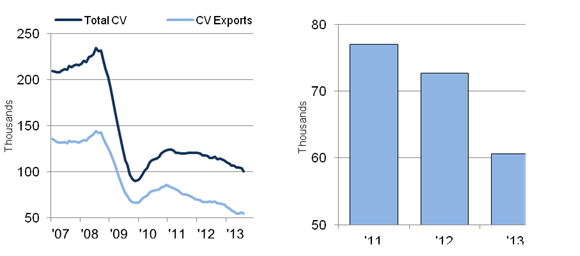
August is traditionally the weakest month of the year, but this year has been pretty disastrous, not least because of the closure of the Ford Transit factory in Southampton. These two graphs show the full horror of the situation — the UK’s CV manufacturing industry has simply collapsed since 2009, with no prospect of any improvement:

UK CV manufacturing August 2013

Total CV manufacturing is less than half its peak pre-recession level, while CV exports have shrunk to almost nothing. (Graphs courtesy of SMMT)

Mike Hawes, SMMT Chief Executive, says that he expects the rest of the year to be pretty bad, too:

“Focused almost entirely on the European market, UK commercial vehicle manufacturing has been impacted by ongoing uncertainly in Eurozone countries, model changes and restructuring of some domestic operations. We expect overall commercial vehicle output to remain negative through the rest of the year, but some sectors may fare better with recent increases in demand for UK-built trucks and buses.”

Given that total CV manufacturing output is down by 16.6% for the year to date, compared to the same period last year, any improvement would be worthwhile, but with unemployment still rife in Southern Europe, and French and German van operators traditionally loyal to home-market brands, it’s hard to see where the improvement is going to come from, unless the UK economy picks up unexpectedly quickly.

Nissan e-NV200 Is A Hit In London’s Square Mile

Nissan e-NV200 electric van

Nissan e-NV200 on trial with the City of London Corporation. The e-NV200 is due to be launched in 2014.

The City of London Corporation is the ‘local council’ for the square mile — London’s financial district, which has just 9,000 residents, but has 350,000 daily commuters and nine million annual visitors.

The dense, congested, urban environment in which the Corporation’s vehicles operate should be ideal for electric power, and two trials this year have confirmed this.

Earlier this year the City of London Corporation took part in a successful trial of the Nissan LEAF electric car, and it’s just completed a week-long trial of Nissan’s electric van, the e-NV200.

The Corporation found that the van could complete a typical daily usage cycle on one charge and received positive feedback from all of the drivers who tried the vehicle.

Using an all-electric vehicle means zero CO2 emissions at the point of use, and the cost of charging an electric vehicle is significantly lower than the equivalent cost of diesel.

The London trial is just one of several trials that Nissan has undertaken with the e-NV200, all of which have been successful. The van is due to be launched next year, and I expect it to be one of the first commercially successful electric vans.

Through its extensive trial programme, Nissan has provided key commercial users with a thorough understanding of how the van can be used, and assuming it is sufficiently affordable, I expect demand to be strong.

Heading Off To University? It’s Time To Hire A Van

Student hat and degree scrollAll across the UK, the university term is about to start (or it’s just started), and parents and students are arriving in droves, often with surprising amounts of ‘stuff’ — electronics, furniture and clothing, mostly, plus a few books…

The only problem is that when you come to pack all that stuff into your car, you may find it simply doesn’t fit — or that your pristine new car is going to end up looking like a battle-scarred taxi inside, by the time you’ve rammed everything in.

The solution, of course, is van hire. This is an especially busy time of year for van hire companies, who face a surge in demand from students and their parents every autumn, as the university crunch strikes, and parents realise that a car simply isn’t the answer.

Although demand is high and I would have recommended booking earlier, my sources tell me that there is still availability for hire vans in most UK locations for the next fortnight, during which most universities kick off the new year.

Luckily, our unique, transparent van hire price comparison engine allows you to compare prices from most major UK van hire companies with just a few clicks. If you need a last-minute rental van, here are a few pointers to get you started:

Thrifty Opens Worcester Car & Van Hire Branch

Thrifty Car & Van Rental logoThrifty Car and Van Rental is continuing its steady expansion in the UK and has opened a new branch in Worcester, on Prescott Drive.
The new branch offers a range of cars and vans for hire and also offers its FlexiFleet service for business customers, which I recently wrote about in my feature on long-term van hire.

Worcester branch manager Amanda Field is keen to emphasise her team’s customer service credentials and the central location of the new branch:

“Our customer service team are very friendly and professional, so you can expect a warm welcome and excellent service on every visit.”

Prescott Drive is situated just to the north of Worcester, directly off the Cotswold Way (B4639) and close to the A449, the Worcester and Birmingham Canal and the districts of Blackpole and Wall Meadow.

You can find full details of the new branch, including a map, on our Thrifty Worcester branch page.

The full address and contact details for Thrifty’s new branch are:

Prescott Drive
Worcester
WR4 9NE

Tel: 01905 675114

Email: thrifty.worcester@thrifty.co.uk

You can find a full list of Thrifty UK van rental branches on our Thrifty branch page.

Vehicle Hire Software Firm Prohire Celebrates 500 UK Locations

If you operate a small or medium-sized car and van hire company, you are likely to need a computer system to manage bookings, invoicing, rental agreements and customer records, as well as back office functions like reporting.

The cost of developing a bespoke system to suit your requirements will almost certainly be prohibitive, and this is where Prohire comes in.

Founded in 1996, Prohire specialises in providing a complete vehicle hire software solution. The firm recently celebrated the addition of the 500th rental location to use its software, when Wrexham-based Jolly Good Van Hire opened its newest branch, in Colwyn Bay.

Commenting on the Prohire service, Mark Hughes, managing director of Jolly Good, said:

“Prohire have been our rental software partner from day one. The quality management information the software provides gives excellent controls within our business”

As well as all of the back office functionality that car and van hire companies require, Prohire also provides a web interface for its customers, that allows vehicle hire firms to take online bookings without the considerable expense and complexity of developing their own booking engines.

Prohire is based on the Kent Science Park, near Sittingbourne,  and is also used by smaller, independent companies with as little as one branch, such as vanrental.co.uk advertiser Seymour Self Drive Hire & Storage, which is based in nearby Larkfield (near Maidstone).

Thieves vs. TRACKER = No Contest As Stolen Van Recovered

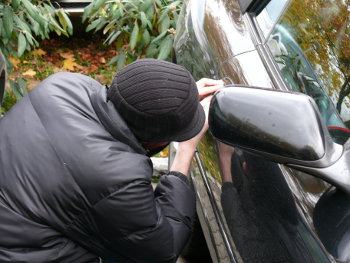
Thief stealing a carWhen it comes to improving the chances of recovering a stolen vehicle, nothing beats a TRACKER.

Although many motorists will commonly associate this technology with high-end cars, the truth is that it is probably even more relevant for companies operating commercial vehicle fleets.

The loss of a van or truck, with thousands of pounds worth of goods or specialist equipment on board can cause damaging disruption to a business, even if it is all insured.

The story of a recent van theft illustrates just how powerful the TRACKER system is, both technologically, and as a deterrent.

A van belonging to Mark Keel, of KD Doors in Lanarkshire, was stolen while an engineer was out on a job. Mark is a TRACKER Fleet customer and also has TRACKER SVR (stolen vehicle recovery) units fitted to all his vehicles for added security; the power of both technologies found the van within less than an hour.

Mark Keel says:

“One of my engineers called me in the afternoon to let me know his van had just been stolen. I was obviously very concerned.  Not only was the van itself valuable, but the tools and equipment inside were equally valuable.  The loss of both would have been a major hit on our business.

“I called 999 and gave them details of the TRACKER SVR unit and 50 minutes later the vehicle was located and recovered. The thieves had apparently left it there to check if it had a tracking unit on it, and so the van was recovered with all my equipment inside. After the initial shock it was a real relief to know I had a TRACKER on my vehicle, ensuring that it could be located swiftly with everything safe inside.”

TRACKER’s range of SVR products work like electronic homing devices.  A covert transmitter is hidden in one of several dozen places around the vehicle. There is no visible aerial, so the thief won’t even know it’s there. Unlike other systems, TRACKER’s devices work no matter where the vehicle or equipment is hidden, even if taken abroad.

Van hire companies don’t always tend to fit TRACKERs (at least they don’t publicly admit to it, and given the short time vans can spend on fleet before being de-fleeted, it doesn’t seem likely), but the power of a TRACKER system is a useful lesson to anyone operating a van who can ill afford to lose a van and all the associated gear.

Of course, there are other tracking systems available that claim to offer similar benefits, but judging from this tale in The Times, they are not all as effective and securely fitted as a genuine TRACKER. In this case, thieves stole the car and removed the tracking device within 12 minutes — since when the car has not been seen.