
Driving A Van In Wind And Rain? Beware Of These Risks

Driving in heavy wind and rainHigh winds and heavy rain shouldn’t be a surprise at this time of year — but they always seem to catch motorists out. if you’re hiring a van you need to take extra care, as the risks are greater, especially in high winds.

Driving in heavy rain and high winds isn’t much fun at the best of time, but it’s even harder if you are driving an unfamiliar rental van. You will find that the van is more susceptible to being blown around by the wind (especially if it’s empty) than your car, and you may not be completely familiar with the controls for windscreen wipers and ventilation — a recipe for disaster if you are on a motorway or main road.

These tips from the Institute of Advanced Motorists apply to all drivers but are especially relevant to drivers of rented vans — so take a quick look:

  • Before you set off, set your heater controls – rain makes the windows mist up in seconds. You don’t want to be fiddling with controls when you should be concentrating on the road.
  • Slow down. In the rain your stopping distance should be at least doubled. Giving yourself more space helps you to avoid spray, especially when following a large vehicle.
  • Keep your eyes on the road ahead and plan your driving so that you can brake, accelerate and steer smoothly – harsh manoeuvres will unbalance the van.
  • Strong winds can also unsettle your car and even change your direction of travel. Grip your steering wheel firmly and be aware of the effects of the elements on other road users, particularly motorcyclists and flat-sided vehicles.
  • If you have cruise control, avoid using it on wet roads – it may create problems if you start to aquaplane.
  • See and be seen. Put your lights on – as a rule of thumb, whenever you need to use your wipers you should also turn your headlights on, and before overtaking put your wipers on their fastest setting.

In cases of severe flooding, you should reconsider making the journey at all. If it is unavoidable, and you have to drive through deep water, the IAM recommends drivers take the following precautions:

  • Drive on the highest section of the road and don’t set off if a vehicle is approaching you
  • Leave time and space to avoid swamping other cars and pedestrians
  • If you can’t see where you are going to come out of the water, such as when approaching flooding on a bend, think twice about starting to drive into it
  • In deep water never take your foot off the accelerator, as this could allow water to travel up the exhaust pipe
  • Once you’re out of the water, dry the brakes before you need them. The best way is to lightly apply the brake as you drive along for a few seconds, after checking nothing is following you too closely.

Remember, it’s better to arrive late than not at all…
Will New Type Approval Rules Cause Fleet Headaches?

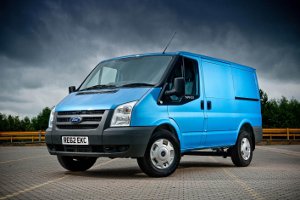
Ford Transit mk7

The BVRLA is warning fleet managers that the new EC type approval rules leave a lot of questions unanswered.

New European Community Whole Vehicle Type Approval (ECWVTA) rules requiring all modified vans to have whole vehicle type approval are due to come into force in Spring 2013.

The main purpose these regulations is to create a common standard for vehicles throughout the European Community, eliminating the need for each country to carry out type approval testing to its own requirements.

The British Vehicle Rental and Leasing Association (BVRLA) has raised concerns that fleets could face major bureaucratic headaches in trying to comply with the rules which require all modifications made to a vehicle before it is registered to undergo type approval.

According to the BVRLA, this even extends to include minor items such as roof beacons.

What approval means

According to the Department for Transport (DfT), vehicle type approval is a requirement for vehicles before they are registered with the DVLA — i.e. when they are in an ex-factory condition.

Once a vehicle — such as a new van — is registered, then the type approval is ‘spent’, according to the DfT. Modifications after its initial registration have to comply with construction and use and other regulations as they do at present, but no further type approval is required.

As far as I can see, this means that racking, roof racks, ply-lining and so on can all be fitted with impunity after a new van has been registered.

Light Touch Proposal

As I understand it, the problem is that there is a growing tendency for vans to be fully kitted out before they go to the dealer to be registered and delivered.

The obvious solution to this would be to register the vans before they are fitted with accessories, but on the basis this won’t always be possible, the BVRLA is working with VOSA and the Vehicle Certification Agency (VCA) to develop a list of modifications that can have ‘blanket’ or ‘light touch’ approval.

This is promising, but as BVRLA Chief Executive John Lewis says:

“While the VCA’s ‘light touch’ proposal is a step in the right direction, there are still too many unanswered questions and we are very concerned that the system will not be able to cope with this potential new surge in type approval testing.”

Not being a fleet manager or a dealer, what I’m not sure about is how much of a problem this really is. If all that is required is for a vehicle to be registered before it’s modified, then surely it’s just a paperwork exercise?

Introducing ‘blanket approval’ schemes for roof beacons seems madness…

Do you know better?

If you are involved in the fleet or van trade and know better than me, then please leave a comment below and let us know how you see the situation.

Disclaimer: This article is my opinion only and is definitely not a guide to the new rules. Contact VOSA or the VCA if you want to know the facts, don’t trust me!

Van Manufacturing Output Up 5% In October

Commercial vehicle manufacturing output rose by 5% in October, but remains down 6.1% on the year-to-date.

After September’s 20% slump in commercial vehicle (CV) manufacturing output, October’s 5% increase is welcome good news, although the year-to-date figure remains down by 6.1%. The gain was due to a surge in domestic demand, which rose by 10.5% in October, although it remains down by 5.6% on the year-to-date, according to the latest figures from the Society of Motor Manufacturers and Traders (SMMT).

Export demand remained weak in October, as European markets continue to struggle with the impact of the eurozone crisis and widespread recession. Exports rose by just 1% in October and remain 6.5% lower over the year-to-date.

No recovery for vans

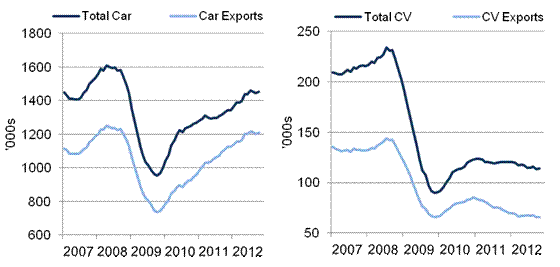
Perhaps the biggest worry is that CV manufacturing simply hasn’t recovered since markets crashed in 2009 — unlike car manufacturing, which has returned to 2007 levels, as these two graphs show:

UK car and CV manufacturing October 2012 (courtesy of SMMT)

UK car and CV manufacturing October 2012 (courtesy of SMMT)

I believe that the slowdown in van sales represents the true depth of the UK’s recession — while in private people have continued to buy new cars using borrowed money if necessary, small businesses have found that credit is much harder to get and less desirable to have, given the pressures many are under to survive.

Of course, next year’s closure of Ford’s Southampton factory will depress the figures even further, as thousands of Transit vans that would have been built in the UK will now be built abroad. Good news could be severely rationed for some time yet…

SsangYong Launches Korando 4×4 Van

SsangYong Korando CSX 4x4 van

The SsangYong Korando CSX 4x4 van

Indian-owned Korean car company SsangYong Motors has launched a commercial version of its popular Korando 4×4.

The SsangYong Korando CSX is a 4×4 van that’s very much in the mould of the Citroen C-Crosser / Mitsubishi Outlander van model, which leaves the car’s rear doors unchanged except for 100% tint glass to aid load security.

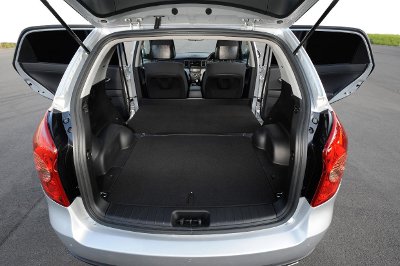
The rear seats are removed, providing a fairly large, flat, load area that has a payload capacity of 433kg and provides 1,312 cubic litres of load volume with a load length of 152cm and a 96cm gap between the wheel arches. This compares reasonably well with the Transit Connect, which has a width of 122cm between wheel arches but is slightly larger, and a purpose-built van.

To add to its appeal, the Korando CSX has a 2,000kg towing capacity and includes SsangYong’s standard 5-year, unlimited mileage warranty — something SsangYong is keen to point out that no other commercial manufacturer offers on a 4×4 van.

SsangYong Korando CSX loadspace

The Korando CSX has a decent-sized loadspace plus a useful 2-tonne towing capacity.

On Demand 4×4

In common with many modern 4x4s, the Korando CSX features a Torque on Demand four wheel drive system, which constantly monitors the level of grip available and distributes power to the wheels that need it most.  Under normal driving conditions the engine’s torque is directed to the front wheels so the car runs with the efficiency of a family hatchback.  However, if the front tyres begin to lose traction, power is automatically fed to the rear wheels to ensure safe, stable and dependable progress is maintained with grip from all four wheels.

An all wheel drive lock mode is also provided to ensure a 50/50 spread of torque between the front and rear wheels at speeds up to 25mph, essential for when low speed traction and control is needed such as when driving up a slippery track or off a muddy building site towing a work trailer.

Power & Luxury

The Korando is powered by a 2.0-litre diesel engine that develops a respectable 149ps and 360Nm of torque with CO2 emissions of 157g/km.

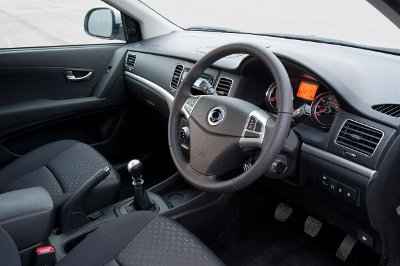
SsangYong Korando CSX interior

Inside the SsangYong Korando CSX

The vehicle is quite well specified and includes ESP with Hill Start Assist, and mud & snow tyres as standard. The interior is well kitted out in the way we have come to expect from Asian cars, with  tinted glass, rear parking sensors, a leather covered steering wheel and gear shift, cruise control and a Kenwood MP3 CD & RDS radio with iPod & Bluetooth connectivity, remote audio controls and six speakers.

Interested?

The SsangYong Korando CSX is priced from £15,995 +VAT on the road and should be ideal for service engineers or companies needing to perform light deliveries to remote areas in all weather conditions. It could also be popular with people like the Environment Agency and utility companies, I would think.

Cutting Fuel Duty Would Boost The Economy, Raising It Won’t

Fuel gauge nearing emptyIf the Chancellor wants to raise more money through taxes, he should be cutting fuel duty by 3p, not increasing it.

Chancellor George Osborne is getting ready to increase fuel duty by 3p per litre in January 2013 — an increase that has already been postponed twice, in January and August of this year. [UPDATE 05/12/2012: The 3p increase in fuel duty scheduled for January 2013 has now been cancelled. This was announced in the Chancellor’s Autumn Statement earlier today]

Yet even that 3p per litre is deceptive — once you add on VAT, which is charged on the price including fuel duty, the actual increase will be 3.62 pence per litre. That’s an extra £2.90 per tank on a Ford Transit. It soon mounts up.

While I appreciate the environmental logic behind increasing fuel duty — people won’t use less fuel and cut pollution unless they are forced to — it is rather brutal and I very much doubt that Osborne is remotely bothered about the environment.

Increasing fuel duty is simply a handy way to raise money to fill the Treasury’s empty coffers — or is it?

Counter-productive cuts

A new report from the National Institute for Economic and Social Research (NIESR) suggests that increasing fuel duty by 3p will ultimately result in the loss of 35,000 jobs and a 0.1% fall in GDP. The logic is simple — higher fuel prices mean that ordinary consumers like you and I have less spare money to spend on other things, so other businesses suffer.

This argument works both ways, according to NIESR. If the Chancellor decided to cut  fuel duty by 3p instead of raising it, the economy would get a very significant boost. According to NIESR, cutting fuel duty by 3p would deliver the following benefits:

  • Create 70,000 jobs
  • Boost GDP by 0.2%

Of course, in the short term tax revenues would fall — by approximately £1,800m, according to NIESR. But that’s less than 0.2% of GDP and this growth plus the increase in employment would be likely to compensate for this in the longer term, helping to speed up the UK’s recovery and kick-start growth.

Don’t kid yourself

I very much doubt that there is any chance that Chancellor George Osborne is going to change direction now and start cutting taxes to boost the economy. He says it’s not prudent and he needs to reduce the UK’s debt, but as we are seeing in countries such as Greece, Spain and Italy, if cuts lead to rising unemployment, then tax receipts fall and no one benefits.

How you can save money on fuel

Although we can’t control our government, we can control our own purchasing decisions — and the simplest way to save money on fuel is to spend less on it.

Ford Ranger Wins ‘International Pick-Up Award 2013’

The new Ford Ranger

The new Ford Ranger has won the 'International Pick-Up Award 2013'

The new Ford Ranger has won the  “International Pick-Up Award 2013” at the Fleet Transport EXPO 12 event in Dublin.

Every member of the judging panel ranked the new Ranger as their number one choice; praising its performance on- and off-road, strong engine line-up, payload and towing capability, and safety.

The new Ford Ranger won the award following extensive testing at Millbrook Proving Ground near Bedford – after which it was awarded 47 points – more than the combined number of points awarded to the second- and third-placed Isuzu D-Max and Volkswagen Amarok.

The new Ranger was a completely new model and also distinguished itself by being the first pick-up to be awarded a 5-star Euro NCAP rating earlier this year.

The Ranger is available in three cab bodystyles – Double, Super and Regular – and comes with a choice of two powerful and economical Duratorq TDCi engines and the option of either 4×2 and 4×4 drivetrains.

Stock Shortages Push Used Van Values Higher

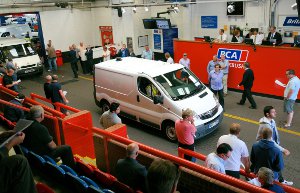
BCA Commercial vehicle auctionStock shortages mean that used vans keep on getting more expensive — despite rising age and mileage.
According to BCA’s latest Pulse Report, average used LCV values improved in October by £223 (5.2%) to £4,447, with year-on-year figures ahead by £144 or 3.3%.  Average age fell slightly to just under 58 months while average mileage increased to nearly 79,000.   Price performance was strong across the board, with average values reaching record levels in the fleet/lease sector.

Performance against CAP average improved over the month by a point to 101.8%, although it’s worth pointing out that this is nearly 2% less than at the same time last year, suggesting a slight weakening in demand (or improvement in supply).

Year-on-year, October 2012 was £146 (3.4%) ahead of the same month in 2011, with both average age and average mileage increasing over the period:

All vans Avg Age Avg Mileage Avg Value Sale vs CAP
Oct 2011 56.74 77,382 £4,301 103.57%
Oct 2012 58.42 79,452 £4,447 101.87%

Duncan Ward BCA’s General Manager – Commercial Vehicles commented:

“October has been a relatively strong month for LCV sales and average values improved compared to September.   Real and ‘virtual’ footfall at LCV sales has increased significantly and the on-going shortage of retail quality stock is keeping values very firm indeed.”

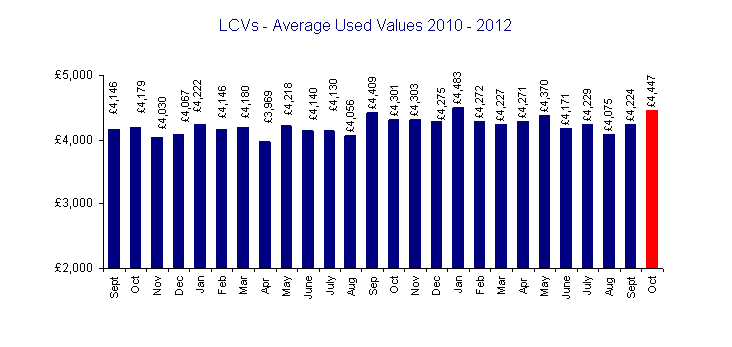
As this graph shows, used van values have remained firm and drifted gradually higher since 2010:

Average used LCV values 2010-2012 (Oct 2012, courtesy of BCA)

Average used LCV values 2010-2012 (Oct 2012, courtesy of BCA)

Duncan Ward was keen to emphasis that as ever, quality vehicles attract a strong premium and pretty much fly off the shelves:

“Any vehicle in clean condition will attract the buyers’ attention, including older, higher mileage vehicles if they are well presented.  As a direct consequence, values continue to rise for dealer P/X stock, where average CAP performance is actually higher than the corporate sector. Buyers will compete strongly for any vehicle with an unusual specification or modification such as crew cab vans, cherry pickers, tippers and dropsides and we are now seeing the upswing in demand for LWB panel vans, Lutons and fridge vans ahead of the Christmas period.”

Considering that new van registrations continue to fall and are far below the levels seen in 2007, strong demand for used models looks set to remain firm, which means we will all have to keep on paying more for older, higher-mileage vans!

Ford Vans Are Most Reliable Say Fleet Managers

Ford Transit mk7

Ford Transit: the most reliable van in the UK

Ford commercial vehicles are the most reliable in Britain, according to the managers of the 50 largest fleets in the UK.

The Brentwood-based blue oval replaces Volkswagen as the most reliable manufacturer, according to the results of the FN50 survey, which surveys the 50 largest UK contract hire and leasing companies.

Commenting on the results, Stephen Briers, editor of Fleet News, said:

“Van reliability is arguably more important than car reliability. A van driver can’t work from home if he or she needs to deliver vital equipment or provide a necessary service. Ford’s commitment to ensuring the Transit and Transit Connect perform well in the key area of reliability should help strengthen its position as the biggest manufacturer in the UK van market.”

The Ford Transit came top of the van reliability survey with the Ford Transit Connect, retaining its second place from a year ago. In the manufacturer table, Ford moved up into the top spot ahead of Volkswagen, who also fell behind fellow German manufacturer Mercedes-Benz, in what must be a disappointing result for VW.

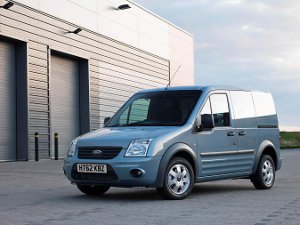
Ford Transit Connect

The Ford Transit Connect came second in the FN50 survey to find the most reliable van in the UK.

Here are this year’s top ten most reliable vans (last year’s position in brackets):

1 Ford Transit (4)
2 Ford Transit Connect (2)
3 Mercedes-Benz Sprinter (1)
4 Volkswagen Transporter (5)
5 Volkswagen Caddy (3)
6 Mercedes-Benz Vito
7 Vauxhall Vivaro
8 Renault Trafic
9 Vauxhall Movano
10 Citroen Berlingo

Top 10 most reliable van manufacturers (last year’s position in brackets*)

1 Ford (2)
2 Mercedes-Benz (3)
3 Volkswagen (1)
4 Vauxhall (-)
5 Citroen (-)
6 Renault (5)
7 Nissan
8 Peugeot
9 Fiat (4)
10 Toyota

(*2011 tables ranked only top five)

Those responding to the survey have a combined LCV fleet size of 160,000. The FN50 reliability survey is the largest study of its kind in the UK. For more information on the survey see www.fleetnews.com.

New Van Registrations Down 8.1% In October

New van registrations fell once more in October, according to the Society of Motor Manufacturers and Traders (SMMT), dropping 8.1% compared to October 2011 and giving a 6.5% fall for the year to date.

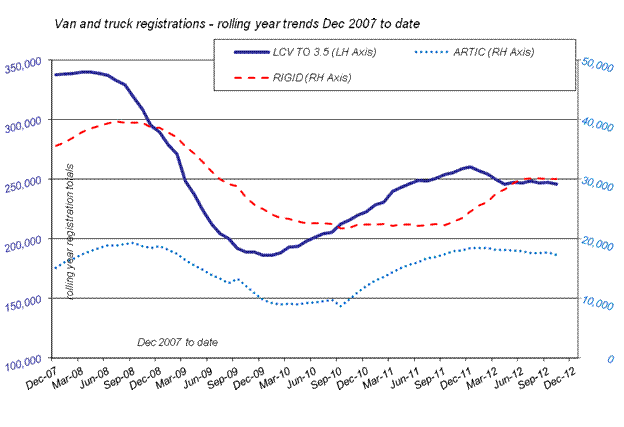
Unfortunately, as I predicted last month, September’s 1% gain was only down to the ’62’ plate change and we are now back to normality. Van registration remain below both 2010 and 2011 levels and are 3.6% down on a rolling year basis.

Despite truck registrations (>3.5t) being up 13% on the year to date, they also fell by 8.1% in October, and as the graph below shows, van and truck registrations appear to be drooping as we approach the end of 2012:

Commercial vehicle registrations 2007 - October 2012 (courtesy of SMMT)

Commercial vehicle registrations 2007 - October 2012 (courtesy of SMMT)

Van registrations fell in all categories of except for the pick-up and 4×4 categories (which are included as light commercial vehicles). Pick-up registrations rose by 18.7% in October, while 4×4 registrations gained 9.5%.

Truck registrations were dragged down by big falls in the 3.5t – 6.0t category (which remains up 41% on the year to date) and the 3-axle artic category, where sales fell by 19.6% in October, taking the fall for the year to date to 8.8%. Registrations rose in all of the other truck categories.

Ford Remains Dominant

Ford hit the news recently when it announced the closure of its Ford Transit plant in Southampton, but it remains the dominant manufacturer in the UK’s light commercial vehicle market, with 29.4% of market share in October and 26.7% for the year to date.

In second place, Volkswagen has arond 12.5% of the market, just above Luton-based Vauxhall, which has around 11%.

Peugeot, Mercedes, Citroen and Renault account for a further 31% of the market, followed by Nissan, Toyota, Fiat, Land Rover, Mitsubishi and Iveco.

VW Amarok Now Available In BlueMotion Spec

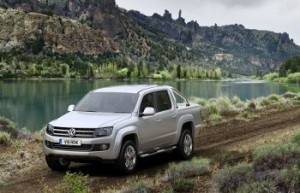
Volkswagen AmarokVolkswagen has updated its Amarok pick-up model and has moved right-hand drive production to Hanover, where it will now be built in the same factory as the Transporter van.

The updated spec for the big pick-ups includes Bluetooth, front and rear parking sensors, heated washer jets, tachograph preparation, cornering fog lights and 19-inch alloy wheels.

Perhaps more usefully, there is a power upgrade for the 163 PS BiTDI engine to 180 PS and  towing limits have been increased from 2,800 kg to 3,000 kg for manual models, while the new eight-speed automatic model boasts an impressively high towing limit of 3,200 kg.

BlueMotion = Green

The other big change is that the Amarok is now available in eco-friendly BlueMotion guise — something that also became available recently on the Transporter.

BlueMotion Technology improves fuel economy and lowers emissions by using low rolling resistance tyres, Stop/Start and regenerative braking.  This means that although the 180 PS BlueMotion Technology is over 10 per cent more powerful than the previous 163 PS model, it is 3.9 per cent more economical, with a combined fuel economy of 37.2 mpg compared to 35.8 mpg.  Better still, emissions drop by 10 g/km to 199 g/km.

Torque for the eight-speed automatic transmission increases from 400 to 420 Nm, delivered at 1,750 rpm.  It is available exclusively as a Highline model with BlueMotion Technology and permanent 4MOTION for a retail price of £25,105 (plus VAT).  It achieves combined fuel economy of 35.3 mpg with emissions of 211 g/km – the same as the standard manual model.

For more information, check out VW’s Facebook page.