Questor Insurance logo

[EXPIRED] Questor Insurance discount code for September

Questor Insurance logo

If you’re hiring a van (or a car) and are concerned about the risk of being hit with a big excess charge for any damage, then you may want to consider taking out excess protection insurance.

Most car and van hire companies sell this product, but it’s often cheaper to buy from an independent supplier.

To help you save even more on this popular extra, we’ve got a discount code from Questor Insurance for September:

*** THIS DISCOUNT CODE HAS NOW EXPIRED ***


Terms and conditions may apply. See Questor Insurance website for details.

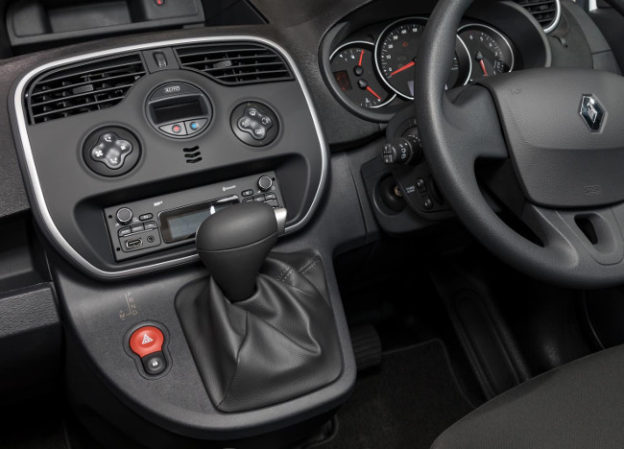
Renault Kangoo automatic gearshift control

Renault adds automatic option to Kangoo van

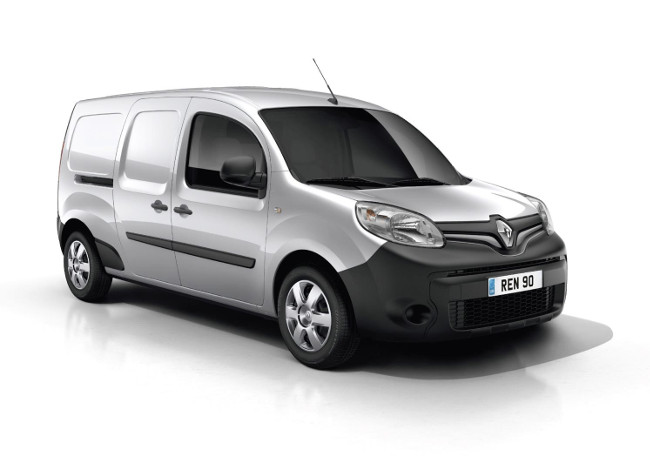
Renault Kangoo

The Renault Kangoo is now available with an automatic gearbox.

The Renault Kangoo van is now available with an automatic gearbox. The French firm has made its Efficient Dual Clutch (EDC) automated manual transmission available on the popular small van, providing an option that’s likely to appeal to drivers who spend a lot of time in town and heavy traffic.

The EDC gearbox is available on the dCi 90 and dCi 110 version of the van, and is now available to order. Prices start from £21,805 for the dCi 90 version.

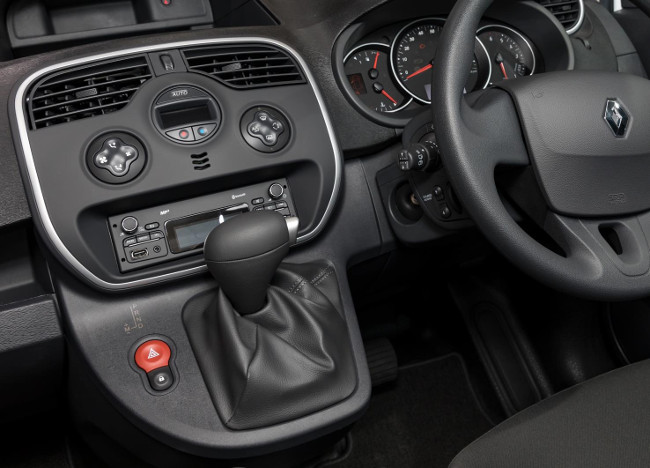
The six-speed EDC is an automatic dual dry clutch transmission, dispensing with the need for a clutch pedal. The ideal gear is selected automatically by an electronic control unit. Gearshift control is of the ‘P-R-N-D’ type, plus an ‘up/down’ shift mode. A push forward on the gear lever directs the transmission to downshift, a pull backwards to upshift.

Renault Kangoo automatic gearshift control

It takes the gearbox just 290ms to change gear, so it’s a lot quicker and smoother than a human driver. But perhaps the biggest advantage is the creep function. As with a traditional torque converter automatic, the van will creep forwards when you take you foot off the brake pedal. This is very useful when driving in heavy traffic.

According to Renault, the EDC automatic transmission adds 28kg in weight compared with the manual. Official fuel consumption for the Kangoo dCi 90 EDC is 55.4mpg on the combined cycle (NEDC), with CO2 of 136g/km.

New Europcar Volkswagen Crafter

Europcar adds 170 new Volkswagen Crafter vans to UK rental fleet

New Europcar Volkswagen Crafter

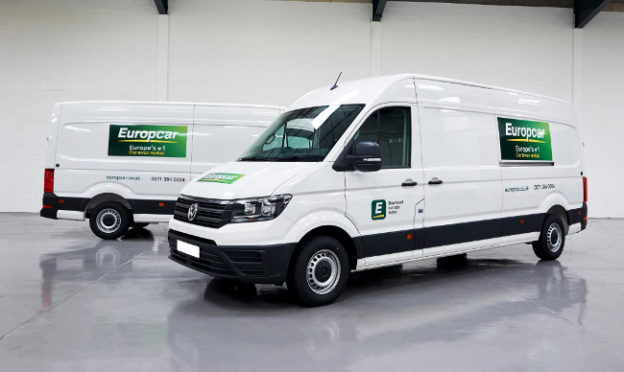
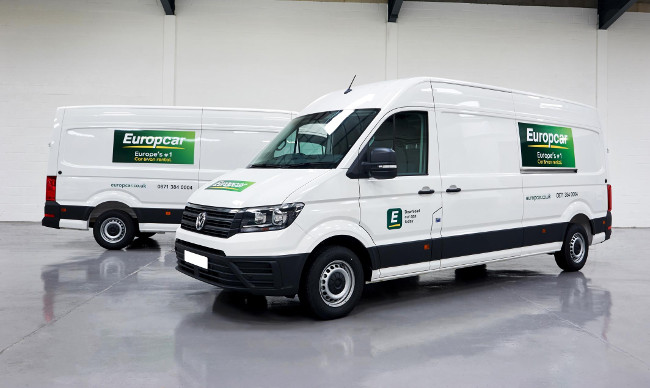
Two of Europcar’s new model Volkswagen Crafter vans.

Europcar has added 170 new model Volkswagen Crafter vans to its UK rental fleet. The new vehicles will be available at Europcar locations from this month.

The firm has used Volkswagen vans before but the new Crafter is an important model for the German manufacturers, as it’s an all-new in-house design, rather than a re-badged Mercedes-Benz Sprinter like previous models.

The new model features a raft of safety features including City Emergency Braking and Front Assist, both designed to minimise or avoid frontal collisions in traffic. Parking sensors are also a useful addition for drivers who may not be used to driving a van.

Commenting on the new vans, Stuart Russell, Specialist Vehicles Director at Europcar UK Group, said:

“The Volkswagen Crafter is a welcome addition to the Europcar commercial fleet. The new model is one of the most practical, economical and safest vans currently on the market and was designed from the ground up to appeal to businesses across various industries.”

Europcar’s new Crafters are powered by the 140 PS version of Volkswagen’s 2.0-litre TDI diesel engine, which the firm says has been specially designed for commercial vehicles, not simply transposed from its car range.

Iceland's 1000th Mercedes-Benz Sprinter

Iceland Sprinter fleet tops 1,000 as PSM tech cuts costs

Iceland's 1000th Mercedes-Benz Sprinter

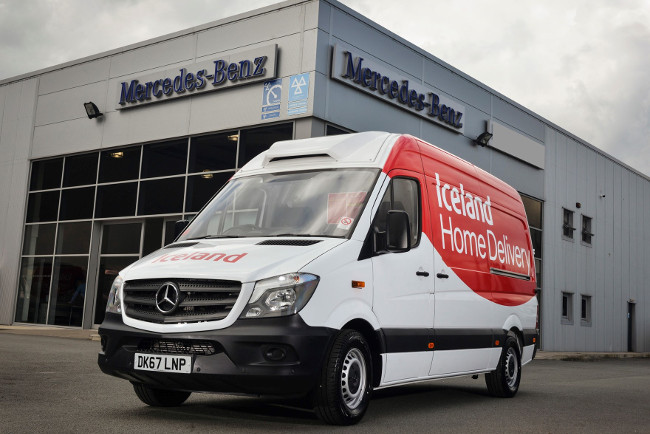
Iceland’s 1000th Mercedes-Benz Sprinter

Four years ago, supermarket Iceland decided to switch its entire delivery van fleet to Mercedes-Benz Sprinters. The frozen food specialist has just taken delivery of its 1,000th van and is within a few months of reaching its 100% target.

The attractions of the Sprinter to heavy duty users are well documented. Its reputation for durability and reliability are especially valuable. But unfortunately even the best vans are at risk of damage and unscheduled downtime due to driver error and avoidable collisions.

For example, in 2013, more than 30% of Iceland’s Sprinter vans had a non-start incident due to a flat battery within six months of delivery. The cause was usually a simple error like leaving an interior light switched on.

Management also had concerns about the level of minor damage caused by low-speed incidents.

After approaching Mercedes about these concerns, it turned out that Sprinters can be fitted with optional Parametric Special Modules (PSMs) at the factory. These are electronic units that can be used to access and control various performance parameters.

The PSM system appears to be surprisingly flexible. Iceland’s Sprinter vans are now delivered with PSM modules which apply a number of settings to the vans, including:

  • Activate hazards when reversing
  • Limit forward and reverse speed
  • Monitor battery voltage
  • Switch off interior lights automatically if they’re left on

The difference has been impressive. Since the PSM programme was introduced, flat battery incidents have fallen to just 5% of the Sprinter fleet.

Although some drivers may bemoan the Big Brother tendencies of such technology, it’s ability to cut costs and improve safety is invaluable for busy transport operations.

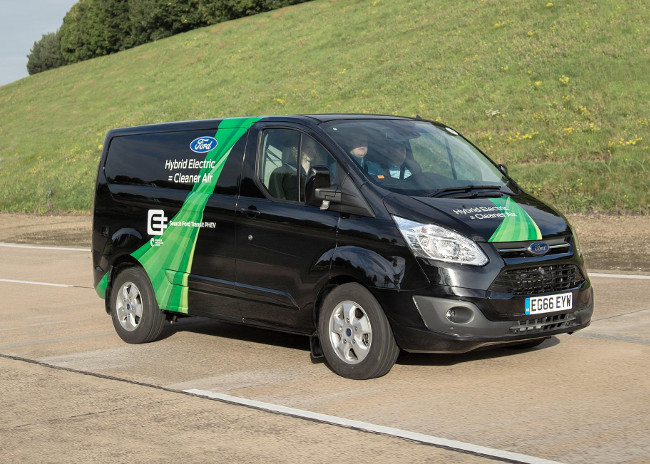
Ford Transit Custom plug-in hybrid van

How do hybrid vans work? Inside the Ford Transit PHEV

Ford Transit Custom plug-in hybrid van

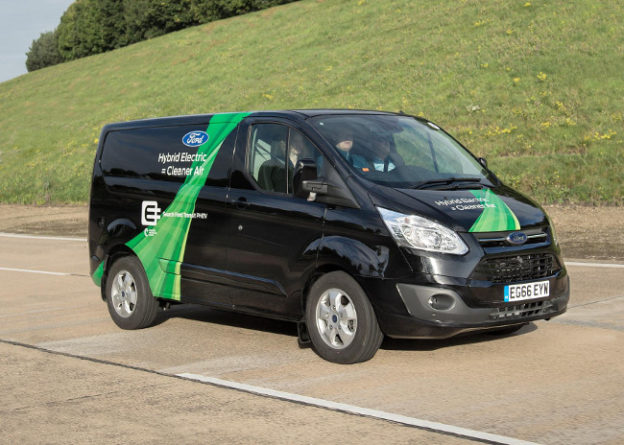
Ford’s planned Transit Custom plug-in hybrid van will go on trial in London later in 2017.

There’s a lot of talk about hybrids, plug-in hybrid electric vehicles (PHEV) and electric vans at the moment. But what does this actually mean?

Well, in simple terms, hybrids are vehicles with a petrol or diesel engine plus some form of electrical propulsion.

The most common type of hybrid uses an electric motor and a battery to provide electric assistance and perhaps electric-only operation at low speed. The battery is charged while driving and especially during braking.

The other type of hybrid is the range-extender electric vehicle. This is essentially an electric car or van with a petrol generator on board that’s used to charge the batteries if they run low while you’re driving.

What about PHEV? Oh yes. A Plug-in Hybrid Electric Vehicle can be either of the two types of hybrid I’ve described above, with one added extra. It also comes with a mains power socket so it can be plugged in to charge the battery when parked up.

What about the Transit hybrid van?

Ford has chosen to follow the range extender and PHEV routes with its upcoming Transit Custom PHEV hybrid.

This van isn’t planned for commercial production until 2019, but a fleet of 20 PHEV Transit will be undergoing a 12-month trial in London starting later this year.

As you may soon start seeing these low-emission vans on the road, I thought it would be interesting to take a look under the bonnet. I’ll aim to answer two important questions:

  1. How do these vehicles actually work?
  2. Why does using a petrol engine in this way make sense if you’re trying to cut emissions?

How does a range-extender hybrid work?

Ford has kindly provided an ‘x-ray’ picture of the new Transit PHEV which shows all the main systems used as part of the powertrain:
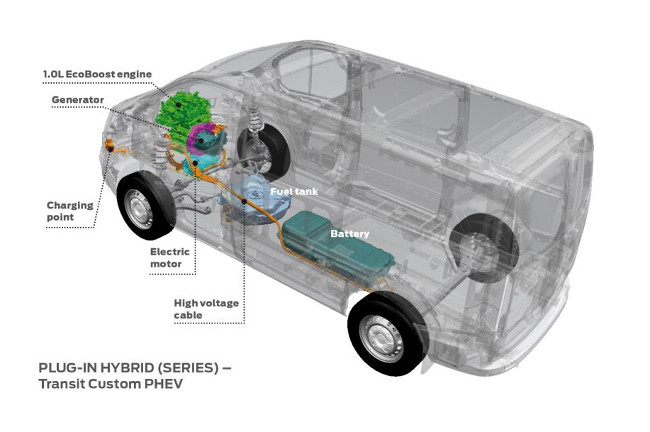
The Transit Custom PHEV powertrain

Battery, electric motor. charging point, engine and generator. Under the skin of the upcoming Transit Custom PHEV (source: Ford)

Here’s how the van will work. The battery pack is a liquid-cooled unit that’s fitted under the floor, so load capacity isn’t affected.

In urban environments, the goal will be to use electric power as much as possible. Ford says that a fully-charged battery should give the van a range of “in excess of 31 miles”.

Batteries can be charged by connecting the charging points to an electric charging point, but if this fails the van’s petrol engine will kick in and start charging the batteries. The van will continue to run as an electric vehicle, but with a supply of electricity from the engine-powered generator. (The generator itself is basically a large, high-powered alternator.)

All of this may seem complex, but it means that unlike with a pure electric vehicle, this hybrid can be driven unlimited distances without needing to be charged, simply filling up with petrol as usual.

Why is it better to use an engine in this way?

There are two reasons why a range extender PHEV should produce far lower emissions than any standard internal combustion engine vehicle.

The first reason is that if the van is used as it’s intended, it will run on battery power much of the time and will be charged from the mains when not in use. For urban use, it’s possible that the engine will rarely even be needed.

The second reason is that as you’ll probably have noticed, the engine fitted isn’t the usual 2.0-litre EcoBlue diesel that’s fitted to most Transit Custom vans. Instead, Ford will be fitting its popular 1.0-litre Ecoboost petrol engine, which is most commonly found in the Fiesta and Focus cars.

This engine produces fewer harmful emissions in general than the Transit diesel. But because it’s being used to power a generator, it can also be tuned to provide optimum efficiency when operating within a narrow rev range.

I’d expect this mode of operation to provide further reductions in emissions, when compared to a regular petrol or diesel-powered vehicle, which has to operate over a wide range of revs.


LCV best sellers August 2017

Small vans lift new LCV registrations by 1.5% in August


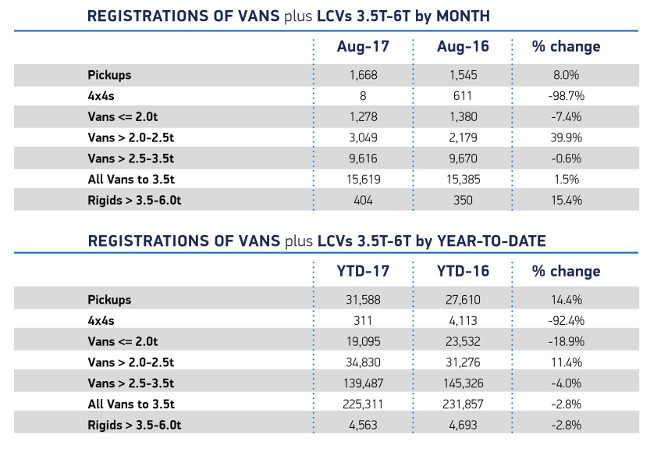
UK van registrations rose by 1.5% to 15,619 units in August, as a 40% rise in small van (2.0-2.5t) registrations offset falls in most other segments.

The latest figures from the Society of Motor Manufacturers and Traders (SMMT) show that registrations of vans with a maximum gross weight of 2.0t-2.5t rose by 39.9% to 3,049 units last month. The most common cause of a large surge in registrations in this class is the delivery of a large fleet order, so I’d imagine this was the explanation.

Elsewhere, registrations were flat or lower, as these figures show:

SMMT LCV registrations August 2017

LCV registrations August 2017 (source: SMMT)

Commenting on the figures, Mike Hawes, SMMT Chief Executive, said:

“August is traditionally one of the quietest months of the year, ahead of September’s plate change, so the moderate increase in the new van market is welcome news. While year-to-date figures show demand easing, this is in line with market expectations and overall registration volumes remain at a very high level. This stabilising of the market is indicative of what we can expect for the remainder of the year.”

Ford maintains stranglehold

Moving over to look at the mix of vans sold, it’s clear that Ford’s comprehensive and excellent range of vans continue to have a stranglehold on the UK market.

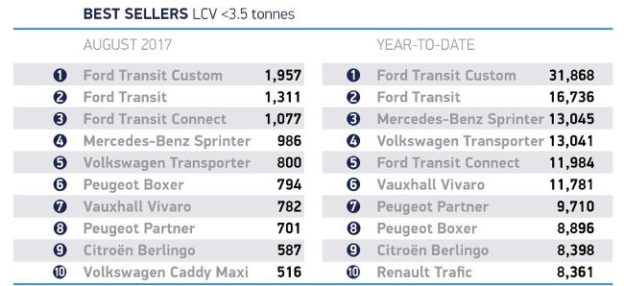
Remarkably, more than one in every four vans sold so far this year has been a Ford. The manufacturer blocked out the top three slots in the best sellers table last month, as sales of the Transit Connect picked up:

LCV best sellers August 2017

The UK’s best-selling vans in August 2017 (source: SMMT)

Ford has always been the dominant van manufacturer in the UK, but I’d guess that the firm’s French and German rivals (plus Vauxhall) may be starting to wonder what they have to do to make in-roads into the Blue Oval’s market share.

More next month.

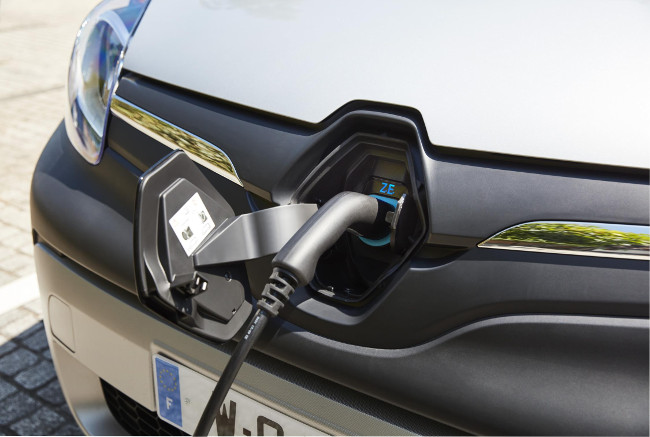
Renault Kangoo Van Z.E. 33

New Renault Kangoo Z.E. 33 with 50% range boost goes on sale in UK

Renault Kangoo Van Z.E. 33

The new Renault Kangoo Van Z.E. 33 will have a 50% longer range than the old model.

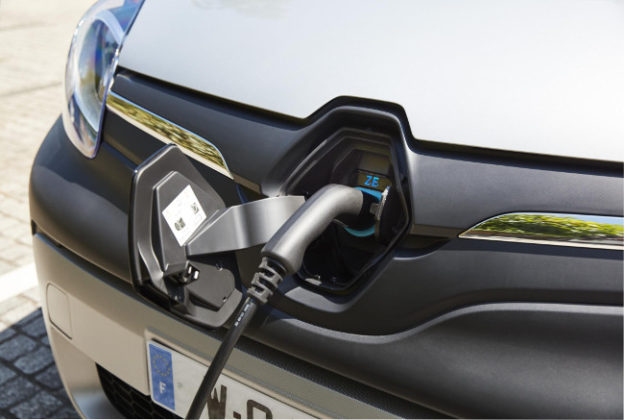
Back in December, Renault promised van buyers a new version of the Kangoo Z.E. electric van with a 50% longer range. The new model — the Kangoo Z.E. 33 — is now available in the UK and the company has released pricing and specification details.

An upgraded battery and motor drivetrain means that the van can now travel up to 170 miles (NEDC figures) on a single charge. That’s about 50% further than the previous version of the van, which had an official range of 106 miles.

However, Renault makes it clear that these NEDC figures are largely nonsense in real world conditions. In today’s press release, the French firm said it estimates that the Kangoo Van Z.E. 33 “has a real-world range of up to 124 miles” in summer, reducing to “75-99” miles in winter.

Priced from £14,194.56 (after governement plug-in grant and excluding VAT), the New Kangoo Van Z.E. 33 will be available in four body styles:

  • Kangoo Van Z.E. 33
    • Available with two seats and a load capacity of up to 3.6m3
  • Kangoo Maxi Van Z.E. 33
    • Styled with two seats and up to 4.6m3 load capacity
  • Kangoo Maxi Crew Van Z.E. 33
    • Suitable for carrying a small crew of people, with five seats and a load capacity of 1.3m3
  • Kangoo Maxi Crew Van Cab Z.E. 33
    • Features an innovative multipositional bulkhead allowing a crew of up to five people or a load capacity of up to 3.6m³, whichever is required.

As is the case with many electric vehicles, buyers can opt to lease the battery on a monthly payment or buy it outright by paying more upfront. Our view is that leasing makes more sense, in order to ensure that you are protected from any future battery problems or replacement costs.

How has Renault increased the range?

The longer range of the Kangoo Van Z.E. is the result of a package of improvements.

The main change is a new, higher density 33kWh battery. This has the same dimensions as the old battery but nearly double the energy storage capacity.

An updated electric motor has been coupled with the new battery. And the whole system is tied together with an updated electronic battery management system.

To help reduce charging times, the Kangoo Van Z.E. 33 can be fitted with an optional upgraded charger that reduces charging times to just six hours and can add 21 miles to the charge in just one hour.

Another new feature is an optional heat pump, which will heat the van more efficiently in cold weather, reducing energy usage and thus increasing range. The new model will also keep its pre-conditioning system which allows drivers to heat or cool the vehicle before use while it’s still hooked up to mains electricity.

Why buy electric?

Aside from the environmental benefits, electric vans continue to offer a number of financial incentives for business owners.

These include exemption from most congestion charges and qualification for low emissions zones. They also remain exempt from UK VED (road tax) and offer zero Benefit-in-Kind (BIK) liability for company vehicle drivers.

Hurst Plastics Mercedes-Benz Sprinter

Mega-mile van operators choose Sprinters for reliability

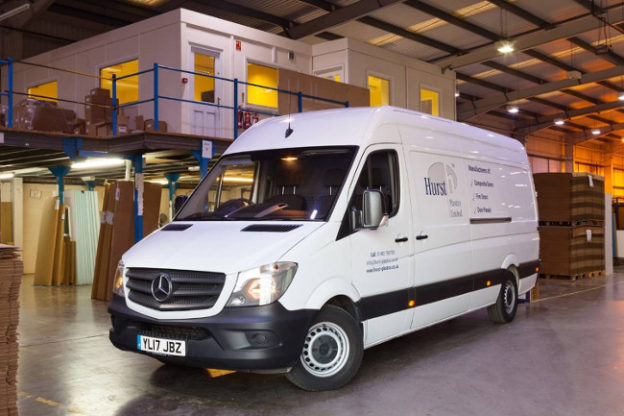
Hurst Plastics Mercedes-Benz Sprinter

One of Hurst Plastics’ new Mercedes-Benz Sprinters

The Sprinter has been viewed as the top choice for high mileage van operations pretty much since its introduction in 1995.

That situation looks unlikely to change anytime soon, judging from comments made by two high-mileage fleet operators who’ve recently taken on new Sprinters.

Door manufacturer Hurst Plastics is unusual among its peers in that it delivers more than 99% of its doors using its own fleet of vans. With more than 1,500 doors and 7,500 fire safety panels heading out of the firm’s factory each month, this policy of in-house delivery means that the company’s vans work hard.

Hurst has just taken on 15 new Sprinters which are each expected to cover 100,000 miles a year. The company plans to keep them for three years and then review their condition before deciding whether to keep them on the road.

Tiffin Sandwiches Mercedes-Benz Sprinter

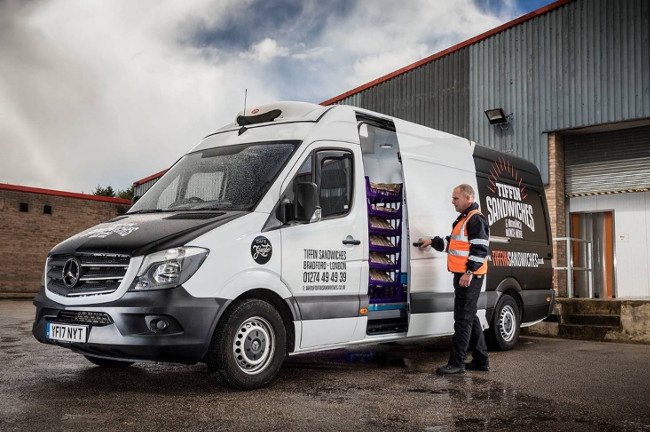
One of Tiffin Sandwiches’ new Mercedes-Benz Sprinter with driver Jon Pilkington.

It’s a similar story albeit with a different product at Tiffin Sandwiches. The company has become one of the UK’s top wholesale sandwich producers. But shipping this many fresh sandwiches daily to customers all over the UK requires some wheel time.

Tiffin has purchased 21 long-bodied Sprinters over the last 18 months, including five 314 CDI Euro 6 models which have just entered service. All of the firm’s vans are converted for temperature-controlled operation and are expected to do up to 2,000 miles per week — or 100k per year.

Unlike Hurst, Tiffin has only recently switched to Sprinters. Fleet Manager Steve Gadd explains why:

“Our previous supplier’s vehicles were struggling to cope with the rigours of our delivery regime, while its after sales service was poor. We therefore approached Northside, and trialled a Sprinter for six months. It slotted into the fleet very well and didn’t miss a beat.

“Not only is the Sprinter more reliable, but it’s also impressively fuel-efficient. We’d been getting 22-24 mpg from our established vehicles, whereas the Mercedes-Benz vans are returning 28-30 mpg. Given the high mileages they cover, this improved economy equates to a big saving on our fuel bill, so we’ve allocated Sprinters to our longest routes and also sent a few down to London, where they excel in the stop-start traffic.”

Mr Gadd intends to replace Tiffin’s entire fleet with Sprinters as soon as possible. Back at Hurst Plastics, Transport Manager Jon Brake has more experience of the three-pointed star and is just as keen:

The Mercedes-Benz package is unbeatable. I’ve been with this company since 1999, and since then we’ve tried vehicles by various manufacturers. The Sprinter has been the best by a mile. It’s a real workhorse, highly robust and with far superior build quality, as well as being really nice to drive.”

Both companies’ latest vans are 314 CDI Euro 6 models, which use both BlueTEC Selective Catalytic Reduction (SCR or AdBlue) and Exhaust Gas Recirculation (EGR) to minimise emissions and comply with the latest pollution regulation.

Questor Insurance logo

New: Exclusive Questor Insurance discount code [EXPIRED]

Questor Insurance logo

New for September 2017, we have an exclusive 7% discount code  for Questor Insurance.

This offer covers Questor’s excess insurance products is exclusive to vanrental.co.uk.

It is only available for a limited period.

If you need car or van hire excess insurance later this year, remember you can buy now and set your policy start date for a later date.

Here are the details of this fantastic offer:

*** THIS DISCOUNT CODE HAS NOW EXPIRED ***


Terms and conditions may apply. See Questor Insurance website for details.

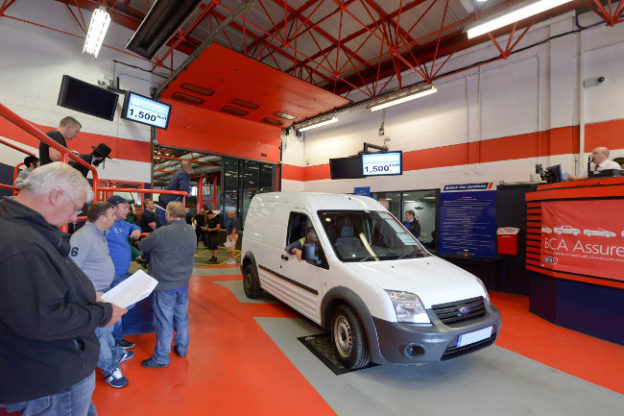
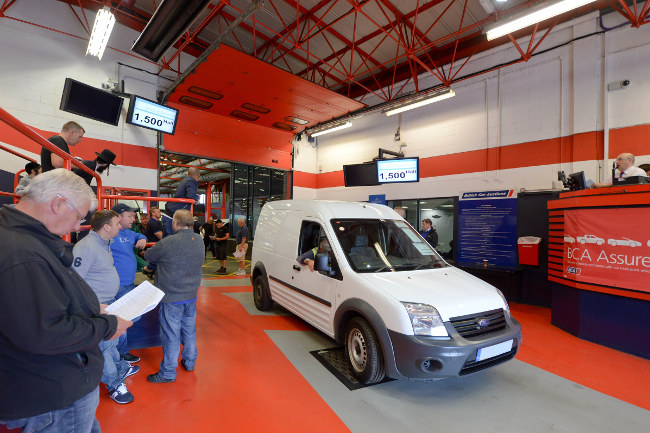
A BCA van auction August 2017

Ex-rental vans continue to support used LCV prices

A BCA van auction August 2017

Source: BCA

Average used van values rose by 1.4% to £6,553 in July, according to auction group BCA.

The company said that prices were particularly strong in the fleet/lease and nearly-new sectors, while values of older part-exchange vans fell.

That’s not surprising, given the high levels of ex-rental and other high quality corporate stock that’s hit the market in recent months. Why pay for an old banger when for a little more you can get a much better van?

As usual, the average age and mileage of vans sold last month was lower than that seen during the corresponding period last year:

All vans Avg Age (mnths) Avg Mileage Avg Value
July 2016 53.42 69,632 £5,931
July 2017 49.60 65,881 £6,553

Source: BCA

Duncan Ward, BCA’s LCV Operations Director, said that July had been a good month with “steady demand” accross BCA’s network of locations. However, he cautioned that condition and specification remain important for sellers wanting a good result:

“While demand for larger panel vans was sometimes patchy, there was plenty of interest in any van with a good retail specification and in particular dropsides, tippers and Lutons were much sought after. The lifestyle/4×4 double cab market continues to experience price pressure, largely as a result of the increasing volumes in this sector – basic specification models are more price sensitive than the higher trim models, which the second owner much prefers. Condition and specification remain as important as ever and sellers should be aware that it is vital to appraise and value vehicles accurately to reflect current market sentiment.”

Mr Ward admitted that the growing volumes of corporate stock handled by BCA is helping to drive up the average price of vans sold by the group. Ex-corporate vans are usually from big, well-maintained fleets and are normally under four years old. They’re desirable buys for used owners as they offer good value.

For example, the ex-fleet and lease vans sold by BCA in July had an average age of 39 months and an average mileage of 59,000. The average sale price of £7,716 represented an average of 36.7% of the original manufacturer’s list price. So buyers are able to get a 3.5-year old van for little more than a third of its new cost. It’s easy to see the attraction.