
Volkswagen factory, Wrzesnia, Poland

What does it take to build a new van factory?

Volkswagen’s newest factory will build 17 vehicles per hour, 380 vehicles per day and around 100,000 vehicles each year.

Volkswagen factory, Wrzesnia, Poland

The new Volkswagen Crafter factory in Wrzesnia, Poland

Located in Września, Poland, the new factory is dedicated to the production of the Volkswagen Crafter and its badge-engineered peer, the MAN TGE van. The factory was completed in just 23 months, from breaking ground in November 2014 until the start of production in October.

It’s an impressive lesson in how rapidly the big automotive manufacturers can deploy new production capacity. But what was involved in the creation of this plant? Here are a few numbers:

  • The plant occupies an area of 220 hectares, or around 300 football fields
  • During excavation, approx. 1,000,000 m³ of soil was moved with 50,000 trips by dump trucks.
  • 22,000 metric tonnes of structural steel and 8,000 tonnes of reinforcing steel were used.
  • 50,000 m³ of concrete was poured by 6,000 cement trucks.
  • 4,000 foundation pilings were rammed 16 metres into the ground.
  • 15,000 metres of utility pipe was laid in the plant.
  • 19,000 training sessions were performed in the framework of occupational safety.
  • In the ramp-up phase, approx. 3,500 (construction) workers were employed at the plant construction site in Września.
  • 45 suppliers from Poland supply the plant
  • Now that the plant is complete, around 3,000 employees will work a three-shift system

The new Crafter also promises to be impressive and supremely flexible. The Września factory will build a total of 69 Crafter derivatives. The Crafter will be available with a maximum gross weight of up to 5.5 tonnes and in panel format up to 7.4m long.

Given that the population of the town of Września is only 30,000, one images that this new factory will have a big impact on the local economy as well as the landscape.

What we don’t yet know is if the new Crafter — the first model to be an in-house design, rather than a rebadged Sprinter — have a similar impact on the van market.
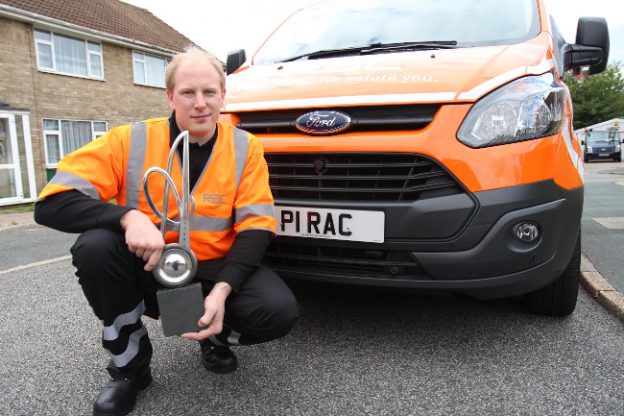
RAC Patrol of the Year Charlie Harding

MPG Marathon shows vans can deliver on manufacturer mpg figures

As any commercial driver will point out, fuel consumption is directly related to load weight. There’s also a looser relationship with aerodynamics, road conditions and of course driving technique.

Bashing manufacturers’ official mpg figure is a popular hobby among motorist, all the more so since we’ve learned that many manufacturers have been rigging their emissions testing.

But this year’s Fleet World MPG Marathon suggests that in the van sector at least, manufacturers’ official figures do provide a realistic idea of what’s possible in moderately favourable conditions.

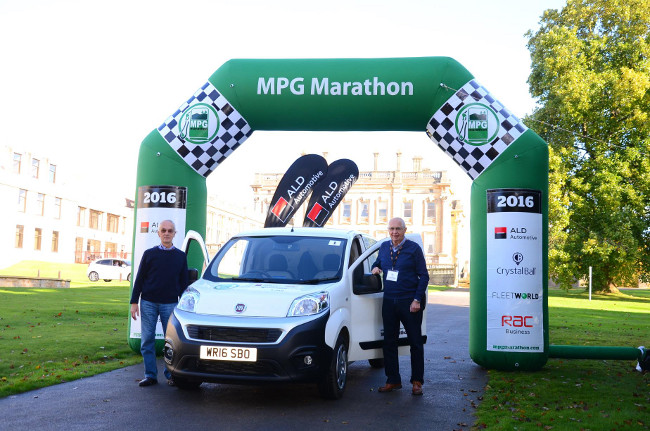
Fiat Fiorino winning MPG Marathon 2016

The MPG Marathon 2016-winning Fiat Fiorino with drivers Doug Powell and Tony Waddington.

Only five light commercial vehicles entered this year’s contest. Here’s how they fared:

Model MPG Marathon mpg Manufacturers’ combined cycle mpg Difference
 Citroen Dispatch BlueHDI 95 S (SWB)  54.76mpg 51.40mpg +6.5%
 Isuzu D-Max Blade Auto Pickup 35.24mpg 33.60mpg +14.9%
 Fiat Fiorino 1.3 MultiJet SX 80hp  72.08mpg 64.20mpg +12.3%
 Ford Transit Custom 330 SWB 125ps (RAC patrol, fully loaded)  39.84mpg 40.90mpg  -2.6%
 Vauxhall Vivaro (current model, no details provided)  46.29mpg 46.30mpg -0.02%

Source: thempgmarathon.co.uk

What’s remarkable about the figures above is how close they are to the manufacturer’s official combined cycle figures. In all but one case, there’s virtually no difference.

I’ve highlighted two vans on this list for their outstanding performance. The first is the Fiat Fiorino driven former fleet manager Doug Powell and co-driver Tony Waddington. The Fiorino managed more than 72mpg — that’s a 12.3% improvement on Fiat’s official combined cycle figures.

As the smallest van present, you’d expect the Fiorino to deliver the lowest fuel consumption. What’s impressive is that while all of the other vans broadly matched their manufacturers’ figures, the Fiorino beat its official figure by a big margin.

Of course, Powell and Waddington’s Fiorino wasn’t loaded. None of the vans were — except one. RAC Patrol of the Year Charlie Harding was driving his Ford Transit Custom work van, fully loaded with the payload of more than 500 tools and spare parts carried by all RAC Patrols.

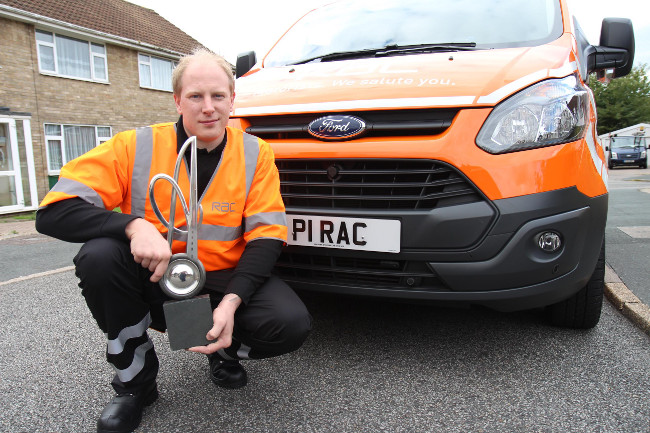
RAC Patrol of the Year Charlie Harding

RAC Patrol of the Year Charlie Harding took part in the 2016 MPG Marathon in his fully-loaded patrol van.

Despite this significant weight handicap, Harding and his co-driver Peter Thompson managed to come within 1mpg of Ford’s official combined cycle figure of 40.9mpg.

As was the case last year, by entering a patrol with a fully-loaded van, the RAC has demonstrated that work vans can deliver decent fuel consumption when driven well.

Impressive stuff.

Will tough new London emission zone plans affect you?

In a bid to reduce air pollution in the capital, London Mayor Sadiq Khan is hoping to accelerate and expand the creation of a new Ultra Low Emission Zone (ULEZ) for London.

What was the plan?

The original plan was for ULEZ to apply to the congestion charging zone from September 2020. All vehicles operating inside this area during congestion charging hours (0700 – 1800, Mon-Fri) would have to meet raised standards.

For diesel vans and cars, the standard would be Euro 6.

What’s being changed?

Mayor Khan is now hoping to get agreement to bring forward the introduction of the ULEZ by one year to 2019.

He’s also hoping to introduce a £10 emissions surcharge on pre-Euro 4 vehicles entering London from 2017. That would generally affect diesel cars and vans registered before 2005.

In a more ambitious move, Mayor Khan is also proposing that from 2020, the ULEZ should be expanded to cover the whole area inside the North and South Circular roads for motorcycles, cars and vans.

Why is this needed?

Car exhaust tailpipe emissionsRecent government health statistics make it clear that this is a serious problem:

  • 443 schools in the capital are in areas where pollution exceeds safe air quality levels.
  • Nearly 10,000 Londoners die from long-term exposure to air pollution every year.
  • The health impacts of air pollution in London are estimated at £3.7bn each year.

It’s clear that something needs to be done, in my view. Simply waiting for natural attrition to eliminate older, more polluting vehicles, may not be enough.

Commenting on the proposals, Mayor Khan said that the current situation is the modern equivalent of the smog problem seen in London in the 1950s:

“It is the 60th anniversary of the Clean Air Act of 1956, which was passed following the great London smogs of the 1950s.  The legislation made a huge difference to life in London and saved countless lives.  British politicians at the time did an amazing thing and responded on the scale that was required.  Today we face another pollution public health emergency in London and now it’s our turn to act for the good of Londoners and for future generations to come.

“Just as in the 1950s, air pollution in London today is literally killing Londoners.  But unlike the smoky pollution of the past, today’s pollution is a hidden killer.”

What’s the problem with cutting pollution?

I’ve discussed the failure of the Euro 5 emissions standard before on this blog.

Euro 6 should provide a significant real-world reduction in NOx emissions, but the number of Euro 6 vans on the road remains very low. Although Euro 6 models have been available from some manufacturers for the last year or so, customers were mostly opting for cheaper Euro 5 alternatives.

If Mayor Khan goes ahead with a plan to expand the ULEZ, then van operators who typically use secondhand vehicles could find themselves unable to buy compliant vans ahead of the 2019 deadline.

This is because the majority of the used van market is supplied by fleet and lease firms, who usually keep their vans for between three and four years. Euro 6 vans have only started selling in volume over the last 6-12 months. This means that relatively few are likely to enter the secondary market before 2019/2020.

For van operators who can’t afford or to buy or lease a new van, operating in London could become difficult.

Mayor Khan is lobbying the government to introduce a diesel scrappage scheme to help address this issue, but comments so far from ministers suggest this is unlikely to be adopted.

It may be that operators will be forced to rely on daily and long-term rental vans to bridge the period between the introduction of the enhanced ULEZ and the widespread availability of used Euro 6 vans.

These proposed changes are currently under consultation. If you’d like more information or want to have your say, visit: www.london.gov.uk/cleanair

Bayfield Vehicle Hire

Jolly Good Shrewsbury and Telford is now Bayfield Vehicle Hire

Bayfield Vehicle HireIf you rent vans (or cars) in the Shrewsbury or Telford areas, then you may have used Jolly Good Vehicle Rentals before.
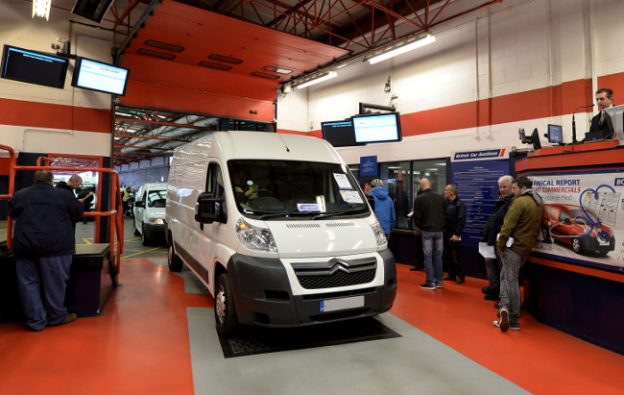
This company has changed name and is now trading as Bayfield Vehicle Hire.

Nothing else has changed and Bayfield’s staff, phone numbers and bank account details remain the same.

The reason for this post is that you may have heard that the company operating the Wrexham branch of Jolly Good Vehicle Rentals has ceased trading. Bayfield is a seperate company with no connection to the Wrexham firm, so is not affected by this event.

You can find more information about Bayfield Vehicle Hire on our Shrewsbury and Telford pages.

Alternatively contact the Bayfield team directly:

  • Shrewsbury: 01743 770035 / shrewsbury@bayfieldgroup.co.uk
  • Telford: 01952 570057 / telford@bayfieldgroup.co.uk
  • Web (coming soon): bayfieldvehiclehire.co.uk
BCA LCV auction September 2016

Used van prices hit new record in September

Falling age profiles and strong demand helped keep used van prices at a record high in September, according to auction specialist BCA.

BCA LCV auction September 2016

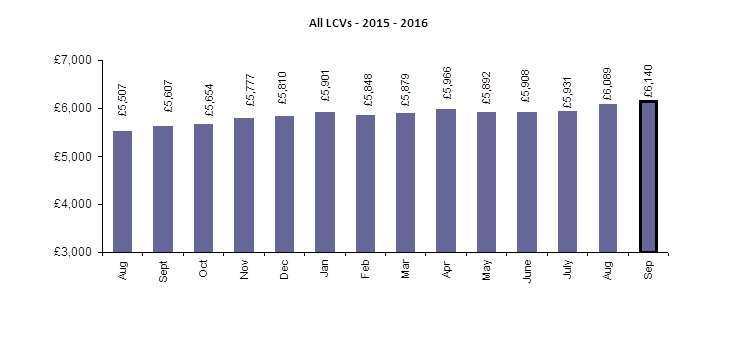
The average value of a used LCV sold at BCA rose to £6,140 in September, 9.5% higher than at the same point last year. Of course, this increase has been offset to some extent by falling age and mileage:

All vans Avg Age (months) Avg Mileage Avg Value
Sept 2015 55.70 75,348 £5,607
Sept 2016 54.15 71,509 £6,140

Source: BCA

I had expected that rising new van sales would dampen growth in the used market more quickly than it has done. But it looks like I didn’t make sufficient allowance for the improved quality and value of used models that’s resulted from the recovery in the new van market.

Here’s how used LCV prices have changed at BCA over the last year:

BCA LCV sales Aug 15 - Sept 16

BCA LCV sales Aug 15 – Sept 16 (source: BCA)

A shortage of cheap vans?

Within these top level figures are three sectors, fleet/lease, part-exchange and nearly new. The largest and most important of these is the fleet/lease sector, where average age and mileage have fallen over the last year as prices have risen:

Fleet/Lease Avg Age (mnths) Avg Mileage Avg Value Sale vs MRP
Sept 2015 42.07 69,340 £6,416 33.95%
Sept 2016 40.64 63,748 £6,884 35.25%

Source: BCA

The falling average age suggests to me that fleet operators are moving back towards a three-year replacement cycle, perhaps in line with the warranty provisions on many van models.

Interestingly, the average value of part-exchange vans has risen slightly this year, despite an increase in average age and mileage:

Part-Ex Avg Age (mnths) Avg Mileage Avg Value
Sept 2015 80.66 88,421 £3,842
Sept 2016 83.70 91,622 £3,997

Source: BCA

These figures suggest to me that buyers at the bottom end of the market are finding it harder to meet demand for more affordable models.

Will Xmas parcel deliveries support the market?

Duncan Ward is BCA’s Head of Commercial Vehicles. He makes the point that strong growth in a number of economic sectors has helped drive strong demand for used vans over the last year:

“The LCV market has seen continued value growth throughout much of 2016. There has been steady demand for vehicles to service online shopping delivery, the construction and civil engineering industries and the small business and entrepreneurial start-up sector. BCA continues to experience plenty of demand for tippers and dropsides, Lutons and larger panel vans, the latter often going back to work to service the online shopping sector.”

Despite this healthy picture, Ward warned that “volumes are rising” and said that buyers will have “more choice in the weeks ahead”. This could put pressure on values.

However, the used van market saw a surge of demand late last year as couriers hunted down additional vans to meet record demand for Christmas delivery work. I wouldn’t be surprised if such demand helps support the used market again this year.

SsangYong Musso pickup front view

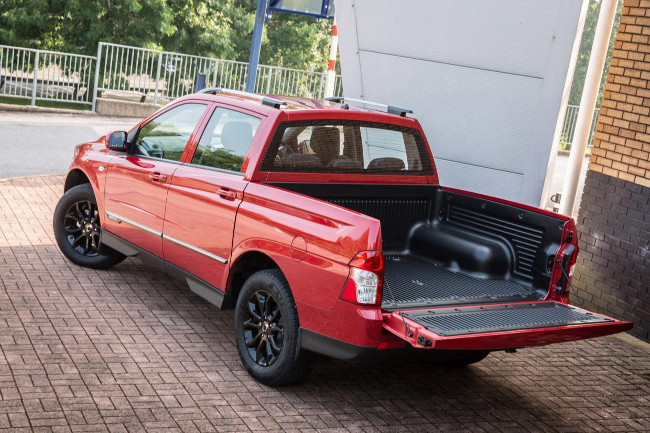
SsangYong offers updated Musso pickup from £15,995 +VAT

Many of the pickups seen on UK roads are fashion accessories, rather than working vehicles. In many cases, it’s obvious that a Ford Focus would have been a more sensible — and easily usable — choice.

Buyers who really need a working pickup aren’t always so keen to splash a lot of cash on something that will have a hard life. That’s where budget competitors like Korean firm SsangYong come into play.

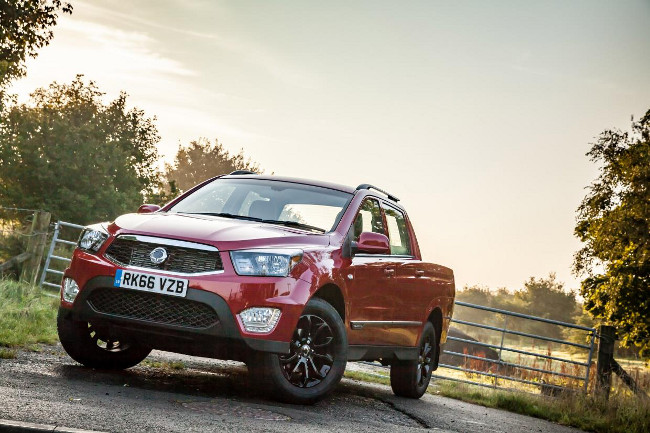
SsangYong Musso pickup front view

The new SsangYong Musso pickup is an improved version of the Korando Sports model

The firm has just updated its 1-tonne payload Musso pickup with Euro 6 diesel engines and increased its towing capacity from 2.7 tonnes to three tonnes. Previously known as the Korando Sports, the firm has decided to reintroduce the Musso nameplate for this model to differentiate this light commercial offering from its passenger car range.

Musso means rhinoceros in Korean, so the choice of name is hardly subtle. But this updated truck should be able to make fair claim to being a tough workhorse. The 1-tonne payload and 3-tonne towing capacity are class competitive, although some more expensive peers can pull 3.5t.

The new and more refined 2.2-litre Euro 6 engine also promises to offer a worthwhile improvement to power and torque compared to the outgoing model:

Korando Sports Musso
Maximum power 155PS 178PS
Peak torque 360Nm 400Nm (from 1,400-2,800rpm)

The new double cab Musso is fitted with multi-link rear suspension and progressive rear coil springs – the only pick-up at this price to offer such a system – which gives a relaxed and comfortable car-like ride, while also carrying over a tonne weight on its load deck.

SsangYong Musso pickup load bed view

The new SsangYong Musso pickup has a one-tonne payload and a three tonne towing capacity.

There are two models in the range. The entry-level SE includes an updated front grill and dashboard, plus silver finish 18″ alloy wheels and hard-wearing wipe-clean TPU (Thermoplastic polyurethane) seat upholstery.

The more upmarket EX model is available with an optional six-speed automatic transmission and boasts black 18″ alloy wheels, roof rails, LED running lights and heated leather seats. There’s also a power operated driver’s seat, automatic air conditioning, automatic headlights, rain sensing wipers, 7” touchscreen RDS radio with iPod and Bluetooth.

The SE model starts from £15,995 +VAT, while the EX starts from £17,995 +VAT, or £18,995 +VAT for the automatic model.

By way of comparison, the starting price for a double cab Mitsubishi L200 Series 5 is £20,249 +VAT. The Nissan Navara starts from £23,520+VAT, while the Volkswagen Amarok starts from £26,150 +VAT.

These are potentially big savings for owners planning to keep the Musso for a few years. Heavy users might also want to consider the fact that the Musso has an unlimited mileage five-year warranty.

While the L200 does have a five-year warranty, it’s capped at a modest 62,500 miles. The Navara’s five-year warranty is limited to 100,000 miles. The Amarok’s manufacturer backing is limited to just three years.

It’s easy to see that if the Musso can deliver the goods, SsangYong could increase its foothold in the UK’s fast-growing pickup market.

Questor Insurance logo

[EXPIRED] Save 5% on Questor excess insurance in October

Questor Insurance logoSAVE 5% on Questor van hire excess insurance with this new discount code.

Here are the details:


** THIS DISCOUNT CODE HAS NOW EXPIRED ***


Please note this is a new discount code. The previous and widely advertised 5% discount code will no longer work!

If you’re new to van hire excess insurance and would like more information about this service — which can reduce the cost of van hire — then check out our van hire excess insurance price comparison page.

Mountjoy Volkswagen Transporter

Building services firm takes 130 VW vans for southern fleet

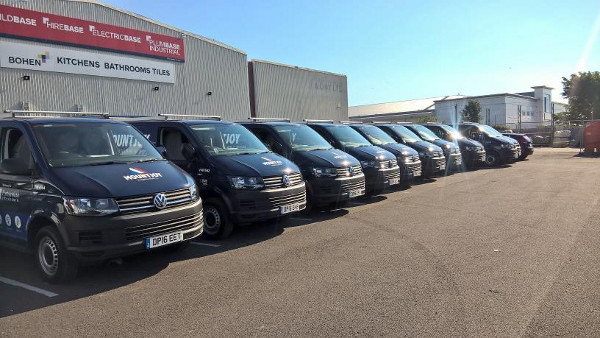
Building services firm Mountjoy has taken delivery of 130 new Volkswagen vans, expanding its fleet to more than 300 vehicles.

Mountjoy Volkswagen Transporter

Some of Mountjoy’s new Portsmouth-based Volkswagen Transporter vans.

The new vans will be based at the company’s Portsmouth site and will be used to provide a repair service to housing tenants for Portsmouth City Council. The vast majority (110) of the new vans are Transporter models, but Mountjoy has also taken 10 Crafter vans and 10 Caddy vans.

All of the new vans have been vinyl-wrapped with Mountjoy’s distinctive livery and specified with Bluetooth and all-round parking sensors — two very practical options for urban work. Inside, the vans have been racked out and had deadlocks fitted to optimise load space and keep valuable tools safe.

Dan Carlin, Finance Director at Mountjoy, said:

“The vehicles we use are as important as the work we provide and deliver. So it was an easy decision for us to turn to Volkswagen Commercial Vehicles for the supply of 130 vans.

They look superb after being wrapped and branded, and our tradesmen have been nothing but positive about them.”

Nissan Navara EnGuard rescue pickup

Nissan demos Navara EnGuard all-terrain rescue pickup

How do you combine the Nissan Leaf’s impressive electric car technology with the big Nissan Navara pickup — a vehicle that certainly can’t be powered by the Leaf’s drivetrain?

Answer — bung the Leaf’s batteries in the back of the Navara and use them to provide a zero carbon mobile power source to support all-terrain search and rescue operations. Nissan reckons the combination of zero carbon mobile power and a capable pickup could prove a winning one.

Nissan Navara EnGuard rescue pickup

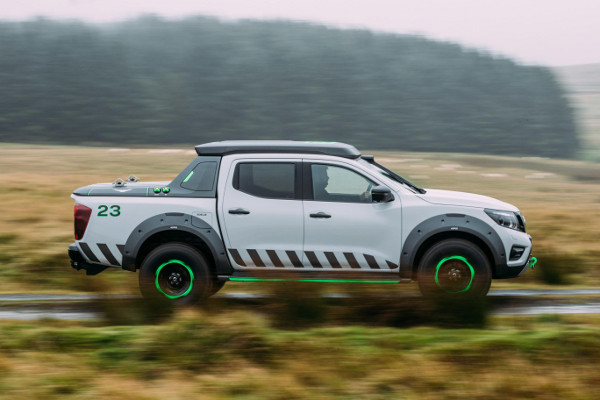
The Nissan Navara EnGuard all-terrain rescue pickup concept vehicle

To test the waters, the Japanese firm has devised the Navara EnGuard concept, which it describes as the “ultimate all-terrain rescue pickup”. On display at last week’s 2016 Hannover Motor Show in Germany, the Navara EnGuard is designed to operate as a base for life-saving operations in harsh environments.

Based on a Double Cab Tekna version of the Nissan Navara, the Navara EnGuard Concept is also packed with equipment suitable for emergency and disaster recovery work, including an advanced drone to provide vital intelligence about what dangers rescue crews might face.

The prototype portable battery pack fitted to the Navara EnGuard is based on the battery system used in the Nissan LEAF electric car and e-NV200 electric van. With more than 250,000 Nissan electric vehicles sold globally to date, the firm can lay claim to a fair level of expertise in this sector.

The batteries are kept permanently under charge when they’re docked in the pickup’s bed and the Navara’s 2.3-litre turbo diesel engine is running. Each power pack is rated at 2kW and contains seven Nissan EV battery modules inside a weather-proof aluminium housing.

Nissan Navara EnGuard load bed

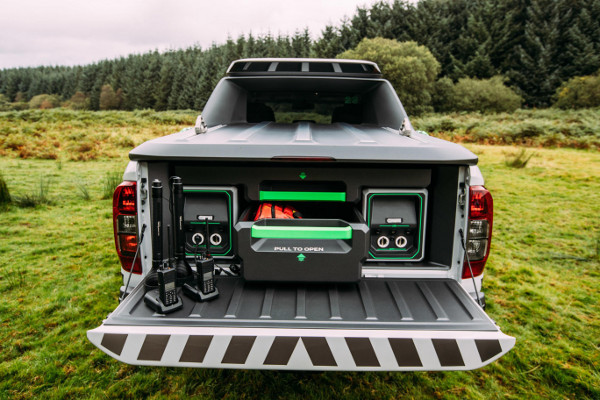
Built into the load bed is the power pack plus storage for a wide range of rescue equipment.

This substantial power reserve can be accessed through five output sockets on each battery pack. Nissan says the power available would be suitable for specialist cutting or heavy-lifting equipment. The power pack has been designed specifically to provide a zero emission alternative to a petrol generator.

Occupying the rest of the space in the load bed are two pull-out fibreglass trays. The shallow upper tray contains lightweight items such as two-way radios, ropes and an axe. The lower tray is deeper and narrower, storing larger items such as an oxygen tank and resuscitation kit, life jackets and buoyancy aids.

Key to the car’s rescue role is a drone, a DJI Phantom 4 with an operating ceiling of 6,000 metres. Weighing just 1,380 grammes, it can fly at speeds of up to 20 metres per second for close to 30 minutes and can relay images back to the concept car. These are viewed on a pop-up HD screen hidden in the load bed wall.

Nissan Navara EnGuard drone

A drone is provided to enable rescue crews to conduct aerial searches using the drone’s onboard camera and a display fitted in the load area.

The Navara EnGuard also boasts raised and upgraded suspension and a modified roofline with a fully-featured light bar. Fluorescent green was chosen as a highlight colour for the EnGuard due to research showing that this is the most visible colour in daylight.

This well-specified model is still a concept and I suspect it will remain so. But Nissan is raising the profile of proven technology which could easily make it onto the option list of future pickup and van models.

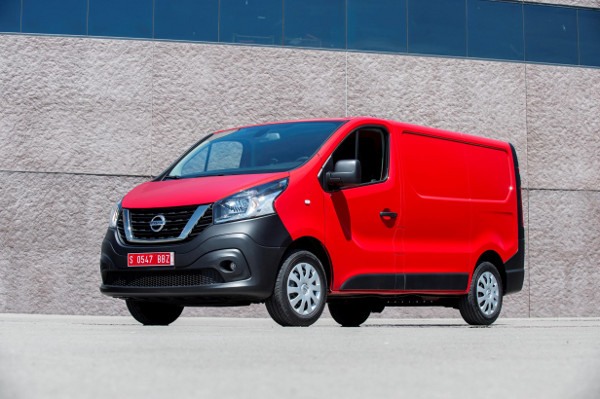
Nissan NV300 van

Revealed: New Nissan NV300 medium van

Nissan has unveiled the new NV300 van — the long-awaited replacement for the Primastar medium van.

Nissan NV300 van

Like the Primastar, the NV300 is based on the Renault Trafic/Vauxhall Vivaro. The NV300 will be built at the Renault-Nissan Alliance factory in Sandouville, France and will be on sale across Europe from November.

The NV300 boasts a payload of up to 1,300kg and will complete Nissan’s LCV range, filling the gap between the firm’s own NV200 van and the Renault Master-based NV400.

Nissan NV300 badgeFour NV300 panel van models will be available, based on two wheelbase choices and two roof heights. A six-seater crew van and chassis cab models will also be offered, as will a nine-seater Combi.
The NV300’s attractions include a five-year/100,000 mile warranty, which trumps the four-year offering available from Renault and Vauxhall. Dealership or fleet marque policies might also tempt buyers to choose the NV300 in favour of its near-identical siblings, the Trafic and Vivaro.

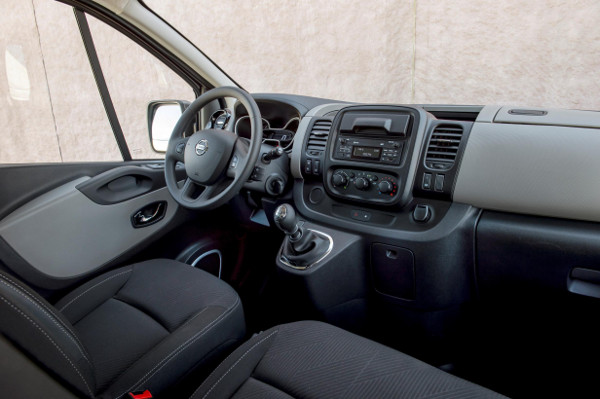
Nissan NV300 van interior

Inside the new Nissan NV300

Engine torque

Four engine options will be offered on the NV300, all of which are based on Nissan’s tried and tested 1.6-litre dCi diesel engine. The same engine is also used in the Qashqai and X-Trail crossovers.

NV300 buyers will be able to choose from power outputs of 95hp, 120hp, 125hp and 145hp. The first two are single turbo engines, while the latter pair are twin turbo. All are mated to a six-speed manual transmission. Not all engines will be available with all body styles.

The twin turbo models have Stop & Start engine technology for reduced fuel consumption, plusan ECO mode switch with gear shift indicator. It’s also an option on 95bhp unit. This allows drivers to optimise fuel consumption by limiting torque and smoothing accelerator response. The most efficient panel van is the 125hp, with Combined Cycle fuel economy of 5.9 litres/100km and CO2 emissions of only 155g/km.

Across the range, fuel consumption is on average 1.0 litres/100km lower than the Nissan Primastar. Nissan believes that this, plus the five-year warranty and two-year/25,000 mile service interval will give the NV300 the lowest running costs in its sector.

It certainly seems a tempting package.