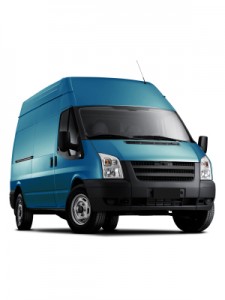
Ten Tips For Hassle-Free Van Rental This Summer

vanrental.co.uk vanSummer is the peak season for car and van hire and rental companies can get busy, with availability limited for popular models and van types. This makes it doubly important to make sure that your van hire is hassle-free and does not deliver any unexpected costs or surprises.

The best way to avoid problems is to be prepared and understand exactly what you’ve booked — and to be aware of any extra costs you may have to pay at the branch.

Gerry Keaney, Chief Executive of the British Vehicle Rental and Leasing Association (BVRLA) explains what can happen:

“Rental firms try to maintain the highest standards of customer service, but mistakes do get made. At the same time, some consumers do not pay enough attention when booking their vehicle and later complain about what they perceive as extra charges or a lack of adequate insurance cover.”

To help make sure that none of these potential problems affect you this summer, the BVRLA has produced a ten-point checklist that should enable you to avoid any costly surprises or unexpected restrictions on how you can use the van (or car):

  1. Beware of bogus car rental companies. Consumers have been caught out by bogus car and van hire companies in recent years, hoodwinked by their offers of very low prices and nationwide availability, even for last minute bookings. Many customers handed over deposits of hundreds of pounds for cars that never materialised.
  2. Use a BVRLA member. Seeing the BVRLA logo on the front desk or website is a sign that you are dealing with a reputable company that has been vetted and operates to a professional code of conduct. You will also be able to use the BVRLA’s conciliation service in the event of any dispute. Find a BVRLA member via the ‘member locator’ on the BVRLA website at: www.carhire.bvrla.co.uk
  3. Before you book. Pay close attention to what is and isn’t included in the reservation fee. For example, some rental companies charge extra if you can’t return the vehicle to the same rental branch or are leaving the country.
  4. Paperwork.Make sure you read and understand the terms and conditions of your contract with the rental company. Ask for a copy prior to your rental, so that you have plenty of time to read it through.
  5. Excess and waivers. Check if there are any exclusions to your loss/damage waiver. For example, in most cases windscreens, tyres, roof damage and undercarriage damage are not covered. You may want to consider arranging third-party van hire excess insurance to cover the hire company’s excess — do this before you collect the vehicle.
  6. Fuel.Your car rental quote will not include fuel. Most companies will give you the option of buying a tank of fuel from them and returning the car empty or returning it with a full tank. Remember what you agreed to, otherwise you could end up gifting the rental company a free tank of fuel or paying an extra charge to have the tank re-filled.
  7. Going abroad. Make sure that you tell the rental company if you are planning to take the vehicle abroad and that you familiarise yourself with the driving regulations at your destination. You may also need to take additional documentation, such as a VE103B certificate. Vehicles travelling in mainland Europe must carry their registration document, but an exception is made for hire vehicles, which must carry this certificate.
  8. At the rental desk. Make sure you turn up with the credit card you used to make your booking and BOTH parts of your driving licence.
  9. Collecting the vehicle. Do a thorough inspection, inside and out, walking all the way around the vehicle. Note every single chip, dent and scratch. Pay particular attention to the wheels, windscreen and lights, which are common damage areas. Before you drive the hire vehicle away, familiarise yourself with all of its controls – lights, windscreen wipers etc.
  10. The return. Allow plenty of time, particularly at busy rental sites such as airports. Try and return the vehicle during opening hours so that someone can check it over with you. Otherwise you will be liable for any damage that occurs between you returning it and them inspecting it.

If you haven’t driven a van before, then we’d strongly recommend that you also check out our guide to driving a van for the first time. It’s simple and easy to read and contains essential information, such as UK speed limit details for vans (van speed limits are lower than car speed limits).

One-Way Van Hire Could Save You Time & Money

People hire vans for all kinds of reasons, but many of them relate to moving house or to business-related moves where the destination is a long way from the starting point.

This can make it expensive and inconvenient — or sometimes impossible — to return your rented van to the location you collected it from.

You can get an instant quote for one-way van hire on our dedicated page, but in this post, I’d like to explain a little more about how this works — and the extra costs you may need to be aware of.

Do all companies offer this service?

Not all companies allow one-way van hire, even if they have a national network of branches. One reason for this is that some companies, such as Sixt, use franchised branches in most areas of the UK. This means that the branches are not owned or directly operated by Sixt — they are really independent businesses who are hooked in to Sixt’s booking system.

Naturally, as independent hire companies, they need to keep control of their own vans, and cannot allow them to be dropped off at another company’s branch, somewhere else in the UK.

Who does offer one-way van hire?

If you want one-way van hire, your best bet is with a company that has a UK-wide network of corporate branches.

In our experience, the best choices in the UK are Europcar, Hertz and Thrifty. Each of these companies has 90 more UK branches and will usually allow you to pick up a van at one branch and return it at another location, as long as you specified this when you made your booking.

The other good thing about all four of these companies is that the one-way fee is included in your online quote — at least they were, when I tried some test quotes today.

How much will it cost?

Unfortunately, one-way hire fees (sometimes referred to as drop-off fees) vary widely. Companies sometimes charge different rates depending on the drop-off and pick-up locations, or the distance between them. Additional fees sometimes apply for locations within London, too.

The best approach is to use the our one-way booking engine, and then click through to the hire company’s website to check that everything you want is included in the quote. Remember that online rates are often only valid for online bookings — walk-in and phone bookings can cost most.

Any question? Drop us an email, tweet us @vanrentaluk, visit our Facebook page or leave a comment below, and we’ll do our best to help.

Cut Van Hire Fuel Costs The Easy Way With VanRental.co.uk!

Fuel gauge nearing emptyIn the latest edition of the vanrental.co.uk newsletter, I took a look at the popular habit of ‘chasing the cheapest litre of diesel’.

What I mean, of course, is driving out of your way to save one or two pence per litre when filling up.

The problem with doing this — apart from wasting time — is that you often end up wasting money, too.

In the case of my personal van, a short wheelbase Ford Transit, I usually get around 36mpg, which equates to a fuel cost of 17.6p per mile, assuming that diesel is 140p per litre, as it is in my area.

This means that a diversion of six miles to fill up will cost me £1.05.

If the fuel I buy is 2p per litre cheaper than I would have paid, then I have to buy at least 52 litres before I save any money (52 x 2p = £1.04).

I’m sure you can see the problem – the cost of the fuel required to drive to a cheaper garage can easily be more than the money you save at the pumps. Plus you waste a load of time, probably on your way to or from work…

There is a better way!

What I’ve found, through long experience, is that finding the cheapest fuel may save me a few pence, but learning to drive with a lighter right foot will save me pounds.

At the start of this post, I said that my average fuel consumption was 36mpg — but I have seen it vary from 33mpg to 40mpg, depending on how I drive.

On long journeys, with a light right foot and keeping motorway speeds below 65mph, I can get 40mpg. If I hoon around like Lewis Hamilton in Melbourne, then unsurprisingly, fuel consumption drops dramatically!

The upshot is that a 10% improvement in fuel consumption is quite easily achievable for many drivers — which equates to a cost saving of 1.8p per mile, no diversions or wasted time necessary!

Fiat Adds UK Market Share With 50% Rise In Sales

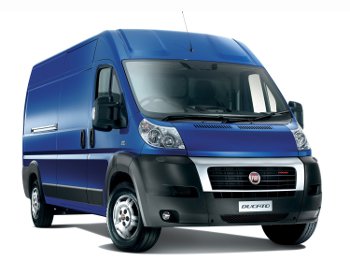
New Fiat Ducato panel vanThe Fiat Professional brand recorded January-June sales figures of 7150 units during the first half of 2013 – up more than 50 per cent over the same period in 2012. The rise in sales means that Fiat’s share of the UK LCV market has risen by 1.3% compared with last year.
The addition of new Tecnico versions on the Ducato, Doblò Cargo and Fiorino models has been well received by customers and offer good value for money in terms of specification, with highly-competitive fuel consumption and CO2 emissions.

Fiat says that the Doblò Cargo range, which has recently been expanded to include new additions such as the Doblò XL and Doblò Maxi Crew Van versions, is continuing to perform strongly.

Fiat Professional’s versatile Ducato, which competes in the demanding large van market, now includes ESP (electronic stability programme) as standard across the entire range of Ducato vans, chassis cabs, combis and minibuses.

Commenting on the half year figures, Sebastiano Fedrigo, director, Fiat Professional UK said:

“We are delighted with the results achieved so far and it is particularly pleasing to see more and more customers driving our products.

“The Fiat Professional brand is growing and continues to make significant strides within the UK market. We are growing both in the corporate fleet sector and the retail sector where our  strong network restructure has proven very successful with June 2013 network registrations up 80 per cent higher than in the same period in 2012.

“We will be working hard to consolidate these results and are looking forward to further new appointments across the network in the very near future – testimony to the strength of our product offering and network back up.”

Van Hire Firm Recycles 810 Tonnes of Tyres In 2012

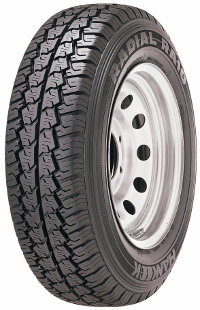
Hankook RA10 All-Season TyreBusiness van hire specialists Northgate Vehicle Hire has a UK fleet of 52,000 vehicles, mostly vans. As you can imagine, these vehicles get through a lot of tyres every year — 85,786 in 2012, to be precise.

These tyre are collected from Nortgate’s 60 UK depots by Vellco Ltd., which specialises in used tyre management. Vellco supplies all of the car and van tyres it collects to Sapphire Energy, a subsidiary of cement maker Lafarge. The tyres are shredded into 50mm pieces and then used as fuel in Lafarge’s cement kilns, instead of coal.

According to Northgate and Vellco, this process is environmentally beneficial, as it produces less nitrogen oxides than coal, while the energy released by burning the tyres is competitive with coal.

Not all tyres end up in a cement kiln, however — Northgate’s light truck tyres follow a different route. These tyres operate under much heavier loads than light vehicle tyres and, as a result, contain more steel than smaller car and van tyres.

To ensure that this steel component doesn’t go to waste, the light truck tyres are seperated into steel and rubber. The steel is recycled into new steel, while the rubber is ground down into small chips, or crumbs, that can be used to produce artificial sports surfaces and the springy black surfaces that have become so popular in children’s playgrounds in recent years.

It just goes to show that very little of our waste needs to go to landfill — and it’s entirely possible for recycling to be a profitable and efficient business.

Europcar Launches Business Connect Service For SME Customers

Europcar has launched a new service aimed at SME (Small and Medium Enterprise) customers — smaller business customers who may not normally be able to access high-volume corporate deals.

The service is called Business Connect and aims to give SMEs more choice and flexibility than they enjoy at present. Some of the features of the Business Connect service are:

  • A choice of fixed rates, to help with budgeting, or variable discounted rates;
  • A choice of payment options, including credit facilities or no-contract credit card payment;
  • Access to Europcar’s online booking system
  • An Affinity scheme to provide employees with access to discounted car hire for personal use.

Europcar says that the Business Connect service will also offer a number of benefits that are usually only available to larger corporate customers, such as a guaranteed diesel option, a light damage option that waives any damage costs up to £400, and dedicated account manager support.

Delivery and collection and one-way hire are also available, although these services are on offer to regular retail customers of Europcar, too (not necessarily at the same rates).

Commenting on the launch, Ken McCall, Europcar UK Group Managing Director, said:

“The launch of Business Connect is part of Europcar’s commitment to our small business customers who are the engine room of the UK economy. Business Connect delivers big business benefits to smaller organisations, helping them get the best out of Europcar’s services by creating a rental solution that meets their specific needs.

“We know that SMEs have to be even more conscious of costs but can often find that they are excluded from the discounts and benefits that are afforded to big volume rental users.  Business Connect brings certainty on costs with discounted rates to keep UK SMEs on the move.  Plus our Affinity programme offers staff, friends and family discounts on vehicle rental booked via our consumer website, providing savings on leisure rentals.”

Europcar is Europe’s largest car and van hire company, and has more than 200 branches across the UK.

Hiring A Van With An Additional Driver: How Much Will It Cost?

Fifty pound note

Make sure you save money on van hire buy checking how much extras such as an additional driver, or sat nav hire, will cost, before you make your booking. The cheapest basic hire rate isn’t always the cheapest total cost.

Extra costs can be a minefield when hiring a vehicle, transforming a cheap daily rental rate into an expensive experience.

One common requirement is for an additional driver; not all drivers are used to driving long journeys, and even if you are, doing a long journey in a large, unfamiliar van can be much more tiring than making the same trip in your car.

(If it’s your first time driving a van, check out our ‘Driving A Van’ guide).

For this reason, having an additional driver is always a popular option for van hire customers — but it isn’t always obvious is how much this may cost.

On vanrental.co.uk we list a number of different hire companies, including seven well-known international hire companies and two major brokers which offer national coverage.

I’ve had a look at how much each charges for an additional driver, and the differences are surprising!

How much for an additional driver?

Remember, each company charges different daily van hire rates, too, so the cheapest additional driver fee isn’t necessarily the cheapest overall.

However, let’s take a look at the fees charged for an additional driver by some of the UK’s biggest van hire operators*:

Which company offers the cheapest total rental costs? It’s impossible to say, I’m afraid, but these figures may give you some indication of what to expect when comparing rental rates with our price comparison engine.

Other extras will vary

You may not need to have an additional driver, but there’s a good chance you will want another optional extra.

Perhaps you’ll be travelling on your own and would rather hire a sat nav to help with the navigation — or maybe your passenger will be a young child, who needs a child seat?

I’m afraid that in every case, charges vary between companies vary, and the only way to get a precise, all-inclusive quotation is to click through to each rental company’s website and complete a full quotation.

Sorry, but that’s the way it is — and anyone who tells you otherwise may not be being completely honest with you.

I’ll take a closer look at the cost of sat nav and child seat hire in future posts — stay tuned for more information.

*All figures were checked at the time of writing in July 2013, but these may be subject to change vanrental.co.uk and the author take no responsibility for any errors, omissions or future changes. Please check yourself before booking.

Hourly Van Hire & Overnight Van Hire – You Can Do It

Daily van rental is usually charged for on a 24-hour basis. So if you collect your van at 9am on day one, and return it by 9am the next day, you pay for one day’s hire.

Unfortunately, if you pick-up a hire van at 9am and return it at 10am, you still pay for a fully day’s hire.

Similarly, if you collect your van after work at 5pm, and return it first thing the next morning, you still pay for a full day’s hire.

More flexibility?

The thing about van hire is that people only hire a van when they need to. It’s not like hiring a car for a weekend away — when you need a van, you may need it at any time of the day or night, and you don’t want to pay a penny more than necessary. 

For example, what about those times when you need to pick-up some furniture from Ikea on a Saturday afternoon, or pick-up a big eBay purchase one evening?

Perhaps you’re in a band and only need a van in the evenings, when you’re travelling to gigs that you fit around your day job?

The good news is that things are improving and that companies are starting to offer genuinely flexible services. Here’s an overview of what’s available:

Overnight Van Hire

If you want to hire a van overnight — say from 5pm to 9am — then Europcar is your best bet.

Europcar is Europe’s largest car and van hire firm and now offers overnight van hire from just £29* at most of its UK branches.

The deal is simple — collect the vehicle after 5pm and return it before 9am (if you return it after 9am, you’ll be charged a full day’s hire costs).

To learn more about overnight van hire from Europcar, click here.

Hourly Van Hire

The other common problem with daily van rental is that you may only need the van for an hour or two. This often means you have no choice but to pay for a 24-hour hire, despite  only needing the van for a small fraction of that time.

It’s worth noting that almost all hire companies will let you book a van for a few hours — or even one hour — but in most cases, you will be charged for a full day’s hire, regardless. You won’t explicitly be told about this — the company’s booking engine will just quote you a price that’s the same as the daily rate.

The best option we know of for standard hourly van hire is Europcar.

Europcar currently offers hourly van hire from just £11 per hour*  – click here for an instant quote.

What about car and van-sharing?

Hertz offers hourly van hire through its standard rental service, but it also offers something a little different — a car-sharing membership scheme called Hertz 24/7, which allows members to book, pick-up and drop-off Hertz 24/7 vehicles from Hertz 24/7 locations.

The deal is simple — as a member, you get a special key fob that gives you access to the vehicle you have reserved. The ignition key will already be in the vehicle and you simply get in, drive off, and then return the vehicle when you are done.

Members can book Hertz 24/7 vehicles online and billing is taken care of automatically — whether hourly or daily.

This scheme is similar to Zipcar and a number of other schemes that are increasingly popular, especially in big US cities, but also in London.

To learn more, visit the Hertz 24/7 On Demand website.

*Prices correct at the time of writing on 22 July 2013. T&Cs apply.

New Ford Transit Connect Offers 70mpg & 3.4m Load Length!

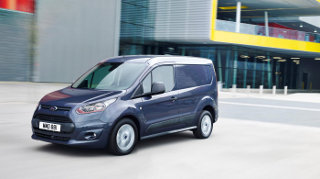
Ford Transit Connect

The new Ford Transit Connect goes on sale later this year.

Ford has published details of the improved fuel efficiency and load-carrying abilities offered by the all-new Ford Transit Connect, which will be launched later this year.

Saving Fuel

The new Ford Transit Connect ECOnetic will be capable of 70.6mpg and 105g/km CO2 emissions − a 34 per cent improvement over the current model, while the new Transit Connect will also be the first van offered with Ford’s award-winning and popular 1.0-litre EcoBoost petrol engine, which is capable of a class-leading 50.4mpg and 129g/km CO2 emissions.

The most popular engine options are likely to be the Dagenham-built 1.6-litre 75 PS and 95PS Duratorq TDCi diesels, which will be offered in the standard models, with the ECOnetic getting the 95PS model. The choice of the higher-power engine option for the ECOnetic is presumably a timely reminder to operators that high power can equal better efficiency, as drivers in higher-powered vehicles tend to need to change gear less and work the engine less hard than in lower-powered models.

All engines will also be available with Ford’s fuel economy package — featuring Auto-Start-Stop, Active Grille Shutter and Smart Regenerative Charging — which is aimed at cutting fuel consumption under typical van usage scenarios, especially urban use.

Load Capacity

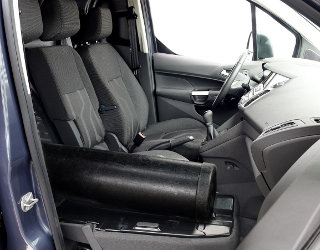
The load-through hatch in the Transit Connect

The passenger seat folds down, allowing loads of up to 3.4m (long wheelbase) and 3m (short wheelbase).

The Transit Connect will be available in short- and long-wheelbase models, which will offer total load volumes of 2.9m3 and 3.6m3 respectively, with full bulkheads fitted. Maximum payload will be a healthy 1,000kg, but where these vans also excel is in expanding the loadspace (safely) into the passenger space.

A load-through hatch in the van’s bulkhead will enable the Transit Connect to carry loads up to 3.4m long in the long wheelbase model and 3m long in the short wheelbase, while the sliding side door on the long wheelbase model will be wide enough to allow a Europallet to be loaded through the side door.

Careful shaping of the bulkhead will also mean that uniquely for this size of van, the Transit Connect will be able to carry 8′ x 4′ sheets of plasterboard and the like in the long wheelbase model, which will also be offered with flat-folding seats in its Kombi (crew cab) form.

The front passenger seat in the Transit Connect will fold upwards to allow large boxes to stand on the floor or long loads to slide through from the load compartment. Like the current Citroen Berlingo, the Transit Connect will also offer a central seat for a second passenger, although this is unlikely to be a seat you’ll want to use for long journeys.

Deliveries of the new Transit Connect are expected to start from the end of 2013.

UK CV Manufacturing Up 1.4% In June, As Home Sales Beat Export Slump

UK commercial vehicle manufacturing output rose by 1.4% in June, bringing to a halt a run of steep falls, according to the latest data from the Society of Motor Manufacturers and Traders (SMMT).

A 17% surge in domestic demand managed to overcome an 8% fall in export demand. The statistics are a sharp contrast to May’s figures, when export demand fell by 33% and home demand increased by just 1.4%. However, June’s figures still leave overall UK CV manufacturing output down by 13.5% so far this year, as these figures show:

CV manufacturing Jun-12 Jun-13 % Change YTD-12 YTD-13 % Change
Total 8,367 8,480 1.4% 56,096 48,517 -13.5%
Home 3,116 3,647 17.0% 21,908 23,874 9.0%
Export 5,251 4,833 -8.0% 34,188 24,643 -27.9%
% export 62.8% 57.0% 60.9% 50.8%

Data courtesy of SMMT (www.smmt.co.uk)

The fall in export demand is also a worry, in the longer term — a year ago, exports accounted for 61% of UK CV output, but that figure has now fallen to 51% and could still drop further. In the long run, home demand cannot absorb this kind of shortfall, but until the eurozone’s economic health improves, a recovery in export demand seems unlikely.

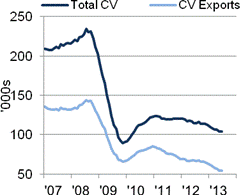
SMMT CV output rolling year totals

Total UK CV output vs. export demand — it seems unlikely that we will return to pre-recession levels, especially given the closure of Ford’s Transit plan in Southampton later in July.

Commenting on the figures, Nigel Base, SMMT Commercial Vehicle Manager, said:

“June’s CV output provides a welcome boost to our commercial vehicle industry, with volumes increasing 1.4% in the month, following a 17% surge in home market demand. Year-to-date volumes offer a slightly gloomier picture, falling 13.5% in the first half of 2013 as CV manufacturers continue to feel the effects of weak demand abroad.

The remainder of the year will be challenging, but strengthening UK demand is expected to support domestic manufacturers of vans, trucks buses and coaches.”

The rise in domestic demand does tally in with the fall we have seen in used van values over the last two months, and suggests that UK van operators are finally starting to move back towards a more typical replacement cycle, rather than the extended cycles we have seen in recent years.