The Grazing Shed's new burger van

Merc burger van is flipping tasty

The Grazing Shed's new burger van

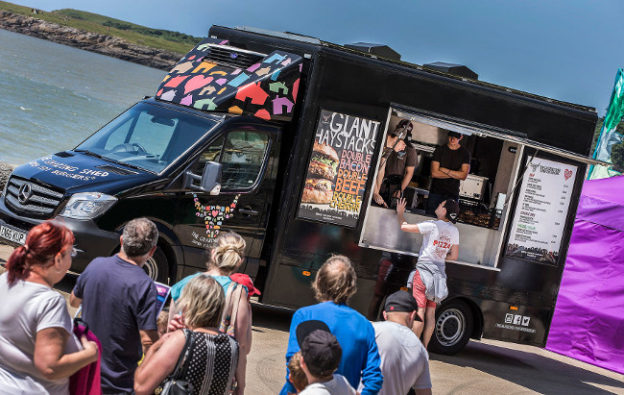
The Grazing Shed’s new Mercedes-Benz Sprinter burger van conversion

When Cardiff-based restaurateur Duncan Black decided to expand his award-winning burger restaurant, The Grazing Shed, he decided to take his business on the road with a burger van.

The Grazing Shed was voted the Number One Burger Joint in Wales at the British Burger Awards 2016. Duncan’s ‘Super Tidy Burgers’ use only locally-sourced beef, fresh-baked artisanal bread and homemade sauces and chutneys. Clearly his mobile unit would need to be able to sustain the high standard of cooking, service and presentation his customers are used to.

The team had been selling at festivals and events since 2014, but always from temporary stalls. So Duncan and his colleagues already had an accurate idea of the kind of volume, storage and cooking capacity they’d need.

“We can be doing anything up to 200 burgers an hour at a festival. As well as grills big enough to cook the food in these high volumes, we also needed a walk-in fridge with sufficient capacity for all of the burgers and accompaniments we might need for a full day.”

They were also already familiar with Mercedes-Benz vans, as the company already ran a Vito Dualiner as a general runaround. The desire to combine mobility with the efficiency and convenience of a permanent setup led Duncan to opt for a custom-built Mercedes-Benz Sprinter van conversion.

The solution was a 3.5-tonne Sprinter 313 CDI chassis cab with purpose-designed body built by Commercial Truck Bodies, of Cardiff, and Carrier refrigeration unit. The van has been generously specified and came with options including air-conditioning, a satellite navigation system, light and rain sensors, and electrically-adjustable door mirrors.

The fuel-efficient vehicle has opened the door to many new opportunities to meet and serve the public, for example at corporate events, parties and even weddings. Manned by up to six members of The Grazing Shed team, it has also fed supporters outside Cardiff City FC’s ground, and the crowds which have descended on the popular Barry Island resort on sunny days.
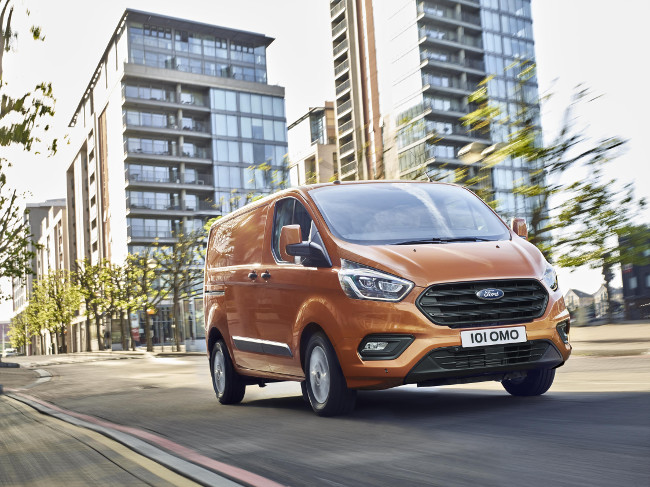
2018 Ford Transit Custom

Top-selling Ford Transit Custom will be updated for 2018

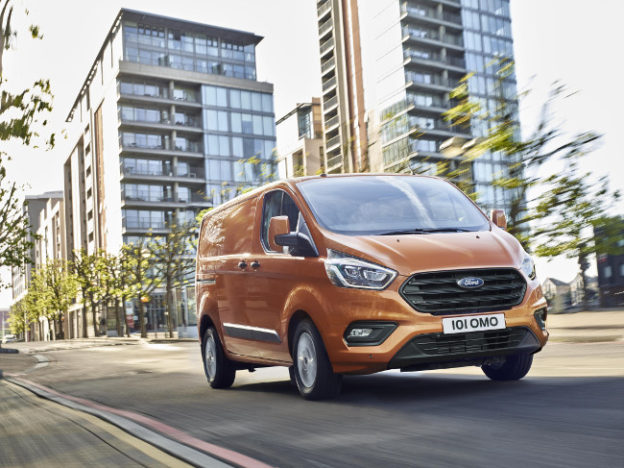
2018 Ford Transit Custom

The 2018 Ford Transit Custom will have an updated front end and new interior.

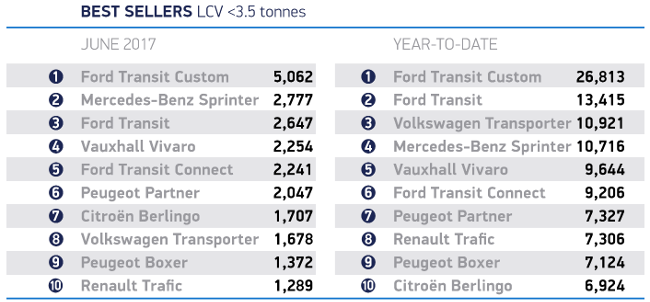
The Ford Transit Custom is Britain’s best-selling van by a country mile. The one-tonne panel van sold 26,813 units during the first half of 2016, double that of the second-placed model, the full-sized Ford Transit.

The top-selling non-Ford van was the Volkswagen Transporter, which managed just 10,921 sales — less than half that of the Transit Custom.

It’s clear that the UK’s love affair with the Transit van is as passionate as ever. But Ford isn’t resting on its laurels. The Blue Oval is planning to unleash an updated version of the Transit Custom for 2018. Highlights will include “sharper styling an updated cabin and a fuel-saving ECOnetic model.

A plug-in hybrid version of the Transit Custom is also on the cards and is currently on trial in London. However, the production model isn’t expected to be ready until 2019.

What’s new?

Here’s a round-up of the changes you can expect when the new Transit Custom models reach dealers early in 2018.

Fuel-saving: The Transit Custom will continue to be offered with Ford’s Dagenham-built EcoBlue diesel engine. This will be available with a choice of 105PS, 130PS and 170PS power outputs.

However, a full ECOnetic version will also be available for the first time. This will be offered as a 105 PS 300 Series short wheelbase model. Changes from the standard model include modified engine tuning, Auto-Stop-Start, low rolling resistance tyres, Ford’s Acceleration Control feature (which limits acceleration when the van is empty) and a fixed 62mph speed limiter.

Ford claims the ECOnetic will deliver 148g/km of CO2 and combined cycle fuel consumption of 49.6mpg, a 6% improvement over the most efficient current model.

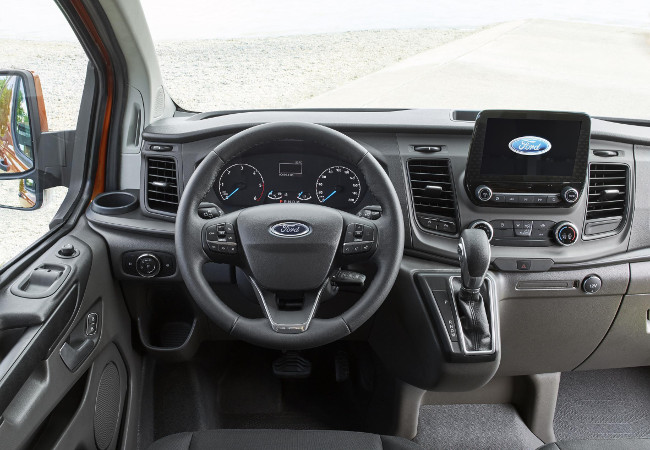
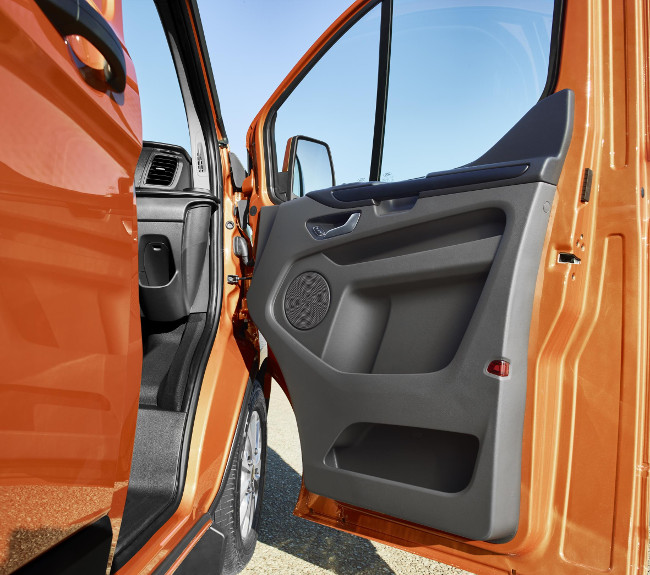
Style & storage: The styling of the van will be updated with a new three-bar grille and what’s described as “a completely new cabin” with best-in-class storage and improved comfort and ergonomics. Connectivity will be provided by Ford’s SYNC3 or MyFord Dock options.

The 2018 Transit Custom will include a new dashboard design

The new-for-2018 Transit Custom will have an all-new dashboard.

New door storage in 2018 Transit Custom

Door storage will be improved in the updated van.

Safety: New features will include Ford’s Intelligent Speed Limiter, which will be available on a van for the first time. Blind Spot Information System and Cross Traffic Alert will also be offered.

Sport: The popular Transit Custom Sport will also get an update. The signature twin bonnet stripes and body kit have been redesigned for the new model. Changes include “distinctive new two-tone stripes in black with orange or silver accents”. Not one for shrinking violets, then.

We say: This mid-life update promises to make an already-great van even better.

Volkswagen Transport Ingimex tipper

Volkswagen Transporter now available with tipper body

Volkswagen Transport Ingimex tipper

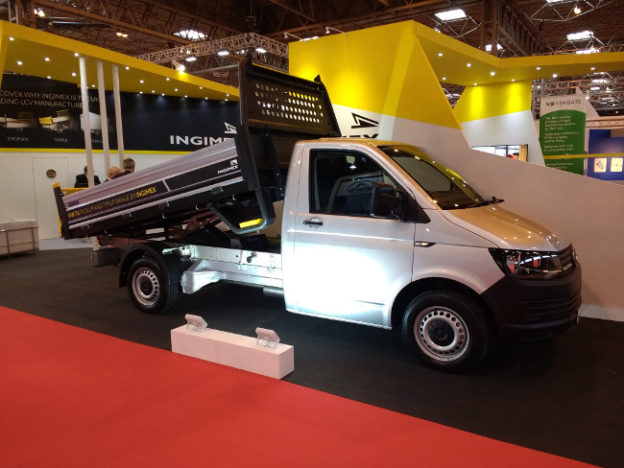
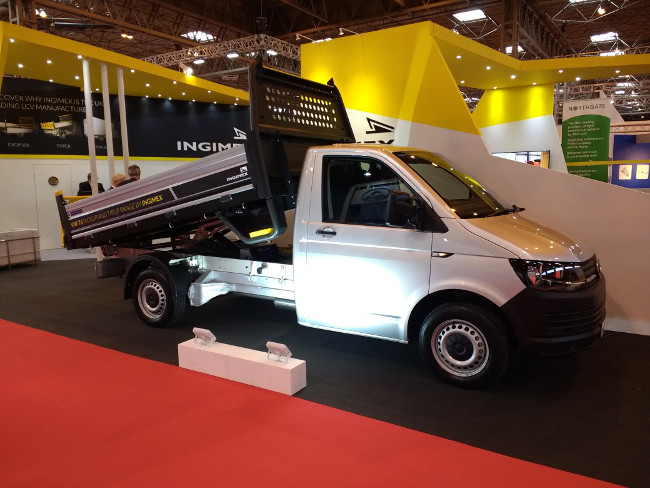
Volkswagen Transport Ingimex tipper at CV Show 2017

The Volkswagen Transporter can now be ordered from VW dealers with a tipper body, thanks to a partnership with converter Ingimex.

I actually flagged this up in my report from the CV Show 2017, where the new model was on display on the Ingimex stand (picture above). But I didn’t have all the details then — so here they are now.

The Ingimex body is available in two formats, a dropside and a tipper. The tipper body will be branded as the Tip-Up, while the dropside is called Pick-Up. Both bodies are available T30 and T32 (3,000kg and 3,200kg GVW) Transporter models.

If you’re not familiar with the range, the main difference between these two is their payloads — the T30 has an 800kg payload, while the T32 has a 1,000kg payload.

According to Nick Axtell, who is Volkswagen Commercial Vehicles’ Specialist Sales Manager, the market for small tippers is “progressive and growing”. Although most building and construction types are still likely to opt for a tipper or dropside based on the larger VW Crafter van, the Transporter Tip-Up and Pick-Up models could have great niche appeal.

The Tip-Up’s more compact dimensions could make it ideal for use on large estates or in urban environments. Another potential attraction is that the Tip-Up is available with the Transporter 4MOTION all-wheel drive drivetrain, providing a go-anywhere ability to rival a pickup truck but with lower running costs and a larger, more functional load area.

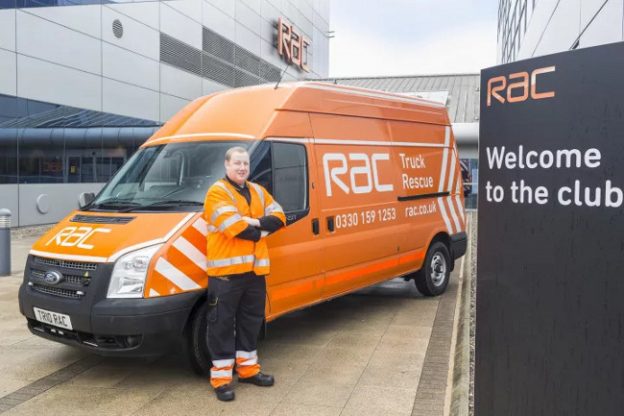
RAC Truck Rescue Patrol

Beginner’s guide to van hire: insurance, accidents & breakdown


In today’s beginner’s guide article, I’m going to look at van hire insurance and breakdown cover, plus what to do if you damage your van or are involved in a collision.

  • Insurance
  • What to do if you have a collision or damage the van
  • Breakdown cover

Insurance

If you’re a private customer hiring a van in the UK, the insurance situation will usually be the same as it would be for a hire car.

Insurance is generally included so that you’re legal to drive the van on public roads. However, this cover usually includes an excess amount you’ll have to pay to cover any damage before the company will claim on their insurance.

The excess on a rental van can be quite high — usually hundreds of pounds.

If you want to reduce this excess to zero, then you will normally have to take out additional insurance. Hire companies will normally offer to sell this extra insurance to you when you collect the car. It will often be described as Collision Damage Waiver (CDW) or something similar.

Unfortunately there isn’t a standard name for this product, so if in doubt ask the rental operative to describe exactly what insurance choices are available and what benefit they provide.

CDW or similar is normally charged per day. It can be quite expensive, especially for longer hire periods. One alternative approach to get the same cover (or better) is to take out your own van hire excess insurance from an independent company. This is perfectly acceptable. How it works is that if you damage the vehicle, you can claim back any costs you face from the insurance firm.

We have more information about van hire excess insurance here.

What should I do if I have a collision or damage the van?

Damage only, no other vehicles involved: If you damage the van without anyone else being involved, then the correct procedure is normally to phone the emergency assistance number provided by the hire company. You may also need to fill out an accident report form, if provided.

If the vehicle can be safely driven without damaging it further, you’re free to carry on. The hire company will assess the cost of damage to the vehicle when you return it and charge you accordingly.

To get an idea of how damage might be costed, it’s worth having a look at this Damage Price Guide on the Europcar website.

I’ve been in a collision: If other vehicles/people are involved, then I would phone the emergency assistance number provided by your hire company immediately if possible.

Try to get all of these details from the other party:

  • Driver’s name & contact telephone number
  • The names and contact details of any passengers/witnesses
  • The registration of the other vehicle and a description (e.g. black Ford Mondeo). This helps to defend against fraudulent claims.
  • Write down a clear description of what happened, including time, date and location. Include as much detail as possible. This helps to defend your claim if the other party disputes it.
  • Provide the other party with a contact telephone number for your hire company.
  • …and again, call your hire company as soon as possible.

Breakdown

In the UK, most hire vans are provided with full breakdown cover. However, it’s always worth checking this when you collect your van, just for peace of mind.

If you do break down and need assistance, then ring the number provided with your van — it will usually be on your paper work or on a sticker inside the windscreen.

Fifty pound note

Beginner’s guide to van hire: how to pay + credit cards

Fifty pound note

Hiring a van for the first time can be daunting. Even the payment process has its own rituals which can be confusing.

Disclaimer: What I’m about to say is generally true at most hire companies, but there are exceptions. As always, please check directly with your hire company if you’re unsure. The author and vanrental.co.uk will take no responsibility for any errors or omissions.

The hirer must pay: The main requirement that applies to virtually all personal rentals is that the payment card used must be in the name of the hirer.

Can I pay by cash or cheque? Sometimes. But many companies will refuse these payment methods. Check directly when booking.

Debit card or credit card? Credit cards are always accepted and are usually the preferred method of payment. But some companies will accept payment by debit card.

Payment requirements can vary depending on whether you pay in full when you book (usually cheaper) or choose to pay after the rental is completed (you get to keep your money for longer).

For post-pay rentals especially, many companies require you to provide a credit card on which they can ‘reserve’ a deposit. This payment will be held on your card during the rental and then released when you return the vehicle undamaged. If you don’t have a credit card, then check carefully before booking.

ID/licence requirements: You will always need to provide your driving licence when renting a car or van. You will often also need to provide ID. When renting at home (e.g. in the UK), a recent utility bill, bank statement or council tax bill showing your name and address is generally best.

Requirements for overseas renters can be different — you’ll probably need a passport/national ID card and perhaps proof of your home address/return flight tickets or similar.

Ford Tourneo Custom

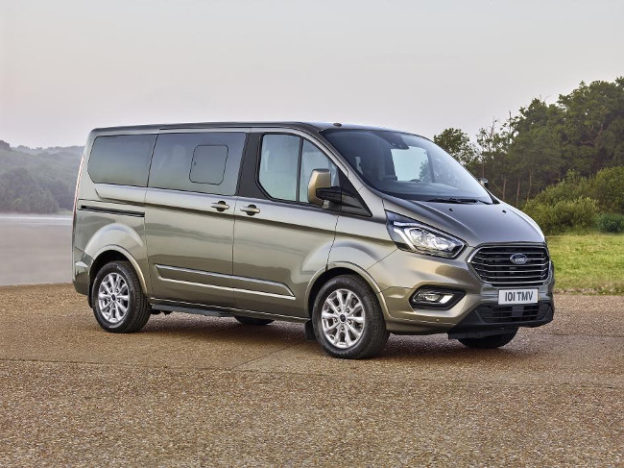
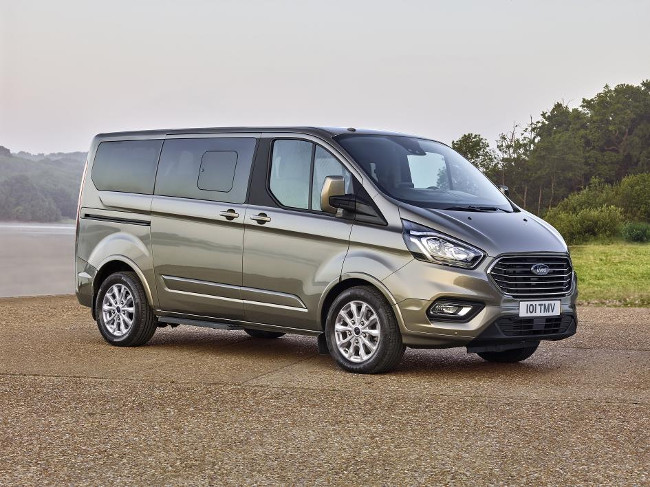
Updated Ford Tourneo Custom will offer car-like luxury

Ford Tourneo Custom

The updated Ford Tourneo Custom will be available from early 2018.

If you’re running an airport transport service or VIP shuttle (or if you have a big family), then the new Ford Tourneo Custom might be worth adding to your short list along with the Mercedes-Benz Viano.

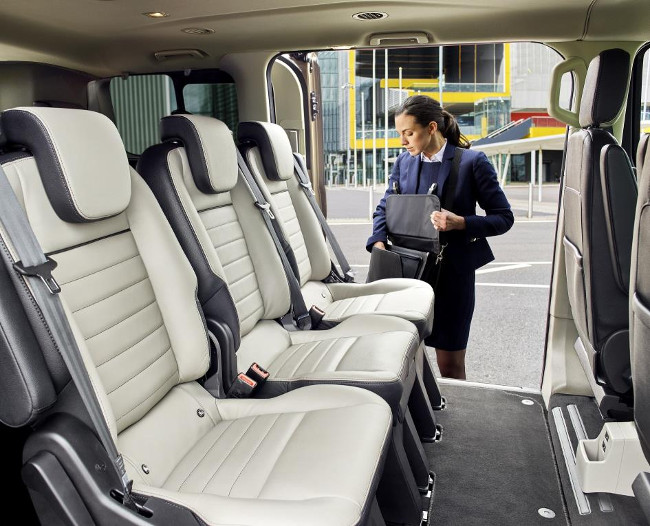
Ford has upped its game with the latest version of this van-based people carrier, which can seat up to nine in a new “premium interior” that “combines the comfort and quality of a luxury car without standing space and practicality”. Ford says that the interior trim has been completely revised and now uses more upscale materials, with a choice of light and dark interior environments.

The new innovations build on the significant product enhancements introduced to Tourneo Custom in 2016, including the Dagenham-built Ford EcoBlue 2.0-litre diesel engine, a new six-speed SelectShift automatic transmission, and optional rear air suspension.

Powered by Ford’s new EcoBlue engine, the model will be available with a choice of 105 PS, 130 PS and 170 PS power ratings, plus a 17-inch alloy wheel option for “enhanced handling and braking performance”. A range of trim levels will be on offer, including range-topping Titanium X and Sport options, offering maximum luxury and sport styling respectively.

Ford Tourneo Custom seating

The second row of seats can be swivelled to create conference seating with the third row.

Among the features of the new model are six individual seats which can be swivelled to “conference format”, a 10-speaker sound system and no fewer than six USB ports. Up front, the driver of the new Tourneo Custom will get some of Ford’s car technology, in the firm of the Intelligent Speed Limiter and SYNC 3 connectivity.

This newish feature works with Apple CarPlay and Android Auto and allows you to control audio, navigation and connected smartphones with simple voice commands. You can, for example, push a button and then say “I need fuel”. The system will then identify nearby filling stations.

A choice of eight and nine-seat configurations will be available, with a choice of short and long wheelbase versions. The long wheelbase provides additional luggage space behind the third row of seats.

Production of the new Tourneo Custom model will start later in 2017, with first deliveries scheduled for early 2018.

The new Bevan-bodied Traffix dropside Vauxhall Movano

Innovative Bevan-bodied Traffix van is “as good as it gets”

The new Bevan-bodied Traffix dropside Vauxhall Movano

Bevan-bodiedVauxhall Movano dropside in operation with Traffix (source: Bevan Group)

Bodybuilder and conversion group Bevan Specialist Products has featured in these pages before, thanks to its growing size and commitment to well-engineered and innovative van conversions.

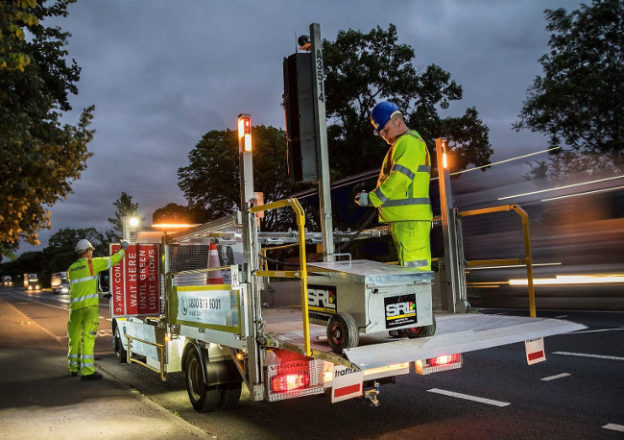
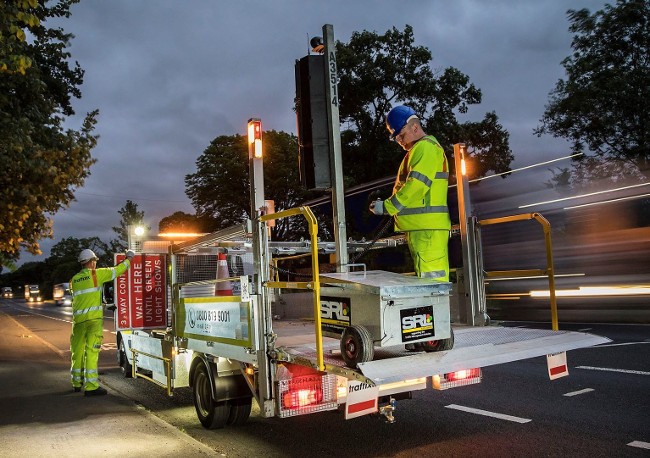
One of the company’s latest models is a Vauxhall Movano dropside conversion designed for traffic management firm Traffix. Based on a L4 long wheelbase Vauxhall Movano chassis cab model, the new Traffix vans include a range of features designed to make deploying signs and temporary traffic lights safer and more efficient.

To eliminate the need to tow trailers to carry portable traffic light systems, Bevan has fitted these vans with tail lifts. A new and bespoke racking system allows the traffic lights to be held in place vertically on the load bed.

The tail lift itself has also benefited from a dose of clever design. The platform is fabricated from mesh to reduce drag while on the move, and the tail lift pillars have LED lighting built into the top in order to replace the traditional horizontal light boards across the rear of previous models.

Traffix Operations Director Derek Vinning played an active role in the design of the new vans and is very pleased with the results:

“I’ve worked with a few traffic management vehicle bodybuilders over the years and there’s no doubt in my mind that when it comes to product quality and workmanship Bevan is far superior to any of them.

“We’ve gradually been able to shed weight, moved from traditional bulbs and halogen lighting to more effective flashing LEDs, and now fit Safe-T-Drop as standard – it’s a fantastic system and very reassuring, because unlike conventional, removable side rail bars, it’s impossible for an operative to forget to use it.”

“There are other companies out there using tail-lifts, but none with a vehicle that rivals the design of ours. When it comes to traffic management, I confidently believe this is as good as it gets.”

Another feature included on the new Traffix vans is Bevan’s patented Safe-T-Drop safety reail system. Rails automatically unfold on either side of the tail lift when it’s lowered, making it impossible for workers to forget to raise them. SImilarly, the dropsides can only be closed when the safety rails are in place, making correct use of the rails essential.

BCA used van auction June 2017

Used van prices under pressure but ex-rental volumes ease

BCA used van auction June 2017

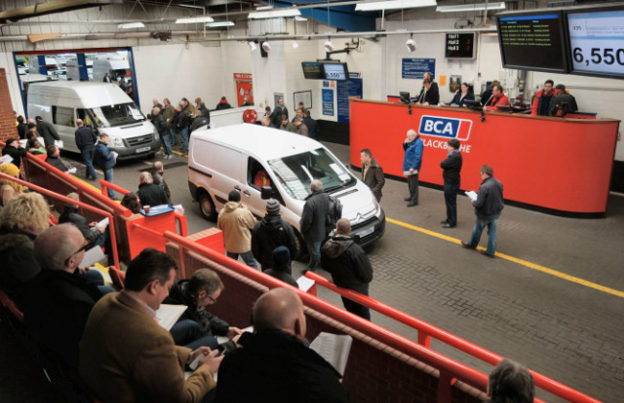
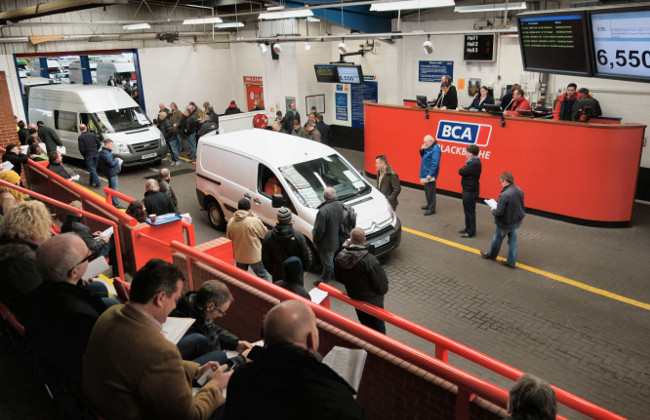
BCA van auction in June 2017 (source: BCA)

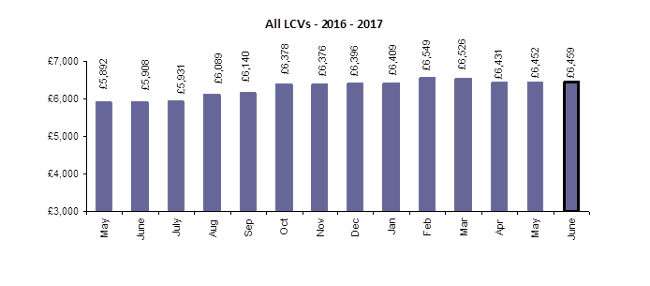
The average price of a used van at auction rose by £7 in June from the level seen in May, according to auction group BCA.

However, this headline figure masked falls in the average sale value of fleet/lease vans and those from dealer part-exchange deals. These are the two high-volume segments of the market — the price rise was largely the result of the low-volume but typically expensive nearly-new sector.

To put these changes in context, it’s probably worth noting that average used prices have now been pretty flat since October 2016:

BCA used LCV prices June 2016/17

BCA used LCV prices June 2016/17 (source: BCA)

However, the average age and mileage of vans sold have been falling steadily over the last year. In June 2016 — one year ago — BCA sold vans with an average age of 53.2 months and an average mileage of 69,618 miles.

Today, those figures have fallen to 50.3 months and 65,693 miles. Although prices have risen by 9.3% since last June, I’d argue that this is largely a reflection of the van’s younger age and lower mileage. In essence, I think the used van market has been largely flat over the last year.

Comments from Duncan Ward, BCA’s LCV Operations Director, suggest to me that the auction group shares this view:

“While average selling price appears resilient, this is largely due to the influence of a younger, lower mileage profile of vehicles currently reaching the market and the growing volume of corporate stock handled by BCA.”

“The model mix continues to change as rental volumes ease, and 4×4 double cab volumes continue to rise.  The latter sector continues to experience price pressure and this can make guide values look overly optimistic. Condition and specification remain as important as ever and sellers should be aware that it is vital to appraise and value vehicles accurately to reflect current market sentiment.”

Sales of pickups have skyrocketed over the last year, so it’s interesting to see that this is now being reflected in auction volumes. These models are fairly pricey, so it could be that this too is helping to support average prices.

It’s also interesting to see that rental volumes are easing after having a big influence on the market earlier this year.

Rolling year UK van registrations June 2011 - June 2017

New van registrations climb 1.8% in June but fall in H1


New van registrations rose by 1.8% to 37,349 units in June, according to the latest figures from the Society of Motor Manufacturers and Traders (SMMT).

However, the first half of the year saw overall demand fall, with a 3.7% drop in the total number of light commercial vehicles registered during the period.

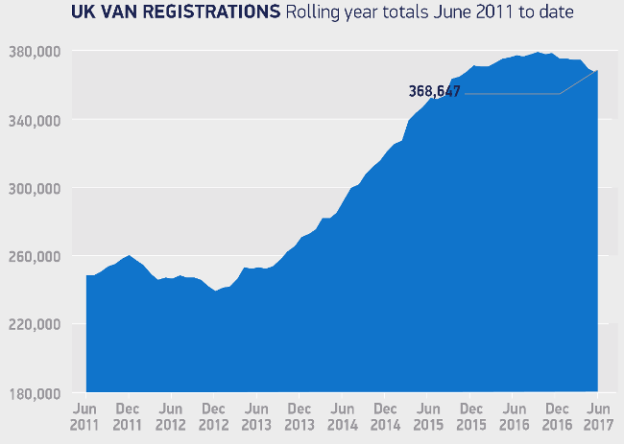
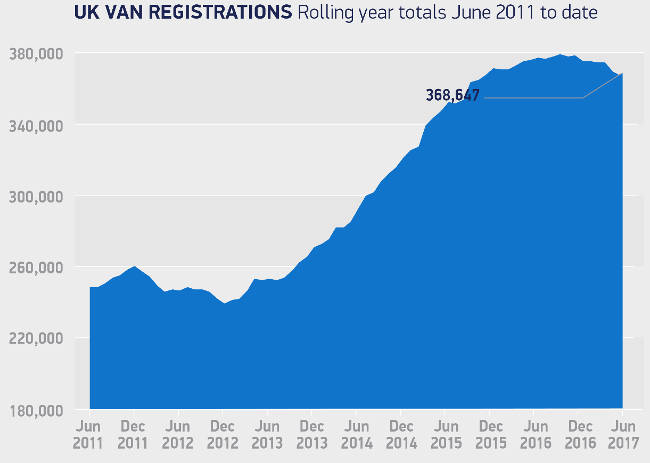
In reality, this isn’t a bad performance given the previous two years of record-breaking growth:

Rolling year UK van registrations June 2011 - June 2017

Source: SMMT

As Mike Hawes, SMMT chief executive explains, some cooling of the market was always likely:

“After two years of record growth in the new van market, it’s natural to see demand ease as the sector reaches a sustainable running rate. However, as these figures show, the market remains at a high level and we expect similar patterns of demand to continue throughout the year.”

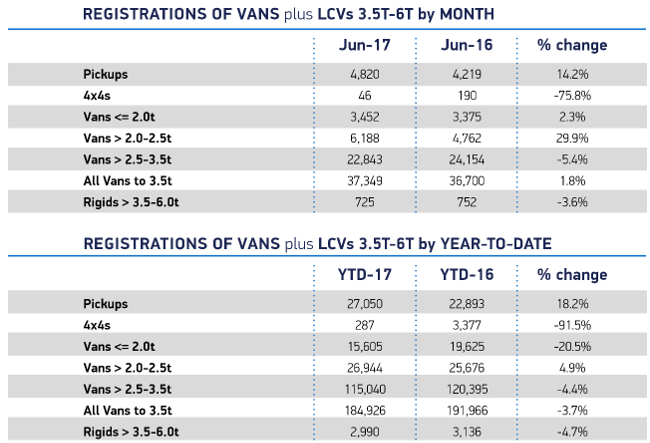
The figures for June show a continuation of three main trends from the first half of the year — growth in demand for pickups and small vans, offset by falling demand for big vans (2.5-3.5t):

LCV registrations June 2017 YTD

Source: SMMT

Growth in demand for pickups has been remarkable. So far this year, new pickup registrations have outnumbered registrations of small vans (2.0-2.5t), such as the Citroen Berlingo and Ford Transit Connect. In my view, the pickup boom is largely down to fashion and favourable tax treatment for company buyers, but it will be interesting to see where this ends up.

What is certain is that Ford appears to remain top dog in the high volume medium and large van markets. Once again, the Ford Transit Custom topped the best-seller list in June:

Best-selling vans June 2017

The success of the Transit Custom model seems to have validated Ford’s move to split the old Transit into two — the larger 2-tonne Transit and the smaller Transit Custom.

Questor Insurance logo

Exclusive: SAVE 7% on Questor Insurance with vanrental.co.uk [EXPIRED]


We have an exclusive 7% discount code for Questor Insurance.Questor Insurance logo

If you’re hiring a van (or car) this summer, then you’ll need to consider insurance.

Basic van hire insurance cover usually includes a big excess. One of the cheapest and easiest ways to reduce this excess is with a third-party excess insurance policy from Questor Insurance.

** THIS DISCOUNT CODE HAS NOW EXPIRED **

If you book before 9 July 2017, you can save even more by using our exclusive discount code:

  • Offer: Save 7% on Questor Insurance motor and travel policies
  • DISCOUNT CODE: SUM2190
  • Valid from 1 July 2017
  • Valid until 9 July 2017


Disclosure: If you buy a Questor Insurance policy after clicking on the links from this post, vanrental.co.uk will receive a small commission payment. The price you pay won’t change.

Terms and conditions may apply — see Questor Insurance website for details.