Mercedes-Benz confirms UK pricing and specification for new Vito

The new Mercedes-Benz Vito

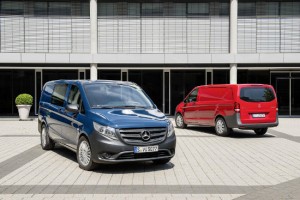
The new Mercedes-Benz Vito will receive its UK launch at the CV Show in April 2015.

The new Mercedes-Benz Vito will launch in the UK on 14 April 2015 at the CV Show. After its European reveal last year, Mercedes has now provided details of pricing and specification for the UK-spec Vito.

Pricing

There will be a bewildering number of versions of the new Vito, which will be available as a panel van, crew van and minibus. There will be a choice of front and rear-wheel drive, and three wheelbases — compact, long and extra long.

Prices start at £17,855 +VAT for the compact wheelbase 109 CDI panel van, and range up to a crunch £32,090 +VAT for the Tourer (minibus) model in SELECT Extra Long specification.

Specification

Here’s a run-down of the main specification choices:

Payload

In conjunction with the 1.6 litre four-cylinder engine, the front-wheel drive panel van’s kerb weight for the compact length with standard equipment is just 1,845 kg. At the standard gvw of 2.8 t, the front-wheel drive New Vito achieves a very impressive payload of 955 kg.

However, the highest payload on offer comes from the rear-wheel drive Vito, with its four-cylinder, 2.1-litre engine and a gvw of 3.2 t, offering a maximum payload capacity of 1,255 kg.

Economy

BlueEFFICIENCY package is fitted to all rear-wheel drive models, which can help to achieve up to 47.1 mpg (combined) in the 119 BlueTEC. Enhancements include alternator management, with the battery charging during coasting or deceleration; improved underbody aerodynamics; and ECO start/stop function.

Six-speed manual transmission is standard, with a 7G-Tronic Plus automatic transmission with torque converter optional for the 114 BlueTEC and 116 BlueTEC, and standard on the 119 BlueTEC. The New Vito offers the world’s only automatic transmission with torque converter and seven gears.

Emissions

Like Volkswagen’s new Caddy, the Vito will offer a choice of Euro 5 and Euro 6 engines.

Euro 5 technology features in the 1.6 litre engine in the two front-wheel drive van and crew van variants, and Euro 6 BlueTEC features on all 2.1 litre rear-wheel drive variants and all Tourer models.

The Euro 6 engines use the established Mercedes-Benz BlueTEC system utilising AdBlue to meet the strict emissions requirements due to become law in 2016 for vans.

Safety

Standard safety equipment includes: Adaptive ESP®, Adaptive Brake Lights, Attention Assist, Crosswind Assist, driver and co-driver airbags, Hill-Start Assist, reflection-style headlights with daytime running lights, Rescue Assist QR codes, and a Tyre Pressure Monitoring System. Thorax and window airbags are standard for the Vito Tourer PRO and SELECT, and optional on the panel and crew van.

Interior

Standard features inside include: Cruise Control with Speedtronic variable Speed Limiter, multifunction steering wheel with trip computer, and Audio 15. This system comes with a high-resolution 5.8-inch TFT display, and includes Bluetooth® hands-free system and audio streaming, USB and aux-in port, iPod® interface, and SD memory card slot.

Exterior

Rear twin doors are standard for the van models, which can be opened back to the 180° position or locked in place at an angle of 90°. A tailgate is standard on the crew van and Tourer models, as well as being a no-cost option for panel van models.

Side loading doors are fitted to both sides of the vehicle as standard, along with a full-height bulkhead.
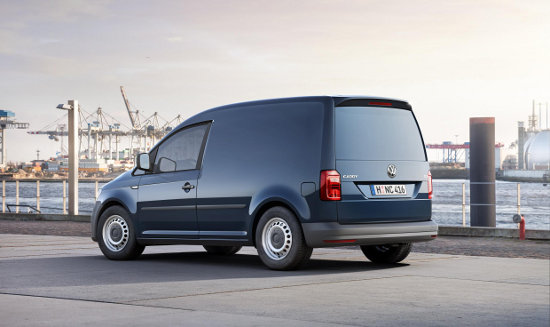
New Volkswagen Caddy makes global debut

More than 1.5 million third generation Volkswagen Caddy vans have been sold globally, making the model an important vehicle for Volkswagen.

Yesterday the German manufacturer took the covers off the new 4th generation Caddy, which it hopes will take the fight to the all-new Ford Transit Connect and continue the big-selling tradition of the current model. It doesn’t seem to be an all-new model — rather it’s an evolution of the outgoing model, but there are some key changes nonetheless.

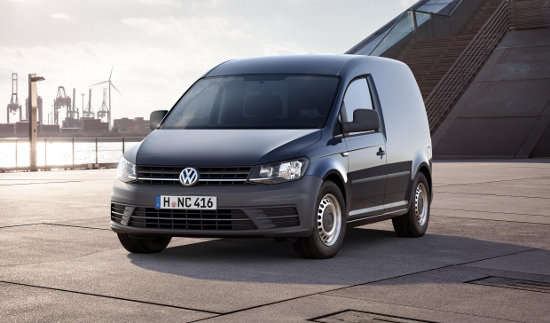
New Volkswagen Caddy

What’s changed?

The main engine choice for the new Caddy will be a new, Euro 6 compliant 2.0-litre diesel engine, with 75 PS, 102 PS and 150 PS power options. As is now usual, there will be a more efficient Blue Motion model, which VW says has been specially developed for city work and will deliver fuel consumption in excess of 70mpg.

VW has jumped the gun with Euro 6, which is compulsory for light commercials in the UK until September 2016. However, the firm is hedging its bets — perhaps recognising that there is buyer resistance to Euro 6 — and VW says that the new Caddy will also be available with the current range of Euro 5 diesel engines.

It’s interesting to see that VW have opted to hone the 2.0l format, rather than switch to a smaller-capacity engine, as many other manufacturers are doing (The new Vauxhall Vivaro/Renault Trafic — a larger van — uses a 1.6-litre engine, for example).

New Volkswagen Caddy rear view

Elsewhere, the new van will have a healthy dose of new safety systems, including Front Assist and City Emergency Braking, which are primarily designed to avoid head-on collisions. VW’s Multi-Collision Brake System is also included — this automatically applies the brakes in the event of a collision where the vehicle collides with more than one obstacle, potentially leaving the driver unable to brake manually.

Now that the Ford patent on heated windscreens has expired, this highly desirable option is appearing everywhere — including on the new Caddy.  Other options include Adaptive Cruise Control and Driver Alert, which monitors a driver’s behaviour for signs of fatigue and recommends a break when necessary.

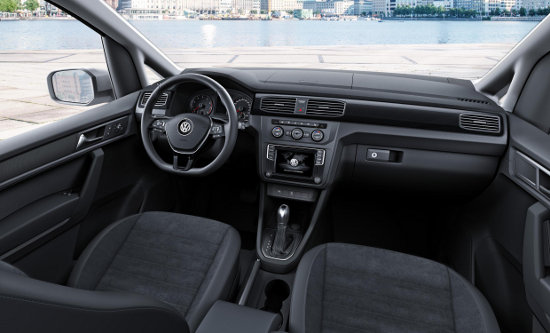
New Volkswagen Caddy interior

A final option is Park Assist, which offers automated parallel parking and right-angle reversing (i.e. reversing around the corner, in driving test parlance). VW says this is “an especially practical feature for courier services” — I’m not convinced that many couriers will choose this option, at least not unless it has a ‘warp speed‘ option to speed up the process…

Van registrations rise by 21.7% in January

New van registrations rose by 21.7% in January, compared to the same period last year, according to the latest figures from the Society of Motor Manufacturers and Traders (SMMT).

The truck market also returned to growth — after the distortion caused by the introduction of Euro 6 emissions legislation and Type Approval Regulations — with sales rising by 38.6% in January compared to January 2014.

UK van and truck registrations: 2015 and % change on 2014

January % change Year-to-date % change Rolling year % change
Vans 22,049 21.7% 22,049 21.7% 325,613 19.2%
Trucks 2,518 38.6% 2,518 38.6% 42,170 -23.5%
Total 24,567 23.2% 24,567 23.2% 367,783 12.0%

Source: Society of Motor Manufacturers and Traders (SMMT)

Mike Hawes, the SMMT’s chief executive, said the gains were a return to business as usual and indicated growing confidence in the economy:

“The truck market posted a strong return to form in January. Changes to Euro Standards and Type Approval Regulations in 2014 affected demand last year, and now we are starting to see a return to business as usual,” said Mike Hawes, SMMT Chief Executive.

The number of vans registered this month has once again increased, reflecting raised levels of business confidence and demand for a range of efficient, well equipped models. Successes in both markets have seen the total commercial vehicle market grow significantly for a ninth consecutive month.”

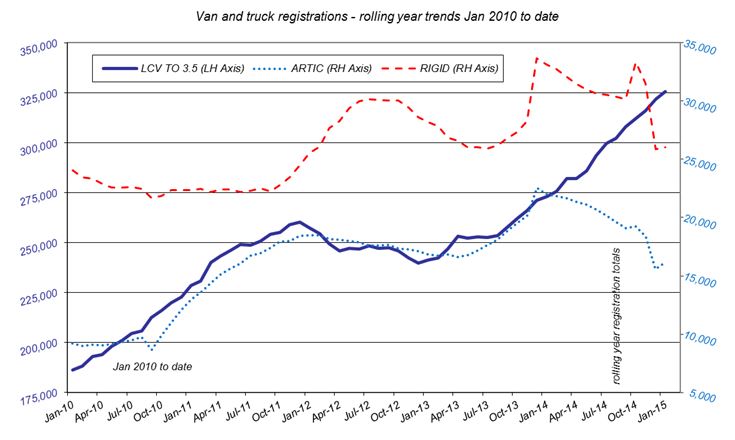
As the graph below shows, new van registrations have now risen by around 80% since the start of 2010:

SMMT CV registrations January 2015

Graph courtesy of SMMT

Which vans are the big sellers?

As usual, growth in van sales was not evenly distributed. The biggest gains in percentage terms were in the 2.0-2.5t category, where new registrations rose from 2,458 units in January 2014 to 4,006 units last month.

Large vans in the 2.5-3.5t category were also strong sellers, adding 1,428 units, or 13.9%, to take total registrations to 11,702 during the first month of 2015.

What about the second-hand market?

The obvious question, of course, is how many of these new sales — if any — are stealing sales from the used van market.

I’ve been speculating on this issue for a while, and although I believe the majority of new van sales are to large buyers who only purchase new, I suspect that a percentage of these gains does represent smaller businesses switching back from used to new, as the economy — and their business outlook — improves.

The other question, of course, is if new sales are rising, are supplies of second-hand vans? The combination of this plus a greater percentage of buyers choosing the new option could end up weakening demand for used vans, although I don’t think this will happen for a little while longer.

One to watch.

Volkswagen launches telematics service for vans

Volkswagen introduces telematics serviceVolkswagen has launched a new telematics service targeting fleet customers across the UK.

VW says that the new service is suitable for fleets of any size and will work with all types of vehicle, enabling companies to manage mixed fleets with one system.

The firm says that the new telematics system is being offered in partnership with the RAC — suggesting to me that it could be a rebadged and tweaked version of the RAC’s own telematics service.

Volkswagen says the service will be available from February and will have a monthly contract fee of £12.50+VAT for each telematics unit. Features available from the new service include:

  • Location tracking
  • Driver behaviour
  • Vehicle diagnostics
  • Odometer
  • Geo-fencing
  • Fuel and CO2 monitoring
  • ‘Driverline’ concierge service

Real-time data and reporting is available through a customisable online portal, which is compatible with smartphones, tablets and laptops.

The service is also intended to ensure that fleet vehicles are properly maintained: the Driverline concierge service will prompt fleet operators to book maintenance and scheduled service visits at Volkswagen Van Centres when required.

It’s interesting to see that by offering a universal solution suitable for all makes and types of vehicle, Volkswagen has taken a different approach to some other manufacturers, such as Citroën, which fits its own-brand telematics solution to vehicles.

As I’ve written before, I believe telematics will become ubiquitous in all fleets over the next 5-10 years.

Even in daily rental fleets, where fleet operators are not directly responsible for fuel costs or driver management, the benefits telematics can offer in terms of tracking, diagnostics and compliance are very useful. At least one major UK van hire company, Practical Car & Van Rental, has already taken the plunge and fitted telematics to its 7,000-strong fleet.

Preston van hire: Easirent.com Car and Van Hire

Easirent.com logoI’m very pleased to welcome our newest advertiser, Easirent.com in Preston, to vanrental.co.uk.

Preston Easirent is part of the Easirent group and offers a wide range of vans and 7.5t lorries for daily hire, including models with tail lifts.

Here’s a summary of the vans and trucks available from Easirent in Preston:

  • Small vans (e.g. Peugeot Partner)
  • Medium vans (e.g. Ford Transit SWB w/ medium roof)
  • Long wheelbase vans (e.g. Ford Transit LWB w/ high roof)
  • Extra-long wheelbase vans (e.g. Volkswagen Crafter w/ high roof)
  • Luton tail lift vans (e.g. Ford Transit luton)
  • Crew cab tipper vans (e.g. Ford Transit crew cab)
  • Dropside vans (e.g. Ford Transit flatbed/dropside with single cab)
  • Crew cab panel vans (e.g. Ford Transit crewbus)
  • 7.5t box lorries with tail lift (e.g. Iveco 7.5t w/ 20ft box)

As you can see, this is a pretty comprehensive selection that should satisfy virtually all van hire requirements!

If you have any questions or want a quote, contract Easirent’s Preston branch directly at:

  • Web: Easirent.com (online chat available)
  • Tel: 01772 886888


If you’d like to promote your van or minibus rental business on vanrental.co.uk, check out our advertising options.

Hertz Van Rental from just £11 per day in February [EXPIRED]

Hertz Van Rental from £11 per dayIf you missed out on the Hertz Winter Van Rental Sale — which ended on Friday — then don’t worry.
From today, Hertz is offering van hire from just £11 per day until the end of February:

  • Hertz Van Rental from just £11 per day
  • Valid from: 2nd February 2015
  • Offer ends: 30th February 2015

** THIS OFFER HAS NOW EXPIRED **

This really is a seriously good deal and is the lowest daily rental price Hertz has offered for a long time — so don’t miss out:


Terms and conditions may apply: see Hertz website for details.

New SsangYong Korando Sports pick-up offers excellent value

The pick-up market keeps on growing in the UK, so it’s no surprise that budget contenders are starting to appear. First, there was the Great Wall Steed, and now there’s the a brand-new version of the SsangYong Korando Sports.

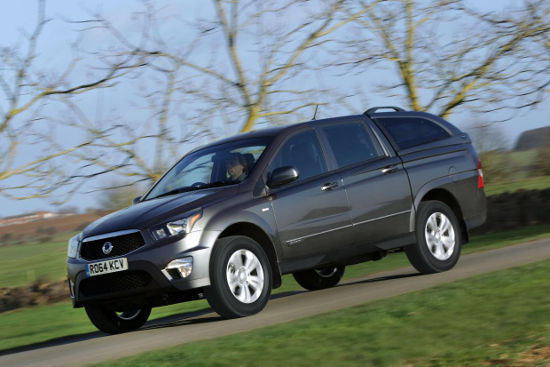
SsangYong Korando Sports pick-up

As you’d expect from SsangYong, the Korando Sports majors in value and practicality — with prices starting at £14,995, these trucks are unlikely to be status purchases and are instead likely to be workhorses.

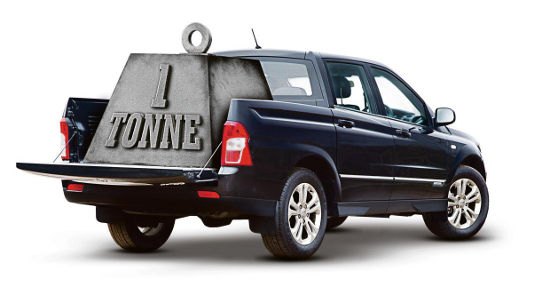
SsangYong’s five-year, unlimited mileage warranty will apply to the Korando Sports, even when purchased for business use, and the pick-up’s upgraded 1-tonne payload means it is now treated as a commercial vehicle for tax purposes. Out behind, a 2.7 tonne towing capacity means that the Korando Sports should be able to handle the biggest caravans, horse boxes and fully-loaded vehicle transporter trailers, while staying within the law.

SsangYong Korando Sports 1-tonne payload

As you’d expect from an Asian budget model, the Korando’s standard specification is generous. There are only two models to choose from — the SX and the more upmarket EX.

The SX includes 16” alloy wheels, tinted glass, air conditioning, leather covered steering wheel, remote central locking, Kenwood MP3 CD & RDS radio with a USB & auxiliary port and Bluetooth connectivity as well as speed sensitive power assisted steering.

The EX has 18” alloy wheels, and features leather upholstery with heated front seats, powered driver’s seat, heated, electrically adjustable and power folding door mirrors and rear parking sensors.  6 speed automatic transmission with cruise control is also available as an option.

Under the bonnet

The Korando Sports is powered by a 2.0-litre diesel, which — on paper — compares very well to the entry level engine offering on the Volkswagen Amarok:

Korando Sports Amarok
Power 155PS 140PS
Torque 360Nm 340Nm
Combined cycle mpg 37.7mpg 36.2mpg

Our verdict?

Perhaps tellingly, SsangYong didn’t include any interior photos in their press release. I’d expect it to be less sophisticated than its Japanese and western peers inside, and the handling probably isn’t as sharp as current premium models, either.

On the other hand, who cares? At this price, the numbers stack up in favour of the Korando Sports, especially given SsangYong’s impressively comprehensive 5-year warranty (check the the detailed comparison versus Hyundai and KIA here).

If you want a proper pick-up for a mixture of on and off-road use, towing, load lugging and general abuse, the SsangYong Korando Sports could be a very sound buy.

Lightweight luton highlights payload gains available to 3.5t operators

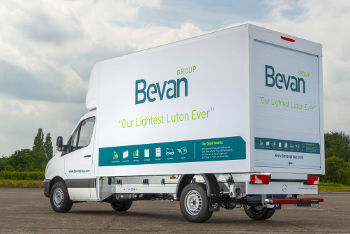
Bevan lightweight luton body

Bevan’s lightweight luton body gives a payload of 1,250kg when fitted to a 3.5t Sprinter chassis (pictured)

I wrote recently about the issue of payload (maximum load weight) in 3.5t vans — and highlighted how a luton van will typically have a slightly lower payload than the equivalent panel van.

Using a luton van — especially with a tail lift — is typically a trade off between gaining a wider, completely flat load deck and losing a little payload. Unsurprisingly, van bodybuilders are constantly trying to minimise the weight of their luton bodies without sacrificing any durability or strength.

One of the best payloads available currently appears to come from Bevan Group’s lightweight luton body, which when fitted to a 3.5t Mercedes-Benz Sprinter chassis, provides a payload of 1,250kg.

I’m not sure if this is the very best in class, but it’s certainly a very competitive payload for a 3.5t luton, although it’s worth noting that this is (I think) without a tail lift, which would knock around 200kg off this payload figure.

Passport to approval

Bevan is one of the bigger names in the UK bodybuilding industry and has capitalised on its scale to create a very efficient process for obtaining whole vehicle type approval (WVTA) for its new models. Since the WVTA rules were changed last year, Bevan has already secured 140 approvals, thanks in part to having a dedicated approvals team, which works closely with the Vehicle Certification Agency (VCA), which is part of the Department for Transport.

The firm is now extending this concept further with its Bevan Passport scheme, which makes the services of Bevan’s WVTA team available to smaller bodybuilders, who don’t have access to the same kinds of resource and may not find it easy to complete the WVTA process efficiently themselves.

The end result is a Bevan Passport, which “proves that a vehicle meets or exceeds all of the requisite environmental, safety and security standards”, according to Lee Dimmock, Bevan’s Group Operations Director and the leader of the firm’s WVTA team. 

14,550 London cyclists can’t be wrong: Met Police launches new Merc safety truck

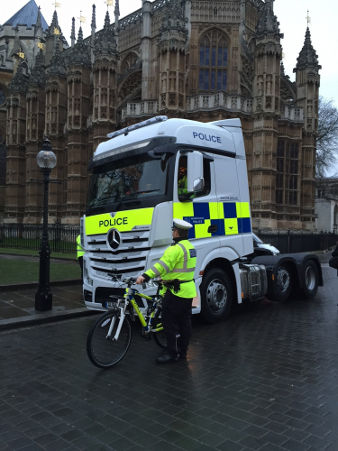
Met Police Exchanging Places cycle safety truck

The new Mercedes-Benz Actros that will be used by the Met Police as part of the Exchanging Places cycle safety programme.

Although van blind spots are pretty trivial compared with those that can exist alongside an HGV, awareness of what you can — and cannot — see is an important part of being a safe driver.

Far too many accidents happen in UK cities each year because cyclists get into the blind spots of large commercial vehicles — and then get injured, sometimes fatally.

Of course, other road users, especially cyclists, have a responsibility in this regard too — and that’s where the Metropolitan Police Service (MPS) Cycle Safety Team comes in. The MPS team have been running a programme called Exchanging Places since 2007.

Today, the team launched its new Mercedes-Benz truck today, which will be used as a core part of the Exchanging Places programme.

One of the main highlights of this award-winning programme is the opportunity it provides for cyclists to sit in the driver’s seat of a truck and realise exactly how difficult it is to see cyclists who may be slipping down the inside of a truck in heavy traffic.

Collisions involving a heavy goods vehicle are the most common cause of serious injury and death to cyclists. The programme gives cyclists the opportunity to sit in the driver’s seat of an HGV to see for themselves how difficult it can be to see a cyclist riding close to the truck. Experienced traffic police officers explain how this type of collision often happens, and talk through several ways of avoiding them.

Police Sergeant Simon Castle, Roads and Transport Policing Command, said:

“The feedback from these events is overwhelmingly positive with 97 per cent of cyclists saying they would change their riding as a result of sitting in the driver’s seat, and 99 per cent would recommend it to a friend.

“I urge cyclists to watch the Exchanging Places film on the MPS Youtube website and also arrange to attend an Exchanging Places event. It is invaluable and a potential life saver.”

More than 15,000 cyclists have taken part in the programme since 2007, which my maths suggests means that 14,550 have understood that their behaviour — as well as that of HGV drivers — is key to keeping them alive and safe.

Here’s the video Sergeant Castle refers to above:

You can find out about planned Exchanging Places events here.

Note: In case you’re wondering, the Mercedes-Benz Actros is funded by Mercedes-Benz and Transport for London and is not costing the Met Police anything except fuel costs. This truck will only be used for demonstrating the issues around cyclist and pedestrian safety, and will not be used for patrols or enforcement.

Small businesses are milking electric van opportunity: is yours?

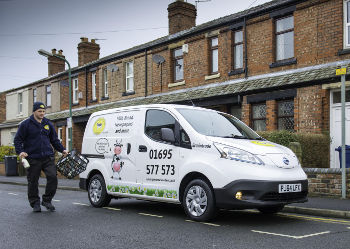
Grimshaw Lane Dairy Nissan e-NV200 electric vanThis is exciting — in fact I can’t find words to describe how big the opportunity is in the UK van market for electric vans.

Yet another (small) example crossed my desk this week, in the form of a press release detailing how a Lancashire dairy is saving £900 per month in fuel bills on just four vans, thanks to making the switch to all-electric Nissan e-NV200s.

Although you might think I’m being funny — after all, milkmen were using electric milk floats before I was born — I’m not. Milkmen don’t use electric milk floats anymore — they use diesel vans.

The milkmen at Grimshaw Lane Dairy, in Ormskirk, cover around 50 miles a day — a similar mileage to a great many fleet vans (think Royal Mail, utility meter readers, urban delivery vehicles).

Such a usage cycle is perfect for electric power, and switching back to electric is not only environmentally friendly, but it is proving to be cost efficient, too, now that a suitable mass produced electric van is available to the UK market.

A case in point

Grimshaw Lane Dairy in Ormskirk has taken delivery of four e-NV200 vans from Crosby Park Nissan in Liverpool and is using them to make its daily deliveries to homes and businesses in and around the town. The four vehicles have replaced a fleet of aging diesels and each covers around 50 miles a day making roughly 500 deliveries apiece.

Managing Director Andrew Brown, who plans to swap his two remaining diesel vehicles with e-NV200s in the coming months, says that he is already saving £900 a month in fuel bills.

What’s more, the generous spec’ and smooth drive of the e-NV200 means driver morale is now at an all-time high and residential customers are happy as early morning deliveries, which start at 1.30am, are now made in near silence.

Commenting  on the change, Andrew said:

“Switching to the Nissan e-NV200 was a no brainer for us. Basically the savings we’re making on the fuel have paid for the contract hire on the vans and we’ll be saving on the maintenance too.

“We’ve effectively got four new vans for what we’d have been spending on fuel.”

Driver satisfaction was also a major consideration, but equipment levels on board the e-NV200 – such as twin side-loading doors, together with the ability to defrost their vehicles from an app on their phones before getting up to start their shifts in the early hours – has proved an instant hit.

Launched last year, the Nissan e-NV200 combines the NV200 – a former International Van of the Year – with the proven technology of the record breaking Nissan LEAF – the world’s bestselling electric car. Nissan claims running costs of just two pence per mile, and says that low maintenance costs mean that the total cost of ownership is £1,200 less than for a conventional diesel van over four years.