Used Van Prices Expected To Rise Further In 2014

BCA LCV auctionUsed van prices have soared to an all-time record this year, as the collapse in van sales seen in 2008/9 continues to cause a shortage supply in the used market.

According to vehicle auctioneer BCA, the average used van price has risen by 55% since 2003 and by 42.9% since 2008, despite a rise in average mileages:

All LCVs sold at BCA 2003 2008 2013
Average Sold price £3,119 £3,395 £4,854
Average Age (Months) 51.0 49.9 58.3
Average Mileage 72,787 70,876 79,847

Data courtesy of BCA (www.british-car-auctions.co.uk)

Duncan Ward, BCA’s General Manager – Commercial Vehicles, says that competition for good quality used stock has been strong this year:

“Demand has been right across the board, from older higher mileage vans through to younger ex-fleet and lease vehicles, while the few late-plate light commercials on offer can make exceptional values.  The end result has been record-breaking average values for fleet/lease and dealer P/X vehicles.  As always, good condition is the key and vans with a nice specification and in an attractive retail colour are very desirable.”

The graph below shows LCV (light commercial vehicle) registrations from 2000-2015 (forecast). It’s easy to see how the current shortfall of decent used vans could continue for a couple more years yet:
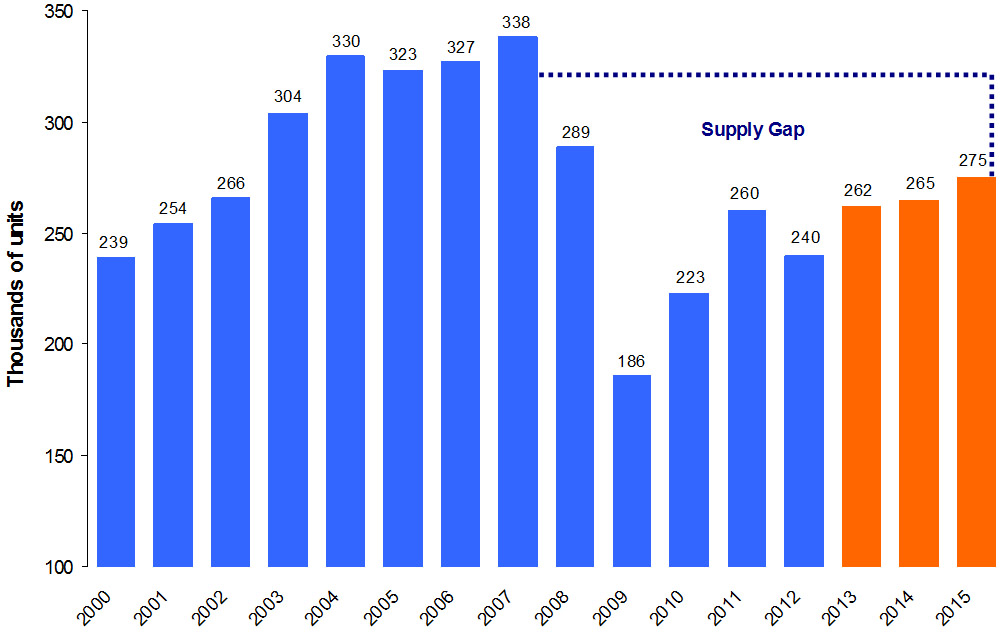
UK LCV registrations 2000 - 2015

UK new LCV registrations; 2000 – 2015 and supply gap (BCA 2013 Used Car Market Report/ACEA/Buckingham)

As I reported recently, demand is particularly strong for ex-fleet vans, such as those from large corporate, lease and rental fleets, where the vans’ quality and history is assured, and condition and mileage is usually better than average.

Vans are getting older

Predictably, the result of this supply shortage is that vans are getting older. According to Ward:

“Not only are vans getting older on average when they are sold, they are higher mileage.  In fact, the average van sold in 2013 at BCA has covered 9,000 more miles than five years ago.”

According to the 2013 BCA  Used Car Market Report, the average age of LCVs on the UK’s roads has now climbed to 7.4 years, compared to 6.87 in 2007.

With new van registrations rising strongly once more, this trend will eventually come to an end, but BCA’s prediction of more of the same next year might well be accurate, as I expect it to take another year or so for increased volumes of new vans to flow through to the secondary market.
Nissan and British Gas Launch UK’s Biggest Electric Van Trial

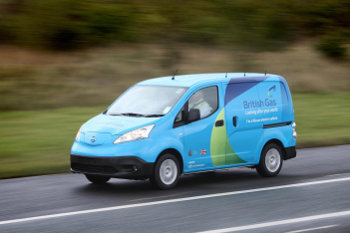
Nissan e-NV200 British Gas trial van

One of 28 British Gas Nissan e-NV200 trial vans that will be in service from November 2013 – April 2014 to test the vans’ winter performance.

Nissan’s long-term trial programme for its e-NV200 electric van has been a considerable success, as I’ve reported before. The company has now returned to one of its early test partners to launch the biggest electric van trial yet seen in the UK.

British Gas will be operating 28 e-NV200 electric vans on a pilot scheme that will run nationwide from November 2013 until April 2014, to assess how the vans perform in winter conditions during typical British Gas home services daily usage patterns.

Battery performance in electric vehicles worsens at low temperatures, and the scheme should enable British Gas, Nissan, and the wider van operating sector to determine whether electric vans are truly viable for fleet use.

The vans will only form a small part of British Gas’ 13,000-strong home service fleet, but if the trial is successful, it could be a significant boost for Nissan and other electric van manufacturers.

Total cost model and driver training

One of the challenges facing electric vehicle operators and manufacturers is cost. Electric vehicles are more expensive to buy than conventional alternatives, but savings are available on fuel. The Nissan-British Gas trial is being run in collaboration with Hitachi Capital Commercial Vehicle Solutions and Gateshead College, and will also include work to generate an accurate total cost of ownership model, so that 100% electric technology can be compared with conventional internal combustion engine drivetrains.

Gateshead College is close to Nissan’s Sunderland plant, and is a leading training facility for LCV development. The college has provided training for all of the British Gas drivers to ensure that they are aware of how to drive, and live with, the e-NV200, and all drivers have been provided with a home charging point and access to public charging points.

The e-NV200 goes on sale in the UK next year, and a successful and high-profile trial with British Gas could give it a major head-start over lower-profile peers, which haven’t benefited from the same widespread fleet exposure and trial opportunities.

Is this a tipping point?

I’ve long thought that the biggest opportunity for electric vans is in the fleet market, and if successful, this trial could be the tipping point that prompts widespread adoption. The potential is considerable — imagine how many electric vans Royal Mail might buy for urban delivery use, for example — but what’s needed is a clear demonstration that both costs and usability can match those of conventional vans. This trial could provide that.

Latest Euro NCAP Results Show Van Safety Improving

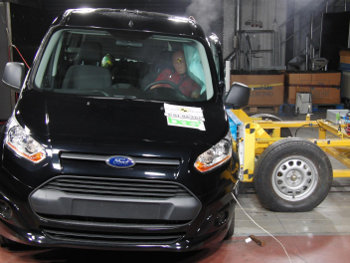
Ford Tourneo Connect crash test

The new Ford Tourneo Connect is the first compact people mover to score a maximum five stars in the Euro NCAP crash tests.

The safety ‘star’ ratings provided for all modern car models are awarded by safety testing organisation, Euro NCAP. For some reason, panel van models are not including in the testing programme, but the minibus/people carrier versions of current van models are tested.

Historically, despite their size and solidity, vans haven’t performed very well in safety tests, due to poor pedestrian safety and lower levels of safety assist technology. Those two trends remain a problem in the van market, but things are improving, as today’s test results show.

Volkswagen T5 Transporter (Kombi): ****

The VW T5 is a perennial favourite amongst campervan owners and small businesses and has also had some notable fleet successes, including becoming the RAC’s standard van for a period, and being chosen by some van hire companies to fill their medium van segment.

The VW T5 Kombi’s four-star rating is strong, and occupants of the vehicle certainly have nothing to worry about — the T5 scored 79% for adult occupants and 74% for child occupants.

Pedestrian may not fare so well, however, as the T5 only scored 32% for pedestrian safety. To some extent this is inevitable with vans, which are always going to have a higher bumper line and a more steeply sloping front end than cars, due to the need to maximise loadspace and payload (which requires bigger tyres and a certain amount of suspension travel, raising the vehicle).

What’s less excusable is that vans often come with lower levels of safety equipment than cars. VW scored a middling 57% in the safety assist category, as although the T5 Kombi it does come with electronic stability control as standard, there is no seatbelt reminder for passengers and no option for a factory-fit speed limiter.

Ford Tourneo Connect: *****

The Tourneo Connect is one of Ford’s brand-new commercial models and will also be sold in van format. Ford has really raised the benchmark for LCV safety since it started to roll out its revamped van range, and the Tourneo Connect has not disappointed, with a five-star rating that makes it the first the first compact people mover to be awarded a maximum Euro NCAP safety rating:

  • Adult occupant: 94%
  • Child occupant: 85%
  • Pedestrian: 62%
  • Safety assist: 70%

Ford scored more highly in the safety assist category thanks to the presence of a front seat passenger seatbelt reminder and the option of a speed limiter, as well as having Electronic Stability Control as standard.

Mercedes-Benz Citan Kombi: **** (re-tested)

Here’s an interesting one. The Citan Kombi was originally tested in April, when it scored an underwhelming three stars, which I suggested might be due to its Renault origins, and did not reflect Merc’s normally-high safety standards.

One can only imagine that the top brass at Stuttgart weren’t happy with this situation, as the Citan Kombi has now had some subtle modifications and has been re-tested and upgraded to a four-star rating. Although an improvement, it’s still one star behind its key competitor, the Tourneo Connect (above), which scored five stars — so what are the Citan’s weaknesses?

Here’s the breakdown of the Citan’s score:

  • Adult occupant: 79%
  • Child occupant: 81%
  • Pedestrian: 56%
  • Safety assist: 70%

So while the Citan ticks the same boxes as the Tourneo in the safety assist category, it didn’t fare so well in any of the others, especially in terms of pedestrian safety, where no improvements have been made.

Adult occupant safety has been improved, but Euro NCAP still pin-pointed several weakness relating to whiplash protection, chest compression protection and side impacts (for full details, click here).

You can see full details of all Euro NCAP test results on www.euroncap.com (it’s all free to access).

Calling All Movember Stars: Could You Be The Face Of Hertz?

Hertz Movember logoIf you’ve grown a Movember ‘tache to help raise funds and awareness for men’s health, then Hertz wants to hear from you.

Hertz UK is taking part in Movember and to celebrate the achievement of all ‘Mo Bros’, the firm will be rolling out a very special Movember van at the end of the month.

If you would like to gain national exposure for you and your Mo, then all you have to do is upload an image of yourself to the Hertz Movember Facebook page. The best ‘Mo Bro’ picks will be selected by Hertz to be used on the company’s Movember van, which will hit the road later this year.

Click here to upload your pic to the Hertz Movember Facebook page

(Naturally, by uploading your image you give Hertz your consent to use it on the Hertz Movember van.)

UK Commercial Vehicle Manufacturing Down 33.8% In October

Commercial manufacturing in the UK fell by a further 33.8% in October, according to the latest figures from the Society of Motor Manufacturers and Traders (SMMT).  The total fall so far this year is now 19.9%, thanks to a 25.9% slump in export demand and an 11.6% fall in home demand:

CV manufacturing Oct-12 Oct-13 % Change YTD-12 YTD-13 % Change
Total 11,899 7,875 -33.8% 94,214 75,484 -19.9%
Home 5,243 3,752 -28.4% 39,662 35,074 -11.6%
Export 6,656 4,123 -38.1% 54,552 40,410 -25.9%
% export 55.9% 52.4% 57.9% 53.5%

Data courtesy of SMMT

In fairness, some of this decline is what analysts like to call ‘structural’ — in this case, the closure of the Ford Transit factory at Southampton removed a chunk of production that is unlikely to be replaced, and leave Vauxhall as the only volume CV manufacturer in the UK.

This article sounds like too many that I’ve written before, but that’s because it seems to be the same story every month, at the moment. Take a look at these figures:

Despite the increase in van registrations we’ve seen over the last three months, few of these vehicles are made in the UK. Mike Hawes, SMMT Chief Executive, says he expects the downtrend to continue for the rest of the year:

“The downward trend in CV production continued in October, given continually low levels of demand across the EU combined and structural and model changes in the UK,” said Mike Hawes, SMMT Chief Executive. “Despite some areas of good news, with UK bus and truck manufacturing growing in the month, the domestic CV manufacturing outlook remains negative for the rest of the year.”

There was better news in the car sector, however, where output rose by 17.4% in October, boosted by a 52.4% jump in domestic demand and and 11.4% rise in export demand, marking the second consecutive month of rising European demand, after a long period of decline.

Strong Residuals and Flexible Loadspace Make Nemos A Buy For Motor Factor

Mill Autoquip Citroën Nemo

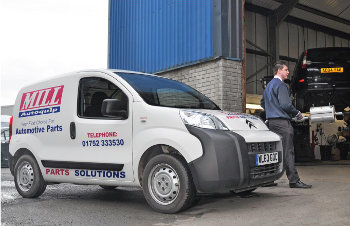
The Citroën Nemo’s folding passenger seat mean it can carry full exhaust systems, despite its compact dimensions.

The Citroën Nemo isn’t going to be suitable for every job, but it may be bigger than you think. If you’re about to dismiss the Nemo in favour of a larger, more expensive model, it might pay to check one out in the flesh to see if it could work for you.

For example, motor factor Mill Autoquip finds that the Nemo’s Extenso folding passenger seat means that it can fit full exhaust systems into this pint-sized van — not something you’d expect. The firm recently added 40 Nemo vans to its fleet, taking the total number of Citroën vans it operates to more than 100.

The firm’s accountant and Fleet Manager, Tony Watson, explains that the Nemo is big enough for most jobs:

“The Nemo, with its combination of excellent fuel economy, load capacity and the Extenso folding seat – which allows us to carry exhaust systems – fulfils our requirements for most day-to-day deliveries. We use the Berlingos to transport the heavier items, such as parts from our dedicated commercial vehicle branch in Redruth.”

Each Nemo van will make up to 50 drops each day, delivering parts to customers from its 17 depots across Cornwall, Devon and Somerset. The company purchases most of its vehicles outright and keeps them for three years during which time they will clock up around 100,000 miles over some challenging terrain.

Despite this demanding duty cycle, the firm finds that the vans also have strong residual appeal, and Watson says that “we still have people queuing up to buy our Citroëns when we have finished with them.”

Fiat Ducato Hits U.S. Streets As Ram ProMaster

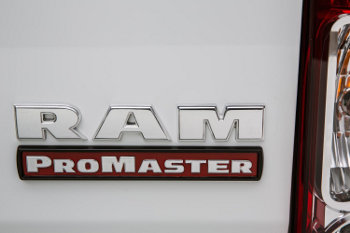
Ram ProMaster badging on US-spec Ducato

Ram ProMaster… Fiat Ducato doesn’t have quite the same ring, does it?

It’s taken a long time, but European car and van manufacturers are finally starting to work out how to sell the same vehicles in Europe and North America, helped by either global brands (Ford) or part-owned US brands (Mercedes-Benz and Fiat).

In the van market, Mercedes-Benz has been very successful with the Dodge Sprinter, while Ford is gradually introducing some of its European car and van models — such as the Focus, and I suspect, next year’s new two-tonne Transit — to the US market.

Now its the turn of Fiat, which is using its Chrysler brand to introduce the Ducato van to North America. Chrysler commercial vehicles are branded as Ram, so the Ducato has become the awesomely-cheesy sounding Ram ProMaster!

Naturally, it has had an engine transplant, and ProMaster models will be offered with a choice of Chrysler’s 280hp, 3.5-litre Pentastar V6, coupled with six-speed auto box, or Fiat’s European 3-litre, 174hp diesel engine, coupled with Fiat’s five-speed automated manual Dualogic transmission.

Ram ProMaster

It looks like a Fiat Ducato — but thanks to a 3.5l V6 petrol engine for the US market, it definitely doesn’t sound like one!

Fiat says that the Ram ProMaster will be as near identical as possible to the European spec van, external changes limited to ‘branding and legal requirements’, while the interior is based on the European version, but has been ‘adapted for U.S. customers’. Not sure what that means, other than the omission of a clutch pedal…

Ford Vans Voted Most Reliable For Second Year Running

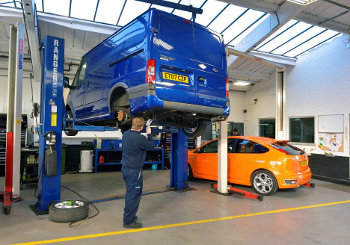
A Ford Transit raised on a lift in a workshop

A rare sight for Ford Transit owners, as the Transit has just been chosen as most reliable van in the UK, for the second consecutive year.

Ford has been voted the most reliable van manufacturer in the UK for the second consecutive year.

The annual Fleet News survey of the 50 largest UK contract hire and leasing companies found that Ford was the most reliable van manufacturer, and the Ford Transit was the most reliable van (one reason it’s also the nation’s most popular used van).

In this annual survey companies themselves rank the best performing vehicles for reliability based on actual breakdowns and warranty claims. It is the largest study of its kind in the UK with those responding to the survey representing a combined fleet size of 170,000 light commercial vehicles.

Here are the top ten most reliable vans and manufacturers, with last year’s positions shown in brackets:

Top 10 most reliable vans:

  1. Ford Transit (1)
  2. Mercedes-Benz Sprinter (3)
  3. Ford Transit Connect (2)
  4. Volkswagen Transporter (4)
  5. Volkswagen Caddy (5)
  6. Mercedes-Benz Vito (6)
  7. Vauxhall Vivaro (7)
  8. Renault Trafic (8)
  9. Vauxhall Movano (9)
  10. Renault Master (new entrant this year)

Top 10 most reliable van manufacturers:

  1. Ford (1)
  2. Volkswagen (3)
  3. Mercedes-Benz (2)
  4. Vauxhall (4)
  5. Renault (6)
  6. Peugeot (8)
  7. Nissan (7)
  8. Citroën (5)
  9. Fiat (9)
  10. Mitsubishi (new entrant this year)

Ford is really on a roll at the moment. By the end of next year, its entire commercial vehicle range will have been replaced with all-new models, and if its as good as the Transit Custom, next year’s 2-tonne Transit will really take the fight to the Sprinter and should confirm the blue oval’s dominance of the UK van market.

Europcar Opens New Van Hire Branch At Bristol Temple Meads Station

Europcar logoEuropcar has opened a new car and van rental branch at Bristol Temple Meads Station, in Bristol.
The Bristol Temple Meads railway station branch expands Europcar’s nationwide network bringing convenient access to a range of services including one-way rentals.

Customers will now be able to collect and drop off vehicles at the branch, from 8am to 6pm Monday to Friday and 8am to 1pm on Saturdays.

“With easy access to Bristol Airport and a number of popular tourist attractions, Bristol is a key location in Europcar’s growing network of branches,” says Ken McCall, Managing Director, Europcar UK Group says. “Our wide range of vehicles makes this new branch ideal for shopping and sightseeing trips, as well as business journeys. It also means that we can make the car hire experience even more convenient for leisure travellers.”

Bristol Temple Meads Station is located just off Temple Gate (the A4) in central Bristol. The postcode of the new branch is BS1 6QF and you can find full location details for the new branch, including a map and sat nav coordinates, on our branch page.

Ford Transit Voted UK’s Favourite Large Used Van

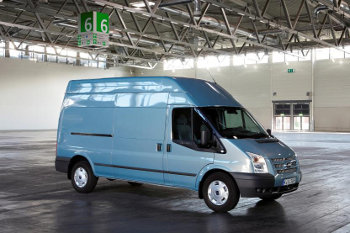
Ford Transit mk7 (2007-13)

Readers of Commercial Motor voted for the Transit as their favourite 3.5t used van.

There’s only one Ford Transit, and despite the motorway-conquering goodness of the Mercedes-Benz Sprinter, the Transit has a place in out hearts that is likely to outlast most of its competitors.

It’s not without good reason, either. As a used van, the Transit is a highly affordable, practical and reliable proposition. I’ve owned two, and neither have cost more than a family car to run, or given any serious trouble.

This eulogy to the Transit has been prompted by news that the readers of Commercial Motor magazine have voted for the Transit as the best large used van, praising the vehicle’s practicality, low costs of ownership and the strength of the service and repair network across the country.

Will Shiers, editor of Commercial Motor, said:

“Commercial Motor’s readers voted overwhelmingly in favour of the Ford Transit as their favourite used 3.5-tonne van. The Transit has been the nation’s favourite for the better part of half a century now, not only when new, but on the used market too. The van has defined the sector. Used buyers know exactly what they’re getting with a Transit, a van they can trust.”

According to Commercial Motor, there are currently around 700,000 new and used Ford Transit vans in operation on UK roads, over 9,000 of which are the recently launched Ford Transit Custom.