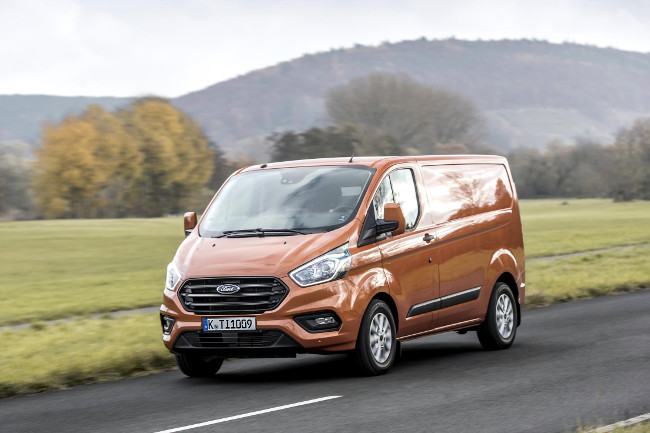
Tag Archives: Ford

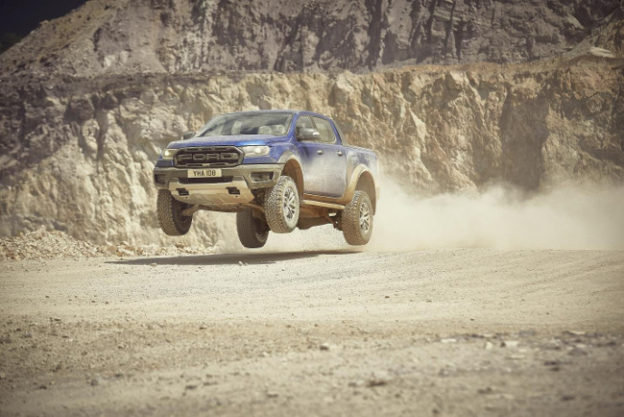
Ford Ranger Raptor

Ford Ranger Raptor makes history with Gamescom launch

Ford Ranger Raptor

The Ford Ranger Raptor will be on sale in mid-2019.

Ford has made history by launching the latest version of its Ranger pickup at Europe’s Gamescon video game trade fair, in Cologne, Germany.

The Raptor looks like something out of a computer game and the link goes further than that — the company announced that in partnership with Microsoft, the Ranger Raptor will feature in the Forza Horizon 4 racing game.

The new model will go on sale to real-world buyers in the middle of 2019. Powered by the BiTurbo versio of Ford’s 2.0-litre EcoBlue engine, it packs a powerful punch with peak power of 213PS and 500Nm of torque. Drive is delivered to the over-sized wheels through Ford’s 10-speed automatic gearbox.

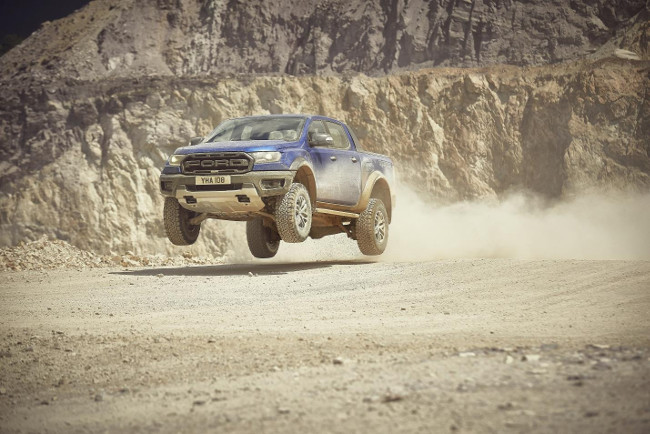
The Ranger Raptor’s design is inspired by off-road racing and the larger F-150 Raptor. It gets upgraded FOX shock absorbers and specially-designed BF Goodrich tyres on 17-inch alloy rims. Upgraded suspension is paired with new underbody protection to prepare the Raptor for serious off road use.

However, this won’t compromise the truck’s on-road driving quality, according to Damien Ross, Ford’s chief program engineer for the Ranger Raptor:

“The standout experience of the Ranger Raptor, hands down, is how far you can push it off-road and still ride like a millionaire on-road. Everything about the Ranger Raptor builds on the already outstanding sophisticated feel and functional capability of the Ranger, and then goes further. From a driving dynamic fun standpoint, it is really an exceptionally special vehicle.”

Inside, front-seat passengers are cossetted inside specially bolstered seats and can enjoy the full-range functionality provided by Ford’s SYNC 3 infotainment system.

The Ford Ranger Raptor will go on sale in Europe in mid-2019.

MS-RT Transit Custom

MS-RT gives Ford Transit Custom rally-inspired makeover

MS-RT Transit Custom

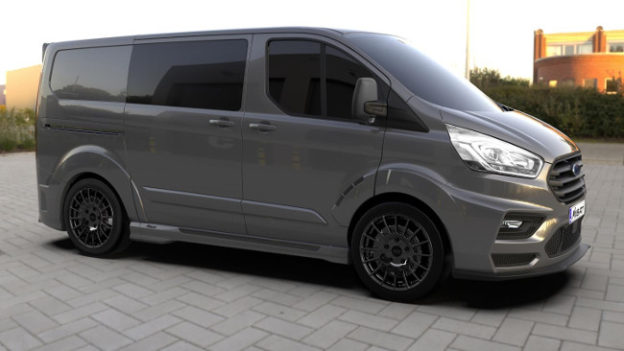
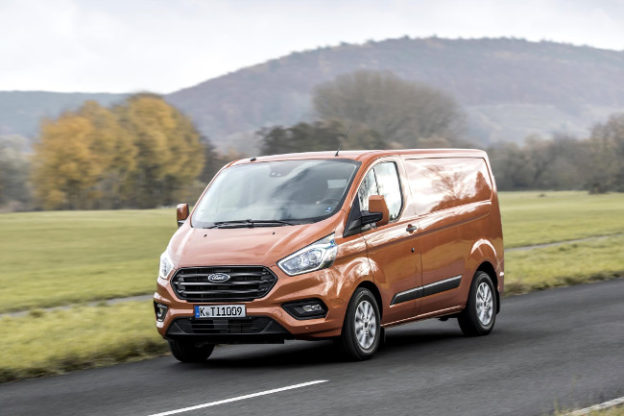
The MS-RT conversion of the Ford Transit Custom adds motorsport styling to the UK’s most popular van.

The Ford Transit Sport vans offer a decent slug of motorsport styling for van operators. But if you’re looking for something to take your next Transit Custom to the next level, the new MS-RT Transit Custom conversion from Welsh firm MS-RT could be just the ticket.

MS-RT says it’s taken inspiration from the Ford-backed M-Sport rally team to achieve “a performance version of the country’s most popular commercial vehicle”. 

The modified van is based on the new 2018 Transit Custom, which is just starting to be delivered to early buyers. MS-RT Founding Director, Ed Davies, says their conversion creates a van owners will cherish:

“The new MS-RT Transit Custom takes an already excellent van and turns it into something really special, which owners are bound to cherish, and which businesses will use to make their brands really stand out.

Head-turning styling

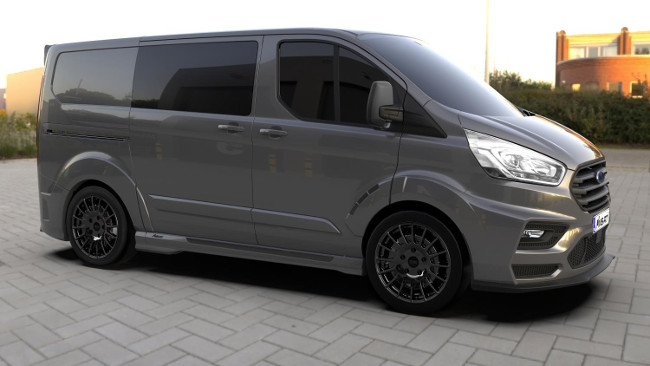
On the outside, the van gets a comprehensive body kit, including a full front bumper and grill replacement with factory-fitted fog lights. There’s also an “extreme front diffuser” side sills, wheel arch extensions and matching rear spoiler and diffuser. The van also gets a British-made twin exhaust system and MS-RT branding.

In order to tighten up the van’s handling, these replacement wheels are paired with a set of Eibach lowering springs. These are paired with exclusive 18-inch Antracite OZ Racing alloys, but MS-RT has taken care to ensure the van retains its load-carrying ability.

These show-stopping wheels are shod with 103XL load-rated Hankook Ventus S1 evo2 tyres, which have been chosen to maintain the van’s 3.5t gross weight.

Impressive spec list

MS-RT’s modifications continue inside the van, which gets handcrafted nappa leather and suede seat facings, a MS-RT sports steering wheel and carbon fibre inlays. There’s even a MS-RT set of floor mats.

All vehicles come with an impressive stock specification. Vans are fitted with Ford’s SYNC3 entertainment system with sat nav, a reversing camera and parking sensors. There’s also heated seats and upgraded HID headlights, plus Ford’s ever-popular heated windscreen.

Under the bonnet MS-RT has specifies Ford’s range-topping 170PS EcoBlue 2.0-litre diesel engine This provides 405Nm of torque and can be paired with your choice of six-speed manual or automatic ‘box. A standard choice of cabin layouts is available, including five or six-seat crew cab, long or short wheel base and tailgate or twin rear doors.

Prices have not yet been announced — more information should be available in April 2018.

Ford F150 right-hand drive

Ford F-150 Raptor now available in UK-spec right-hand drive

Ford F150 right-hand drive

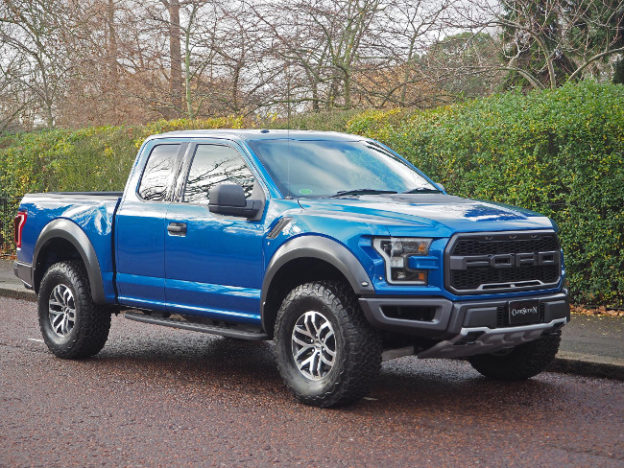
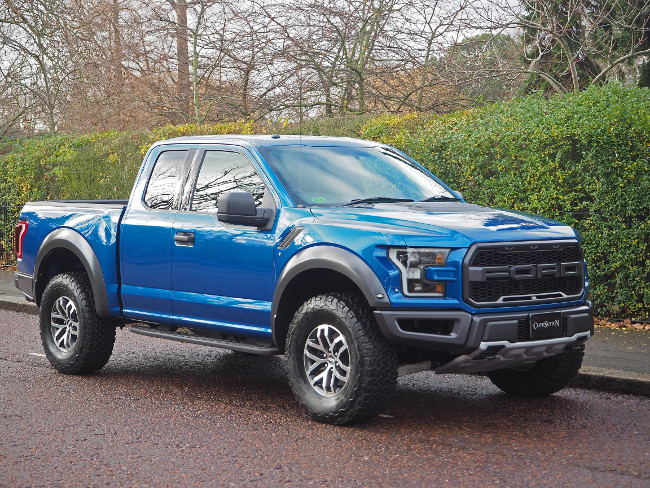
Specialist car dealer Clive Sutton is now selling the UK’s first Ford F150 Ford F150 right-hand drive conversion.

Until now, owning a genuine American pickup with right-hand drive has been pretty much impossible. But specialist luxury car dealer Clive Sutton has changed that, with the UK’s first right-hand drive conversion of a Ford F-150 Raptor pickup.

The fully-converted model is now available for the not-so-bargain price of £89,000 +VAT. Converting an existing F-150 Raptor, should you happen to own one, will cost around £32,000 +VAT.

What’s a Raptor?

In case you’re not familiar, the Raptor version of the F-150 is a high-spec version of the standard F-150, with extra off-road equipment including super knarly off-road tyres and upgraded long-travel suspension. Power is delivered by a twin-turbo 3.5-litre V6 engine which delivers 450 horsepower through a 10-speed automatic gearbox.

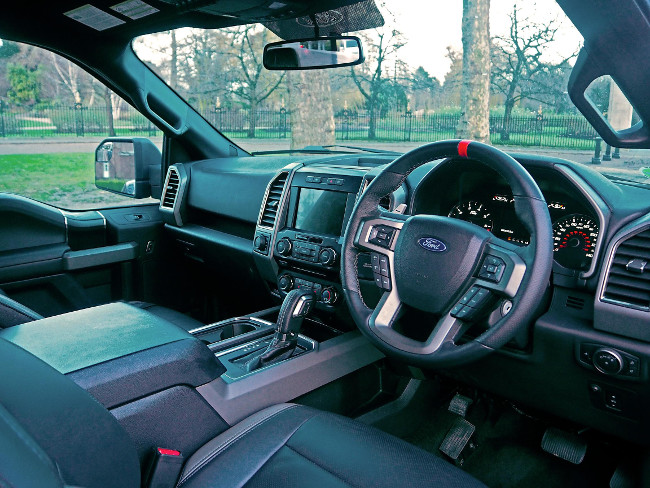
The conversion has been done in depth and includes a right-hand drive steering rack, precision-sculpted cabin fittings and a fully ‘mirrored’ cabin and dashboard conversion.

Even the Ford Sync 3 infotainment system has been reprogrammed with full European mapping and radio frequencies.

Ford F-150 Raptor RHD cab

Inside the cab of Clive Sutton’s first RHD Ford F-150 conversion

Sutton’s first converted model is a SuperCab model in Lightening Blue. Ford’s SuperCab is a smaller version of the SuperCrew crew cab, so while it can seat extra passengers, they won’t have as much space as in a full-size crew cab.

That’s probably just as well, because according to this US review, the full-sized SuperCrew cab adds an extra 12 inches to the truck’s already gigantic dimensions (compared to a standard UK-spec pickup)

I want more…

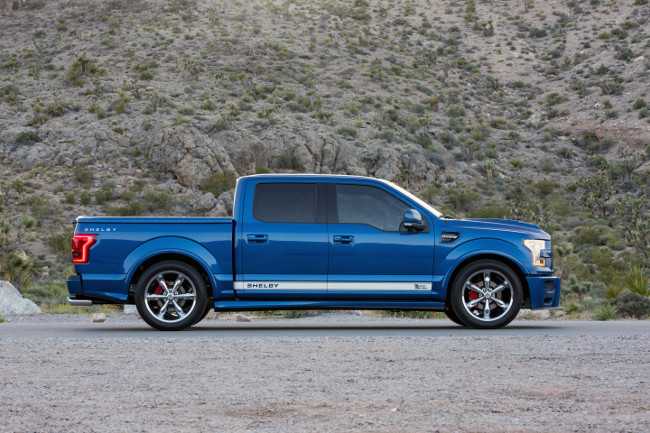
If a ‘standard’ F-150 just isn’t enough, then Clive Sutton has something even more special on offer. Renowned US tuner Shelby is producing a limited run of 500 Shelby-tuned Ford F-150 pickups.

In among these will be 150 F-150 Super Snake models. These heavily modified trucks are built around a 750hp supercharged 5.0-litre V8 engine and will have more than 45 proprietary components. The price will be £120,000, including VAT.

Shelby F-150 Super Snake

Just two of these 750hp V8 Shelby F-150 Super Snake trucks will be imported to the UK. Contact dealer Clive Sutton if you’re interested.

The Super Snake promises to be a true super truck. But just two of these models will be available in the UK, so anyone who is interested should contact Sutton as soon as possible.

Ford Tourneo Custom and Tourneo Connect

New Ford Tourneo models unveiled at Brussels Motor Show

Ford Tourneo Custom and Tourneo Connect

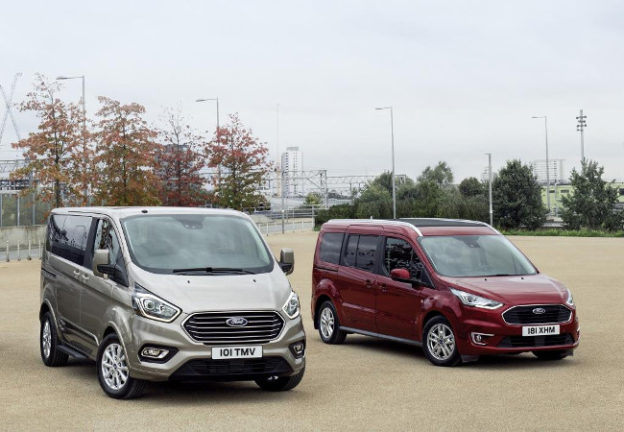
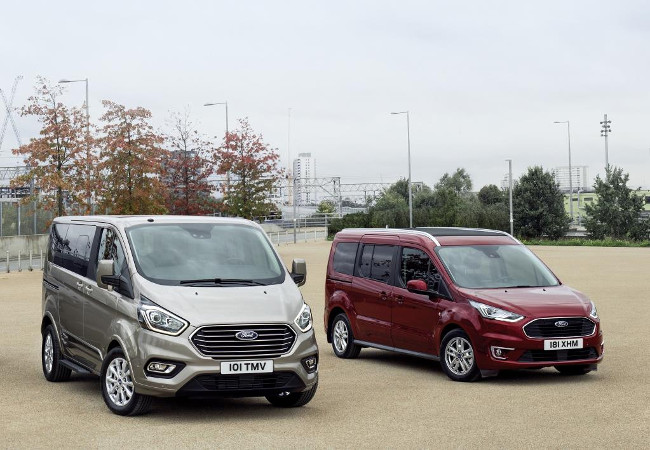
The new Ford Tourneo Custom and Tourneo Connect

Ford’s new Tourneo Custom and Tourneo Connect people movers have made their first public appearance at the Brussels Motor Show.

Tourneo Custom

The new Tourneo Custom is available in 8/9 seater configurations and features updated styling plus some new in-cab tech, such as a voice-controlled assistance system. It’s also available with six rear seats, three of which can be swivelled to provide a conference-type seating arrangement.

Powered by the Ford’s EcoBlue diesel engine, the model will be available with a choice of 105 PS, 130 PS and 170 PS power ratings, plus a 17-inch alloy wheel option for “enhanced handling and braking performance”.

Passengers benefit from convenient features such as multiple USB sockets and an optional 10-speaker sound system.

Aimed firmly at the executive transfer and minicab markets, the Tourneo Customer looks likely to be popular with minibus hire firms too, in my view.

Tourneo Connect

This smaller model is more likely to be of interest to large families and minicab drivers. Available in five or seven-seat versions, the Tourneo Connect also gets two new powertrains. Buyers can choose from Ford’s all-new 1.5-litre EcoBlue diesel or the excellent and very popular 1.0-litre EcoBoost petrol engine.

Both are likely to offer good performance and economy and are specified with six-speed manual transmission as standard. The diesel is also available with an eight-speed automatic transmission.

As with its larger sibling, the Tourneo Connect gets updated interior and exterior styling.

Hertz rental vans

Ford partners with Hertz UK to make hourly van hire easier

It isn’t the best-known service, but hourly van hire is very popular. It’s obvious why. Trips home from B&Q, trips to the tip, furniture deliveries — they only take an hour or two, but are often impossible in a family car.

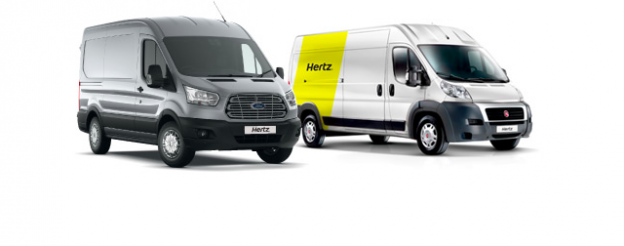
One of the leaders in hourly van hire in the UK is Hertz. The Hertz 24/7 hourly rental service is available at popular locations such as B&Q, Brunnings, Costco and Ikea. But you do need to register for this service before you can use it.

To make life easier for its customers, Ford will now offer the Hertz 24/7 service through the FordPass app. I have to admit I wasn’t familiar with this before today. FordPass is a system for Ford owners which provides live traffic data, assistance with problems, online service and repair scheduling and other useful tasks.

What does it cost?

At the time of writing, Hertz 24/7 hourly van rental prices start at just £13 per hour.

Ford and Hertz are also offering a £10 credit to FordPass customers for their first Hertz 24/7 rental, using the voucher code 1068 (valid for rentals completed by 31 January 2018).

UK van registrations rolling year November 2011-2017

New van sales slump in November – SMMT

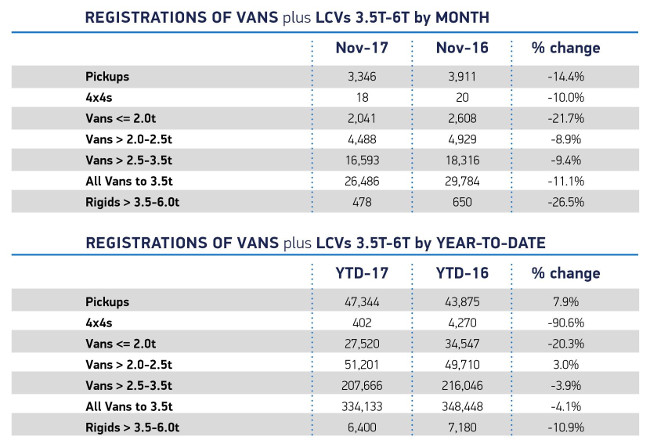
New registrations of light commercial vehicles fell by 11.1% in November, according to new figures from the Society of Motor Manufacturers and Traders (SMMT), the UK automotive industry’s trade body.

This is the third consecutive months of falling registrations, leaving the UK LCV market down by 4.1% so far this year. The growth seen during the first half of the year has been well and truly reversed.

As you can see from the figures below, the only two segments of the market to show growth over the first eleven months of 2017 were pickups and vans in the 2.0-2.5t weight bracket. But even in these popular segments of the market, registrations fell last month:

SMMT LCV registrations November 2017

LCV registrations November 2017 (source: SMMT)

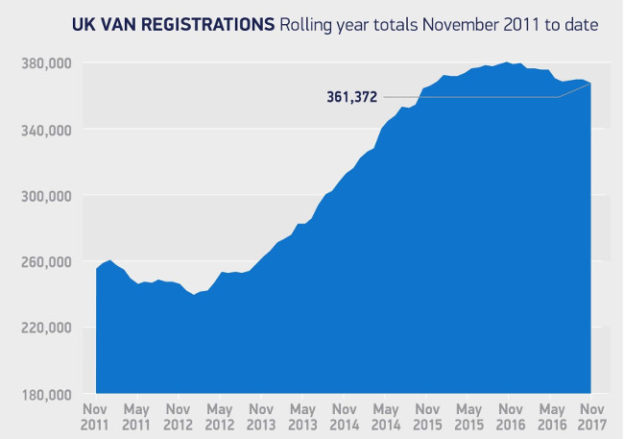
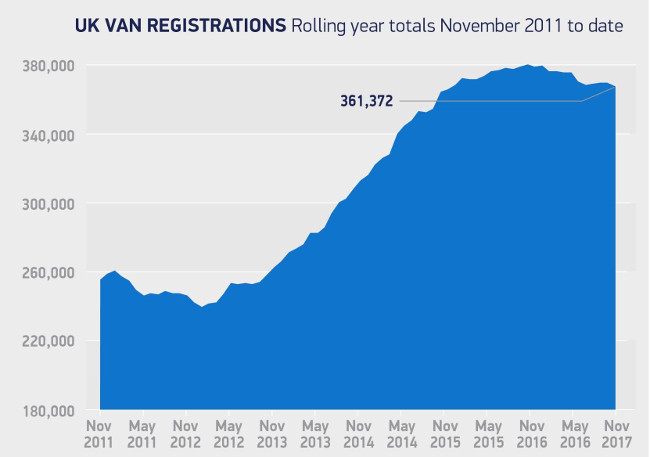
In my view, it’s certainly starting to look as though the record registrations seen in 2016 marked the peak of the market:

UK van registrations rolling year November 2011-2017

UK van registrations rolling year November 2011-2017 (source: SMMT)

Ford is still on top

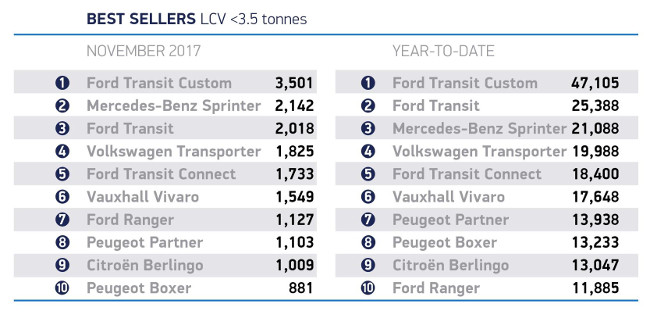
Sales numbers may have changed, but Ford’s dominance of the UK van market hasn’t. Almost one in three of the LCVs registered in November had a blue oval on its radiator grill, as has been the case throughout this year:

Best sellers LCV under 3.5t November 2017

Best sellers LCV under 3.5t November 2017 (source: SMMT)

I don’t expect the proportions of these figures to change much next year. But I believe we could see further falls in new registrations next year. Watch this space.

New 2018 Ford Transit Custom

Updated Ford Transit Custom van promises to raise standard in one-tonne segment

New 2018 Ford Transit Custom

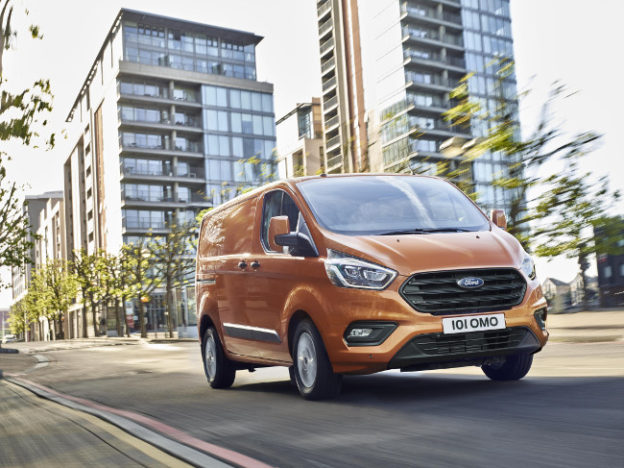
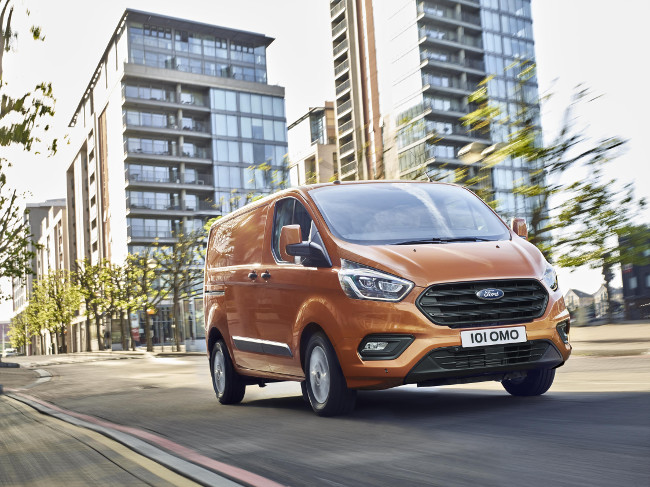
First deliveries of the new Ford Transit Custom are expected early in 2018. The updated model has a new front end plus additional safety tech and communications. It will also be available in a fuel-sipping ECOnetic variant. Image: Ford

Hans Schep is General Manager, Commercial Vehicles, of Ford of Europe. He’s naturally going to talk up his own products, but when he describes the Transit Custom van as “a runaway success”, I don’t think he’s exaggerating.

As we’ve reported a number of times previously, the Transit Custom is outselling its rivals in the UK market several times over. At the end of August, trade body figures showed that 31,868 new Ford Transit Customs had been registered so far in 2017. The models closest rival, the Volkswagen Transporter, had clocked up just 13,041 UK registrations in the same period.

However, it’s easy to forget that the current Transit Custom has been on sale since 2012.  So it’s not a complete surprise to hear that Ford will be launching an updated version of the van later this year.

Under the bonnet

The new model will have an updated front end, featuring Ford’s distinctive new radiator grill design. Under the bonnet, the 2.0-litre EcoBlue that was introduced in 2016 will remain, with buyers getting the choice of 105PS, 130PS and 170PS power ratings.

A new ECOnetic variant will also be available on 300 SWB vans, promising CO2 emissions of 148g/km and official combined cycle fuel consumption of 49.6mpg. Ford says this is a 6% improvement over the most efficient current vehicle.

Among the changes made to achieve this result are low rolling resistance tyres, Auto-Stop-Start, Acceleration Control (which limits acceleration when unloaded) and a fixed 62mph speed limiter.

New interior

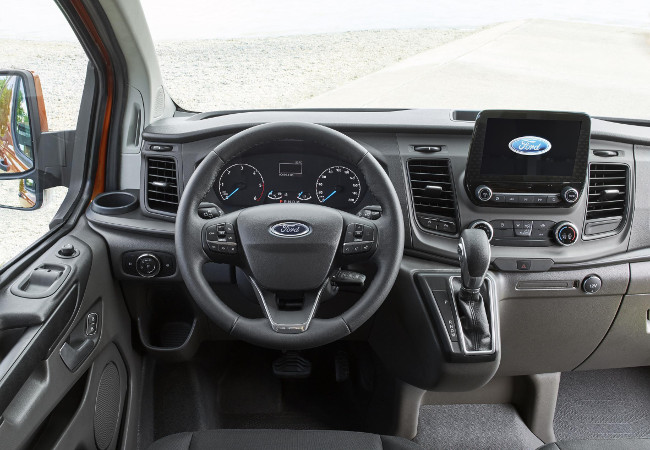
Ford says the cabin is “completely new” and uses an instrument panel based on the new design philosophy first seen in the latest Fiesta. The company claims it’s “influenced by consumer interactions with smart devices and tablets” and has “strong horizontal design elements”. See for yourself:
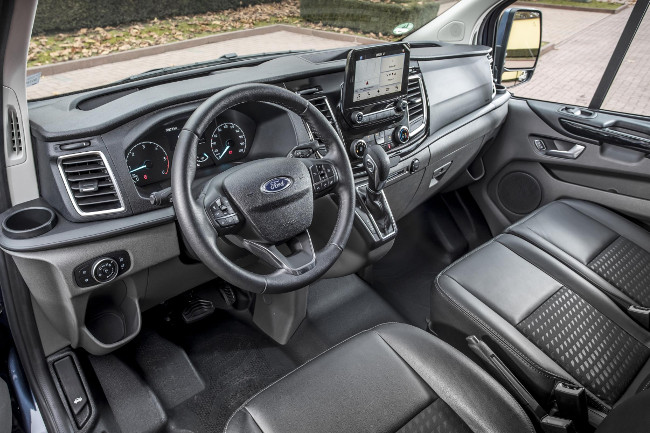
New cabin interior in Ford Transit Custom

The new cabin interior in the 2018 Ford Transit Custom

The focus is on providing a good workspace for drivers who use the van as a mobile office. High-spec vans will get Ford’s SYNC3 infotainment system plus an eight-inch colour touchscreen.

Lower spec models get a four-inch screen, while entry level vans get the MyFordDock in the centre of the instrument panel, allowing drivers to mount and charge their smartphones or sat nav devices. Multiple USB and 12V sockets are provided for easy charging.

Safety first

Less visible but no less valuable are improvements to the safety technology fitted to the Transit Custom. The new van will be available with Intelligent Speed Assist, which acts as a dynamic speed limiter, adjusting the vehicle’s maximum speed to remain within legal limits.

Other new options include the Blind Spot Information System with Cross Traffic Alert, which uses radar sensors to detect when passing vehicles may be in the blind spot, and lights a warning light in the appropriate wing mirror.

Cross Traffic Alert uses the same sensors to warn drivers reversing out of a parking space if nearby vehicles or bicyles are about to pass behind them.

I recently drove a Ford car fitted with both of these systems and I have to say that while I don’t consider them a necessity, they worked well and were very useful. Definitely worth having, as long as they don’t make you lazy.

Other safety options available on the new Transit Custom include Pre-Collision Assist with Pedestrian Detection, Lane Keeping Alert, Driver Alert, Auto High Beam, Rear View Camera, Adaptive Cruise Control and Side Wind Stabilisation.

When will it be available?

Production of the new van is due to start late in 2017. First UK deliveries are expected early in 2018. A new plug-in hybrid model (currently on trial in London) is expected to launch in 2019.

Ford Transit Custom plug-in hybrid van

How do hybrid vans work? Inside the Ford Transit PHEV

Ford Transit Custom plug-in hybrid van

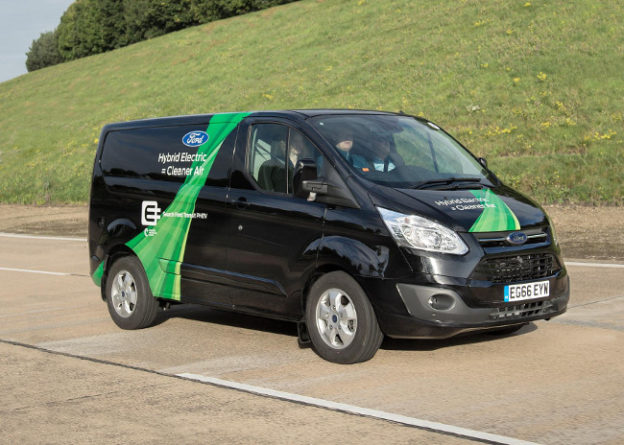
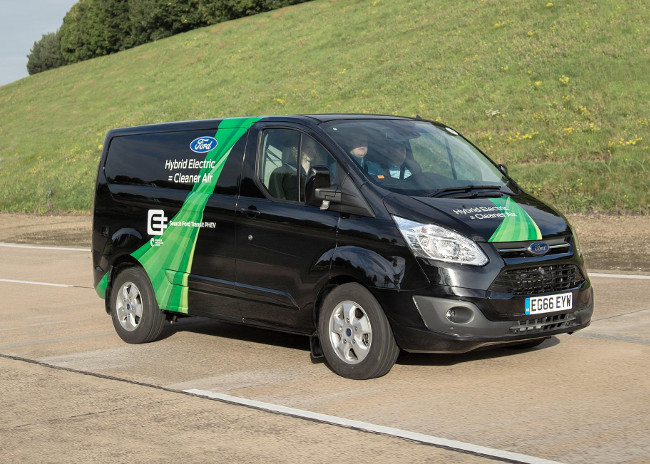
Ford’s planned Transit Custom plug-in hybrid van will go on trial in London later in 2017.

There’s a lot of talk about hybrids, plug-in hybrid electric vehicles (PHEV) and electric vans at the moment. But what does this actually mean?

Well, in simple terms, hybrids are vehicles with a petrol or diesel engine plus some form of electrical propulsion.

The most common type of hybrid uses an electric motor and a battery to provide electric assistance and perhaps electric-only operation at low speed. The battery is charged while driving and especially during braking.

The other type of hybrid is the range-extender electric vehicle. This is essentially an electric car or van with a petrol generator on board that’s used to charge the batteries if they run low while you’re driving.

What about PHEV? Oh yes. A Plug-in Hybrid Electric Vehicle can be either of the two types of hybrid I’ve described above, with one added extra. It also comes with a mains power socket so it can be plugged in to charge the battery when parked up.

What about the Transit hybrid van?

Ford has chosen to follow the range extender and PHEV routes with its upcoming Transit Custom PHEV hybrid.

This van isn’t planned for commercial production until 2019, but a fleet of 20 PHEV Transit will be undergoing a 12-month trial in London starting later this year.

As you may soon start seeing these low-emission vans on the road, I thought it would be interesting to take a look under the bonnet. I’ll aim to answer two important questions:

  1. How do these vehicles actually work?
  2. Why does using a petrol engine in this way make sense if you’re trying to cut emissions?

How does a range-extender hybrid work?

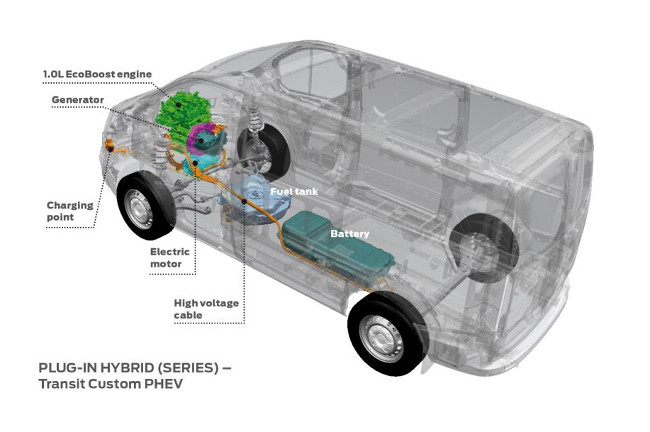
Ford has kindly provided an ‘x-ray’ picture of the new Transit PHEV which shows all the main systems used as part of the powertrain:

The Transit Custom PHEV powertrain

Battery, electric motor. charging point, engine and generator. Under the skin of the upcoming Transit Custom PHEV (source: Ford)

Here’s how the van will work. The battery pack is a liquid-cooled unit that’s fitted under the floor, so load capacity isn’t affected.

In urban environments, the goal will be to use electric power as much as possible. Ford says that a fully-charged battery should give the van a range of “in excess of 31 miles”.

Batteries can be charged by connecting the charging points to an electric charging point, but if this fails the van’s petrol engine will kick in and start charging the batteries. The van will continue to run as an electric vehicle, but with a supply of electricity from the engine-powered generator. (The generator itself is basically a large, high-powered alternator.)

All of this may seem complex, but it means that unlike with a pure electric vehicle, this hybrid can be driven unlimited distances without needing to be charged, simply filling up with petrol as usual.

Why is it better to use an engine in this way?

There are two reasons why a range extender PHEV should produce far lower emissions than any standard internal combustion engine vehicle.

The first reason is that if the van is used as it’s intended, it will run on battery power much of the time and will be charged from the mains when not in use. For urban use, it’s possible that the engine will rarely even be needed.

The second reason is that as you’ll probably have noticed, the engine fitted isn’t the usual 2.0-litre EcoBlue diesel that’s fitted to most Transit Custom vans. Instead, Ford will be fitting its popular 1.0-litre Ecoboost petrol engine, which is most commonly found in the Fiesta and Focus cars.

This engine produces fewer harmful emissions in general than the Transit diesel. But because it’s being used to power a generator, it can also be tuned to provide optimum efficiency when operating within a narrow rev range.

I’d expect this mode of operation to provide further reductions in emissions, when compared to a regular petrol or diesel-powered vehicle, which has to operate over a wide range of revs.

Ford Model TT loaded with straw

From Model TT to Transit: Ford celebrates 100 years of vans

Ford Model TT van in 1917

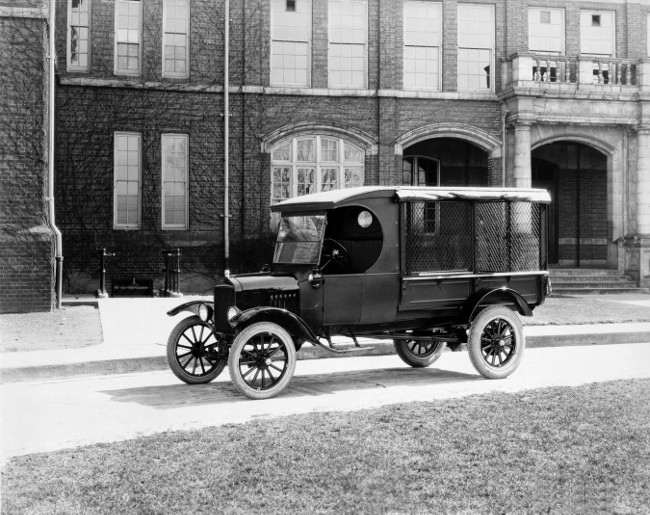
The Ford Model TT van was launched in 1917 and was the company’s first purpose-built van.

Did you know that 2017 marks the 100th anniversary of the first purpose-built van made by Ford? I didn’t either, but it turns out that back in 1917, Ford launched the Model TT.

The TT was a purpose-built one-tonne van, making it the direct equivalent of today’s Transit Custom. Obviously much has changed. But as these pictures from the Ford archives make clear, in some ways very little has changed. Like the Transit Custom, the TT provided a flexible and highly customisable way for businesses to transport more or less anything.

Ford Model TT loaded with straw

The Ford Model TT loaded with straw. Obviously wide loads weren’t such an issue then as they might be now…

The TT had solid tyres and was started with a crank handle. Operators wanting more comfort could specify air-filled rear tyres, which were something of a luxury at that time.

Ford Model TT with caged rear body

A Ford Model TT with a caged rear body — as used by gardeners and scrap dealers today!

I’ll leave you with this fascinating titbit. According to a study commissioned by Ford, 46% of Britons believe that a “Transit” refers to a specific size of van. Almost a quarter of those questioned used the word “Transit” to describe a typical panel van.

Like it or not, the Transit really is part of the fabric of life in the UK.

2018 Ford Transit Custom

Top-selling Ford Transit Custom will be updated for 2018

2018 Ford Transit Custom

The 2018 Ford Transit Custom will have an updated front end and new interior.

The Ford Transit Custom is Britain’s best-selling van by a country mile. The one-tonne panel van sold 26,813 units during the first half of 2016, double that of the second-placed model, the full-sized Ford Transit.

The top-selling non-Ford van was the Volkswagen Transporter, which managed just 10,921 sales — less than half that of the Transit Custom.

It’s clear that the UK’s love affair with the Transit van is as passionate as ever. But Ford isn’t resting on its laurels. The Blue Oval is planning to unleash an updated version of the Transit Custom for 2018. Highlights will include “sharper styling an updated cabin and a fuel-saving ECOnetic model.

A plug-in hybrid version of the Transit Custom is also on the cards and is currently on trial in London. However, the production model isn’t expected to be ready until 2019.

What’s new?

Here’s a round-up of the changes you can expect when the new Transit Custom models reach dealers early in 2018.

Fuel-saving: The Transit Custom will continue to be offered with Ford’s Dagenham-built EcoBlue diesel engine. This will be available with a choice of 105PS, 130PS and 170PS power outputs.

However, a full ECOnetic version will also be available for the first time. This will be offered as a 105 PS 300 Series short wheelbase model. Changes from the standard model include modified engine tuning, Auto-Stop-Start, low rolling resistance tyres, Ford’s Acceleration Control feature (which limits acceleration when the van is empty) and a fixed 62mph speed limiter.

Ford claims the ECOnetic will deliver 148g/km of CO2 and combined cycle fuel consumption of 49.6mpg, a 6% improvement over the most efficient current model.

Style & storage: The styling of the van will be updated with a new three-bar grille and what’s described as “a completely new cabin” with best-in-class storage and improved comfort and ergonomics. Connectivity will be provided by Ford’s SYNC3 or MyFord Dock options.

The 2018 Transit Custom will include a new dashboard design

The new-for-2018 Transit Custom will have an all-new dashboard.

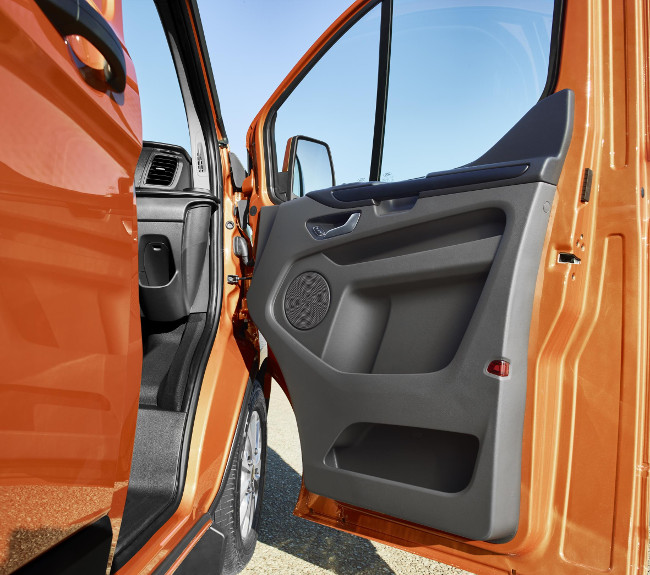
New door storage in 2018 Transit Custom

Door storage will be improved in the updated van.

Safety: New features will include Ford’s Intelligent Speed Limiter, which will be available on a van for the first time. Blind Spot Information System and Cross Traffic Alert will also be offered.

Sport: The popular Transit Custom Sport will also get an update. The signature twin bonnet stripes and body kit have been redesigned for the new model. Changes include “distinctive new two-tone stripes in black with orange or silver accents”. Not one for shrinking violets, then.

We say: This mid-life update promises to make an already-great van even better.